Advantages of Portable High Pressure Dive Compressors: Comprehensive Insights for Diving Professionals and Enthusiasts
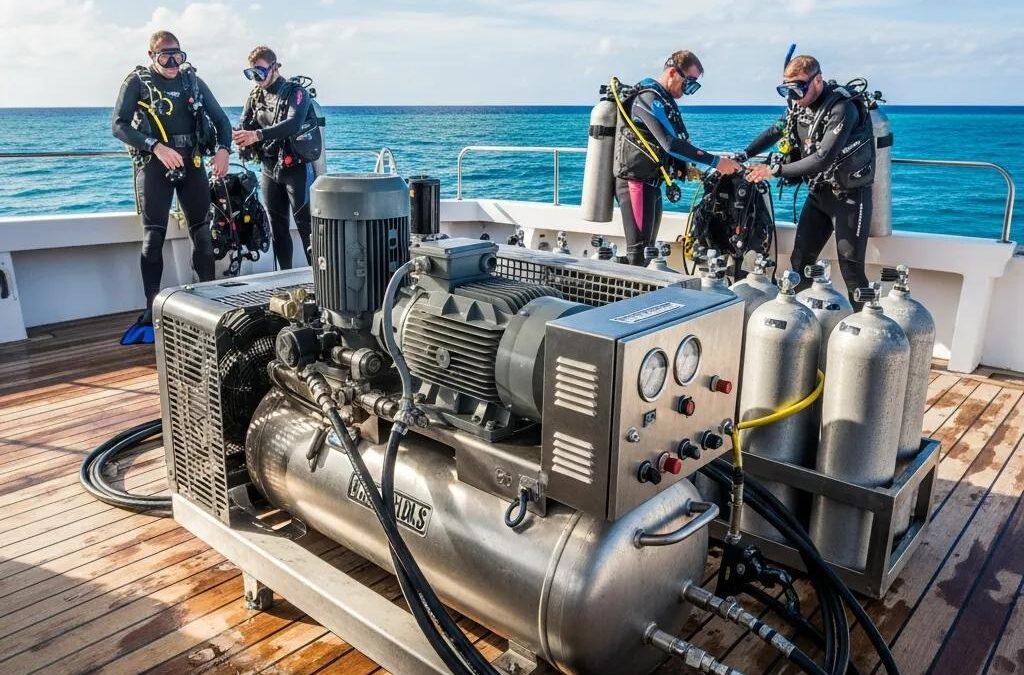
Portable high pressure dive compressors are essential tools for divers, providing a reliable source of compressed air for underwater exploration. These compressors are designed to be compact and efficient, making them ideal for both recreational and professional diving applications. In this article, we will explore the numerous advantages of using portable high pressure dive compressors, including their efficiency, portability, and advanced filtration systems. Additionally, we will discuss how these compressors serve outdoor sports enthusiasts and professional divers, highlighting their practical applications in various scenarios. By understanding the benefits and features of these compressors, divers can make informed decisions that enhance their diving experiences. For a more detailed review of compressor options, check out our complete guide on high pressure compressors for diving systems.
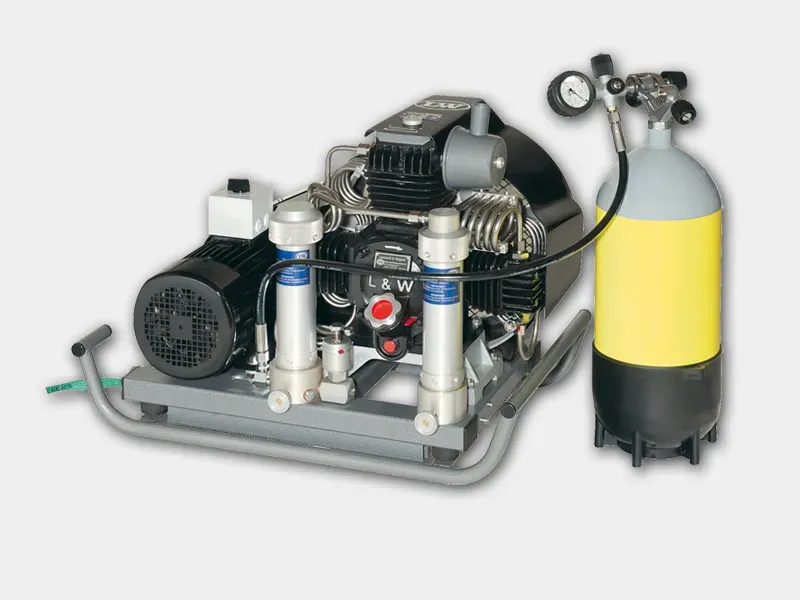
The specialized design of these compressors, often featuring multiple cylinders, allows them to achieve the high pressures necessary for critical applications like scuba tank filling and breathing air systems.
Portable High-Pressure Compressors for Breathing Air Systems
These compressors use two cylinders to further increase the pressure of the air, making them useful for applications that require high-pressure breathing air, such as scuba tank filling and commercial diving breathing air systems.
FABRICATION AND TESTING OF A PORTABLE BREATHING EQUIPMENT FOR LOW PRESSURE CONDITIONS, 2023
What Are the Core Benefits of Using Portable High Pressure Dive Compressors?
Portable high pressure dive compressors offer several key benefits that make them indispensable for divers. These advantages include efficiency in filling tanks, portability for remote locations, and cost-effectiveness in operations. By utilizing these compressors, divers can ensure they have a reliable air supply, which is crucial for safety and performance underwater.
How Does Portability Enhance Dive Compressor Utility?
The portability of dive compressors significantly enhances their utility, especially in remote diving operations and emergency response situations. Divers can easily transport these compressors to various locations, allowing them to fill tanks on-site without the need for a stationary air supply. This flexibility is particularly beneficial for expeditions to remote areas where access to traditional filling stations may be limited.
In What Ways Do Compact Designs Improve Operational Efficiency?
Compact designs of portable dive compressors contribute to operational efficiency by allowing for high performance despite their size. These compressors are engineered to deliver powerful output while consuming less energy, making them an environmentally friendly choice. Their small footprint also means they can be easily stored and transported, further enhancing their practicality for divers. For additional information, you can review the different high compressor types for divers here.
How Do Portable High Pressure Dive Compressors Serve Outdoor Sports Enthusiasts and Professional Divers?
Portable high pressure dive compressors are not only beneficial for recreational divers but also serve outdoor sports enthusiasts and professional divers effectively. Their mobility allows for logistical independence, enabling divers to engage in various activities without being tethered to a fixed air supply.
What Use Cases Highlight the Advantages for Recreational Diving?
Recreational diving often takes place in remote locations, where access to air filling stations can be challenging. Portable dive compressors allow divers to fill their tanks on-site, ensuring they have the necessary air supply for their adventures. This capability is particularly advantageous for training and instruction scenarios, where multiple divers may require air fills in a short period.
What Are the Comparative Advantages of LW Americas’ Portable Dive Compressors?
LW Americas specializes in providing portable high pressure dive compressors that stand out in the market due to their unique features. These compressors are designed with advanced filtration systems that support compliance with recognized air quality standards such as CGA Grade E and EN 12021, which are critical for diving safety.
Ensuring the purity of breathing air is paramount for diver safety, a concern that has driven the development of rigorous testing protocols and the demand for advanced monitoring solutions.
Real-time Air Quality Monitoring for Diving Compressors
The U.S. Navy Divers Air Sampling Program coordinates the mandatory semiannual air purity testing of compressors used to supply divers air in the Fleet. Gas sampling kits are sent to the field, where gas samples are taken. These samples are then returned to a contract laboratory for analysis, with the results subsequently reported back to the field. This approach is expensive, cumbersome, and potentially unreliable. Consequently, the U.S. Navy is interested in having a real-time online air quality monitor to ensure that compressors deliver safe diving air.
Development and Evaluation of an Online Air Quality Monitor (Diveair2) for Diving Compressors, 2009
How Do LW Americas Compressors Differ in Portability and Filtration?
LW Americas’ portable dive compressors are engineered for superior portability and filtration compared to traditional models. Their lightweight design allows for easy transport, while the advanced filtration systems help remove contaminants from the air, supporting compliance with industry air quality standards to help ensure divers breathe clean air during their dives.
What Industry Standards and Certifications Validate LW Americas’ Product Quality?
LW Americas’ products are built to meet stringent industry standards and certifications, which validate their quality and reliability. These certifications ensure that divers can trust the performance of their compressors, providing peace of mind during underwater excursions.
Efficiency and Cost-Effectiveness
The efficiency and cost-effectiveness of portable high pressure dive compressors are significant factors that contribute to their popularity among divers. These compressors are designed to maximize performance while minimizing operational costs, making them an attractive option for both recreational and professional use.
Real-world evaluations of portable compressors demonstrate their efficiency in action, showcasing impressive tank filling times and economical operation.
A gasoline engine driven high-pressure breathing air compressor, BAUER Varius G-3, was evaluated by the Navy Experimental Diving Unit to determine its suitability for Navy use. Results of the 50-hour test showed that the portable compressor delivers breathing air at an average charge rate of 2.07 CFM, charging twin 72 cu. ft., twin 50 cu. ft., and single 80 cu. ft. scuba tanks in 71, 44, and 39 minutes respectively. The unit is easily maintained, sturdily constructed, and economical in gasoline fuel consumption.
Test and Evaluation of Bauer Portable High-Pressure Breathing Air Compressor, Model Varius G-3., 1980
Feature
Description
Benefit
Energy Efficiency
Utilizes advanced technology to reduce power consumption
Lowers operational costs
Compact Design
Small footprint for easy transport and storage
Enhances mobility for divers
High Output
Delivers powerful air compression
Ensures quick tank fills
This table illustrates how the features of portable dive compressors translate into tangible benefits for users, highlighting their efficiency and cost-effectiveness. To help make a decision, you can review our article on how to choose the right compressor for dive tanks.
Maintenance Practices to Ensure Optimal Performance of Portable High Pressure Dive Compressors
Proper maintenance is crucial for ensuring the optimal performance of portable high pressure dive compressors. Regular maintenance practices can extend the lifespan of these compressors and enhance their reliability during use.
What Are the Recommended Maintenance Intervals and Procedures?
It is recommended that divers perform routine checks on their compressors, including inspecting filters, checking for leaks, and ensuring that all components are functioning correctly. Regular maintenance intervals should be established based on usage frequency, with more frequent checks for compressors used in demanding environments.
How Does Proper Maintenance Extend Compressor Lifespan and Reliability?
By adhering to recommended maintenance practices, divers can significantly extend the lifespan and reliability of their portable dive compressors. Regular upkeep not only prevents potential issues but also ensures that the compressors operate at peak efficiency, providing divers with the air supply they need for safe and enjoyable diving experiences.
For a broader understanding of high-pressure diving compressors and their applications, readers are encouraged to explore our comprehensive guide on high-pressure diving compressors, which covers a wide range of topics to support informed decision-making.
High Pressure Compressor Types Explained for Divers: Comprehensive Guide to Diving Air Compressors and Portable Scuba Systems
High pressure compressors are essential tools for divers, providing the necessary air supply to support safe and enjoyable underwater experiences. Understanding the various types of compressors available can significantly enhance a diver’s efficiency and safety. This comprehensive guide will delve into the different types of high pressure compressors, their key features, applications, and maintenance tips. By the end of this article, readers will have a clear understanding of how to choose the right compressor for their diving needs and the benefits each type offers.
Diving enthusiasts often face challenges in ensuring they have a reliable air supply while exploring underwater environments. High pressure compressors address this need by delivering compressed air efficiently and in a manner designed to support compliance with recognized air quality standards. This article will cover the types of diving air compressors, their applications, advantages, and maintenance tips, providing a thorough overview for both novice and experienced divers. For a complete overview of systems, standards, and maintenance, see our high pressure diving compressors guide.
Comprehensive Guide on High Pressure Compressors for Divers
High pressure compressors play a crucial role in the diving industry, ensuring that divers have access to breathable air at the depths they explore. These compressors are designed to handle the specific requirements of diving, including the need for high pressure and air purity. Understanding the different types of compressors available can help divers make informed decisions about their equipment.
The importance of high pressure compressors cannot be overstated, as they not only provide the necessary air supply but also support safety through proper filtration and pressure management. This guide will explore the various types of compressors, their features, and how they cater to the unique needs of divers.
Types of Diving Air Compressors
Diving air compressors come in several types, each designed for specific applications and environments. Understanding these types can help divers select the most suitable compressor for their needs.
Portable Scuba Air Compressors
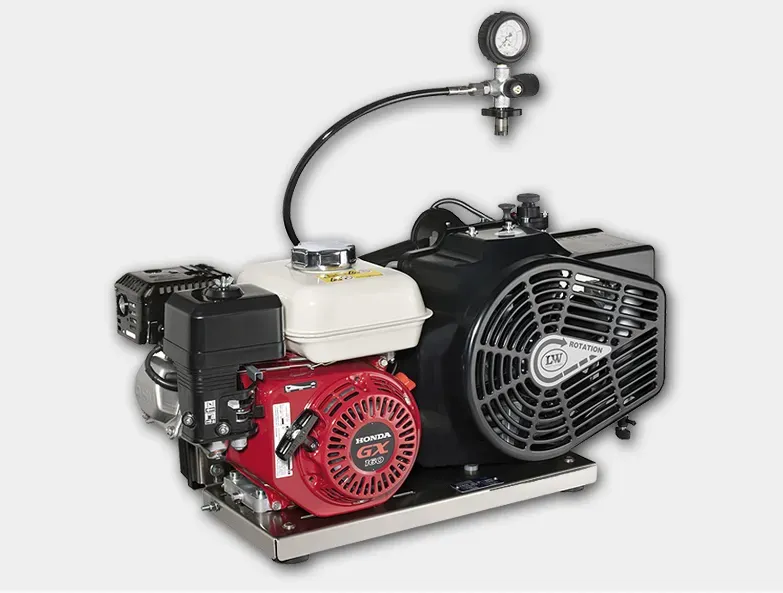
Portable scuba air compressors are lightweight and designed for mobility, making them ideal for divers who venture into remote locations. These compressors are typically compact and easy to transport, allowing divers to fill their tanks on-site without relying on external fill stations. The advantages of portable compressors include:
Lightweight and Mobility: Easy to carry and set up in various locations.
Ideal for Remote Locations: Perfect for diving trips where access to traditional fill stations is limited.
Advantages for Divers: Provides convenience and flexibility for spontaneous diving adventures.
Industrial Fill-Station Compressors
Industrial fill-station compressors are designed for high-volume air supply, making them suitable for commercial diving operations. These compressors can operate continuously and are built to handle the demands of multiple divers filling their tanks simultaneously. Key features include:
High-Volume Capacity: Capable of filling multiple tanks quickly.
Continuous Operation: Designed for long-term use without overheating.
Used in Commercial Diving: Essential for dive shops and industrial applications.
Mobile Fill Station Compressors
Mobile fill station compressors offer flexibility and rapid fill capabilities, often mounted on trailers for easy transport. These systems are particularly useful for emergency operations or events where quick air supply is needed. Their features include:
Trailer-Mounted Systems: Easily transportable to various locations.
Emergency Operations: Ideal for situations requiring immediate air supply.
Quick Air Supply: Efficiently fills tanks in a short amount of time.
Custom-Engineered Systems
Custom-engineered compressor systems are tailored to meet specific operational needs, providing enhanced efficiency and performance. These systems can be designed for unique applications, ensuring that divers have the right equipment for their specific requirements. Features include:
Tailored Designs: Customized to fit specific diving operations.
Specific Operational Needs: Addresses unique challenges faced by divers.
Enhanced Efficiency: Optimized for performance and reliability.
Key Features of High Pressure Compressors
When selecting a high pressure compressor, several key features should be considered to ensure optimal performance and safety. These features include:
Pressure Rating: The maximum pressure the compressor can achieve, which is crucial for filling scuba tanks.
Air Flow: The volume of air the compressor can deliver, impacting how quickly tanks can be filled.
Filtration Systems: Essential for supporting compliance with air quality standards such as CGA Grade E or EN 12021, ensuring the air is free from contaminants.
Cooling Systems: Important for maintaining optimal operating temperatures during extended use.
Applications of High Pressure Compressors
High pressure compressors have a wide range of applications beyond recreational diving. Some of the key areas where these compressors are utilized include:
Diving: Providing breathable air for recreational and professional divers.
Firefighting: Supplying air for firefighters using breathing apparatus.
Medical: Used in medical facilities for various applications requiring compressed air.
Industrial: Supporting various industrial processes that require high pressure air.
For divers, understanding these applications can help in selecting the right compressor for their specific needs.
Advantages of High Pressure Compressors
High pressure compressors offer several advantages that enhance the diving experience. These benefits include:
Safety Support: Designed to support compliance with air quality standards, helping divers access breathable air when properly maintained and operated.
Efficiency: Allows for quick tank fills, reducing downtime between dives.
Durability: Built to withstand the rigors of diving environments.
Versatility: Suitable for various applications beyond recreational diving.
Maintenance Tips
Proper maintenance of high pressure compressors is essential for ensuring their longevity and reliability. Here are some key maintenance tips:
Regular Inspections: Conduct routine checks to identify any potential issues early.
Follow Manufacturer Guidelines: Adhere to the recommended maintenance schedule provided by the manufacturer.
Proper Storage: Store compressors in a dry, cool place to prevent damage.
By following these maintenance tips, divers can ensure their compressors remain in optimal condition.
What Are the Primary Types of High Pressure Diving Compressors?
The primary types of high pressure diving compressors include portable scuba air compressors, industrial fill-station compressors, mobile fill station compressors, and custom-engineered systems. Each type serves a specific purpose and is designed to meet the unique needs of divers.
For instance, the rigorous evaluation of specific models like the Bauer Mariner D highlights the importance of robust design and performance in meeting demanding operational standards.
In July 1982, the BAUER MARINER D high pressure air compressor was tested by the Navy Experimental Diving Unit in response to reference 1. The purpose of this test was to determine if the equipment was suitable for use by the United States Navy USN diving community. The BAUER MARINER D met manufacturers specifications for quantity of air produced with a quality which met or exceeded purity standards. The design and engineering was determined to be adequate as no material failures were encountered during testing. The BAUER MARINER D is considered to be suitable for USN requirements for compressors of this size and type.
Evaluation of BAUER MARINER’D’High Pressure Breathing Air Compressor.
How Do Piston Compressors Operate in Scuba Tank Filling?
Piston compressors operate by using a series of pistons to compress air, which is then stored in scuba tanks. This process involves staged compression, where air is gradually compressed to the desired pressure. Effective thermal management is crucial to prevent overheating during operation, ensuring the compressor functions efficiently.
Beyond the compressor’s operation, proper handling and maintenance of the scuba tanks themselves are equally vital for diver safety and equipment longevity.
Scuba Tank Filling, Safety, and Maintenance for Divers
In scuba diving, air is obtained from tanks for breathing. For recreational diving, scuba tanks are usually filled with normal compressed air up to 200 bar. Scuba tanks shouldn’t be emptied completely for safety and maintenance reasons. They always should have more than 50 bar left at the end of each dive. If tanks are completely emptied, moist air might enter and cause the inside to rust. Rust particles in return might block of the sinter filter and block off air supply. Scuba tanks have to be serviced in regular intervals. Tanks made of steel have to undergo a visual test usually every 2.5 years and a hydrostatic test every 5 years.
Note: This guidance reflects general diving best practices and is provided for informational purposes only. It is not specific operational advice related to compressor use.
What Are the Features of Diaphragm Compressors for Breathing Air?
Diaphragm compressors are specialized systems designed to provide ultra-high purity gas by utilizing a diaphragm mechanism to compress air. While they are not commonly used for standard scuba tank filling, they find niche applications in environments requiring exceptionally pure breathing air, such as laboratories and certain medical settings. Key features include:
Ultra-High Air Purity: Ensures air is free from contaminants beyond typical diving requirements.
Efficiency: Operates quietly and with minimal energy consumption.
Specialized Applications: Suitable for industries demanding stringent air quality standards.
What Are the Advantages of Portable Scuba Compressors for Divers?
Portable scuba compressors offer several advantages for divers, including:
Portability Benefits: Easy to transport, allowing divers to fill tanks on-site.
Ease of Use: Simple operation makes them accessible for divers of all experience levels.
How Do Portable Compressors Enhance Outdoor Diving Activities?
Portable compressors significantly enhance outdoor diving activities by providing logistical independence. Divers can fill their tanks in remote locations, allowing for greater flexibility in planning dives. This capability supports advanced diving techniques and exploration of less accessible sites. You can read our portable scuba compressors guide to deepen your understanding of these essential systems.
What Are the Key Specifications of Portable High Pressure Air Systems?
Key specifications of portable high pressure air systems include:
Pressure Levels: Typically range from 3000 to 4500 psi, depending on the model.
Air Quality Standards: Must meet specific purity standards for safe breathing.
Portability Features: Lightweight designs and compact sizes for easy transport.
How Should Divers Maintain and Ensure Safety of High Pressure Air Compressors?
To maintain and ensure the safety of high pressure air compressors, divers should:
Conduct Regular Maintenance: Follow a strict maintenance schedule to keep compressors in good working order.
Check Safety Features: Ensure that all safety features, such as pressure relief valves, are functioning correctly.
Implement Emergency Procedures: Be prepared with emergency protocols in case of compressor failure.
What Are the Essential Maintenance Procedures for Diving Compressors?
Essential maintenance procedures for diving compressors include:
Inspection Schedules: Regularly inspect components for wear and tear.
Filter Replacements: Change filters as recommended to maintain air quality.
Oil Changes: Follow the manufacturer’s guidelines for oil changes to ensure smooth operation.
Which Safety Features Are Mandatory in Breathing Air Compressors?
Mandatory safety features in breathing air compressors include:
Pressure Relief Valves: Prevent over-pressurization and potential accidents.
Advanced Safety Features in Specialized Systems: Some higher-end or industrial compressors may include redundant sensors and additional monitoring for enhanced safety, though these are not universally required across all compressor types.
Operator Training: Proper training for operators to handle compressors safely.
What Accessories Complement High Pressure Compressors for Outdoor Sports Enthusiasts?
Several accessories complement high pressure compressors, enhancing their functionality for outdoor sports enthusiasts:
Fill Manifolds: Allow multiple tanks to be filled simultaneously.
Purification Systems: Ensure the air is free from contaminants.
Breathing Air Monitors: Provide real-time monitoring of air quality.
Which Compressor Accessories Support Efficient Scuba Tank Filling?
Accessories that support efficient scuba tank filling include:
Lightweight Fill Systems: Designed for easy transport and setup.
Storage Solutions: Keep tanks organized and secure during transport.
Cooling Systems: Help maintain optimal operating temperatures during use.
How to Choose the Right Diving Compressor: Buying Guide and Considerations
When choosing a diving compressor, consider the following factors:
Pressure Levels: Ensure the compressor can meet the required pressure for your tanks.
Air Quality Standards: Look for compressors that support compliance with industry standards for breathing air.
Maintenance Requirements: Consider the ease of maintenance and availability of replacement parts.
What Factors Determine the Best Compressor Type for Your Diving Needs?
Several factors influence the selection of the best compressor type for diving needs, including:
Pressure Requirements: Different diving depths require different pressure levels.
Intended Use: Recreational vs. commercial diving may dictate compressor choice.
Flow Rate: The speed at which tanks can be filled is crucial for efficiency.
How Do Noise Levels and Filtration Systems Impact Compressor Selection?
Noise levels and filtration systems are critical considerations when selecting a compressor. High noise levels can be disruptive, especially in residential areas, while effective filtration systems ensure the air quality is safe for breathing. Choosing a compressor with low noise output and high-quality filtration can enhance the overall diving experience.
High Pressure Compressors for Diving Systems: Complete Guide to Portable Scuba Compressors and Maintenance
High pressure compressors are essential components in diving systems, designed to support the supply of breathable air for underwater activities. These compressors are engineered to help meet the necessary air quality and pressure requirements, which are critical for diver safety and performance. In this comprehensive guide, we will explore the various types of high pressure compressors, their features, maintenance practices, and the latest innovations in compressor technology. Understanding these aspects will help divers and diving professionals make informed decisions about their equipment and maintenance routines. We will also discuss how LW Americas, a specialized provider of high pressure compressors, addresses the operational demands of underwater breathing air supply with industry-relevant solutions.
Overview of High Pressure Compressors
High pressure compressors are designed to compress air to high pressures, making them vital for scuba diving and other underwater activities. These compressors work by drawing in ambient air and compressing it through a series of stages, resulting in high-pressure air suitable for breathing when combined with proper filtration and maintenance. The role of these compressors in diving is to support compliance with recognized air quality standards, ensuring that divers have access to air that meets safety requirements while submerged. Key functionalities include multi-stage compression, filtration systems, and control panels that monitor pressure levels and air quality.
Portable Scuba Compressors
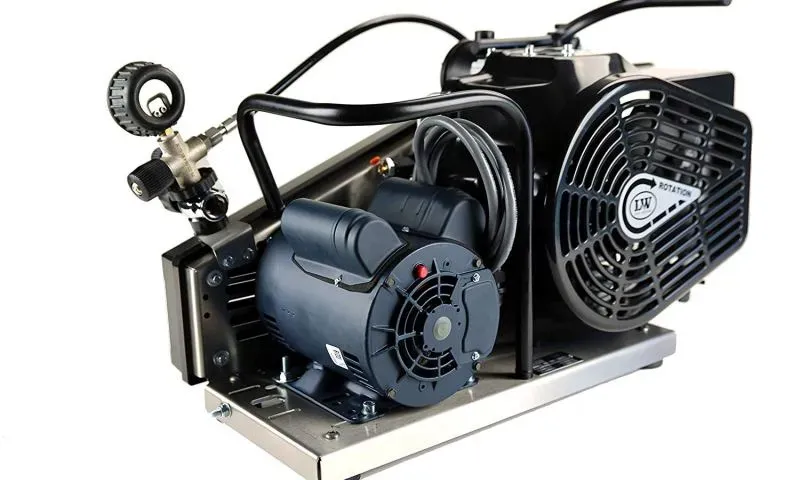
Portable scuba compressors are compact and lightweight versions of traditional high pressure compressors, designed for easy transport and use in various diving environments. These compressors are particularly useful for recreational divers who need to refill their tanks on-site or in remote locations. Key features of portable scuba compressors include:
Compact Design: Easy to transport and store, making them ideal for travel.
User-Friendly Operation: Simple controls that allow divers to operate the compressor with minimal training.
Versatile Power Options: Many models can be powered by electricity or gas, providing flexibility in different settings.
When selecting a portable scuba compressor, several features should be considered to ensure optimal performance and reliability. These features include:
Pressure Output: The ability to reach the required pressure levels for scuba tanks, typically around 3000 psi or higher.
Power Source Options: Availability of electric, gas, or battery-powered models to suit various diving conditions.
Transportability: Lightweight construction and compact size for easy transport to dive sites.
Maintenance Practices for High Pressure Compressors
Proper maintenance of high pressure compressors is essential to support their longevity and reliable operation. Regular maintenance practices include:
Routine Inspections: Regular checks for wear and tear, ensuring all components are functioning correctly.
Oil Changes: Frequent oil changes to maintain optimal lubrication and prevent overheating.
Filter Replacements: Regularly replacing air filters to help maintain air quality and prevent contamination.
How to Choose the Right High Pressure Air System for Your Diving Needs?
Choosing the right high pressure air system involves considering several factors, including:
Pressure Levels: Ensure the compressor can meet the pressure requirements of your diving tanks.
Air Quality Standards: Verify that the compressor is designed to support compliance with breathing air quality standards, such as CGA Grade E.
Operational Environment: Consider the conditions in which the compressor will be used, including portability and power source.
Recent advancements in compressor technology have significantly improved the efficiency and safety of high pressure compressors. Innovations include:
Smart Technology Integration: Modern compressors often feature digital controls and monitoring systems that enhance user experience and support adherence to safety protocols.
Energy Efficiency Improvements: New designs focus on reducing energy consumption while maintaining high performance levels.
Indeed, the evolution of diving technology, including compressors, is deeply intertwined with the overall progress in recreational scuba diving.
Technological Advancements in Recreational Scuba Diving
This chapter primarily focuses on examining the intricate relationship between technology and recreational scuba diving. The analysis centers on significant technological advancements that have facilitated underwater respiration and improved the ease of diving. The gradual development of recreational scuba diving is heavily dependent on technological progress, which in turn supports safer and more efficient diving practices.
Diving technology at the recreational world, M Tzanakis, 2024
What Are the Types and Features of High Pressure Diving Compressors?
High pressure diving compressors can be categorized into several types, each with unique features:
Portable Compressors: Designed for easy transport, ideal for recreational divers.
Stationary Compressors: Typically used in commercial settings, offering higher output and durability.
Industrial Fill-Station Compressors: Used for large-scale operations, capable of filling multiple tanks simultaneously.
For a more detailed breakdown of each system type and its applications, see our guide on types of diving compressors.
How Do Stationary and Portable Dive Compressors Compare?
When comparing stationary and portable dive compressors, several factors come into play:
Advantages of Each Type: Portable compressors offer flexibility and ease of transport, while stationary compressors provide higher output and durability.
Use Cases for Each Type: Portable compressors are ideal for recreational diving, while stationary compressors are better suited for commercial operations.
What Are the Key Performance Specifications of Diving Compressors?
Key performance specifications for diving compressors include:
Pressure Ratings: The maximum pressure the compressor can achieve, typically around 3000 psi or higher.
Flow Rates: The volume of air the compressor can deliver per minute, affecting how quickly tanks can be filled.
Efficiency Metrics: Energy consumption relative to output, indicating the compressor’s operational cost-effectiveness.
Which Breathing Air Quality and Safety Standards Apply to Diving Compressors?
Diving compressors must be designed to support compliance with strict breathing air quality and safety standards to help ensure diver safety. Key standards include:
CGA Grade E Standards: Specifies the acceptable levels of contaminants in breathing air, including oil, carbon dioxide, and others.
EN 12021 Compliance: European standard for breathing air quality, ensuring safety for divers.
What Are the Regulatory Requirements for Breathing Air Compressors?
Regulatory requirements for breathing air compressors focus on ensuring air quality and safety. These include:
Air Quality Standards: Compliance with established standards to help provide safe breathing air for divers.
Safety Standards: Regulations governing the design and operation of compressors to prevent accidents and ensure reliability.
How Do Compressors Support Compliance with Air Purity and Diver Safety?
Compressors contribute to maintaining air purity and diver safety through various mechanisms:
Testing Methods: Regular testing of air quality to verify compliance with safety standards.
Safety Protocols: Implementation of safety measures to prevent contamination and ensure reliable operation.
Ensuring the highest air quality is paramount for diver safety, leading to continuous efforts in monitoring and verification.
Real-Time Air Quality Monitoring for Safe Diving Compressors
The U.S. Navy is interested in having a real-time online air quality monitor to help ensure that compressors deliver safe diving air. With the help of the manufacturer, Navy Experimental Diving Unit has developed and extensively tested an online air quality monitor Anagas Diveair2, model DV 2.0, Geotechnical Instruments, Inc. Leamington Spa, UK for compressors supplying diving air for U.S. Navy operations. This development reflects the importance of integrating advanced monitoring technologies to uphold air quality standards in critical diving applications.
Development and Evaluation of an Online Air Quality Monitor (Diveair2) for Diving Compressors, 2009
What Are the Best Practices for Diving Air Compressor Maintenance and Troubleshooting?
To maintain diving air compressors effectively, consider the following best practices:
Common Issues: Be aware of potential problems such as leaks or pressure loss.
Troubleshooting Steps: Follow systematic troubleshooting procedures to identify and resolve issues promptly.
Effective maintenance practices are crucial for supporting the longevity and optimal performance of high-pressure air compressors. Research in this area validates the importance of condition monitoring and maintenance engineering to maximize availability and quality.
High Pressure Air Compressor Maintenance & Performance
The study carried on two high pressure air compressor manufacturing units addressed three aspects namely availability, performance, and quality which quantify overall equipment effectiveness (OEE). This research underscores the value of applied modern condition monitoring and best maintenance engineering practices in reciprocating gas compression plants.
A review of applied modern condition monitoring and best maintenance engineering practices in reciprocating gas compression plants, MHM Faris, 2019
How Should Portable Scuba Compressors Be Maintained for Reliability?
Maintaining portable scuba compressors involves:
Regular Inspections: Conducting routine checks to identify wear and tear.
Oil Changes: Ensuring proper lubrication to prevent overheating and mechanical failure.
What Are Common Issues and How Are They Resolved?
Common issues with compressors include:
Leak Detection: Identifying and repairing leaks to maintain pressure.
Pressure Loss: Troubleshooting pressure loss through systematic checks of components.
How Do LW Americas’ Portable Dive Compressors Meet Operational Requirements?
LW Americas offers portable dive compressors designed to meet the operational requirements of divers by focusing on key industry-relevant features. Their compressors emphasize portability, robust filtration performance to support air quality standards, and reliable power options suitable for both recreational and professional use. This alignment with recognized air quality and safety standards helps ensure that their equipment supports safe diving operations in diverse environments.
What Are the Latest Innovations in Portable Dive Compressor Technology?
Recent innovations in portable dive compressor technology focus on enhancing performance and user experience. These include:
Filtration Advancements: Improved filtration systems that help ensure cleaner air supply.
Noise Reduction Technologies: Designs that minimize operational noise, enhancing user comfort.
How Are Advances in Filtration and Noise Reduction Improving Diving Compressors?
Advancements in filtration and noise reduction are crucial for improving the performance of diving compressors. Enhanced filtration systems help ensure that the air supplied is free from contaminants, while noise reduction technologies make compressors more user-friendly and suitable for a wider range of diving environments.
What Are the Emerging Regulatory and Certification Developments?
Emerging regulatory and certification developments focus on improving safety and air quality standards for diving compressors. Staying informed about these changes is essential for manufacturers and users alike to ensure compliance and safety in diving operations.
Dive Compressor Rental vs Purchase: Operational Considerations for High-Pressure Breathing Air Systems
High-pressure dive compressors are central to safe, compliant breathing air supply, and choosing between renting and purchasing has direct safety, operational and financial consequences for dive operations.
This article explains the compressor purchase decision and dive compressor rental trade-offs so operators can compare total cost of ownership, uptime requirements, air-quality obligations (often guided by standards like EN12021), and logistical constraints that shape optimal choices. The decision is primarily framed by usage frequency, service access, maintenance liability, and capital availability.
Readers will learn what high-pressure compressors do, how continuous-duty designs affect throughput and maintenance, the operational components that drive the decision between rental and ownership, and practical decision criteria for occasional, seasonal, and heavy commercial use.
Throughout the guide we use semantic comparisons—types, parts, and related entities like purification modules and storage banks—to clarify trade-offs and to help you calculate ROI.
The article concludes with a pragmatic decision framework and options for evaluation or an on-site systems assessment by LW Americas as a specialized supplier of continuous-duty compressors, NitroxMaker™ and YachtPro™ systems to support implementation and long-term service planning.
What Are High-Pressure Dive Compressors and Their Role in Breathing Air Supply?
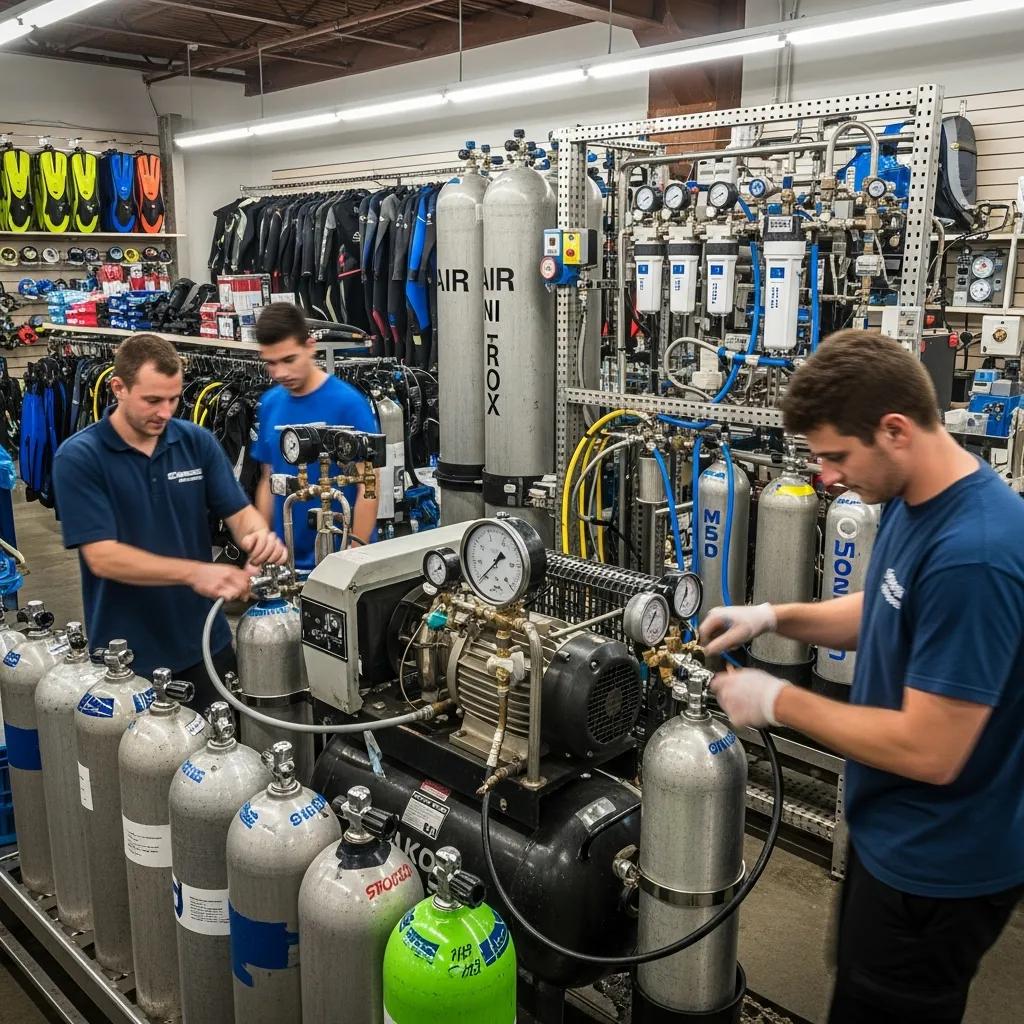
High-pressure dive compressors are gas compression equipment that pressurize and deliver breathing air into storage cylinders or filling manifolds at the pressures required for scuba and commercial diving.
They function by increasing gas pressure through staged compression, removing contaminants with purification modules, and enabling safe, standards-compliant fills that often meet breathing air quality standards like EN12021.
These compressors appear as portable dive air supply units for field fills or as stationary high-pressure compressors integrated into dive shops, maritime vessels and emergency-response systems.
Understanding the difference between portable and stationary systems clarifies rental versus purchase decisions and sets the stage for assessing throughput and quality controls.
Operators commonly select among several compressor families based on use case and site constraints:
Portable dive air supply units for remote fills and mobile operations.
Mobile scuba tank fill compressors with skids and quick-connect manifolds.
Stationary high-pressure compressors for dive shops or onboard vessels.
These hyponyms map directly to operational needs: portability prioritizes transportability and quick hook-up, while stationary units optimize continuous-duty operation and integration with storage cylinders. The next subsection explains how continuous-duty compressors specifically change operational outcomes for high-frequency fills.
How Do Continuous-Duty Compressors Enhance Dive Operations?
Continuous-duty compressors are engineered to run for extended periods without the heat and wear limitations common to intermittent designs, and that enables higher throughput with lower downtime.
Mechanically, continuous-duty designs use lower RPMs and robust components—such as one-piece cast compressor blocks—which reduce vibration, reduce wear on seals, and extend service intervals compared with higher-RPM intermittent units.
The operational result is predictable delivery rates during peak fill days, more consistent cylinder turnaround, and simplified scheduling for dive shops and maritime operations where uptime is mission-critical.
In practice, continuous-duty compressors pair well with storage banks and filling manifolds to smooth peak demand, which also reduces labor pressure on staff and optimizes operational efficiency compared with cycling smaller portable units.
Because continuous-duty capability changes maintenance cadence, the following section addresses why breathing air quality and purification are equally important for safe compressor operation.
Why Is Breathing Air Quality Critical for Dive Compressor Use?
Breathing air quality matters because contaminants—oil, carbon monoxide (CO), moisture, and particulates—create acute and chronic hazards when compressed and delivered as breathing gas; industry standards, such as EN12021, often set limits for oxygen, CO, CO₂ and contaminants to assure safety.
Effective purification includes pre-filtration, coalescing filters, adsorption beds and regular testing; these meronyms—air purification module, storage cylinders, filling manifold—form the functional chain that keeps breathing air within specification.
Operators must schedule filter changes, perform CO and moisture testing at prescribed intervals, and maintain documentation to demonstrate compliance, especially in commercial or regulated applications.
Good practices include using oil-free compression where feasible, monitoring compressor operating parameters, and pairing compressors with NitroxMaker™ or similar systems when gas blending is required for enriched-air applications.
What Are the Operational Differences Between Renting and Purchasing Dive Compressors?
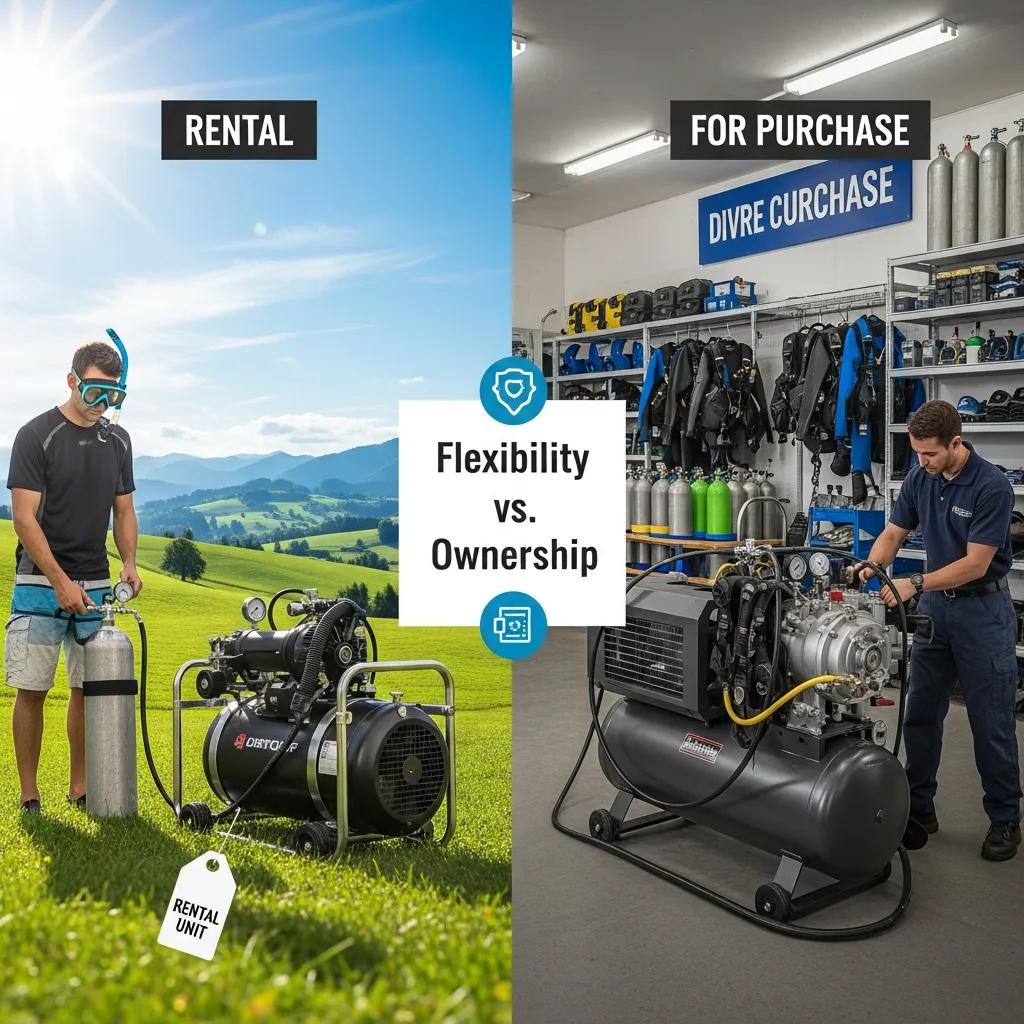
A clear comparison separates upfront capital, recurring operating expenses, and long-term operational outcomes—renting typically requires less initial capital but may involve different operational expenses, while purchasing concentrates capital outlay and offers distinct long-term operational characteristics.
When buying, expect a significant initial investment and ongoing costs for energy, filter media, scheduled maintenance, and parts; when renting, expect periodic rates plus transport and potential surcharges for specific needs.
Depreciation and potential long-term value shape total cost of ownership, and lease financing can spread capital but adds financing costs that affect the overall financial picture.
To support decision-making, the following table contrasts Rent / Buy / Lease across core financial and operational attributes.
Intro: The table below compares rental, purchase, and lease options across typical financial and operational attributes so decision-makers can weigh trade-offs objectively, focusing on capital availability, maintenance liability, service access, and usage frequency.
Option
Upfront cost
Periodic operational expense
Maintenance
Availability
Customization
Rent
Lower initial outlay
Periodic operational expense
Provider responsibility or limited
Variable during peak demand
Limited to what provider supplies
Buy
Significant capital investment
Owner-managed operational expenses
Owner-managed; scheduled
Predictable and immediate
High; system can be customized
Lease
Managed initial outlay
Fixed payments
Often serviced per agreement
Contracted availability
Moderate; subject to contract
How Do Upfront and Long-Term Operational Characteristics Compare for Rental vs Purchase?
Evaluating the long-term financial implications requires inputs such as initial investment, expected annual hours or fills, operational expenses, and the value of consistent service access. A comprehensive model compares the total operational expenditure of ownership against the periodic costs of rental, considering factors like utilization and service requirements.
For example, an operation with high annual fill volumes and mission-critical uptime may find ownership more advantageous over time due to consistent service access and predictable operational characteristics, which can outweigh the initial capital investment.
Key KPIs to track include operational efficiency per fill, cost per operating hour, downtime cost per hour, and annual maintenance spend, which together provide the datapoints for an ROI calculation.
What Hidden and Operational Expenses Should Be Considered?
Beyond initial investment and periodic rates, hidden costs frequently alter the economics: transport and logistics for mobile fills, insurance differentials between rented and owned equipment, training and certification for operators, and regulatory testing or documentation.
Downtime after equipment failure has opportunity cost measured in missed fills and customer satisfaction impact; rental units require careful verification of maintenance history to mitigate this risk.
Contractual protections—service-level agreements, spare-parts guarantees, and clear liability clauses—reduce hidden exposure but may add to rental cost.
A focused checklist helps capture these line items when modeling total cost:
Transport and logistics expenses for moving compressors to and from sites.
Insurance, liability coverage differences, and rental deposit risks.
Training and certification costs for operators and maintenance staff.
Unexpected downtime costs and spare-parts availability.
Accounting for these items leads to a more accurate lifecycle model and prepares operators to negotiate rental terms or service contracts, which is the subject of the next section on operational pros and cons.
What Are the Operational Advantages and Disadvantages of Renting Dive Compressors?
Renting offers operational flexibility, fast access to portable diving air supply when needed, and avoids capital commitments, making it a good fit for short-term projects and trialing equipment types.
The downsides include potential availability constraints during busy seasons, and the need for operators to conduct due diligence to verify maintenance histories and confirm air-quality controls on each rental unit before accepting it into service. The responsibility for ensuring compliance with breathing air standards, such as EN12021, ultimately rests with the operator, regardless of ownership.
Operators evaluating rental providers should vet maintenance records, purification modules installed, and confirm whether the unit is capable of meeting relevant breathing air standards, such as EN12021. Negotiating service-level guarantees can help reduce availability and quality risks.
When Is Renting a Portable Dive Air Compressor Most Beneficial?
Renting is most beneficial for infrequent fills, temporary events, seasonal peaks, or pilot testing where capital purchase is not justified by projected utilization.
For example, support for a multi-day training event, a one-off commercial inspection, or emergency response deployments commonly favors rental because it provides immediate capacity with minimal logistics.
A rental-selection checklist should confirm compressor flow rate, pressure rating, installed purification modules, noise levels, and available service support to ensure compatibility with mission requirements.
What Are the Limitations and Risks of Rental Equipment?
Common rental limitations include the need to verify maintenance histories to assess failure risk, possible incompatibility of fittings and accessories, and the operator’s responsibility to ensure air quality if purification modules are not properly maintained.
Liability and insurance coverage must be clarified in rental agreements to determine who bears responsibility for damage or contamination.
Best practices include pre-delivery inspection, documentation of CO and moisture readings upon receipt, and a written SLA that specifies response times for breakdowns.
Mitigating these risks often requires a short service-level agreement and an inspection protocol, which operators can use while comparing the long-term benefits of ownership covered in the next section.
What Are the Benefits and Challenges of Purchasing High-Pressure Dive Compressors?
Purchasing delivers predictable availability, the ability to customize systems for specific missions, and potential long-term operational efficiencies when utilization is high and maintenance is managed effectively.
Ownership enables integration with purification, storage, and filling manifolds and supports blending systems like NitroxMaker™ where enriched-air capability is required.
Challenges include upfront capital, space and storage requirements, the need for trained maintenance personnel, and planning for scheduled service intervals and spare-part inventory to avoid extended downtime.
To clarify ownership decisions across compressor classes, the table below compares typical compressor model types and attributes relevant to ownership.
Compressor Model Type
Flow rate
Pressure rating
Power source
Continuous-duty capability
Portable skid-mounted
Low–moderate
Up to 300 bar typical
Petrol/genset or electric
Limited; often intermittent
Mobile truck/van unit
Moderate–high
Up to 300 bar typical
Vehicle or generator
Varies by design
Stationary shop compressor
High
Up to 300+ bar
Industrial electric
Designed for continuous-duty
How Does Ownership Improve Reliability and Customization?
Ownership improves reliability by enabling scheduled preventive maintenance, consistent use of OEM parts, and controlled operating environments that limit contamination risk; this yields fewer unexpected outages and enhanced reliability.
Customization options include tailored purification trains, storage banks sized for peak demand, and integration with YachtPro™ packages for maritime installations.
These custom integrations reduce operator labor during fills and can improve throughput and safety, which collectively contribute to enhanced operational efficiency over the equipment lifecycle.
What Maintenance and Storage Responsibilities Come with Ownership?
Owners are responsible for routine tasks—filter replacement, oil changes for non oil-free designs, belt inspections, pressure-testing storage cylinders, and scheduled CO/moisture testing—to keep air quality within applicable standards, such as EN12021, and maintain warranty conditions.
Storage considerations include secure mounting, proper ventilation, and environmental controls to prevent corrosion or condensation that shorten component life.
Owners must budget for spare filters, common wear parts, and occasional overhauls; outsourcing maintenance to qualified service providers is an alternative that trades labor time for predictable service costs.
A strategic maintenance schedule and documented storage plan reduce long-term costs and guide the purchase-versus-rent decision that follows, where supplier support becomes a differentiator.
How Does LW Americas Provide Superior Dive Compressor Solutions?
LW Americas is a specialized provider of high-pressure compressor and gas systems in North and South America and acts as the exclusive regional distributor for L&W Compressors of Germany, supplying continuous-duty scuba tank fill compressors, NitroxMaker™ systems, YachtPro™ systems, purification, storage, filling solutions, and custom dive systems.
The company’s value proposition centers on robust engineering—such as one-piece cast blocks and lower RPM continuous-duty designs—comprehensive system configurations that integrate purification and storage, and responsive North American parts and service support.
What Unique Features Do LW Americas’ Continuous-Duty Compressors Offer?
LW Americas’ continuous-duty compressors emphasize design features that reduce wear and downtime: robust one-piece cast compressor blocks that lower vibration, lower RPM operation that increases seal life, and compatibility with modular purification and storage banks for compliance with relevant breathing air standards, such as EN12021.
The operational benefits include sustained throughput during peak demand, quieter operation that eases staff exposure to noise, and reduced service frequency, which can contribute to reduced lifecycle maintenance.
These feature-to-benefit relationships make continuous-duty compressors particularly well-suited to busy dive shops, commercial teams, and marine installations where predictable performance and integration with NitroxMaker™ or YachtPro™ systems matter.
How Do Custom Solutions and Support Enhance Dive Compressor Investment?
Custom engineering allows LW Americas to tailor compressor skids, portable packages, and yacht installations to site constraints, integrating purification modules, storage cylinders and filling manifolds to meet specific throughput and quality needs.
Responsive parts availability and authorized service pathways in North America reduce downtime and simplify lifecycle management, while initial site surveys and operator training help ensure correct installation and safe operation.
Together, system customization and local support lower the operational risk of ownership and improve ROI by keeping equipment online and compliant with breathing air standards.
How Can Businesses Decide Between Renting and Purchasing Dive Compressors?
Deciding between renting and purchasing requires a structured checklist that weighs usage frequency, mission-critical uptime, budget constraints, storage, regulatory obligations, and vendor support for parts and service.
A practical approach uses a short scoring rubric: estimate annual fills or hours, score the criticality of uninterrupted availability, assign a budgetary tolerance for capital expenditure, and rate access to space and trained staff for maintenance.
This produces an initial recommendation—rent for low scores and purchase for high utilization and high-criticality operations—and helps prioritize next steps like trial rentals, pilot purchases, or requesting a site evaluation by a supplier.
The decision framework below provides a compact, action-oriented checklist to guide immediate choices.
Estimate Annual Usage: Quantify expected fills or operating hours for the next 3–5 years.
Assess Uptime Criticality: Rate how damaging downtime is to operations and reputation.
Evaluate Capital vs Operating Budget: Determine available capital and appetite for financing.
Check Space and Maintenance Capacity: Confirm storage, ventilation, and trained staff availability.
This checklist prepares operators to run an ROI calculation, which is detailed in the final subsection along with a recommendation to involve a systems partner for evaluation when appropriate.
Intro: The table below aligns common use cases with recommended approaches to clarify which option tends to be most appropriate, considering usage frequency, service access, maintenance liability, and capital availability.
Use Case
Estimated annual hours
Recommended approach
Key considerations
Occasional / hobby fills
<200 hrs/year
Rent
Minimize capital; verify air quality on delivery
Seasonal ops
200–800 hrs/year
Rent or lease pilot
Consider lease-to-own if usage grows
Heavy commercial
>800 hrs/year
Purchase
Favor continuous-duty, plan spare parts and training
Emergency response
Variable, mission-critical
Purchase + rental backup
Prioritize uptime, rapid deployable portable units
Summary: Mapping use cases to approach helps prioritize procurement and ensures operators align investment with expected utilization and risk tolerance.
What Factors Should Influence the Rental vs Purchase Decision?
Primary factors include operational cadence (annual fills), criticality of uptime, available budget or financing options, storage and maintenance capacity, regulatory obligations for testing and documentation, and supplier support for parts and service.
Weight each factor according to organizational priorities—safety and compliance should carry high weight for commercial operators—then compute a simple score that points toward renting, leasing, or purchasing.
This rubric reduces ambiguity and focuses stakeholder discussions on measurable inputs like operational efficiency per fill, expected downtime impact, and vendor response times.
How to Calculate ROI and Long-Term Value for Dive Compressor Investments?
Calculate ROI by estimating total lifecycle costs for purchase (capital + cumulative operating and maintenance costs over a multi-year horizon) and comparing them to cumulative rental costs for the same period; analyze total costs relative to expected fills to understand the long-term value and identify when ownership becomes more operationally efficient than renting.
Key inputs include initial investment, potential long-term value, annual maintenance, energy cost, periodic rental rates, and downtime cost per hour.
Track KPIs post-purchase—operational efficiency per fill, annual service spend, and unplanned downtime hours—to validate the decision and refine future procurement choices.
Practical next steps include running a 3–5 year modeled comparison and contacting a systems partner for a site survey or tailored quote; for operators needing integrated continuous-duty systems and North American support, LW Americas can provide system proposals, customization, and service planning to support accurate ROI modeling.
I am purchasing a Lagoon 42 Catamaran and want to install a Scuba compressor. I have a FISCHER PANDA FP Marine Genset AC – PMS08 Mini-DP 120V already installed on the boat.
The boat will be delivered to CT and then in November, I plan to sail it down to the Caribbean. I was wondering if you guys can help with this project, or at least advise on which compressor to purchase and where to install and best design for the system.
LW AMERICAS RECOMMENDATION
YachtPro™ Essential (YP100)
Our Yachtpro™ Essential (YP100SF-D) compressor system is preferred by motor cat and sail cat owners everywhere. Here is a downloadable page with details, features, specifications and drawings to give you some reference.
The YP100 is completely automated. You only need to connect your tanks, open the valves and turn the system on. You are then free to attend to other duties while your tanks fill to the programmed pressure. The compressor automatically stops when your tanks are full.
The system comes with a Variable Frequency Drive (VFD) to alleviate the tremendous inrush draw typically experienced when starting an electric motor. You can use the Yacht Pro Essential on much smaller generator sets than other compressors of this size; very important for boaters.
The entire compressor system is pre-mounted on a base of King Starboard to make installation as easy as possible. Just place on a suitable surface. screw the base panel down, hang the VFD control box, hook up your electric service – and you are ready to go!
We supply everything you need to install and run your compressor system.
NOTE: At this time, the standard configuration of the YP100 is compatible with 200-240v, 50/60Hz 1ph or 3ph electric service. Higher voltage configurations are available for an additional charge.
Things to consider:
Does your generator have a 230v outlet you can utilize for the compressor?
How many divers will the system need to support? Making how many dives per day?
We can modify the compressor output to best fit your boat plans. I’ve attached a page illustrating just a few of the options we use on a regular basis. Let us know if you have a particular need or design requirement. We are happy to help.