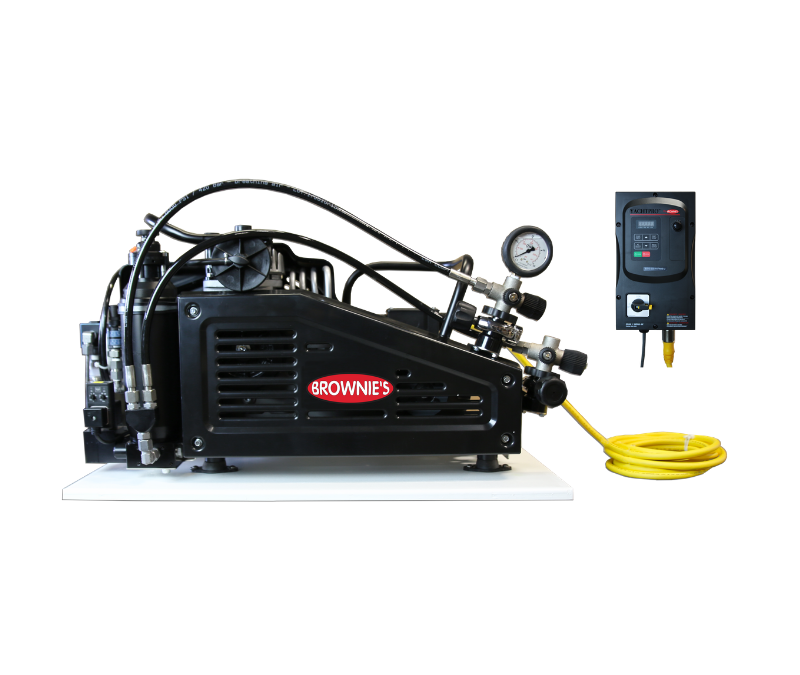
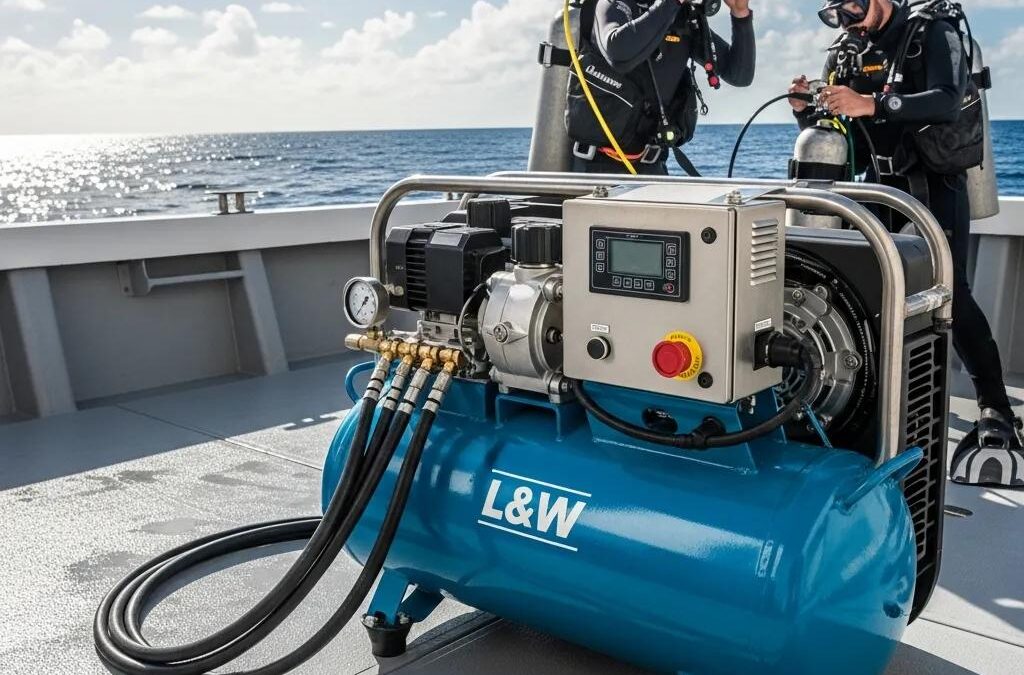
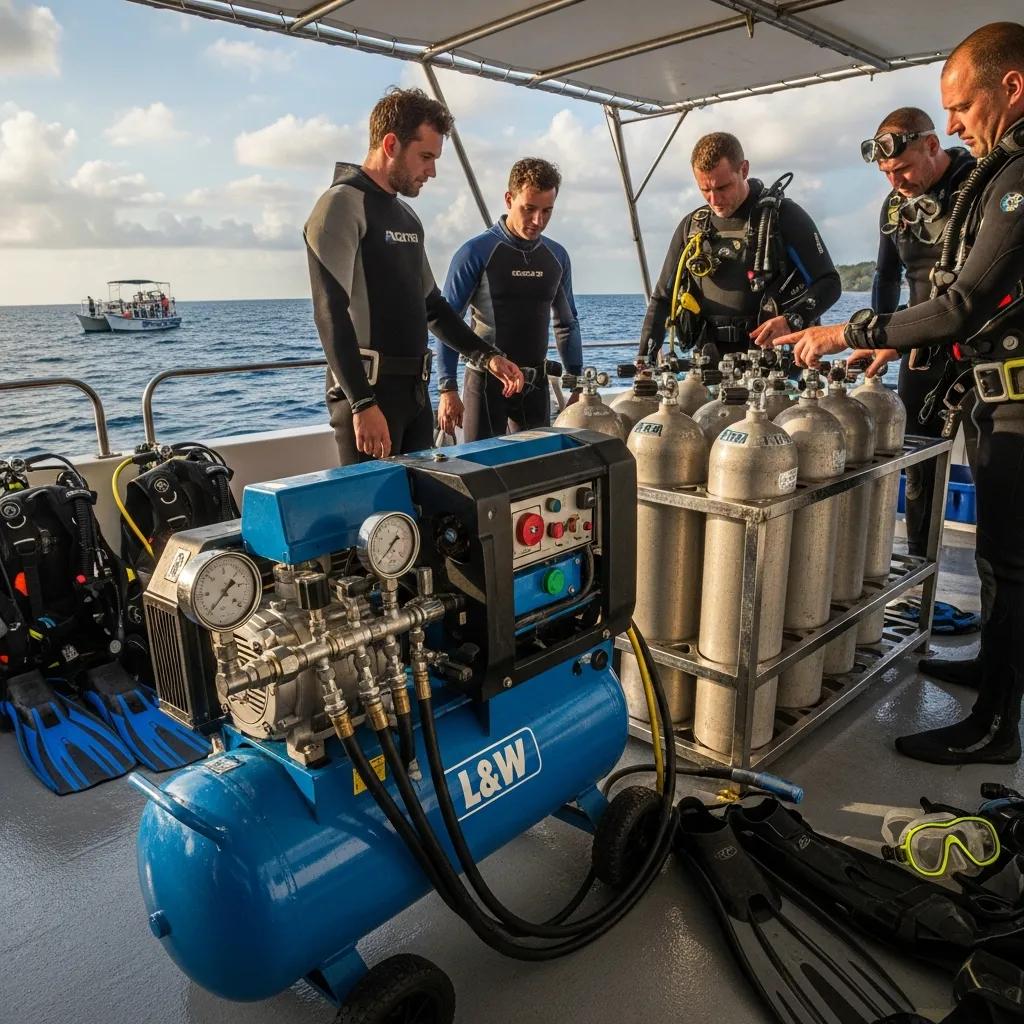
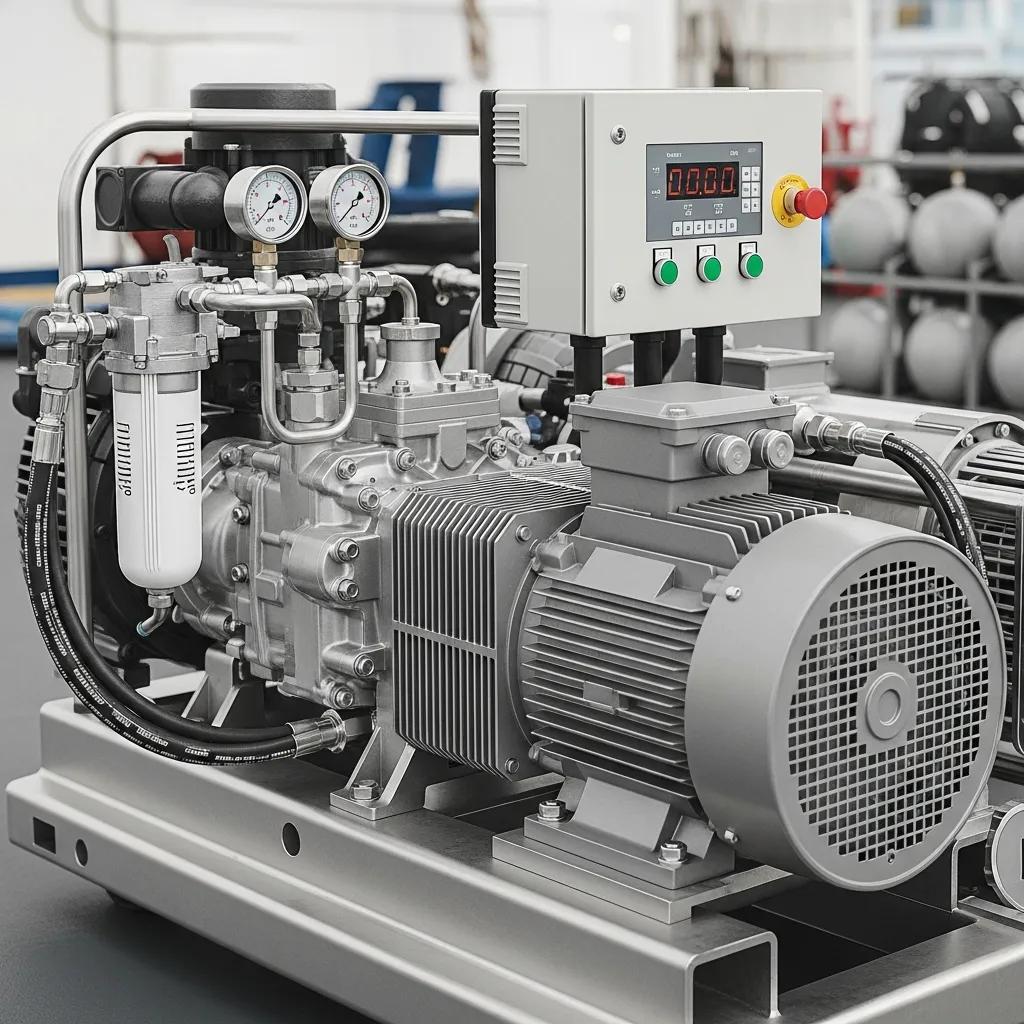
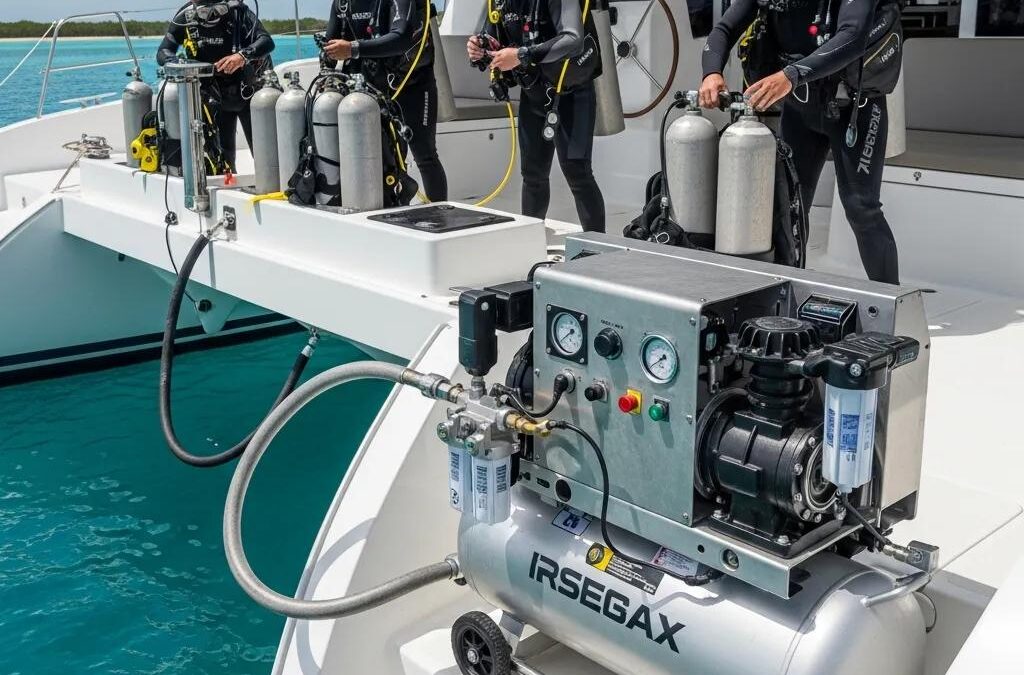
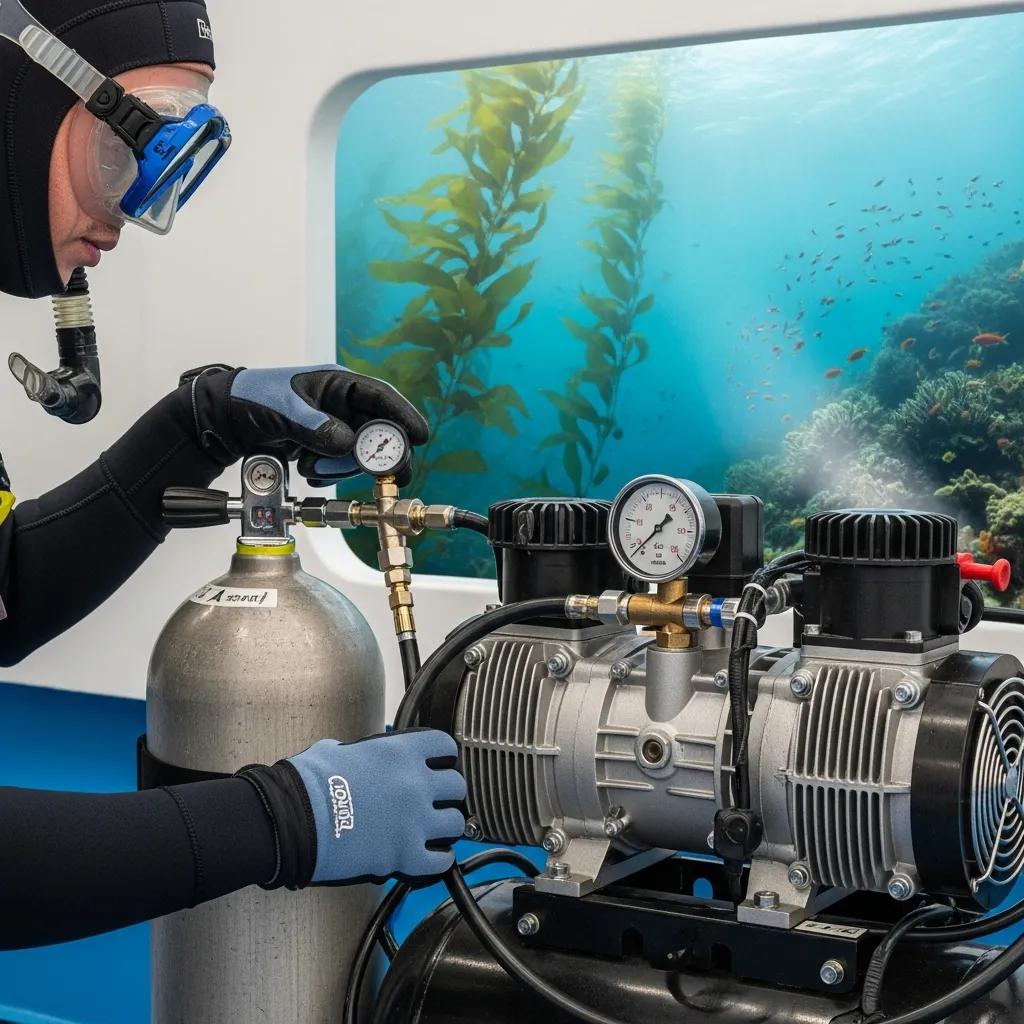
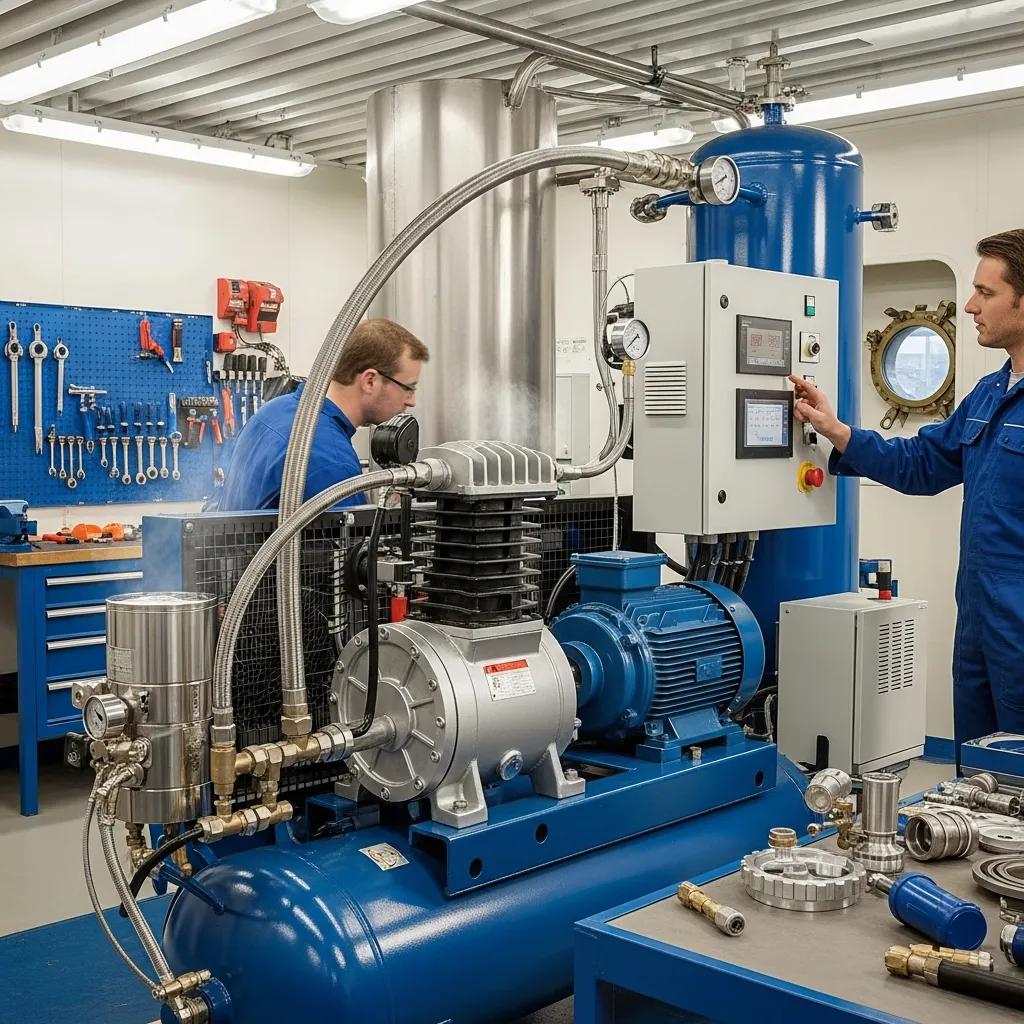
Compact onboard dive compressors have transformed the way recreational divers access breathing air while at sea. These essential tools provide the convenience of filling tanks directly aboard the vessel, eliminating dependence on shore-based filling stations. For private boaters and yachting enthusiasts, a purpose-built marine compressor means greater operational freedom, reduced logistical overhead, and — critically — reliable access to clean, safe breathing air regardless of location. LW Americas, the exclusive distributor of L&W high-pressure compressors in North and South America, supplies German-engineered systems specifically designed to meet the demands of demanding marine environments. This article explores the functionality, key features, and benefits of compact onboard dive compressors, examines space-saving design, marine-grade durability, breathing air quality standards, and safety requirements, and provides practical guidance for selecting the right model.
Functionality
Onboard dive compressors operate through a multi-stage compression mechanism that efficiently converts ambient air into high-pressure breathing air for diving tanks. Each compression stage progressively increases air pressure while integrated filtration removes moisture, hydrocarbons, and particulates — critical steps for delivering air that meets recognized breathing air quality standards such as CGA Grade E and EN 12021. Select L&W models are engineered for continuous-duty operation, sustaining extended fill sessions without mandatory cool-down periods — a meaningful advantage during multi-diver expeditions or back-to-back dive days. This on-site fill capability is particularly valuable on long passages, remote dive sites, and destinations where commercial air supplies are unavailable.
Key Features
Compact onboard dive compressors offer several key features that make them well-suited to boating and yachting applications:
Portability and Weight: Designed for easy installation aboard vessels of varying size, these compressors are compact and lightweight, fitting into dedicated engine-room compartments or storage spaces without compromising deck operations.
Automation and User-Friendly Operation: L&W models such as the YachtPro™ Essential (YP100) are fully automated, filling tanks to a programmed pressure and shutting off without manual intervention — a practical advantage when crew attention is divided between diving and vessel management.
Variable Frequency Drive (VFD) Technology: Select L&W compressors incorporate VFD, which manages motor inrush current at startup, reduces energy consumption, and extends component service life.
Advanced Monitoring and Telemetry: Onboard monitoring systems enable proactive detection of performance issues, supporting preventative maintenance and reducing unplanned downtime.
These features reflect the engineering precision that distinguishes purpose-built marine compressors from general-purpose alternatives.
Benefits for Recreational Divers
The use of onboard dive compressors delivers measurable operational and safety benefits for recreational divers:
Independence from Filling Stations: Divers are no longer constrained by the proximity of shore-based filling stations, providing the freedom to explore remote reefs, offshore wrecks, and destinations far from commercial air supplies.
Assured Breathing Air Quality: A well-maintained onboard compressor with a properly serviced filtration system delivers breathing air under the operator’s direct control — eliminating uncertainty about the quality of air sourced from third-party fill stations. L&W compressors are engineered to support compliance with CGA Grade E and EN 12021 breathing air standards when maintained per manufacturer protocols.
Long-Term Cost-Effectiveness: Ownership reduces the cumulative cost of repeated fill-station visits, particularly for vessel operators who dive frequently or support multiple divers.
Increased Diving Efficiency: On-demand tank filling eliminates transit time back to shore, maximizes bottom time, and allows dive schedules to be dictated by conditions rather than logistics.
These advantages contribute significantly to a more productive and safer diving experience, allowing operators to focus resources on the water rather than on supply chain management.
Use Cases
Onboard dive compressors are versatile and serve a range of operational scenarios:
Private Yachts and Charter Vessels: Yacht operators integrating an L&W system gain a fully self-sufficient air supply capable of supporting multiple divers across consecutive dive days — without scheduling around shore-based services.
Extended Offshore Expeditions: For multi-day passages or live-aboard itineraries, an onboard compressor ensures ample breathing air is available regardless of distance from port.
Remote and Destination Diving: At locations far from commercial filling infrastructure — remote Pacific atolls, Caribbean anchorages, or offshore wrecks — onboard compressors open dive sites that would otherwise be inaccessible.
Dive Training Operations: Instructors and dive schools operating from private vessels benefit from on-demand fills that eliminate logistical delays and allow training schedules to run without interruption.
These scenarios reflect the operational demands that L&W compressors are specifically engineered to address.
Space-Saving Benefits
The compact design of onboard dive compressors not only enhances portability but also optimizes storage utilization across a range of vessel types. Key space-saving considerations include:
Engine-Room and Below-Deck Installation: L&W marine compressors are engineered with a compact footprint that accommodates installation in engine rooms, lazarette compartments, or dedicated storage areas, preserving deck and cabin space.
Scalable Configurations: From single-tank recreational units to higher-output systems supporting a full dive crew, L&W offers configurations that match vessel size and operational requirements without over-specifying equipment.
Straightforward Integration: Many L&W systems are designed for clean integration with existing onboard electrical and air systems, reducing installation complexity and setup time.
Proper placement and integration planning — areas where LW Americas provides direct technical support — ensure that the compressor operates efficiently without encroaching on critical vessel spaces.
Marine-Grade Durability
Marine-grade durability is a non-negotiable requirement for equipment operating in the saltwater environment. L&W compressors are constructed to address the specific stresses of offshore and coastal marine service:
Corrosion-Resistant Construction: Critical components are manufactured from materials selected for resistance to saltwater, humidity, and the accelerated oxidation inherent to marine atmospheres, ensuring sustained performance and an extended service life.
Robust Mechanical Design: German engineering principles prioritize structural integrity and component longevity, translating to dependable performance across multi-day dive itineraries without degradation.
Telemetry-Ready Monitoring: Advanced monitoring capabilities enable early detection of performance anomalies, supporting proactive maintenance that prevents unplanned failures at sea.
OEM Parts and Preventative Maintenance Support: A comprehensive inventory of OEM spare parts and structured preventative maintenance programs ensures compressors remain in specification throughout their operational life.
This combination of robust construction and manufacturer-backed support means operators can rely on their L&W system to perform when and where it matters most.
Safety Standards
Breathing air quality is the most consequential safety consideration in any dive compressor system. Onboard operations must adhere to recognized standards and maintain the filtration systems that make compliance achievable:
CGA Grade E and EN 12021 Breathing Air Standards: These standards define acceptable concentration limits for contaminants including oil vapor, carbon monoxide, carbon dioxide, moisture, and particulates — and represent the baseline compliance target for any breathing air application.
Multi-Stage Filtration Systems: Effective filtration is the mechanism through which breathing air quality is achieved. L&W systems incorporate multi-stage filtration designed to control total hydrocarbons, moisture, and particulate content — the primary contaminant categories that pose health risks to divers.
Automated Safety and Over-Pressure Protection: Integrated safety mechanisms prevent over-pressurization and detect anomalous operating conditions, with automated shutdown protecting both the equipment and the diver.
Scheduled Maintenance and Filter Replacement Protocols: Filtration media has a defined service life, and regular replacement is essential to sustaining air quality compliance throughout the compressor’s operational life — not merely at commissioning.
Adherence to these standards is fundamental to safe diving operations aboard any vessel.
How to Choose the Right Model
Selecting the correct onboard dive compressor requires a systematic evaluation of operational requirements rather than a comparison of specifications in isolation. The following practical considerations should guide the selection process:
Number of Divers Onboard: The number of divers simultaneously supported determines the required delivery capacity. A single-diver recreational setup has fundamentally different fill-rate requirements than a yacht supporting four to six divers per day. Undersizing the compressor relative to diver load results in extended fill times and, in continuous-duty applications, potential thermal stress on the unit.
Expected Fills Per Day: Calculate the total volume of air required across a typical diving day — accounting for tank size, fill pressure (e.g., 3,000 psi / 207 bar or 3,500 psi / 241 bar), and number of fills per diver. This figure drives the required flow rate (cubic feet per minute or liters per minute) and determines whether a standard-duty or continuous-duty model is appropriate.
Available Power Supply: Compatibility with the vessel’s power infrastructure is a critical practical constraint. L&W compressors are available in configurations suited to 200–240V, 50/60Hz electrical supplies, including systems compatible with onboard generator sets common to larger yachts. Power source availability directly affects which models are operationally feasible.
Space and Installation Constraints: Measure available installation space before specifying a unit. Consider ventilation requirements, access for filter and oil servicing, and vibration isolation. LW Americas provides technical support for installation planning to ensure the selected model integrates correctly within the vessel’s layout.
Remote Fill and Cascade Options: For vessels supporting extended expeditions or higher diver volumes, a cascade storage system — in which the compressor charges high-pressure storage cylinders that are then used to fill dive tanks — increases effective fill capacity and reduces direct compressor run time. LW Americas can advise on cascade configurations appropriate to specific operational profiles.
Air Quality Standard Compliance: Confirm that the selected model, when maintained per manufacturer protocols, supports compliance with the applicable breathing air standard (CGA Grade E in North America; EN 12021 in international contexts). This is a non-negotiable criterion for any breathing air application.
Prospective buyers are encouraged to contact LW Americas directly to discuss their specific operational requirements. The team provides expert guidance on model selection, installation planning, and ongoing maintenance support across North and South America.
Integrates with YachtPro™ systems; produces 21–40% nitrox mixtures via membrane technology
Nitrox diving from private or charter vessels
Specific output capacities, duty cycles, and power requirements vary by model. Contact LW Americas for a specification comparison matched to your vessel and diver load.
Conclusion
Owning a compact onboard dive compressor fundamentally changes what is possible from a private vessel. It removes dependence on shore-based filling infrastructure, extends the range of accessible dive sites, supports compliance with recognized breathing air quality standards, and delivers the operational reliability that serious divers and yacht operators require. For those seeking equipment engineered to perform in demanding marine environments, L&W compressors — distributed exclusively across North and South America by LW Americas — represent a proven solution backed by German engineering precision, robust long-service designs, and responsive U.S.-based technical support. To discuss specific vessel requirements, model selection, or installation planning, contact LW Americas at +1 954-462-5571 or info@lwamericas.com.
Ready to Equip Your Vessel?
LW Americas’ team of specialists is available to help identify the right L&W compressor for any vessel type, diver load, or operational profile. Whether the application calls for a purpose-built YachtPro™ marine compressor, a high-output system from the broader L&W Compressors range, or onboard nitrox generation with the NitroxMaker™, LW Americas provides expert guidance on model selection, installation planning, and ongoing maintenance support across North and South America.
Contact LW Americas at +1 954-462-5571 or info@lwamericas.com to discuss specific requirements.
What Makes L&W Compressors Stand Out From Competitors: Key Features and Benefits of L&W Continuous Duty High-Pressure Compressors
L&W Compressors are recognized for their exceptional performance and reliability in high-pressure applications. This article explores the unique features and benefits that set *select L&W continuous-duty compressors* apart from competitors, particularly focusing on their continuous-duty capabilities. Readers will learn about the engineering excellence behind *these specific compressor models*, the advantages of their continuous-duty operation, and how these features translate into real-world benefits for various industries. Many organizations face challenges in maintaining uptime and ensuring consistent performance in demanding environments. L&W’s continuous-duty compressor systems provide a solution through their robust design and advanced technology, making them a preferred choice for critical applications. We will delve into the engineering principles, operational advantages, and industry applications that highlight the superiority of L&W Compressors.
How Does German Engineering Define L&W Compressor Quality and Reliability?
German engineering defines L&W compressor quality and reliability through several key factors:
Continuous-Duty Design: *Select L&W compressor models* are engineered for continuous operation without frequent cool-down periods, utilizing robust cast blocks and thermal management strategies to enhance durability and uptime.
Monitoring and Telemetry: The integration of telemetry allows operators to monitor performance metrics such as flow rate and motor current, enabling proactive maintenance and reducing the risk of failure.
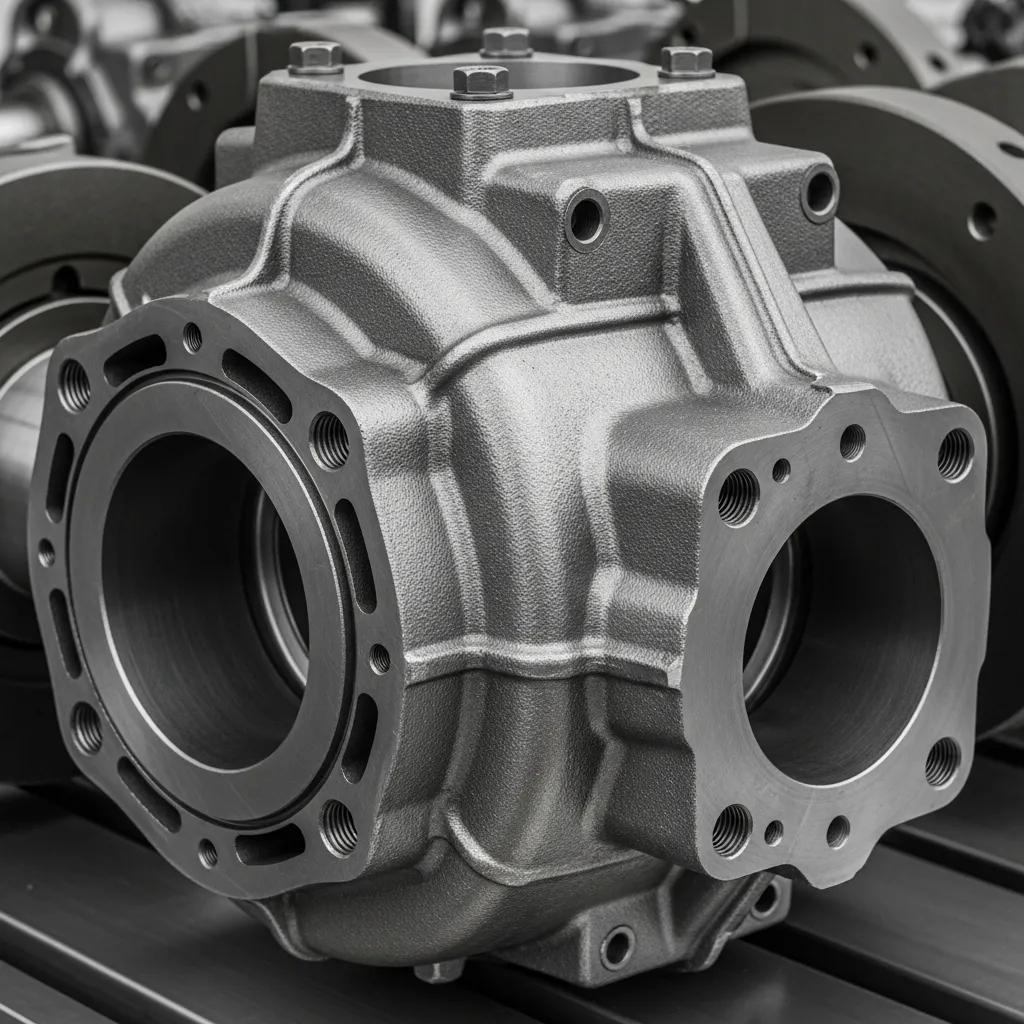
Mechanical Design: Features like one-piece cast blocks improve durability and reduce potential leaks, contributing to the overall reliability of the compressors.
Customization and Support: L&W offers tailored solutions that align with specific operational needs, supported by project management and customer service throughout the lifecycle of the compressor.
What Are the Benefits of Precision Manufacturing in L&W Compressors?
The benefits of precision manufacturing in L&W Compressors include:
Sustained Uptime: *L&W’s continuous-duty compressor models* are designed to operate without frequent cool-down periods, which enhances overall equipment availability for critical manufacturing lines and fueling stations.
Reduced Thermal Stress: The use of lower RPM components and robust cast blocks helps dissipate heat effectively, reducing thermal stress on key components.
Minimized Risk of Unplanned Stops: Continuous operation decreases the likelihood of unexpected downtime, allowing for predictable scheduling.
Longer Maintenance Intervals: Fewer start/stop cycles lead to decreased wear on valves and seals, extending maintenance intervals compared to intermittent-duty machines.
Customization: Tailored solutions can align compressors with specific site constraints and purity requirements, optimizing lifecycle costs and regulatory compliance.
Improved Performance: Precision manufacturing allows for better component selection and service access, which simplifies maintenance planning and enhances operational efficiency.
Telemetry and Monitoring: Integration of monitoring systems helps detect issues before failures occur, allowing for proactive maintenance and improved asset management.
How Does ISO 9001 Certification Ensure L&W Compressor Excellence?
ISO 9001 certification ensures L&W Compressor excellence by establishing a framework for quality management that emphasizes continuous improvement and customer satisfaction. This certification helps maintain high standards in manufacturing processes, ensuring that products consistently meet customer and regulatory requirements. By adhering to these standards, L&W enhances customer trust and demonstrates its commitment to quality and reliability.
What Advantages Do L&W’s Continuous-Duty Compressor Systems Offer?
L&W’s continuous-duty compressor systems are engineered for sustained performance, offering significant operational advantages:
Enhanced Uptime & Productivity: Designed for longer run times without thermal stress, these systems reduce downtime and allow for consistent, predictable operation, crucial for critical manufacturing lines and fueling stations.
Proactive Maintenance: Integrated telemetry allows operators to detect issues like declining flow or abnormal vibrations before failures occur, enabling timely adjustments and service scheduling.
Reduced Thermal Stress & Wear: The use of lower RPM components and robust cast blocks helps dissipate heat effectively, reducing thermal stress on key components and extending maintenance intervals.
Durability & Reliability: Features like one-piece cast blocks enhance mechanical integrity and reduce potential leaks, contributing to the overall longevity and reliability of the compressor.
Data for Long-Term Planning: Monitoring capabilities provide valuable data for asset management and long-term operational planning, supporting specification validation under real site conditions.
Custom Engineering Support: These platforms can be tailored to meet specific operational needs, including pressure, flow, and duty cycle requirements, optimizing lifecycle costs and regulatory compliance.
How Does the One-Piece Cast Block Design Enhance L&W Compressor Durability and Lifespan?
The one-piece cast block design significantly enhances the durability and lifespan of L&W compressors by improving mechanical integrity and reducing the potential for leaks. This robust construction is crucial for continuous-duty operations, ensuring sustained uptime and reliability in demanding applications.
By minimizing the number of potential leak paths inherent in multi-piece designs, the one-piece cast block contributes to more consistent performance and reduces the risk of premature component failure. This design, combined with routine maintenance and advanced monitoring technologies, allows for predictive maintenance, enabling operators to address issues proactively and significantly extend the compressor’s operational life.
Predictive Maintenance for Industrial Compressors: Uptime & Efficiency
Research highlights the growing role of predictive maintenance in optimizing compressor performance and longevity. Integrating machine learning with IoT infrastructure allows for real-time monitoring, ensuring operational efficiency and minimizing downtime.
Predictive Maintenance and Monitoring of Industrial Compressors Using Machine Learning: A Proactive Approach, P Dwivedi, 2025
How Does L&W Ensure Superior Breathing Air Quality and Safety?
L&W ensures superior breathing air quality and safety by utilizing *select continuous-duty high-pressure compressor systems* that are designed for sustained uptime and precise pressure control. These systems are paired with proper filtration and monitoring, which enhances safety and purity, particularly for specialized applications like breathing air. Additionally, they incorporate accessories such as purification modules and monitoring systems that help maintain air quality and operational integrity. The emphasis on project management and tailored solutions further supports the delivery of systems that meet specific air quality standards and operational requirements.
What Role Do Puracon Systems Play in Air Purification?
Puracon systems play a role in air purification by utilizing purification stages designed to remove contaminants such as oil, moisture, particulates, and hydrocarbons. These systems help meet application-specific purity targets, ensuring safety and quality in air supplies, particularly for regulated breathing-air duties. They work in conjunction with breathing air monitors that provide continuous verification of air quality, triggering alarms when unsafe levels are detected. This combination supports compliance and operator safety in various applications.
How Does L&W Support EN 12021 Breathing Air Standards Compliance?
L&W supports compliance with and often exceeds EN 12021 breathing air standards through the integration of its advanced compressor hardware with proper filtration, purification modules, and continuous monitoring systems. This comprehensive system-level approach, combined with rigorous quality control, ensures that the air produced is safe for breathing applications, providing peace of mind for users in critical environments.
What Industry Applications Highlight L&W Compressor Performance and Reliability?
The industry applications that highlight L&W Compressor performance and reliability include:
Critical breathing-air or industrial systems requiring *L&W’s continuous-duty operations*.
Manufacturing compressed air systems that require sustained uptime and precise pressure control.
Applications in energy contexts, particularly for fuel-grade gas and regulatory compliance.
Custom solutions for unique requirements in footprint, purity, and pressure staging.
How Are L&W Compressors Tailored for Diving, Firefighting, and Maritime Use?
L&W Compressors are tailored for diving, firefighting, and maritime use through features such as:
Automation: The YachtPro™ Essential (YP100) compressor system is fully automated, allowing users to fill tanks to a programmed pressure without constant monitoring.
Continuous-Duty Capability: *Specific L&W compressor models* are designed for sustained high-pressure fills and continuous operation, crucial for applications like SCBA fill stations in firefighting.
High-Pressure and Flow Control: They provide precise pressure control and high flow rates, essential for both diving and firefighting operations.
Monitoring and Safety Features: Integrated air quality monitoring and telemetry capabilities help ensure safe and reliable operation, detecting contaminants and enabling proactive maintenance.
Customization: LW Americas offers tailored solutions based on specific operational profiles, including pressure, flow, and duty cycle requirements.
Durability and Reliability: The use of robust mechanical designs and thermal management strategies enhances uptime and reliability, which is critical in emergency and maritime scenarios.
What Case Studies Demonstrate L&W’s Impact in Industrial and Medical Sectors?
Case studies in industrial and medical sectors demonstrate L&W’s impact through successful implementations that highlight the reliability and efficiency of their compressors. For instance, a major medical facility reported improved uptime and reduced operational costs after integrating L&W compressors into their breathing air systems, showcasing the effectiveness of continuous-duty operation in critical applications.
How Does North American Support Enhance the L&W Compressor Customer Experience?
North American support enhances the L&W Compressor customer experience by providing faster response times for parts and technical queries, custom solution capabilities, and comprehensive project management. This local presence helps reduce installation complexity and supports reliable fill-station uptime, predictable maintenance costs, and compliance verification during audits. Additionally, the structured project workflow, which includes needs assessment, equipment selection, system design, installation oversight, and post-installation support, ensures a coherent handover with operating and maintenance guidance for local staff.
What Services and Parts Are Provided Locally by LW Americas?
LW Americas provides local services and parts including:
Project Management and Design: They assist with needs assessment, equipment selection, 2D/3D system design, installation oversight, commissioning, and post-installation support.
High-Pressure Compressors: *L&W’s continuous-duty compressor models* are designed for long run times and lower operating speeds, which reduce wear and maintenance frequency.
Purification and Storage Solutions: They offer high-performance solutions for the reliable compression, purification, storage, and recovery of inert gases.
SCBA Fill Station Support: They provide guidance on designing, operating, and maintaining SCBA fill stations, including compliance with air-quality standards.
Local Support Presence: Their North American support facilitates faster response for parts and technical queries.
How Does Responsive Support Improve Operational Efficiency?
Responsive support improves operational efficiency by providing tailored project management and engineering services that align with specific operational demands. This includes needs assessment, equipment selection, and the creation of installation-ready designs, which help minimize installation risks and ensure maintainability. Additionally, local support enhances response times for parts and technical queries, while comprehensive project management reduces complexity, leading to reliable uptime and predictable maintenance costs. These factors collectively contribute to a more efficient operation, particularly in safety-critical environments.
What Makes L&W Compressors Stand Out in Diving: Features, Technology, and Reliability Explained
L&W Compressors are recognized for their exceptional performance in diving applications, driven by advanced engineering and innovative features. This article delves into the unique aspects that set L&W Compressors apart, including their automation, reliability, and safety features, many of which are enhanced by their continuous-duty capable designs. Readers will gain insights into how these compressors enhance diving experiences through superior technology and design. Many divers face challenges related to air quality, compressor efficiency, and operational safety. L&W Compressors address these issues with robust solutions that ensure reliable air supply and operational efficiency. We will explore the principles of German engineering that define their quality, the importance of continuous-duty operation for specific models, and the reliability features that make them a preferred choice for divers.
How Does German Engineering Define L&W Dive Compressor Quality?
German engineering defines L&W dive compressor quality through a combination of robust design, the availability of continuous-duty capable models, and advanced monitoring systems. LW Americas emphasizes the importance of specifications such as pressure ratings, delivery capacities, and power requirements, ensuring that their compressors are tailored for high-performance in demanding marine environments. Features like corrosion-resistant components, advanced filtration systems, and telemetry readiness for proactive maintenance further enhance reliability and safety, making them suitable for critical applications like breathing air supply for divers.
What Are the Key German Engineering Principles in L&W Compressors?
Continuous-Duty Design Options: Emphasis on creating compressor models and configurations that can operate continuously without frequent cool-down periods, enhancing reliability and uptime.
Robust Mechanical Design: Use of one-piece cast blocks to improve durability and reduce potential leaks, ensuring long-term performance.
Thermal Management: Implementation of thermal management strategies to maintain optimal operating temperatures and efficiency.
Precision and Control: Focus on precise pressure control and monitoring capabilities to ensure process consistency and safety, particularly in critical applications.
Customization and Integration: Ability to provide tailored solutions that combine appropriate pressure, flow, and duty cycle with project management support for installation.
Monitoring and Telemetry: Integration of telemetry systems to analyze performance trends, allowing for proactive maintenance and specification validation.
These principles contribute to the overall efficiency, safety, and effectiveness of the compressors in various industrial applications.
How Does the One-Piece Cast Block Enhance Compressor Performance?
The one-piece cast block enhances compressor performance by improving durability and reducing leak potential. This design contributes to the overall efficiency and reliability of the compressor, which is particularly important in applications where consistent performance is critical.
Why Are Continuous-Duty Capable L&W Scuba Compressors Crucial?
Continuous-duty operation, available on specific L&W Scuba compressor models and configurations, is crucial because it ensures sustained high-pressure fills and robust uptime, which are essential for applications like diving and firefighting. These specific compressors are designed to operate continuously without interruption, reducing the risk of downtime and enhancing reliability. Additionally, continuous-duty capable designs, combined with monitoring capabilities, support long-term asset planning and maintenance, making them suitable for critical breathing-air systems and other demanding applications.
How Do Continuous-Duty Capable Compressors Benefit Extended Dive Sessions?
Continuous-duty operation, when configured for specific models, benefits extended dive sessions by enabling longer run times without thermal compromise, which is crucial for applications like scuba fills that require consistent air supply. The design of continuous-duty capable platforms incorporates robust mechanical components and optimized cooling strategies, allowing for sustained operation and predictable maintenance intervals. This ensures that critical breathing-air systems can maintain air purity and availability during extended use, ultimately enhancing the reliability and efficiency of the diving experience.
How Do L&W’s Continuous-Duty Capable Models Compare to Competitors?
L&W’s continuous-duty capable platforms are positioned as competitive options in the market due to their robust mechanical components, energy efficiency improvements, and integration-ready monitoring capabilities. They emphasize total cost of ownership, uptime guarantees, and serviceability, which are increasingly valued by buyers. L&W’s designs, such as one-piece cast blocks, enhance durability and reduce maintenance needs, making them suitable for critical applications. Additionally, their project management services and custom engineering support help ensure that systems are tailored to specific operational demands, further differentiating them from competitors. Overall, L&W’s combination of continuous-duty design options and monitoring readiness offers a compelling package for organizations seeking reliable and efficient compressor solutions.
What Reliability Features Make L&W High-Pressure Dive Compressors Stand Out?
Primary Pressure Calibration – Allows adjustment of the desired inlet pressure.
Inlet Buffer Tank – 150 l capacity with safety valve, manual condensate drain valve, pressure gauge, and electrical cut-off solenoid for inlet gas.
Primary Pressure Monitoring – Includes pressure shut off at maximum/minimum inlet pressure.
Electronic Compressor Control (ECC) – Facilitates automated operation.
Auto Start Function – For semi/full automatic mode.
Inter-stage Pressure Gauge – For monitoring pressure between stages.
Oil Pressure Gauge and Monitoring – Includes auto shut down feature.
Compressor Block Heating – For operation in ambient temperatures below +5°C.
Water Cooling System – Utilizes a stainless steel heat exchanger.
High-Pressure Versions – Capable of reaching up to 420 bar.
Filter Extension Options – Allows for larger or additional filter housing.
How Do Steel Piston Rings Improve Compressor Longevity?
Steel piston rings improve compressor longevity by providing a better seal, which reduces wear and tear on the compressor components. This enhancement leads to improved efficiency and lower maintenance costs over time, ensuring that the compressor operates reliably in various conditions.
What Maintenance Advantages Do L&W Compressors Offer for Diving?
Automated Operation: Compressor systems, such as the YachtPro™ Essential (YP100), are designed for automated operation, allowing users to connect tanks, open valves, and initiate fills without constant supervision, freeing them for other tasks.
Proactive Monitoring for Filter Life: Real-time monitoring, like that provided by the Puracon M200, tracks moisture content in compressed air, alerting users when filter changes are necessary to prevent moisture from entering scuba tanks and optimizing filter lifespan.
Structured Maintenance Support: Emphasis on best practices for filter maintenance, including regular checks and replacements based on usage, helps maintain air quality and system longevity.
Digital Record Keeping: A structured maintenance log system supports compliance and predictive maintenance, reducing risk and demonstrating due diligence during inspections.
Designed for Serviceability: L&W compressors are engineered with service access in mind, simplifying routine maintenance and component replacement to minimize downtime.
How Do L&W Compressors Ensure Safe Breathing Air Quality for Divers?
Advanced Filtration and Monitoring: Systems like Puracon Filter Monitoring actively ensure air purity by detecting and alerting users to potential contaminants, crucial for meeting breathing air standards.
Integrated Pressure Management: Primary pressure monitoring and shut-off mechanisms at maximum and minimum inlet pressures prevent unsafe operating conditions.
Robust System Design: Features such as one-piece cast blocks, lower RPM operation, and the option for continuous-duty capable designs contribute to overall system durability and consistent, safe performance.
Comprehensive Safety Valves: Integrated safety valves and monitoring systems are in place to mitigate overpressure risks, ensuring secure operation during use.
What Are the EN 12021 Standards and How Do L&W Systems Support Compliance?
The EN 12021 standards set the requirements for breathing air quality in diving applications. L&W Compressors, when integrated into a complete system with appropriate filtration, regular maintenance, and continuous monitoring, are designed to help achieve compliance with these standards by providing air that meets or exceeds the purity levels required for safe breathing. This comprehensive approach to compliance is critical for maintaining diver safety and operational integrity.
Beyond Air Purification: Nitrox Generation with NitroxMaker™
While dedicated multi-stage filtration systems, such as those incorporating Puracon technology, are essential for ensuring breathing air purity by removing contaminants like oil, particulates, moisture, and hydrocarbons, L&W also offers specialized systems like the NitroxMaker™. The NitroxMaker™ is a low-pressure membrane nitrox generator designed to produce enriched air nitrox, not to purify breathing air. It integrates seamlessly into a complete compressor setup, allowing divers to safely generate nitrox for extended bottom times and reduced nitrogen loading. Continuous monitoring of air quality via dedicated filtration systems remains a critical design principle to ensure compliance with purity standards for breathing air.
Which L&W Compressor Models Best Suit Different Diving Applications?
The recommended compressor model for diving applications, specifically for a Lagoon 42 Catamaran, is the YachtPro™ Essential (YP100). This model is preferred by motor cat and sail cat owners due to its automation features, allowing users to fill tanks to a programmed pressure without constant supervision. It includes a Variable Frequency Drive (VFD) to manage inrush current during motor start-up, making it suitable for marine environments.
For other diving applications, LW Americas offers a range of compressors designed for high-pressure needs, ensuring clean and safe air for divers, with robust features for durability and performance in marine conditions. However, specific models for different diving applications beyond the YP100 are not detailed in the provided context.
What Are the Features of the YachtPro™ Series for Marine Diving?
The YachtPro™ series is designed specifically for marine environments, featuring automation for ease of use, corrosion-resistant components, and advanced filtration systems. These features ensure that divers receive clean and safe air while maximizing operational efficiency.
How Do L&W Compressors Support Commercial and Technical Diving Needs?
L&W Compressors support commercial and technical diving needs by providing high-performance, reliable compressor systems specifically designed for marine environments. Their compressors are equipped with features such as corrosion-resistant components, advanced filtration systems for clean and safe air, and automation for ease of use. They ensure sustained uptime and precise pressure control, which are critical for breathing air supply for divers. Additionally, their continuous-duty capable platforms and telemetry-ready designs enhance operational efficiency and safety, making them suitable for various underwater activities.
Why Choose LW Americas for Support and Custom Dive Compressor Solutions?
You should choose LW Americas for support and custom dive compressor solutions because they offer tailored high-pressure solutions that align with specific site constraints and performance targets. Their YachtPro™ Essential (YP100) compressor system is fully automated, allowing users to fill tanks without constant supervision. LW Americas also provides project-managed custom solutions, ensuring that the final system meets operational and regulatory requirements, which can improve lifecycle costs and reduce downtime. Additionally, they offer responsive North American support for specific quotes, custom designs, and engineering assistance.
What Customization and OEM Services Does LW Americas Provide?
LW Americas provides customization and OEM services that include tailored high-pressure compressor solutions, project management, and design services. Their approach involves a structured workflow that starts with needs assessment, followed by equipment selection, engineering design, installation oversight, commissioning, and post-installation support. They offer custom designs, 2D/3D drawings, and project-managed compressor selection to ensure systems align with operational and regulatory environments. Additionally, they focus on optimizing component selection and service access to improve lifecycle costs and regulatory compliance.
How Does North American Support Enhance Customer Experience?
North American support enhances customer experience by providing faster response times for parts and technical queries, which is crucial for maintaining operational efficiency. The local presence allows for custom solution capabilities and comprehensive project management, reducing installation complexity. This support contributes to reliable fill-station uptime, predictable maintenance costs, and facilitates compliance verification during audits, all of which are practical outcomes that benefit departments managing life-safety infrastructure.
Marine Compressor Systems for Professional Diving Needs: High-Pressure Solutions for Commercial and Offshore Applications
Marine compressor systems are essential for professional diving, providing the high-pressure air necessary for safe underwater operations. These specialized systems compress ambient air to high pressures, ensuring divers have a reliable supply of clean and safe breathing air. In this article, we will explore the critical role of high-pressure marine compressors in professional diving, the differences between various types of compressors, and the advanced technology offered by LW Americas. Additionally, we will discuss the importance of air quality standards and the applications of custom marine compressor systems in commercial diving.
What Are High-Pressure Marine Compressors and Their Role in Professional Diving?
High-pressure marine compressors are specialized systems designed to compress ambient air to high pressures for various applications, including scuba diving. In professional diving, these compressors play a critical role by providing a reliable supply of clean and safe breathing air. They are engineered to withstand harsh marine environments and often include advanced filtration systems to ensure the air quality meets safety standards. These compressors enhance safety and efficiency in underwater activities by delivering the necessary air supply for divers while also being equipped with features that ensure durability and performance in challenging conditions.
How Do Continuous-Duty Compressors Ensure Reliable Breathing Air Supply?
Continuous-duty compressors, depending on their specific design and configuration, can ensure a reliable breathing air supply by incorporating robust mechanical components and advanced thermal management strategies that allow them to operate without frequent cool-down periods. These compressors are designed with lower RPM components and one-piece cast blocks, which enhance durability and reduce thermal stress. This engineering enables them to sustain long run times with predictable maintenance intervals, making them suitable for critical applications like breathing air systems. Additionally, their energy-efficient designs contribute to lower total costs per delivered cubic foot, enhancing resilience and uptime for continuous industrial use.
What Are the Differences Between Portable and Stationary Marine Compressor Systems?
The differences between portable and stationary marine compressor systems include:
Purpose and Use Case:Stationary Compressors: Designed for centralized high-volume refilling and continuous operation, making them suitable for consistent, high-demand environments.Portable Compressors: Ideal for situational support, such as on-scene refilling, remote training, or temporary field deployment where a fixed installation is not feasible.
Performance:Stationary Compressors: Specific models typically have higher sustained pressure capabilities (up to 5000 psi) and flow rates, supporting continuous duty.Portable Compressors: Specific models may have moderate pressure capabilities (up to 4500 psi) and are not always designed for continuous operation.
Maintenance and Access:Stationary Compressors: Generally offer easier maintenance access and are designed for sustained power availability and cooling capacity.Portable Compressors: May have limitations in maintenance access and cooling, as they are built for mobility.
Installation and Footprint:Stationary Compressors: Require specific electrical and ventilation setups and have a fixed footprint.Portable Compressors: Designed for easy transport and setup, often requiring less space and simpler installation.
Operational Considerations:Stationary Compressors: Better suited for high-throughput needs and long-term operational plans.Portable Compressors: More flexible for temporary needs and can be used in various locations as required.
How Does LW Americas’ Continuous-Duty Compressor Technology Stand Out?
LW Americas’ continuous-duty compressor technology, in its various configurations, stands out due to its engineering designed for uninterrupted operation without frequent cool-down periods. This is achieved through the use of lower RPM components, robust cast blocks, and effective thermal management strategies that dissipate heat during prolonged use. These features reduce thermal stress, maintain steady pressure delivery, and minimize the risk of unplanned stops, thereby improving overall equipment availability. Additionally, continuous-duty compressors experience fewer start/stop cycles, which decreases wear on components and extends maintenance intervals compared to intermittent-duty machines. This design is particularly beneficial for operations that prioritize uptime and reliability.
What Are the Advantages of the One-Piece Cast Block Design?
The one-piece cast block design offers several advantages, including enhanced durability and reduced risk of leaks. This design minimizes the number of joints and potential failure points, ensuring a more robust and reliable compressor system. Additionally, the solid construction allows for better heat dissipation, which is crucial for maintaining optimal operating temperatures during extended use.
How Does Lower RPM Operation Reduce Noise and Wear?
Lower RPM operation significantly reduces noise levels and wear on compressor components. By operating at lower speeds, the mechanical stress on parts is minimized, leading to longer service life and reduced maintenance needs. This quieter operation is particularly beneficial in environments where noise reduction is a priority, such as in residential areas or during nighttime operations.
What Are the Standards and Solutions for Breathing Air Quality and Purification?
Breathing air systems, depending on their intended application and regulatory requirements, require controlled pressure, certified filtration, and adherence to recognized standards for air quality, specifying limits for total hydrocarbons, CO, moisture, and particulates. Compliance with these standards is critical for maintaining the safety and operational integrity of breathing air systems used in diving, as they help prevent health risks associated with contaminated air. Additionally, adherence to these standards supports continuous availability and reliability of air supply during diving operations.
How Do Grade E Breathing Air Standards Impact Marine Diving Operations?
Grade E breathing air standards impact marine diving operations by ensuring that the air quality meets specific safety and health requirements for systems configured to meet these standards. These standards dictate controlled pressure, certified filtration, and limits on total hydrocarbons, carbon monoxide, moisture, and particulates in the air supplied to divers. Compliance with these standards is critical for maintaining the safety and operational integrity of breathing air systems used in diving, as they help prevent health risks associated with contaminated air. Additionally, adherence to these standards supports continuous availability and reliability of air supply during diving operations.
Research highlights the critical need for rigorous air quality testing to prevent contamination in breathing air systems.
High-Pressure Compressors & Breathing Air Quality for Divers
pared with the aid of high-pressure compressors operating in breathing air has been found to contain elevated levels of and Systems be made obligatory and that air quality tests be
Carbon monoxide and water vapor contamination of compressed breathing air for firefighters and divers, CC Austin, 1997
Which Purification Systems Ensure Safe Breathing Air for Divers?
The purification systems that ensure safe breathing air for divers include multi-stage purification combined with continuous monitoring. This design principle supports compliance and operator safety by detecting any degradation in purification performance before user exposure. Additionally, while some systems utilize oil-free compressors, many compliant breathing air systems effectively mitigate oil carryover risk into the compressed air stream through the use of high-quality oil-lubricated compressors paired with advanced, multi-stage filtration systems. Both approaches are essential for maintaining purity standards in breathing air applications, with the specific choice often depending on operational requirements and system design.
Further studies emphasize the importance of multi-stage purification and robust filtration systems for ensuring the safety of breathing air.
Breathing Air Filtration & Multi-Stage Purification for Diving Safety
This paper deals with the implementation of safety parameters downstream of the breathing air filtration system. Tests were Compressed air was subjected to multi-stage purification in a
Use of a Carbon Dioxide Measurement System to Control the Process of Obtaining Breathing Air for Hyperbaric Oxygen Conditions, A Woźniak, 2020
How Do Nitrox and Mixed Gas Systems Enhance Professional Diving Performance?
Nitrox and mixed gas systems can enhance professional diving performance by allowing divers to potentially extend their bottom time and reduce the risk of decompression sickness, provided proper training, dive planning, and adherence to established standards are maintained. These systems utilize different gas mixtures to optimize the breathing gas for specific depths and conditions, improving overall safety and efficiency during dives.
Understanding the physiological effects of gas flow under high ambient pressure is fundamental to optimizing these specialized breathing gas mixtures.
Gas Flow & Breathing Physiology Under High Ambient Pressure
of gas flow under high pressure in the human airways and it gas flow under high pressure in air was compared to that of high at each stop by connecting the wedge to a standard Collins
Breathing under high ambient pressure, 1966
What Is the NitroxMaker™ System and How Does It Work?
The NitroxMaker™ system is a low-pressure membrane nitrox generator designed to produce nitrox blends on-site. It works by separating oxygen from ambient air, allowing divers to customize their breathing gas according to their specific needs. It is crucial to note that the NitroxMaker™ system generates low-pressure nitrox and must be paired with a separate high-pressure breathing-air compressor for the safe and proper filling of dive cylinders. By providing nitrox blends, when used correctly and in conjunction with appropriate high-pressure compression, the system can help reduce nitrogen absorption, thereby potentially minimizing the risk of decompression sickness for properly trained and equipped divers following established protocols.
How Are Trimix and Enriched Air Used in Commercial Diving?
Trimix and enriched air are used in commercial diving to enhance safety and performance at greater depths, when utilized by properly trained and certified divers following strict dive plans and safety protocols. Trimix, which consists of oxygen, nitrogen, and helium, can reduce the risk of nitrogen narcosis and allow divers to operate safely at deeper depths. Enriched air, or nitrox, provides a higher oxygen concentration, which can potentially improve bottom time and reduce fatigue. Both gas mixtures are essential for professional divers working in challenging underwater environments, but their safe application is entirely dependent on adherence to industry standards and individual diver competency.
Which Commercial Diving Applications Benefit from Custom Marine Compressor Systems?
The commercial diving applications that benefit from custom marine compressor systems include scuba fills, firefighting SCBA, medical gas supply, and maritime systems. These applications require specific specifications related to flow, pressure, air quality, and duty cycle, which custom systems can address effectively.
How Are Offshore Diving and Underwater Construction Supported by Compressor Systems?
Offshore diving and underwater construction are supported by compressor systems that provide reliable breathing air and power for tools. These systems are designed to meet the high demands of underwater operations, ensuring that divers have the necessary air supply while also powering equipment used in construction and maintenance tasks.
What Are the Design Considerations for Dive Boat Air Fill Stations?
The design considerations for dive boat air fill stations include:
Continuous Operation: Systems must be optimized for continuous-duty to ensure reliable air supply during operations.
High-Pressure Capability: The compressors should meet target cylinder pressures, typically between 3000–4500 psi.
Air Quality Standards: Compliance with controlled pressure, certified filtration, and recognized air quality standards is essential, focusing on limits for total hydrocarbons, CO, moisture, and particulates.
Compact Packaging: Due to space constraints on boats, equipment should be compact and easily mountable.
Vibration Resistance: The design must withstand the vibrations typical in maritime environments.
Custom Configurations: Tailoring systems to specific site demands and operational profiles is crucial, including expected simultaneous fills and turnaround times.
Safety Features: Incorporation of safety valves and monitoring systems to manage pressure and ensure safe operation.
What Are Best Practices for Maintenance, Support, and Spare Parts for Marine Compressors?
Best practices for maintenance, support, and spare parts for marine compressors include regular servicing according to manufacturer specifications, timely replacement of worn components, and adherence to manufacturer guidelines. Proper maintenance ensures the longevity and reliability of compressor systems, which is critical for safety in diving operations.
How Often Should Professional Diving Compressors Be Serviced?
Professional diving compressors should be serviced regularly, with specific intervals varying by model and manufacturer recommendations, but typically every 500 hours of operation or annually, whichever comes first. Regular servicing includes checking and replacing filters, inspecting mechanical components, and ensuring that the system operates within specified parameters. Neglecting maintenance can lead to reduced performance and increased risk of failure during critical operations.
What Support Does LW Americas Provide for Compressor Maintenance and Parts?
LW Americas provides support for compressor maintenance and parts through tailored high-pressure solutions, including project-managed custom designs, engineering support, and responsive North American assistance. They offer features such as primary pressure monitoring, electronic compressor control, and maintenance planning to enhance equipment availability and reduce downtime. Additionally, they provide standard equipment with automatic features, safety measures, and options for customization based on specific application requirements.
In the realm of industrial air systems, optimizing high-pressure continuous duty performance is crucial for enhancing operational efficiency and reducing downtime. This article delves into the key features and benefits of L&W compressor systems, providing insights into how they can transform your operations. Readers will learn about the innovative designs, energy-saving technologies, and tailored solutions that L&W offers to meet diverse industrial needs. Many businesses face challenges related to compressor efficiency, leading to increased operational costs and downtime. L&W compressor systems present a solution through their advanced engineering and customer support. This guide will explore the key features of L&W compressors, their energy efficiency capabilities, custom solutions for specific industries, maintenance practices for longevity, and the practical applications that highlight their efficiency benefits.
What Are the Key Features of L&W Continuous-Duty High-Pressure Compressors?
The key features of L&W Continuous-Duty High-Pressure Compressors include:
Continuous Operation: Designed for extended operation without frequent cool-down periods, contributing to enhanced uptime in suitable applications.
Robust Mechanical Design: Utilizes lower RPM components and one-piece cast blocks for durability and reduced leak potential.
Thermal Management: Incorporates strategies to manage heat effectively during operation, crucial for sustained performance.
Telemetry Ready: Supports monitoring of performance metrics like FAD (Free Air Delivery), motor current, and vibration, enabling proactive maintenance and specification validation.
Custom Engineering Support: Offers tailored solutions for specific operational needs, including pressure, flow, and duty cycle, ensuring application-specific optimization.
North American Support: Provides local assistance for installation and maintenance, enhancing serviceability.
Advanced Control Features: Includes options like Electronic Compressor Control (ECC) for automatic operation and monitoring capabilities.
These features are designed to make them suitable for critical applications requiring sustained high-pressure fills and robust uptime.
The robust design and continuous operation of L&W compressors align with broader industry insights on high-pressure continuous duty systems.
As a hermetic compressor designed for use with high-pressure refrigerants, the scroll compressor offers a compact, lightweight, and efficient solution. These compressors are designed for continuous duty and long life, making them suitable for demanding industrial applications. Overall, hermetic scroll air compressor performance is enhanced by these design considerations.
A hermetic scroll compressor for application to high, 2003
How Does the One-Piece Cast Block Design Enhance Compressor Durability?
The one-piece cast block design enhances compressor durability by improving mechanical integrity and reducing the potential for leaks. This design minimizes the number of joints and connections, which are often points of failure in compressors, thereby increasing reliability and longevity.
Why Does Lower RPM Operation Improve Efficiency and Reduce Wear?
Lower RPM operation improves efficiency and reduces wear by minimizing friction and heat generation within the compressor. This leads to less wear and tear on components, ultimately extending the operational life of the compressor and reducing maintenance needs.
How Do L&W Compressor Systems Achieve Energy Efficiency and Cost Savings?
L&W Compressor Systems achieve energy efficiency and cost savings through several key features:
Variable Frequency Drive (VFD): This technology reduces the inrush current when starting the electric motor, potentially leading to significant energy savings depending on the duty cycle.
Automated Operation: The systems are designed to automatically stop when tanks are full, optimizing energy consumption.
Continuous-Duty Design: Their compressors are built for continuous operation, which, when properly applied, can enhance reliability and reduce maintenance needs, contributing to cost savings over time.
Monitoring and Telemetry: By analyzing telemetry trends, operators can detect issues before they lead to failures, facilitating proactive maintenance and potential downtime reduction.
Optimized Mechanical Design: Features like one-piece cast blocks improve durability and reduce leak potential, contributing to lower operational costs.
These elements combined help in reducing energy usage and maintenance costs, ultimately leading to significant savings for users.
Further emphasizing the importance of such technologies, research highlights the critical role of Variable Frequency Drives in achieving significant energy savings for industrial air compressors.
Variable Frequency Drives for Industrial Air Compressor Energy Savings
Air compressors have the problem of high energy consumption and high operating costs, which seriously restricts the development of the hydrogen fuel cell industry. Therefore, it is necessary to apply variable-frequency drive (VFD) to control the operation of HFC air compressors, and the application status of VFD in HFC air compressors is reviewed in this paper.
Application status of variable-frequency drive in hydrogen fuel cell air compressors from an industrial viewpoint: A review, X Guo, 2024
What Role Does Continuous-Duty Operation Play in Reducing Downtime?
Continuous-duty operation can play a crucial role in reducing downtime by enabling longer run times with predictable maintenance intervals when integrated into a well-planned maintenance strategy. This is achieved through the use of robust mechanical components and optimized cooling strategies, which allow compressors to sustain continuous operation without thermal compromise. As a result, applications that previously required complex setups can now aim for higher uptime with fewer, more efficient units. This shift emphasizes lifecycle cost and serviceability, ultimately aiming for reduced maintenance frequency and improved reliability for critical systems.
How Can Smart Controls Optimize Energy Consumption in L&W Systems?
Smart controls are designed to optimize energy consumption in L&W systems by leveraging technology trends such as variable-speed drives, enhanced designs, and IoT for predictive maintenance. These innovations can lead to more efficient operation, potentially reducing the operating cost per delivered cubic foot and enabling longer continuous operation without thermal issues under optimal conditions. Additionally, smarter monitoring provides telemetry that helps transition from reactive to predictive service models, ultimately improving total cost of ownership and uptime guarantees.
Further research highlights the growing importance of advanced technologies like machine learning and IoT in enhancing predictive maintenance strategies for industrial compressors.
Predictive Maintenance for Industrial Air Compressors
In the era of Industry 4.0, predictive maintenance has become a cornerstone for ensuring operational efficiency, minimizing downtime, and extending the lifespan of industrial equipment. This paper presents a comprehensive approach to predictive maintenance and real-time monitoring of industrial air compressors using machine learning techniques integrated with Internet of Things (IoT) infrastructure.
Predictive Maintenance and Monitoring of Industrial Compressors Using Machine Learning: A Proactive Approach, P Dwivedi, 2025
Building on this, further studies underscore the practical application of machine learning with real-world data to enhance predictive maintenance systems for industrial compressors.
Machine Learning for Compressor Predictive Maintenance & Efficiency
Maintaining the operational efficiency and reliability of any industrial system is mandatory to minimize downtime and prevent failures. For this purpose, forecasting the evolution of key operational parameters such as temperature is essential. Whereas many studies are based on benchmark datasets, this work is based on real sensor data collected from industrial screw compressors to make maintenance planning relevant to the real world. The proposed framework is designed to be computationally efficient and scalable for real-time application on industrial edge devices.
Predictive maintenance system for screw compressors using machine learning: A comparative study, 2025
Which Custom L&W Compressor Solutions Are Available for Industry-Specific Needs?
The available Custom L&W Compressor Solutions for industry-specific needs include:
Primary pressure calibration to adjust desired inlet pressure.
Inlet buffer tank (150 l) with safety valve, manual condensate drain valve, pressure gauge, and electrical cut-off solenoid for inlet gas.
Primary pressure monitoring with pressure shut off at max/min inlet pressure.
Electronic Compressor Control (ECC) for auto start in semi/full automatic mode.
Inter-stage pressure gauge and oil pressure gauge with monitoring and auto shut down.
Puracon filter monitoring.
Compressor block heating for ambient temperatures below +5°C.
Options for 420 bar versions and water cooling with stainless steel heat exchangers.
Filter extension (larger or second filter housing).
These solutions are designed to meet specific operational and regulatory requirements, aiming for optimal performance and reliability in various applications.
How Are L&W Compressors Tailored for Diving and Firefighting Applications?
L&W Compressors are tailored for diving and firefighting applications through features that ensure high-pressure delivery, continuous operation, and safety.
For diving, the YachtPro™ Essential (YP100) compressor system automates tank filling, allowing users to focus on other tasks while ensuring tanks fill to the desired pressure within system capabilities. It includes a Variable Frequency Drive (VFD) to manage inrush current and operates efficiently in marine environments.
For firefighting, the SCBA fill station integrates high-pressure compressors with multi-stage purification and storage tanks, providing reliable on-site access to breathing air that is designed to meet health and safety standards. Continuous-duty compressors can support rapid cylinder refills, contributing to enhanced crew readiness and operational efficiency. Additionally, integrated air quality monitoring helps ensure the safety of the air being supplied.
What Custom Solutions Support Medical and Industrial Air System Efficiency?
LW Americas’ custom solutions support medical and industrial air system efficiency through continuous-duty high-pressure compressor systems, tailored project management, and custom engineering. They provide sizing and project management services, including 2D/3D design drawings and packaging options, to ensure that compressor selection aligns with specific manufacturing needs. Their offerings include purification modules, filling devices, and boost pumps, which are designed to enhance system integrity and throughput. Additionally, their focus on energy efficiency and continuous-duty architectures aims to contribute to improved operational performance in various applications.
How Can Maintenance and Longevity Practices Maximize L&W Compressor Efficiency?
Maintenance and longevity practices can maximize L&W compressor efficiency by implementing structured maintenance schedules, monitoring system performance, and ensuring proper operational conditions. Key practices include:
Regular Inspections: Conduct daily visual inspections and weekly checks for oil levels and leaks to catch issues early.
Scheduled Maintenance: Follow a structured maintenance matrix that includes filter replacements and annual overhauls based on manufacturer recommendations and usage patterns.
Telemetry Monitoring: Utilize telemetry to track performance metrics like FAD (Free Air Delivery) and motor current, allowing for proactive adjustments to duty cycles and scheduling of services before failures occur.
Environmental Considerations: Adjust for environmental factors such as altitude and temperature that can affect compressor performance, ensuring optimal conditions for operation.
System Design: Choose compressors with durable designs, such as one-piece cast blocks, and incorporate features like variable-speed drives to enhance efficiency and reduce wear.
By adhering to these practices, operators can significantly improve uptime, maintain efficiency, and extend the lifespan of their compressors when implemented consistently.
What Preventative Maintenance Ensures Continuous Operation?
Preventative maintenance that aims to ensure continuous operation includes routine checks such as monthly visual and operational inspections, quarterly filter and oil-level verifications, and annual vibration and thermal analyses. Predictive maintenance, which focuses on monitoring temperature, vibration spectra, and oil condition, is also crucial for scheduling interventions before failures occur. Additionally, maintaining a critical-spares list for valves and seals can help shorten repair times and minimize downtime.
Why Are Genuine L&W Spare Parts Critical for Sustained Performance?
Genuine L&W spare parts are critical for sustained performance because they ensure reliability and compatibility with the equipment, which is essential for maintaining operational efficiency and safety. Using genuine parts is crucial as it helps reduce the risk of failure, minimizes maintenance frequency, and supports compliance with adopted standards. This is particularly important in life-safety infrastructure, where performance and reliability are paramount. Additionally, genuine parts are designed to work seamlessly with the systems, contributing to predictable maintenance costs and overall uptime.
What Are the Practical Applications and Efficiency Benefits of L&W High-Pressure Systems?
The practical applications and efficiency benefits of L&W high-pressure systems include:
Automated Operation: The YachtPro™ Essential compressor system allows users to fill tanks automatically, freeing them to attend to other tasks while ensuring tanks fill to the programmed pressure within system specifications.
Continuous-Duty Performance: The systems are designed for sustained high-pressure fills, which is essential for applications like breathing-air systems and industrial operations where continuous performance is critical.
Telemetry and Monitoring: The ability to analyze telemetry trends helps operators detect issues before failures occur, facilitating proactive maintenance and contributing to improved uptime.
Custom Engineering Support: LW Americas offers tailored solutions that combine appropriate pressure, flow, and duty cycle with monitoring, designed to enhance operational efficiency.
Durability and Reliability: The use of one-piece cast blocks improves durability and reduces leak potential, aiming to contribute to long-term reliability.
Customer Support: Comprehensive customer support throughout the lifecycle of the compressors is provided to help ensure optimal performance and maintenance, thereby enhancing overall efficiency.
How Do L&W Compressors Improve Breathing Air Quality in Maritime and Offshore Settings?
L&W Compressors improve breathing air quality in maritime and offshore settings by utilizing multi-stage purification systems that filter contaminants from the ambient air before it is compressed. This is designed to ensure that the compressed air meets health and safety standards, which is critical for applications such as filling SCBA cylinders. The compressors are designed for continuous-duty operation, providing reliable access to high-quality breathing air while aiming to minimize the risks associated with using off-site fills. Additionally, integrated air quality monitoring helps detect potential contamination, enhancing safety and operational readiness.
What Efficiency Gains Do CNG, Biogas, and Motor Sports Industries Experience?
L&W compressor systems are engineered to provide significant efficiency gains across various industries, including representative use cases such as CNG, biogas, and motorsports. These systems are designed to optimize gas compression processes, which can lead to reduced energy consumption and lower operational costs when properly implemented. In the CNG sector, for instance, L&W compressors can facilitate faster refueling times and improved gas quality, which are essential for meeting stringent regulatory standards. Similarly, in biogas applications, the efficiency of L&W compressors can enhance the overall energy yield from organic waste, making them a sustainable choice for energy production. In motorsports, the reliability and performance of L&W compressors are utilized to help teams maintain optimal air pressure in tires and other systems, potentially impacting race performance.
Feature
Description
Benefit
Continuous Operation
Designed for uninterrupted use in specific applications
Maximizes uptime and efficiency potential
Variable Frequency Drive
Manages motor start-up energy and adjusts speed
Reduces energy consumption and optimizes performance
Telemetry Monitoring
Tracks performance metrics and operational data
Enables proactive maintenance and informed decision-making
High-Pressure Air Compressors for Professional Diving: Reliable Continuous-Duty Systems for Safe Breathing Air Supply
High-pressure air compressors for professional diving are specialized systems designed to provide safe breathing air by delivering compressed air at high pressures, typically required for scuba diving applications. These compressors are engineered for continuous-duty operation, designed to provide reliability and safety when properly specified, installed, and operated within their environmental limits. Key benefits include sustained uptime, precise pressure control, and enhanced air purity when paired with appropriate filtration systems. For marine environments, such as on various recreational or commercial vessels, compressors like the YachtPro™ Essential (YP100) are recommended. This model is fully automated, allowing users to fill tanks to a programmed pressure without constant supervision. It features a Variable Frequency Drive (VFD) to manage power draw during startup, ensuring efficient operation. Overall, high-pressure compressors are critical for ensuring safe and reliable air supply for divers, with specific designs and features tailored to meet the demands of marine applications.
Why Are High-Pressure Air Compressors Essential for Professional Diving Operations?
High-pressure air compressors are essential for professional diving operations because they generate compressed air at the required PSI (typically ranging from 3000–4500 psi) necessary for filling SCBA (Self-Contained Breathing Apparatus) and scuba cylinders. They ensure the delivery of breathing air that meets specific contaminant limits through a purification train that filters out particulates, oil, and other contaminants. Additionally, these compressors support safe filling procedures with features like fill panels for controlled distribution, monitoring devices for real-time air quality alerts, and cascade storage for rapid fills. Their continuous-duty design capability, when properly implemented, enhances reliability and safety, making them crucial for maintaining the quality and availability of breathing air in diving operations.
What Roles Do Breathing Air and Scuba Tank Filling Play in Diver Safety?
Breathing air and scuba tank filling play crucial roles in diver safety by ensuring that the air supplied is of high quality and at the correct pressure. Breathing air systems must adhere to strict air quality standards, including limits on total hydrocarbons, carbon monoxide, moisture, and particulates, to prevent contamination that could harm divers. Additionally, the compressors used for filling scuba tanks need to provide high-pressure fills (typically between 3000 to 4500 PSI) and maintain continuous availability to ensure divers have access to safe air during their activities. Proper filtration and monitoring systems are essential to detect any degradation in air quality before it reaches the diver, thereby enhancing safety.
Which Diving Applications Require Specialized High-Pressure Air Systems?
Diving applications that require specialized high-pressure air systems include scuba fills and firefighting SCBA (Self-Contained Breathing Apparatus). These applications prioritize air purity standards, continuous availability during operation, and specific pressure ratings, typically requiring fill pressures in the 3000–4500 PSI range.
How Does LW Americas’ Continuous-Duty Technology Enhance Dive Compressor Performance?
LW Americas’ Continuous-Duty Technology enhances dive compressor performance by designing compressors to operate for extended periods without frequent cool-down cycles, when properly specified and operated. This is achieved through the use of lower RPM components, robust cast blocks, and effective thermal management strategies. These features are designed to contribute to sustained uptime, precise pressure control, and improved safety and purity when combined with proper filtration and monitoring, and operated within design parameters. This continuous-duty capability ensures reliable actuation and filling operations, making it suitable for demanding applications like scuba diving.
What Are the Benefits of Continuous Operation Compared to Intermittent Compressors?
Higher Duty Cycle: Continuous-duty compressors are engineered for high duty cycles, often approaching 90-100% under optimal conditions, allowing for consistent performance and reduced downtime in applications requiring constant air supply.
Increased Output Pressure Capability: Continuous-duty compressors can achieve higher output pressures (e.g., filling cylinders to 3000-4500 PSI), making them suitable for demanding applications like breathing-air fills.
Optimized for Steady Demand: They are specifically designed to manage steady, continuous demand, which is beneficial for applications requiring a constant flow of air within their operational parameters.
Durability and Reliability: Continuous-duty platforms often feature robust designs, such as one-piece cast blocks, which enhance durability and reduce the risk of leaks.
Energy Efficiency: Recent innovations in compressor technology, such as variable-speed drives and optimized cooling, are designed to allow for longer continuous operation without thermal compromise when properly maintained, leading to reduced operating costs.
Predictive Maintenance: Continuous operation can be paired with IoT and predictive maintenance tools, allowing for better monitoring and lifecycle management, which can further enhance uptime and reduce maintenance costs.
Which Engineering Features Ensure Durability and Low Noise in LW Americas Compressors?
Lower RPM Components: This design choice reduces wear and tear, contributing to longevity and quieter operation.
Robust Cast Blocks: The solid construction enhances durability and stability during operation.
Thermal Management Strategies: Effective heat dissipation during prolonged operation minimizes thermal stress on components, which can lead to failures and noise.
Continuous-Duty Design: This allows for fewer start/stop cycles, reducing wear on valves and seals, which also contributes to lower noise levels.
What Comprehensive Solutions Does LW Americas Offer for Professional Diving Air Systems?
Custom High-Pressure Solutions: Tailored designs for specific requirements, including 2D/3D drawings and project-managed compressor selection.
YachtPro™ Essential Compressor: An automated system for filling tanks to programmed pressure, suitable for marine applications.
SCBA Fill Station Setup: Guidance on designing, operating, and maintaining safe breathing air systems for fire departments.
Purification Modules and Accessories: Integral components for system integrity and throughput, including purification and monitoring approaches.
Continuous-Duty Compressors: Engineered for extended, reliable operation, designed to enhance uptime and reduce maintenance needs when properly utilized.
How Do Scuba Tank Filling Stations Integrate Compressors, Purification, and Storage?
Scuba tank filling stations integrate compressors, purification, and storage through a system that includes compressors with intercooler and aftercooler stages, purification modules, and storage receivers. The compressors are selected based on the required pressure and flow rates for filling tanks efficiently. Purification involves multi-stage filtration to ensure the air quality meets safety standards, while storage receivers help buffer demand and maintain pressure during peak usage. Controlled distribution piping with safety valves and monitoring systems ensures safe operation and compliance with relevant standards.
What Are the Advantages of Nitrox and Trimix Generation Systems for Technical Diving?
Reduced Nitrogen Narcosis: By using a mix of oxygen and helium, divers can mitigate the effects of nitrogen narcosis at greater depths.
Extended Bottom Time: These gas mixtures allow for longer dives without the risk of decompression sickness, enabling divers to explore deeper and more complex environments.
Improved Safety: Custom gas blends can be tailored to specific dive profiles, enhancing safety and performance during technical dives.
How Are Breathing Air Quality and Purification Standards Met in Professional Diving Compressors?
Breathing air quality and purification standards in professional diving compressors are met through controlled pressure, certified filtration, and adherence to recognized air quality standards. These standards specify limits for total hydrocarbons, carbon monoxide (CO), moisture, and particulates. The systems are designed to achieve high-pressure fills (often between 3000–4500 PSI) while ensuring that the air delivered meets the necessary purity requirements for safe breathing.
LW Americas’ Approach to Air Quality, Purification, and Monitoring
LW Americas’ purification and monitoring systems are designed to ensure safe breathing air by integrating advanced purification modules and monitoring technologies within their compressor systems. These systems adhere to critical air quality standards such as CGA G-7, EN 12021:2014, and often reference NFPA 1989. These standards are paramount for diving applications, outlining permissible limits for contaminants like total hydrocarbons, carbon monoxide, and moisture, thereby ensuring the air supplied to divers is safe and free from harmful substances. Our SCBA fill stations are engineered to compress, purify, store, and dispense breathing air, supporting readiness for various applications. Key features like primary pressure monitoring, electronic compressor control, and filter monitoring are integral to maintaining air purity and safety throughout operation, ensuring compliance and diver health.
The importance of real-time monitoring is underscored by the historical challenges and evolving needs in ensuring breathing air purity for divers.
Real-Time Air Quality Monitoring for Safe Diving Compressors
The U.S. Navy Divers Air Sampling Program coordinates the mandatory semiannual air purity testing of compressors used to supply divers air in the Fleet. Gas samples are sent to the field, where gas samples are taken. These samples are then returned to a contract laboratory for analysis, with the results subsequently reported back to the field. This approach is expensive, cumbersome, and potentially unreliable. Consequently, the U.S. Navy is interested in having a real-time online air quality monitor to ensure that compressors deliver safe diving air.
Development and Evaluation of an Online Air Quality Monitor (Diveair2) for Diving Compressors, 2009
This interest led to the development of specific real-time monitoring solutions, such as the Anagas Diveair2, to address these critical safety requirements.
Ensuring Safe Diving Air with Real-Time Quality Monitors
With the help of the manufacturer Geotechnical Instruments, Inc. Leamington Spa, UK, the Navy Experimental Diving Unit NEDU previously developed the Anagas Diveair2 model DV 2.0, an online air quality monitor, to ensure that compressors deliver safe diving air. The Diveair2 should allow reliable real-time screening of diving air–provided that any hardware and procedures adopted for field use are verified to produce acceptable results.
Hardware and Procedures for Using the Diveair2 Monitor to Test Diving Air Quality in the Field, 2011
Why Choose LW Americas for Custom High-Pressure Air Compressor Solutions and Support?
LW Americas is a strong choice for custom high-pressure air compressor solutions and support due to several key factors:
Customization: They offer tailored solutions that adapt core compressor designs to meet specific site constraints and performance targets, ensuring that the system aligns with operational and regulatory environments.
Continuous-Duty Design: Their compressors are engineered for extended, reliable operation, designed to enhance uptime and reduce maintenance needs when properly specified and maintained. This design minimizes thermal stress and improves overall equipment availability.
Project Management: LW Americas provides project-managed custom solutions, which include stages like requirements capture, compressor selection, engineering design, and site support, ensuring a comprehensive approach to system integration.
Durability and Reliability: Their continuous-duty platforms utilize robust mechanical designs, such as one-piece cast blocks, engineered to enhance durability and reduce the risk of leaks, contributing to long-term reliability.
Monitoring Capabilities: They offer telemetry-ready compressors that allow for proactive maintenance and monitoring, reducing risks associated with critical systems.
North American Support: LW Americas provides local support, which can be crucial for timely assistance and service.
How Does LW Americas Provide Project Management and Tailored Compressor Systems?
LW Americas provides project management and tailored compressor systems by following a structured workflow that includes needs assessment, equipment selection, engineering design, and installation oversight. They focus on customizing high-pressure compressor solutions to meet specific site constraints and performance targets, ensuring that the final system aligns with operational and regulatory environments. Their approach emphasizes continuous-duty operation, robust construction, and optimized designs to enhance reliability and reduce maintenance needs. Additionally, they offer responsive support throughout the project lifecycle, from initial design to commissioning.
What North American Support and Maintenance Services Are Available for Dive Compressors?
LW Americas offers comprehensive support and maintenance services for dive compressors, ensuring that systems operate efficiently and safely. Their local expertise allows for timely assistance, routine maintenance, and emergency repairs, which are critical for maintaining the reliability of high-pressure air systems. This support is essential for organizations that rely on these systems for safety and operational effectiveness.
nitrox compressors, lw marine, lw americas nitroxmaker onboard nitrox generator, lw americas breathing air purification solutions, lw americas yachtpro marinized tankfill system features, lw americas nitroxmaker specifications features, best practices for integrating onboard nitrox systems in boats, diving compressor market
LW Americas: Leaders in Mobile Breathing Air Solutions
LW Americas stands at the forefront of mobile breathing air compressor technology, specializing in products designed for marine applications. Our commitment to innovation and quality ensures that customers receive reliable and efficient solutions tailored to their specific needs, whether for recreational diving or professional maritime operations.
With a focus on performance and user satisfaction, LW Americas continually enhances its product offerings. Our compressors, including the renowned LW 100 series, are engineered with cutting-edge technology to deliver optimal air supply under various conditions, making them the preferred choice for divers and marine professionals alike.
Innovative Features of LW 100 Series Compressors
The LW 100 series of compressors is engineered with advanced features that set them apart in the industry. These compressors boast a powerful performance of 3.5 CFM and a remarkable 7+ hour run time, making them ideal for extended use in demanding environments.
Additionally, the LW 100 series incorporates a compact design that minimizes space requirements, ensuring easy installation and operation. Features such as variable frequency drive soft starters and dual functioning intake and discharge valves enhance reliability and efficiency, providing users with the best possible experience.
Applications of LW Americas' Compressors in Marine Environments
LW Americas' compressors are versatile tools widely used in various marine applications. From filling scuba tanks for recreational divers to providing air supply for commercial diving operations, our products are designed to meet the rigorous demands of the marine industry.
In addition to diving, our compressors are utilized in underwater construction, inspection, and maintenance tasks. Their robust design and reliable performance ensure that professionals can depend on LW Americas' products in critical situations, contributing to safety and efficiency in marine operations.
Customer Support and Custom Solutions
At LW Americas, we pride ourselves on offering exceptional customer support and tailored solutions to meet the unique needs of our clients. Our team of experts is available to assist customers with product selection, installation, and maintenance, ensuring a seamless experience from start to finish.
We also provide custom solutions, including the design and installation of filling stations and storage systems, to optimize the use of our compressors. By understanding our customers' specific requirements, we can deliver solutions that enhance operational efficiency and safety in any marine environment.