
By Robert Carmichael, LW Americas
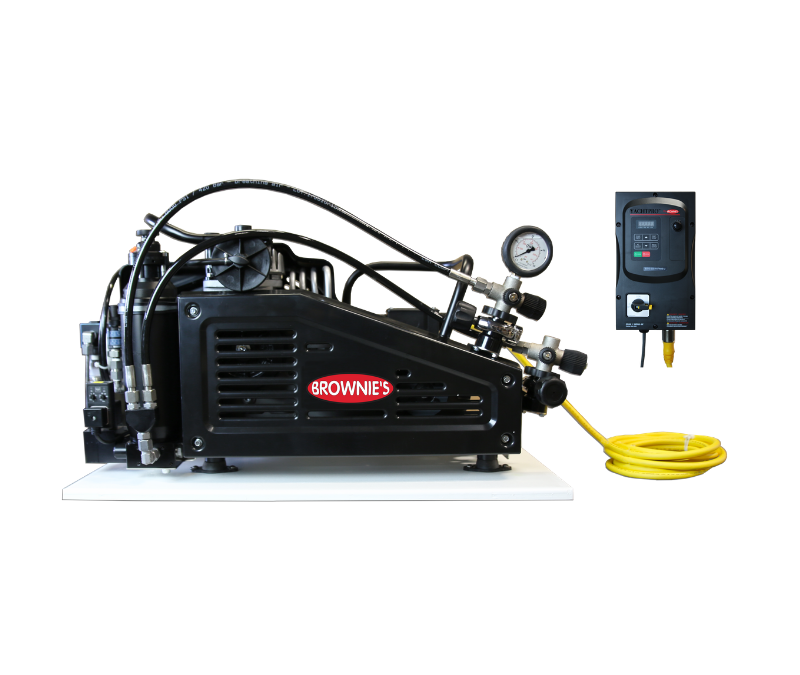
Compact onboard dive compressors have transformed the way recreational divers access breathing air while at sea. These essential tools provide the convenience of filling tanks directly aboard the vessel, eliminating dependence on shore-based filling stations. For private boaters and yachting enthusiasts, a purpose-built marine compressor means greater operational freedom, reduced logistical overhead, and — critically — reliable access to clean, safe breathing air regardless of location. LW Americas, the exclusive distributor of L&W high-pressure compressors in North and South America, supplies German-engineered systems specifically designed to meet the demands of demanding marine environments. This article explores the functionality, key features, and benefits of compact onboard dive compressors, examines space-saving design, marine-grade durability, breathing air quality standards, and safety requirements, and provides practical guidance for selecting the right model.
Functionality
Onboard dive compressors operate through a multi-stage compression mechanism that efficiently converts ambient air into high-pressure breathing air for diving tanks. Each compression stage progressively increases air pressure while integrated filtration removes moisture, hydrocarbons, and particulates — critical steps for delivering air that meets recognized breathing air quality standards such as CGA Grade E and EN 12021. Select L&W models are engineered for continuous-duty operation, sustaining extended fill sessions without mandatory cool-down periods — a meaningful advantage during multi-diver expeditions or back-to-back dive days. This on-site fill capability is particularly valuable on long passages, remote dive sites, and destinations where commercial air supplies are unavailable.
Key Features
Compact onboard dive compressors offer several key features that make them well-suited to boating and yachting applications:
- Portability and Weight: Designed for easy installation aboard vessels of varying size, these compressors are compact and lightweight, fitting into dedicated engine-room compartments or storage spaces without compromising deck operations.
- Automation and User-Friendly Operation: L&W models such as the YachtPro™ Essential (YP100) are fully automated, filling tanks to a programmed pressure and shutting off without manual intervention — a practical advantage when crew attention is divided between diving and vessel management.
- Variable Frequency Drive (VFD) Technology: Select L&W compressors incorporate VFD, which manages motor inrush current at startup, reduces energy consumption, and extends component service life.
- Advanced Monitoring and Telemetry: Onboard monitoring systems enable proactive detection of performance issues, supporting preventative maintenance and reducing unplanned downtime.
These features reflect the engineering precision that distinguishes purpose-built marine compressors from general-purpose alternatives.
Benefits for Recreational Divers
The use of onboard dive compressors delivers measurable operational and safety benefits for recreational divers:
- Independence from Filling Stations: Divers are no longer constrained by the proximity of shore-based filling stations, providing the freedom to explore remote reefs, offshore wrecks, and destinations far from commercial air supplies.
- Assured Breathing Air Quality: A well-maintained onboard compressor with a properly serviced filtration system delivers breathing air under the operator’s direct control — eliminating uncertainty about the quality of air sourced from third-party fill stations. L&W compressors are engineered to support compliance with CGA Grade E and EN 12021 breathing air standards when maintained per manufacturer protocols.
- Long-Term Cost-Effectiveness: Ownership reduces the cumulative cost of repeated fill-station visits, particularly for vessel operators who dive frequently or support multiple divers.
- Increased Diving Efficiency: On-demand tank filling eliminates transit time back to shore, maximizes bottom time, and allows dive schedules to be dictated by conditions rather than logistics.
These advantages contribute significantly to a more productive and safer diving experience, allowing operators to focus resources on the water rather than on supply chain management.
Use Cases
Onboard dive compressors are versatile and serve a range of operational scenarios:
- Private Yachts and Charter Vessels: Yacht operators integrating an L&W system gain a fully self-sufficient air supply capable of supporting multiple divers across consecutive dive days — without scheduling around shore-based services.
- Extended Offshore Expeditions: For multi-day passages or live-aboard itineraries, an onboard compressor ensures ample breathing air is available regardless of distance from port.
- Remote and Destination Diving: At locations far from commercial filling infrastructure — remote Pacific atolls, Caribbean anchorages, or offshore wrecks — onboard compressors open dive sites that would otherwise be inaccessible.
- Dive Training Operations: Instructors and dive schools operating from private vessels benefit from on-demand fills that eliminate logistical delays and allow training schedules to run without interruption.
These scenarios reflect the operational demands that L&W compressors are specifically engineered to address.
Space-Saving Benefits
The compact design of onboard dive compressors not only enhances portability but also optimizes storage utilization across a range of vessel types. Key space-saving considerations include:
- Engine-Room and Below-Deck Installation: L&W marine compressors are engineered with a compact footprint that accommodates installation in engine rooms, lazarette compartments, or dedicated storage areas, preserving deck and cabin space.
- Scalable Configurations: From single-tank recreational units to higher-output systems supporting a full dive crew, L&W offers configurations that match vessel size and operational requirements without over-specifying equipment.
- Straightforward Integration: Many L&W systems are designed for clean integration with existing onboard electrical and air systems, reducing installation complexity and setup time.
Proper placement and integration planning — areas where LW Americas provides direct technical support — ensure that the compressor operates efficiently without encroaching on critical vessel spaces.
Marine-Grade Durability
Marine-grade durability is a non-negotiable requirement for equipment operating in the saltwater environment. L&W compressors are constructed to address the specific stresses of offshore and coastal marine service:
- Corrosion-Resistant Construction: Critical components are manufactured from materials selected for resistance to saltwater, humidity, and the accelerated oxidation inherent to marine atmospheres, ensuring sustained performance and an extended service life.
- Robust Mechanical Design: German engineering principles prioritize structural integrity and component longevity, translating to dependable performance across multi-day dive itineraries without degradation.
- Telemetry-Ready Monitoring: Advanced monitoring capabilities enable early detection of performance anomalies, supporting proactive maintenance that prevents unplanned failures at sea.
- OEM Parts and Preventative Maintenance Support: A comprehensive inventory of OEM spare parts and structured preventative maintenance programs ensures compressors remain in specification throughout their operational life.
This combination of robust construction and manufacturer-backed support means operators can rely on their L&W system to perform when and where it matters most.
Safety Standards
Breathing air quality is the most consequential safety consideration in any dive compressor system. Onboard operations must adhere to recognized standards and maintain the filtration systems that make compliance achievable:
- CGA Grade E and EN 12021 Breathing Air Standards: These standards define acceptable concentration limits for contaminants including oil vapor, carbon monoxide, carbon dioxide, moisture, and particulates — and represent the baseline compliance target for any breathing air application.
- Multi-Stage Filtration Systems: Effective filtration is the mechanism through which breathing air quality is achieved. L&W systems incorporate multi-stage filtration designed to control total hydrocarbons, moisture, and particulate content — the primary contaminant categories that pose health risks to divers.
- Automated Safety and Over-Pressure Protection: Integrated safety mechanisms prevent over-pressurization and detect anomalous operating conditions, with automated shutdown protecting both the equipment and the diver.
- Scheduled Maintenance and Filter Replacement Protocols: Filtration media has a defined service life, and regular replacement is essential to sustaining air quality compliance throughout the compressor’s operational life — not merely at commissioning.
Adherence to these standards is fundamental to safe diving operations aboard any vessel.
How to Choose the Right Model
Selecting the correct onboard dive compressor requires a systematic evaluation of operational requirements rather than a comparison of specifications in isolation. The following practical considerations should guide the selection process:
- Number of Divers Onboard: The number of divers simultaneously supported determines the required delivery capacity. A single-diver recreational setup has fundamentally different fill-rate requirements than a yacht supporting four to six divers per day. Undersizing the compressor relative to diver load results in extended fill times and, in continuous-duty applications, potential thermal stress on the unit.
- Expected Fills Per Day: Calculate the total volume of air required across a typical diving day — accounting for tank size, fill pressure (e.g., 3,000 psi / 207 bar or 3,500 psi / 241 bar), and number of fills per diver. This figure drives the required flow rate (cubic feet per minute or liters per minute) and determines whether a standard-duty or continuous-duty model is appropriate.
- Available Power Supply: Compatibility with the vessel’s power infrastructure is a critical practical constraint. L&W compressors are available in configurations suited to 200–240V, 50/60Hz electrical supplies, including systems compatible with onboard generator sets common to larger yachts. Power source availability directly affects which models are operationally feasible.
- Space and Installation Constraints: Measure available installation space before specifying a unit. Consider ventilation requirements, access for filter and oil servicing, and vibration isolation. LW Americas provides technical support for installation planning to ensure the selected model integrates correctly within the vessel’s layout.
- Remote Fill and Cascade Options: For vessels supporting extended expeditions or higher diver volumes, a cascade storage system — in which the compressor charges high-pressure storage cylinders that are then used to fill dive tanks — increases effective fill capacity and reduces direct compressor run time. LW Americas can advise on cascade configurations appropriate to specific operational profiles.
- Air Quality Standard Compliance: Confirm that the selected model, when maintained per manufacturer protocols, supports compliance with the applicable breathing air standard (CGA Grade E in North America; EN 12021 in international contexts). This is a non-negotiable criterion for any breathing air application.
Prospective buyers are encouraged to contact LW Americas directly to discuss their specific operational requirements. The team provides expert guidance on model selection, installation planning, and ongoing maintenance support across North and South America.
| L&W Product Line | Key Characteristics | Ideal Application |
|---|---|---|
| YachtPro™ Series | Purpose-built for marine environments; fully automated; scalable from recreational to commercial duty | Private yachts, charter vessels, live-aboard operations |
| Compressors | High-pressure systems up to 6,100 psi; continuous-duty capable configurations available | Extended offshore expeditions, multi-diver operations |
| NitroxMaker™ | Integrates with YachtPro™ systems; produces 21–40% nitrox mixtures via membrane technology | Nitrox diving from private or charter vessels |
Specific output capacities, duty cycles, and power requirements vary by model. Contact LW Americas for a specification comparison matched to your vessel and diver load.
Conclusion
Owning a compact onboard dive compressor fundamentally changes what is possible from a private vessel. It removes dependence on shore-based filling infrastructure, extends the range of accessible dive sites, supports compliance with recognized breathing air quality standards, and delivers the operational reliability that serious divers and yacht operators require. For those seeking equipment engineered to perform in demanding marine environments, L&W compressors — distributed exclusively across North and South America by LW Americas — represent a proven solution backed by German engineering precision, robust long-service designs, and responsive U.S.-based technical support. To discuss specific vessel requirements, model selection, or installation planning, contact LW Americas at +1 954-462-5571 or info@lwamericas.com.
Ready to Equip Your Vessel?
LW Americas’ team of specialists is available to help identify the right L&W compressor for any vessel type, diver load, or operational profile. Whether the application calls for a purpose-built YachtPro™ marine compressor, a high-output system from the broader L&W Compressors range, or onboard nitrox generation with the NitroxMaker™, LW Americas provides expert guidance on model selection, installation planning, and ongoing maintenance support across North and South America.
Contact LW Americas at +1 954-462-5571 or info@lwamericas.com to discuss specific requirements.