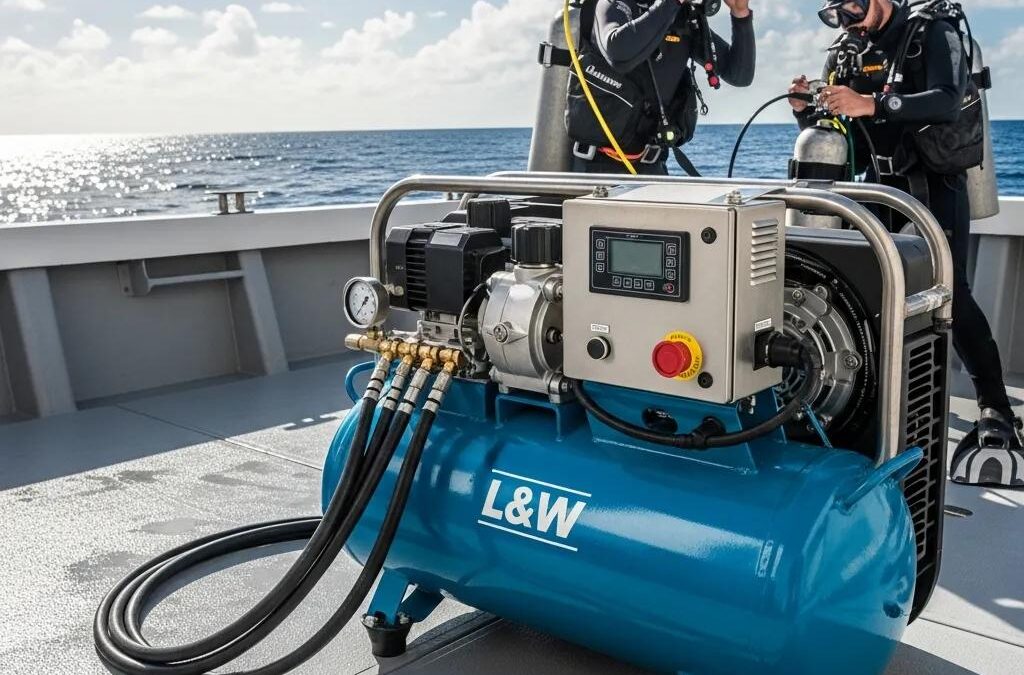
What Makes L&W Compressors Stand Out in Diving: Features, Technology, and Reliability Explained
L&W Compressors are recognized for their exceptional performance in diving applications, driven by advanced engineering and innovative features. This article delves into the unique aspects that set L&W Compressors apart, including their automation, reliability, and safety features, many of which are enhanced by their continuous-duty capable designs. Readers will gain insights into how these compressors enhance diving experiences through superior technology and design. Many divers face challenges related to air quality, compressor efficiency, and operational safety. L&W Compressors address these issues with robust solutions that ensure reliable air supply and operational efficiency. We will explore the principles of German engineering that define their quality, the importance of continuous-duty operation for specific models, and the reliability features that make them a preferred choice for divers.
How Does German Engineering Define L&W Dive Compressor Quality?
German engineering defines L&W dive compressor quality through a combination of robust design, the availability of continuous-duty capable models, and advanced monitoring systems. LW Americas emphasizes the importance of specifications such as pressure ratings, delivery capacities, and power requirements, ensuring that their compressors are tailored for high-performance in demanding marine environments. Features like corrosion-resistant components, advanced filtration systems, and telemetry readiness for proactive maintenance further enhance reliability and safety, making them suitable for critical applications like breathing air supply for divers.
What Are the Key German Engineering Principles in L&W Compressors?
Continuous-Duty Design Options: Emphasis on creating compressor models and configurations that can operate continuously without frequent cool-down periods, enhancing reliability and uptime.
Robust Mechanical Design: Use of one-piece cast blocks to improve durability and reduce potential leaks, ensuring long-term performance.
Thermal Management: Implementation of thermal management strategies to maintain optimal operating temperatures and efficiency.
Precision and Control: Focus on precise pressure control and monitoring capabilities to ensure process consistency and safety, particularly in critical applications.
Customization and Integration: Ability to provide tailored solutions that combine appropriate pressure, flow, and duty cycle with project management support for installation.
Monitoring and Telemetry: Integration of telemetry systems to analyze performance trends, allowing for proactive maintenance and specification validation.
These principles contribute to the overall efficiency, safety, and effectiveness of the compressors in various industrial applications.
How Does the One-Piece Cast Block Enhance Compressor Performance?
The one-piece cast block enhances compressor performance by improving durability and reducing leak potential. This design contributes to the overall efficiency and reliability of the compressor, which is particularly important in applications where consistent performance is critical.
Why Are Continuous-Duty Capable L&W Scuba Compressors Crucial?
Continuous-duty operation, available on specific L&W Scuba compressor models and configurations, is crucial because it ensures sustained high-pressure fills and robust uptime, which are essential for applications like diving and firefighting. These specific compressors are designed to operate continuously without interruption, reducing the risk of downtime and enhancing reliability. Additionally, continuous-duty capable designs, combined with monitoring capabilities, support long-term asset planning and maintenance, making them suitable for critical breathing-air systems and other demanding applications.
How Do Continuous-Duty Capable Compressors Benefit Extended Dive Sessions?
Continuous-duty operation, when configured for specific models, benefits extended dive sessions by enabling longer run times without thermal compromise, which is crucial for applications like scuba fills that require consistent air supply. The design of continuous-duty capable platforms incorporates robust mechanical components and optimized cooling strategies, allowing for sustained operation and predictable maintenance intervals. This ensures that critical breathing-air systems can maintain air purity and availability during extended use, ultimately enhancing the reliability and efficiency of the diving experience.
How Do L&W’s Continuous-Duty Capable Models Compare to Competitors?
L&W’s continuous-duty capable platforms are positioned as competitive options in the market due to their robust mechanical components, energy efficiency improvements, and integration-ready monitoring capabilities. They emphasize total cost of ownership, uptime guarantees, and serviceability, which are increasingly valued by buyers. L&W’s designs, such as one-piece cast blocks, enhance durability and reduce maintenance needs, making them suitable for critical applications. Additionally, their project management services and custom engineering support help ensure that systems are tailored to specific operational demands, further differentiating them from competitors. Overall, L&W’s combination of continuous-duty design options and monitoring readiness offers a compelling package for organizations seeking reliable and efficient compressor solutions.
What Reliability Features Make L&W High-Pressure Dive Compressors Stand Out?
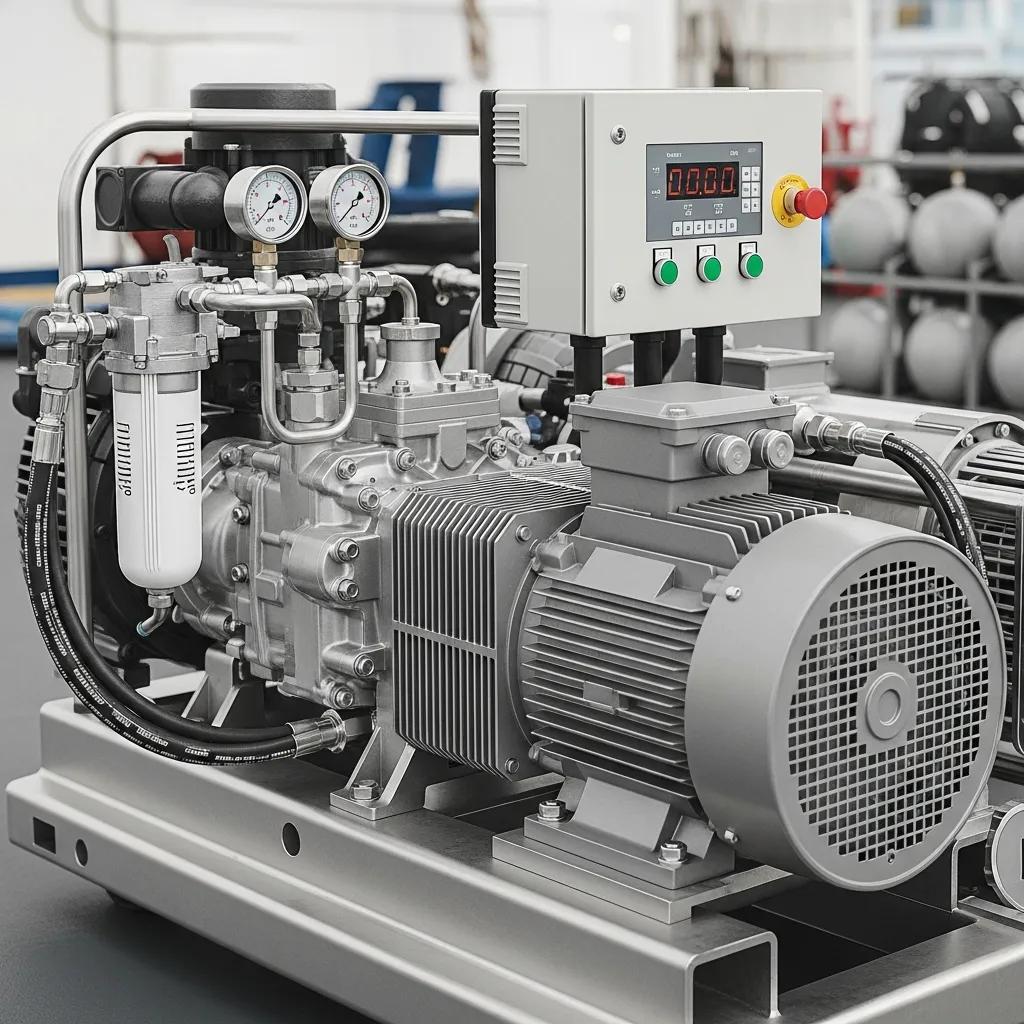
Primary Pressure Calibration – Allows adjustment of the desired inlet pressure.
Inlet Buffer Tank – 150 l capacity with safety valve, manual condensate drain valve, pressure gauge, and electrical cut-off solenoid for inlet gas.
Primary Pressure Monitoring – Includes pressure shut off at maximum/minimum inlet pressure.
Electronic Compressor Control (ECC) – Facilitates automated operation.
Auto Start Function – For semi/full automatic mode.
Inter-stage Pressure Gauge – For monitoring pressure between stages.
Oil Pressure Gauge and Monitoring – Includes auto shut down feature.
Compressor Block Heating – For operation in ambient temperatures below +5°C.
Water Cooling System – Utilizes a stainless steel heat exchanger.
High-Pressure Versions – Capable of reaching up to 420 bar.
Filter Extension Options – Allows for larger or additional filter housing.
How Do Steel Piston Rings Improve Compressor Longevity?
Steel piston rings improve compressor longevity by providing a better seal, which reduces wear and tear on the compressor components. This enhancement leads to improved efficiency and lower maintenance costs over time, ensuring that the compressor operates reliably in various conditions.
What Maintenance Advantages Do L&W Compressors Offer for Diving?
Automated Operation: Compressor systems, such as the YachtPro™ Essential (YP100), are designed for automated operation, allowing users to connect tanks, open valves, and initiate fills without constant supervision, freeing them for other tasks.
Proactive Monitoring for Filter Life: Real-time monitoring, like that provided by the Puracon M200, tracks moisture content in compressed air, alerting users when filter changes are necessary to prevent moisture from entering scuba tanks and optimizing filter lifespan.
Structured Maintenance Support: Emphasis on best practices for filter maintenance, including regular checks and replacements based on usage, helps maintain air quality and system longevity.
Digital Record Keeping: A structured maintenance log system supports compliance and predictive maintenance, reducing risk and demonstrating due diligence during inspections.
Designed for Serviceability: L&W compressors are engineered with service access in mind, simplifying routine maintenance and component replacement to minimize downtime.
How Do L&W Compressors Ensure Safe Breathing Air Quality for Divers?
Advanced Filtration and Monitoring: Systems like Puracon Filter Monitoring actively ensure air purity by detecting and alerting users to potential contaminants, crucial for meeting breathing air standards.
Integrated Pressure Management: Primary pressure monitoring and shut-off mechanisms at maximum and minimum inlet pressures prevent unsafe operating conditions.
Robust System Design: Features such as one-piece cast blocks, lower RPM operation, and the option for continuous-duty capable designs contribute to overall system durability and consistent, safe performance.
Comprehensive Safety Valves: Integrated safety valves and monitoring systems are in place to mitigate overpressure risks, ensuring secure operation during use.
What Are the EN 12021 Standards and How Do L&W Systems Support Compliance?
The EN 12021 standards set the requirements for breathing air quality in diving applications. L&W Compressors, when integrated into a complete system with appropriate filtration, regular maintenance, and continuous monitoring, are designed to help achieve compliance with these standards by providing air that meets or exceeds the purity levels required for safe breathing. This comprehensive approach to compliance is critical for maintaining diver safety and operational integrity.
Beyond Air Purification: Nitrox Generation with NitroxMaker™
While dedicated multi-stage filtration systems, such as those incorporating Puracon technology, are essential for ensuring breathing air purity by removing contaminants like oil, particulates, moisture, and hydrocarbons, L&W also offers specialized systems like the NitroxMaker™. The NitroxMaker™ is a low-pressure membrane nitrox generator designed to produce enriched air nitrox, not to purify breathing air. It integrates seamlessly into a complete compressor setup, allowing divers to safely generate nitrox for extended bottom times and reduced nitrogen loading. Continuous monitoring of air quality via dedicated filtration systems remains a critical design principle to ensure compliance with purity standards for breathing air.
Which L&W Compressor Models Best Suit Different Diving Applications?
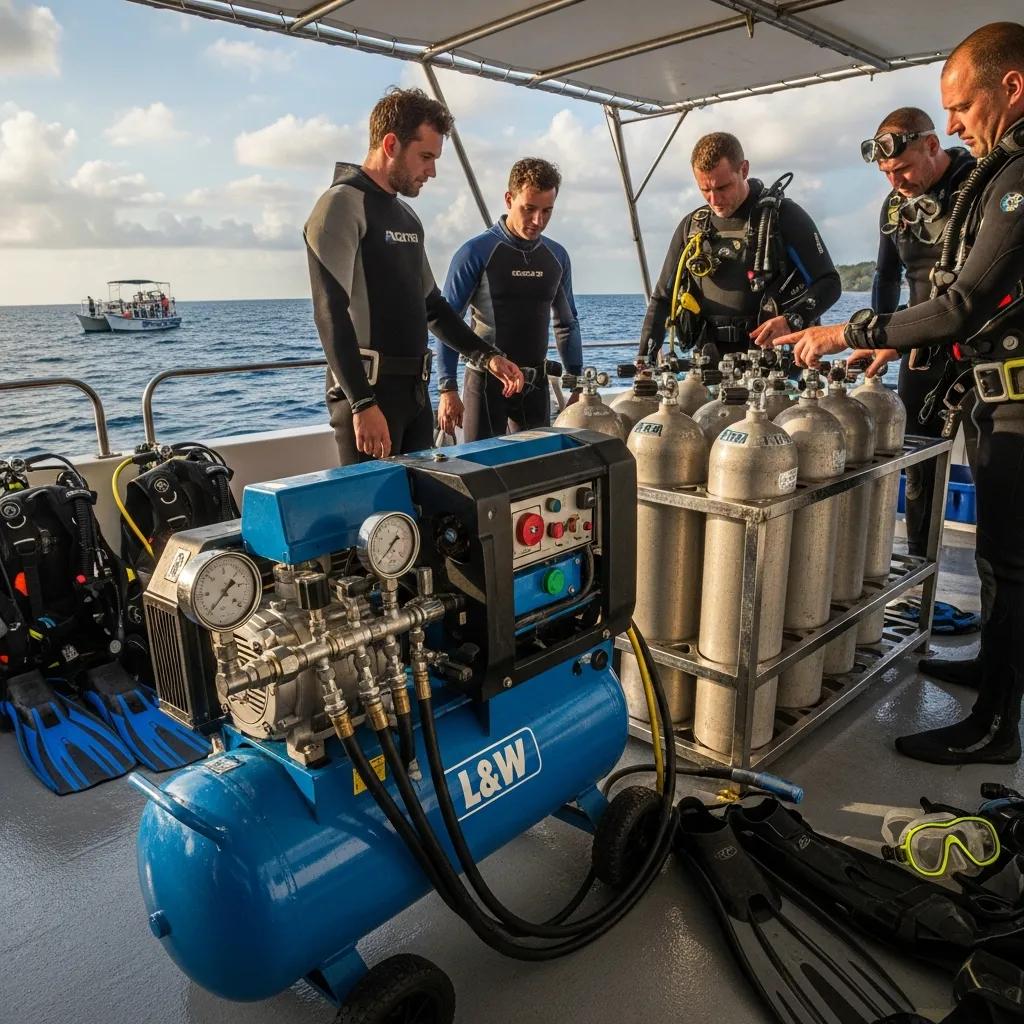
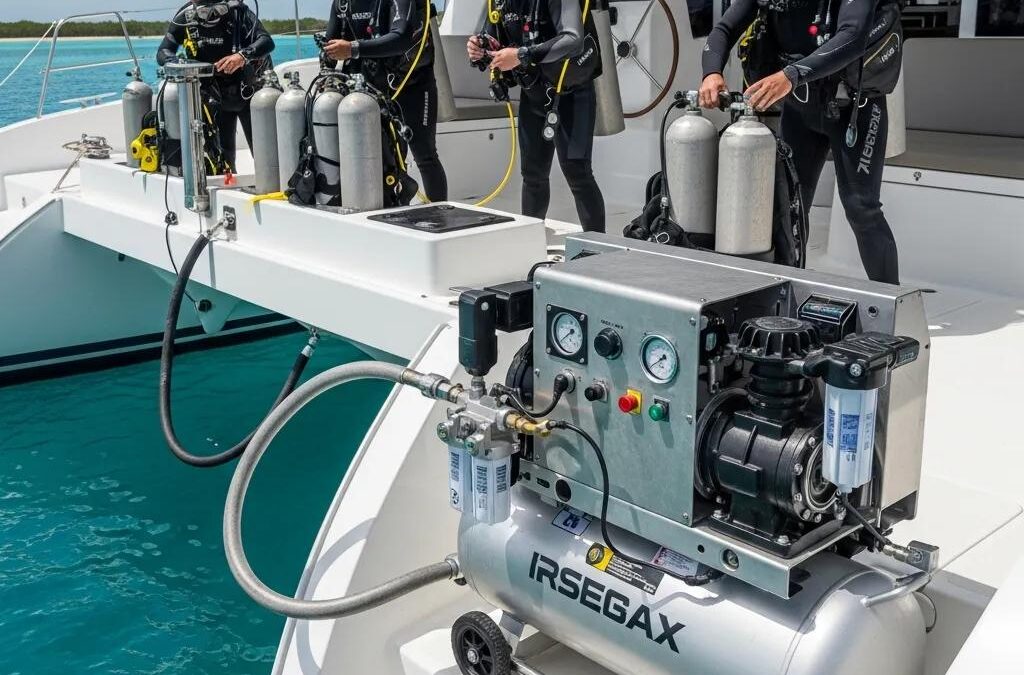
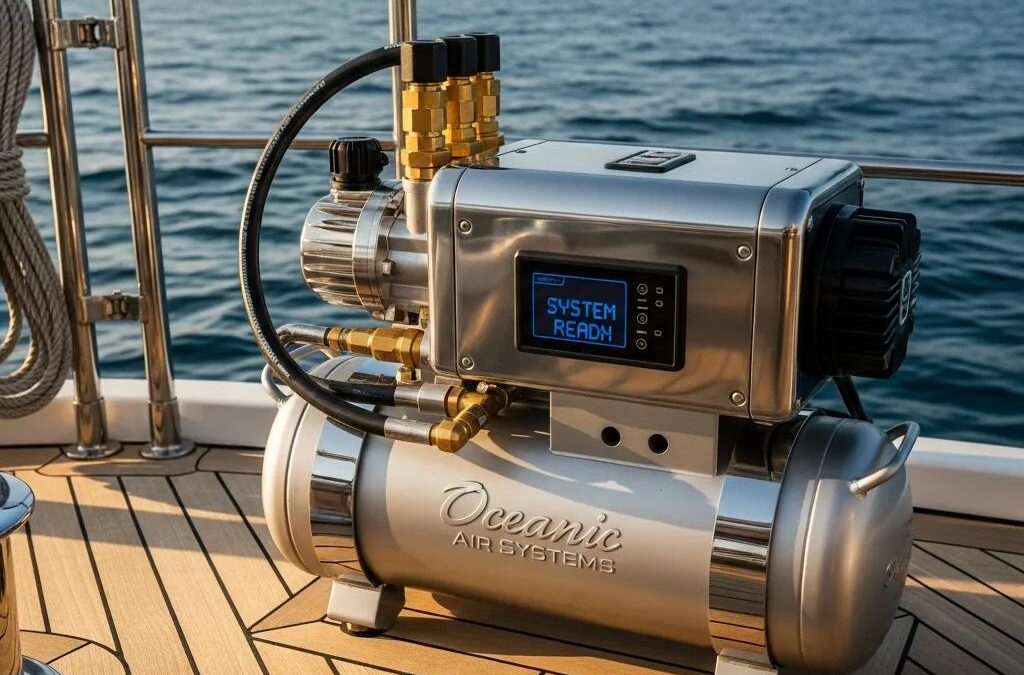
The recommended compressor model for diving applications, specifically for a Lagoon 42 Catamaran, is the YachtPro™ Essential (YP100). This model is preferred by motor cat and sail cat owners due to its automation features, allowing users to fill tanks to a programmed pressure without constant supervision. It includes a Variable Frequency Drive (VFD) to manage inrush current during motor start-up, making it suitable for marine environments.
For other diving applications, LW Americas offers a range of compressors designed for high-pressure needs, ensuring clean and safe air for divers, with robust features for durability and performance in marine conditions. However, specific models for different diving applications beyond the YP100 are not detailed in the provided context.
What Are the Features of the YachtPro™ Series for Marine Diving?
The YachtPro™ series is designed specifically for marine environments, featuring automation for ease of use, corrosion-resistant components, and advanced filtration systems. These features ensure that divers receive clean and safe air while maximizing operational efficiency.
How Do L&W Compressors Support Commercial and Technical Diving Needs?
L&W Compressors support commercial and technical diving needs by providing high-performance, reliable compressor systems specifically designed for marine environments. Their compressors are equipped with features such as corrosion-resistant components, advanced filtration systems for clean and safe air, and automation for ease of use. They ensure sustained uptime and precise pressure control, which are critical for breathing air supply for divers. Additionally, their continuous-duty capable platforms and telemetry-ready designs enhance operational efficiency and safety, making them suitable for various underwater activities.
Why Choose LW Americas for Support and Custom Dive Compressor Solutions?
You should choose LW Americas for support and custom dive compressor solutions because they offer tailored high-pressure solutions that align with specific site constraints and performance targets. Their YachtPro™ Essential (YP100) compressor system is fully automated, allowing users to fill tanks without constant supervision. LW Americas also provides project-managed custom solutions, ensuring that the final system meets operational and regulatory requirements, which can improve lifecycle costs and reduce downtime. Additionally, they offer responsive North American support for specific quotes, custom designs, and engineering assistance.
What Customization and OEM Services Does LW Americas Provide?
LW Americas provides customization and OEM services that include tailored high-pressure compressor solutions, project management, and design services. Their approach involves a structured workflow that starts with needs assessment, followed by equipment selection, engineering design, installation oversight, commissioning, and post-installation support. They offer custom designs, 2D/3D drawings, and project-managed compressor selection to ensure systems align with operational and regulatory environments. Additionally, they focus on optimizing component selection and service access to improve lifecycle costs and regulatory compliance.
How Does North American Support Enhance Customer Experience?
North American support enhances customer experience by providing faster response times for parts and technical queries, which is crucial for maintaining operational efficiency. The local presence allows for custom solution capabilities and comprehensive project management, reducing installation complexity. This support contributes to reliable fill-station uptime, predictable maintenance costs, and facilitates compliance verification during audits, all of which are practical outcomes that benefit departments managing life-safety infrastructure.
Marine Compressor Systems for Professional Diving Needs: High-Pressure Solutions for Commercial and Offshore Applications
Marine compressor systems are essential for professional diving, providing the high-pressure air necessary for safe underwater operations. These specialized systems compress ambient air to high pressures, ensuring divers have a reliable supply of clean and safe breathing air. In this article, we will explore the critical role of high-pressure marine compressors in professional diving, the differences between various types of compressors, and the advanced technology offered by LW Americas. Additionally, we will discuss the importance of air quality standards and the applications of custom marine compressor systems in commercial diving.
What Are High-Pressure Marine Compressors and Their Role in Professional Diving?
High-pressure marine compressors are specialized systems designed to compress ambient air to high pressures for various applications, including scuba diving. In professional diving, these compressors play a critical role by providing a reliable supply of clean and safe breathing air. They are engineered to withstand harsh marine environments and often include advanced filtration systems to ensure the air quality meets safety standards. These compressors enhance safety and efficiency in underwater activities by delivering the necessary air supply for divers while also being equipped with features that ensure durability and performance in challenging conditions.
How Do Continuous-Duty Compressors Ensure Reliable Breathing Air Supply?
Continuous-duty compressors, depending on their specific design and configuration, can ensure a reliable breathing air supply by incorporating robust mechanical components and advanced thermal management strategies that allow them to operate without frequent cool-down periods. These compressors are designed with lower RPM components and one-piece cast blocks, which enhance durability and reduce thermal stress. This engineering enables them to sustain long run times with predictable maintenance intervals, making them suitable for critical applications like breathing air systems. Additionally, their energy-efficient designs contribute to lower total costs per delivered cubic foot, enhancing resilience and uptime for continuous industrial use.
What Are the Differences Between Portable and Stationary Marine Compressor Systems?
The differences between portable and stationary marine compressor systems include:
Purpose and Use Case:Stationary Compressors: Designed for centralized high-volume refilling and continuous operation, making them suitable for consistent, high-demand environments.Portable Compressors: Ideal for situational support, such as on-scene refilling, remote training, or temporary field deployment where a fixed installation is not feasible.
Performance:Stationary Compressors: Specific models typically have higher sustained pressure capabilities (up to 5000 psi) and flow rates, supporting continuous duty.Portable Compressors: Specific models may have moderate pressure capabilities (up to 4500 psi) and are not always designed for continuous operation.
Maintenance and Access:Stationary Compressors: Generally offer easier maintenance access and are designed for sustained power availability and cooling capacity.Portable Compressors: May have limitations in maintenance access and cooling, as they are built for mobility.
Installation and Footprint:Stationary Compressors: Require specific electrical and ventilation setups and have a fixed footprint.Portable Compressors: Designed for easy transport and setup, often requiring less space and simpler installation.
Operational Considerations:Stationary Compressors: Better suited for high-throughput needs and long-term operational plans.Portable Compressors: More flexible for temporary needs and can be used in various locations as required.
How Does LW Americas’ Continuous-Duty Compressor Technology Stand Out?
LW Americas’ continuous-duty compressor technology, in its various configurations, stands out due to its engineering designed for uninterrupted operation without frequent cool-down periods. This is achieved through the use of lower RPM components, robust cast blocks, and effective thermal management strategies that dissipate heat during prolonged use. These features reduce thermal stress, maintain steady pressure delivery, and minimize the risk of unplanned stops, thereby improving overall equipment availability. Additionally, continuous-duty compressors experience fewer start/stop cycles, which decreases wear on components and extends maintenance intervals compared to intermittent-duty machines. This design is particularly beneficial for operations that prioritize uptime and reliability.
What Are the Advantages of the One-Piece Cast Block Design?
The one-piece cast block design offers several advantages, including enhanced durability and reduced risk of leaks. This design minimizes the number of joints and potential failure points, ensuring a more robust and reliable compressor system. Additionally, the solid construction allows for better heat dissipation, which is crucial for maintaining optimal operating temperatures during extended use.
How Does Lower RPM Operation Reduce Noise and Wear?
Lower RPM operation significantly reduces noise levels and wear on compressor components. By operating at lower speeds, the mechanical stress on parts is minimized, leading to longer service life and reduced maintenance needs. This quieter operation is particularly beneficial in environments where noise reduction is a priority, such as in residential areas or during nighttime operations.
What Are the Standards and Solutions for Breathing Air Quality and Purification?
Breathing air systems, depending on their intended application and regulatory requirements, require controlled pressure, certified filtration, and adherence to recognized standards for air quality, specifying limits for total hydrocarbons, CO, moisture, and particulates. Compliance with these standards is critical for maintaining the safety and operational integrity of breathing air systems used in diving, as they help prevent health risks associated with contaminated air. Additionally, adherence to these standards supports continuous availability and reliability of air supply during diving operations.
How Do Grade E Breathing Air Standards Impact Marine Diving Operations?
Grade E breathing air standards impact marine diving operations by ensuring that the air quality meets specific safety and health requirements for systems configured to meet these standards. These standards dictate controlled pressure, certified filtration, and limits on total hydrocarbons, carbon monoxide, moisture, and particulates in the air supplied to divers. Compliance with these standards is critical for maintaining the safety and operational integrity of breathing air systems used in diving, as they help prevent health risks associated with contaminated air. Additionally, adherence to these standards supports continuous availability and reliability of air supply during diving operations.
Research highlights the critical need for rigorous air quality testing to prevent contamination in breathing air systems.
High-Pressure Compressors & Breathing Air Quality for Divers
pared with the aid of high-pressure compressors operating in breathing air has been found to contain elevated levels of and Systems be made obligatory and that air quality tests be
Carbon monoxide and water vapor contamination of compressed breathing air for firefighters and divers, CC Austin, 1997
Which Purification Systems Ensure Safe Breathing Air for Divers?
The purification systems that ensure safe breathing air for divers include multi-stage purification combined with continuous monitoring. This design principle supports compliance and operator safety by detecting any degradation in purification performance before user exposure. Additionally, while some systems utilize oil-free compressors, many compliant breathing air systems effectively mitigate oil carryover risk into the compressed air stream through the use of high-quality oil-lubricated compressors paired with advanced, multi-stage filtration systems. Both approaches are essential for maintaining purity standards in breathing air applications, with the specific choice often depending on operational requirements and system design.
Further studies emphasize the importance of multi-stage purification and robust filtration systems for ensuring the safety of breathing air.
Breathing Air Filtration & Multi-Stage Purification for Diving Safety
This paper deals with the implementation of safety parameters downstream of the breathing air filtration system. Tests were Compressed air was subjected to multi-stage purification in a
Use of a Carbon Dioxide Measurement System to Control the Process of Obtaining Breathing Air for Hyperbaric Oxygen Conditions, A Woźniak, 2020
How Do Nitrox and Mixed Gas Systems Enhance Professional Diving Performance?
Nitrox and mixed gas systems can enhance professional diving performance by allowing divers to potentially extend their bottom time and reduce the risk of decompression sickness, provided proper training, dive planning, and adherence to established standards are maintained. These systems utilize different gas mixtures to optimize the breathing gas for specific depths and conditions, improving overall safety and efficiency during dives.
Understanding the physiological effects of gas flow under high ambient pressure is fundamental to optimizing these specialized breathing gas mixtures.
Gas Flow & Breathing Physiology Under High Ambient Pressure
of gas flow under high pressure in the human airways and it gas flow under high pressure in air was compared to that of high at each stop by connecting the wedge to a standard Collins
Breathing under high ambient pressure, 1966
What Is the NitroxMaker™ System and How Does It Work?
The NitroxMaker™ system is a low-pressure membrane nitrox generator designed to produce nitrox blends on-site. It works by separating oxygen from ambient air, allowing divers to customize their breathing gas according to their specific needs. It is crucial to note that the NitroxMaker™ system generates low-pressure nitrox and must be paired with a separate high-pressure breathing-air compressor for the safe and proper filling of dive cylinders. By providing nitrox blends, when used correctly and in conjunction with appropriate high-pressure compression, the system can help reduce nitrogen absorption, thereby potentially minimizing the risk of decompression sickness for properly trained and equipped divers following established protocols.
How Are Trimix and Enriched Air Used in Commercial Diving?
Trimix and enriched air are used in commercial diving to enhance safety and performance at greater depths, when utilized by properly trained and certified divers following strict dive plans and safety protocols. Trimix, which consists of oxygen, nitrogen, and helium, can reduce the risk of nitrogen narcosis and allow divers to operate safely at deeper depths. Enriched air, or nitrox, provides a higher oxygen concentration, which can potentially improve bottom time and reduce fatigue. Both gas mixtures are essential for professional divers working in challenging underwater environments, but their safe application is entirely dependent on adherence to industry standards and individual diver competency.
Which Commercial Diving Applications Benefit from Custom Marine Compressor Systems?
The commercial diving applications that benefit from custom marine compressor systems include scuba fills, firefighting SCBA, medical gas supply, and maritime systems. These applications require specific specifications related to flow, pressure, air quality, and duty cycle, which custom systems can address effectively.
How Are Offshore Diving and Underwater Construction Supported by Compressor Systems?
Offshore diving and underwater construction are supported by compressor systems that provide reliable breathing air and power for tools. These systems are designed to meet the high demands of underwater operations, ensuring that divers have the necessary air supply while also powering equipment used in construction and maintenance tasks.
What Are the Design Considerations for Dive Boat Air Fill Stations?
The design considerations for dive boat air fill stations include:
Continuous Operation: Systems must be optimized for continuous-duty to ensure reliable air supply during operations.
High-Pressure Capability: The compressors should meet target cylinder pressures, typically between 3000–4500 psi.
Air Quality Standards: Compliance with controlled pressure, certified filtration, and recognized air quality standards is essential, focusing on limits for total hydrocarbons, CO, moisture, and particulates.
Compact Packaging: Due to space constraints on boats, equipment should be compact and easily mountable.
Vibration Resistance: The design must withstand the vibrations typical in maritime environments.
Custom Configurations: Tailoring systems to specific site demands and operational profiles is crucial, including expected simultaneous fills and turnaround times.
Safety Features: Incorporation of safety valves and monitoring systems to manage pressure and ensure safe operation.
What Are Best Practices for Maintenance, Support, and Spare Parts for Marine Compressors?
Best practices for maintenance, support, and spare parts for marine compressors include regular servicing according to manufacturer specifications, timely replacement of worn components, and adherence to manufacturer guidelines. Proper maintenance ensures the longevity and reliability of compressor systems, which is critical for safety in diving operations.
How Often Should Professional Diving Compressors Be Serviced?
Professional diving compressors should be serviced regularly, with specific intervals varying by model and manufacturer recommendations, but typically every 500 hours of operation or annually, whichever comes first. Regular servicing includes checking and replacing filters, inspecting mechanical components, and ensuring that the system operates within specified parameters. Neglecting maintenance can lead to reduced performance and increased risk of failure during critical operations.
What Support Does LW Americas Provide for Compressor Maintenance and Parts?
LW Americas provides support for compressor maintenance and parts through tailored high-pressure solutions, including project-managed custom designs, engineering support, and responsive North American assistance. They offer features such as primary pressure monitoring, electronic compressor control, and maintenance planning to enhance equipment availability and reduce downtime. Additionally, they provide standard equipment with automatic features, safety measures, and options for customization based on specific application requirements.
In the realm of industrial air systems, optimizing high-pressure continuous duty performance is crucial for enhancing operational efficiency and reducing downtime. This article delves into the key features and benefits of L&W compressor systems, providing insights into how they can transform your operations. Readers will learn about the innovative designs, energy-saving technologies, and tailored solutions that L&W offers to meet diverse industrial needs. Many businesses face challenges related to compressor efficiency, leading to increased operational costs and downtime. L&W compressor systems present a solution through their advanced engineering and customer support. This guide will explore the key features of L&W compressors, their energy efficiency capabilities, custom solutions for specific industries, maintenance practices for longevity, and the practical applications that highlight their efficiency benefits.
What Are the Key Features of L&W Continuous-Duty High-Pressure Compressors?
The key features of L&W Continuous-Duty High-Pressure Compressors include:
Continuous Operation: Designed for extended operation without frequent cool-down periods, contributing to enhanced uptime in suitable applications.
Robust Mechanical Design: Utilizes lower RPM components and one-piece cast blocks for durability and reduced leak potential.
Thermal Management: Incorporates strategies to manage heat effectively during operation, crucial for sustained performance.
Telemetry Ready: Supports monitoring of performance metrics like FAD (Free Air Delivery), motor current, and vibration, enabling proactive maintenance and specification validation.
Custom Engineering Support: Offers tailored solutions for specific operational needs, including pressure, flow, and duty cycle, ensuring application-specific optimization.
North American Support: Provides local assistance for installation and maintenance, enhancing serviceability.
Advanced Control Features: Includes options like Electronic Compressor Control (ECC) for automatic operation and monitoring capabilities.
These features are designed to make them suitable for critical applications requiring sustained high-pressure fills and robust uptime.
The robust design and continuous operation of L&W compressors align with broader industry insights on high-pressure continuous duty systems.
As a hermetic compressor designed for use with high-pressure refrigerants, the scroll compressor offers a compact, lightweight, and efficient solution. These compressors are designed for continuous duty and long life, making them suitable for demanding industrial applications. Overall, hermetic scroll air compressor performance is enhanced by these design considerations.
A hermetic scroll compressor for application to high, 2003
How Does the One-Piece Cast Block Design Enhance Compressor Durability?
The one-piece cast block design enhances compressor durability by improving mechanical integrity and reducing the potential for leaks. This design minimizes the number of joints and connections, which are often points of failure in compressors, thereby increasing reliability and longevity.
Why Does Lower RPM Operation Improve Efficiency and Reduce Wear?
Lower RPM operation improves efficiency and reduces wear by minimizing friction and heat generation within the compressor. This leads to less wear and tear on components, ultimately extending the operational life of the compressor and reducing maintenance needs.
How Do L&W Compressor Systems Achieve Energy Efficiency and Cost Savings?
L&W Compressor Systems achieve energy efficiency and cost savings through several key features:
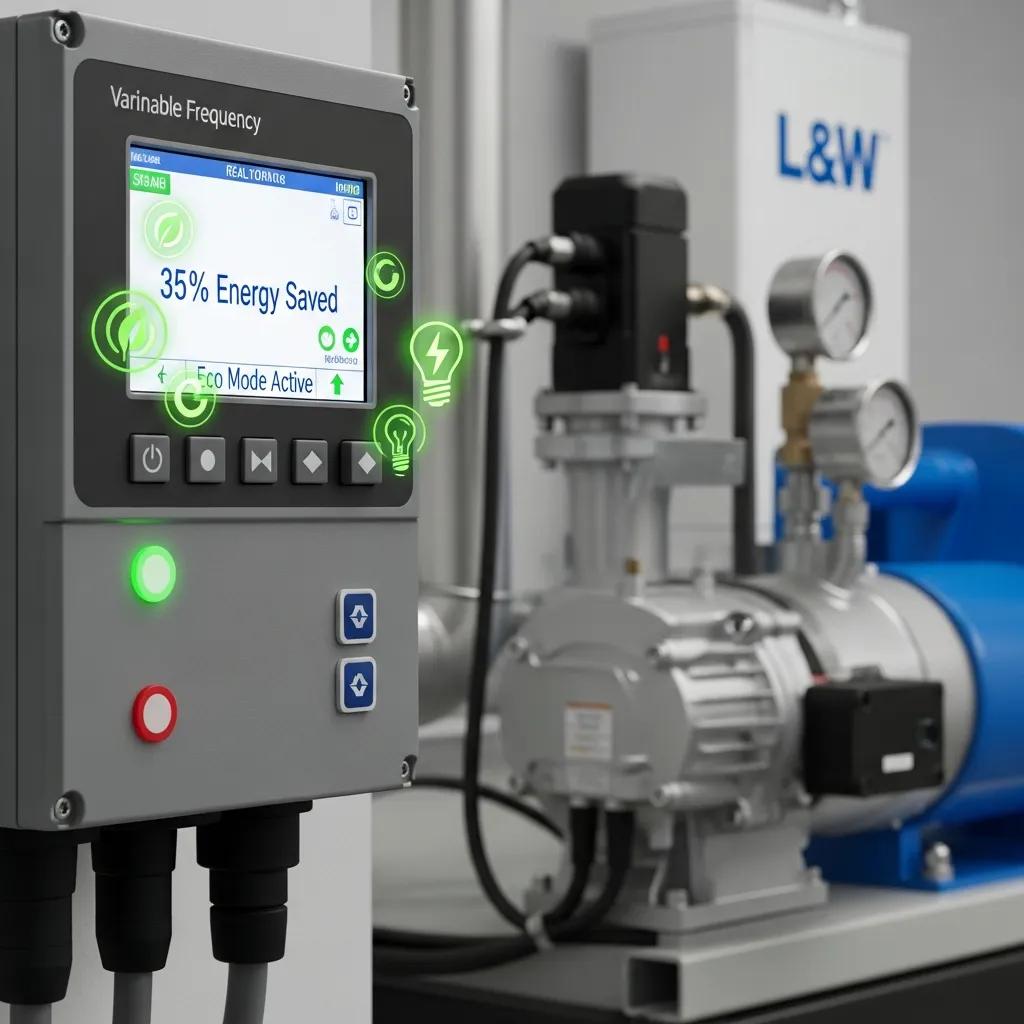
Variable Frequency Drive (VFD): This technology reduces the inrush current when starting the electric motor, potentially leading to significant energy savings depending on the duty cycle.
Automated Operation: The systems are designed to automatically stop when tanks are full, optimizing energy consumption.
Continuous-Duty Design: Their compressors are built for continuous operation, which, when properly applied, can enhance reliability and reduce maintenance needs, contributing to cost savings over time.
Monitoring and Telemetry: By analyzing telemetry trends, operators can detect issues before they lead to failures, facilitating proactive maintenance and potential downtime reduction.
Optimized Mechanical Design: Features like one-piece cast blocks improve durability and reduce leak potential, contributing to lower operational costs.
These elements combined help in reducing energy usage and maintenance costs, ultimately leading to significant savings for users.
Further emphasizing the importance of such technologies, research highlights the critical role of Variable Frequency Drives in achieving significant energy savings for industrial air compressors.
Variable Frequency Drives for Industrial Air Compressor Energy Savings
Air compressors have the problem of high energy consumption and high operating costs, which seriously restricts the development of the hydrogen fuel cell industry. Therefore, it is necessary to apply variable-frequency drive (VFD) to control the operation of HFC air compressors, and the application status of VFD in HFC air compressors is reviewed in this paper.
Application status of variable-frequency drive in hydrogen fuel cell air compressors from an industrial viewpoint: A review, X Guo, 2024
What Role Does Continuous-Duty Operation Play in Reducing Downtime?
Continuous-duty operation can play a crucial role in reducing downtime by enabling longer run times with predictable maintenance intervals when integrated into a well-planned maintenance strategy. This is achieved through the use of robust mechanical components and optimized cooling strategies, which allow compressors to sustain continuous operation without thermal compromise. As a result, applications that previously required complex setups can now aim for higher uptime with fewer, more efficient units. This shift emphasizes lifecycle cost and serviceability, ultimately aiming for reduced maintenance frequency and improved reliability for critical systems.
How Can Smart Controls Optimize Energy Consumption in L&W Systems?
Smart controls are designed to optimize energy consumption in L&W systems by leveraging technology trends such as variable-speed drives, enhanced designs, and IoT for predictive maintenance. These innovations can lead to more efficient operation, potentially reducing the operating cost per delivered cubic foot and enabling longer continuous operation without thermal issues under optimal conditions. Additionally, smarter monitoring provides telemetry that helps transition from reactive to predictive service models, ultimately improving total cost of ownership and uptime guarantees.
Further research highlights the growing importance of advanced technologies like machine learning and IoT in enhancing predictive maintenance strategies for industrial compressors.
Predictive Maintenance for Industrial Air Compressors
In the era of Industry 4.0, predictive maintenance has become a cornerstone for ensuring operational efficiency, minimizing downtime, and extending the lifespan of industrial equipment. This paper presents a comprehensive approach to predictive maintenance and real-time monitoring of industrial air compressors using machine learning techniques integrated with Internet of Things (IoT) infrastructure.
Predictive Maintenance and Monitoring of Industrial Compressors Using Machine Learning: A Proactive Approach, P Dwivedi, 2025
Building on this, further studies underscore the practical application of machine learning with real-world data to enhance predictive maintenance systems for industrial compressors.
Machine Learning for Compressor Predictive Maintenance & Efficiency
Maintaining the operational efficiency and reliability of any industrial system is mandatory to minimize downtime and prevent failures. For this purpose, forecasting the evolution of key operational parameters such as temperature is essential. Whereas many studies are based on benchmark datasets, this work is based on real sensor data collected from industrial screw compressors to make maintenance planning relevant to the real world. The proposed framework is designed to be computationally efficient and scalable for real-time application on industrial edge devices.
Predictive maintenance system for screw compressors using machine learning: A comparative study, 2025
Which Custom L&W Compressor Solutions Are Available for Industry-Specific Needs?
The available Custom L&W Compressor Solutions for industry-specific needs include:
Primary pressure calibration to adjust desired inlet pressure.
Inlet buffer tank (150 l) with safety valve, manual condensate drain valve, pressure gauge, and electrical cut-off solenoid for inlet gas.
Primary pressure monitoring with pressure shut off at max/min inlet pressure.
Electronic Compressor Control (ECC) for auto start in semi/full automatic mode.
Inter-stage pressure gauge and oil pressure gauge with monitoring and auto shut down.
Puracon filter monitoring.
Compressor block heating for ambient temperatures below +5°C.
Options for 420 bar versions and water cooling with stainless steel heat exchangers.
Filter extension (larger or second filter housing).
These solutions are designed to meet specific operational and regulatory requirements, aiming for optimal performance and reliability in various applications.
How Are L&W Compressors Tailored for Diving and Firefighting Applications?
L&W Compressors are tailored for diving and firefighting applications through features that ensure high-pressure delivery, continuous operation, and safety.
For diving, the YachtPro™ Essential (YP100) compressor system automates tank filling, allowing users to focus on other tasks while ensuring tanks fill to the desired pressure within system capabilities. It includes a Variable Frequency Drive (VFD) to manage inrush current and operates efficiently in marine environments.
For firefighting, the SCBA fill station integrates high-pressure compressors with multi-stage purification and storage tanks, providing reliable on-site access to breathing air that is designed to meet health and safety standards. Continuous-duty compressors can support rapid cylinder refills, contributing to enhanced crew readiness and operational efficiency. Additionally, integrated air quality monitoring helps ensure the safety of the air being supplied.
What Custom Solutions Support Medical and Industrial Air System Efficiency?
LW Americas’ custom solutions support medical and industrial air system efficiency through continuous-duty high-pressure compressor systems, tailored project management, and custom engineering. They provide sizing and project management services, including 2D/3D design drawings and packaging options, to ensure that compressor selection aligns with specific manufacturing needs. Their offerings include purification modules, filling devices, and boost pumps, which are designed to enhance system integrity and throughput. Additionally, their focus on energy efficiency and continuous-duty architectures aims to contribute to improved operational performance in various applications.
How Can Maintenance and Longevity Practices Maximize L&W Compressor Efficiency?
Maintenance and longevity practices can maximize L&W compressor efficiency by implementing structured maintenance schedules, monitoring system performance, and ensuring proper operational conditions. Key practices include:
Regular Inspections: Conduct daily visual inspections and weekly checks for oil levels and leaks to catch issues early.
Scheduled Maintenance: Follow a structured maintenance matrix that includes filter replacements and annual overhauls based on manufacturer recommendations and usage patterns.
Telemetry Monitoring: Utilize telemetry to track performance metrics like FAD (Free Air Delivery) and motor current, allowing for proactive adjustments to duty cycles and scheduling of services before failures occur.
Environmental Considerations: Adjust for environmental factors such as altitude and temperature that can affect compressor performance, ensuring optimal conditions for operation.
System Design: Choose compressors with durable designs, such as one-piece cast blocks, and incorporate features like variable-speed drives to enhance efficiency and reduce wear.
By adhering to these practices, operators can significantly improve uptime, maintain efficiency, and extend the lifespan of their compressors when implemented consistently.
What Preventative Maintenance Ensures Continuous Operation?
Preventative maintenance that aims to ensure continuous operation includes routine checks such as monthly visual and operational inspections, quarterly filter and oil-level verifications, and annual vibration and thermal analyses. Predictive maintenance, which focuses on monitoring temperature, vibration spectra, and oil condition, is also crucial for scheduling interventions before failures occur. Additionally, maintaining a critical-spares list for valves and seals can help shorten repair times and minimize downtime.
Why Are Genuine L&W Spare Parts Critical for Sustained Performance?
Genuine L&W spare parts are critical for sustained performance because they ensure reliability and compatibility with the equipment, which is essential for maintaining operational efficiency and safety. Using genuine parts is crucial as it helps reduce the risk of failure, minimizes maintenance frequency, and supports compliance with adopted standards. This is particularly important in life-safety infrastructure, where performance and reliability are paramount. Additionally, genuine parts are designed to work seamlessly with the systems, contributing to predictable maintenance costs and overall uptime.
What Are the Practical Applications and Efficiency Benefits of L&W High-Pressure Systems?
The practical applications and efficiency benefits of L&W high-pressure systems include:
Automated Operation: The YachtPro™ Essential compressor system allows users to fill tanks automatically, freeing them to attend to other tasks while ensuring tanks fill to the programmed pressure within system specifications.
Continuous-Duty Performance: The systems are designed for sustained high-pressure fills, which is essential for applications like breathing-air systems and industrial operations where continuous performance is critical.
Telemetry and Monitoring: The ability to analyze telemetry trends helps operators detect issues before failures occur, facilitating proactive maintenance and contributing to improved uptime.
Custom Engineering Support: LW Americas offers tailored solutions that combine appropriate pressure, flow, and duty cycle with monitoring, designed to enhance operational efficiency.
Durability and Reliability: The use of one-piece cast blocks improves durability and reduces leak potential, aiming to contribute to long-term reliability.
Customer Support: Comprehensive customer support throughout the lifecycle of the compressors is provided to help ensure optimal performance and maintenance, thereby enhancing overall efficiency.
How Do L&W Compressors Improve Breathing Air Quality in Maritime and Offshore Settings?
L&W Compressors improve breathing air quality in maritime and offshore settings by utilizing multi-stage purification systems that filter contaminants from the ambient air before it is compressed. This is designed to ensure that the compressed air meets health and safety standards, which is critical for applications such as filling SCBA cylinders. The compressors are designed for continuous-duty operation, providing reliable access to high-quality breathing air while aiming to minimize the risks associated with using off-site fills. Additionally, integrated air quality monitoring helps detect potential contamination, enhancing safety and operational readiness.
What Efficiency Gains Do CNG, Biogas, and Motor Sports Industries Experience?
L&W compressor systems are engineered to provide significant efficiency gains across various industries, including representative use cases such as CNG, biogas, and motorsports. These systems are designed to optimize gas compression processes, which can lead to reduced energy consumption and lower operational costs when properly implemented. In the CNG sector, for instance, L&W compressors can facilitate faster refueling times and improved gas quality, which are essential for meeting stringent regulatory standards. Similarly, in biogas applications, the efficiency of L&W compressors can enhance the overall energy yield from organic waste, making them a sustainable choice for energy production. In motorsports, the reliability and performance of L&W compressors are utilized to help teams maintain optimal air pressure in tires and other systems, potentially impacting race performance.
Feature
Description
Benefit
Continuous Operation
Designed for uninterrupted use in specific applications
Maximizes uptime and efficiency potential
Variable Frequency Drive
Manages motor start-up energy and adjusts speed
Reduces energy consumption and optimizes performance
Telemetry Monitoring
Tracks performance metrics and operational data
Enables proactive maintenance and informed decision-making
High-Pressure Air Compressors for Professional Diving: Reliable Continuous-Duty Systems for Safe Breathing Air Supply
High-pressure air compressors for professional diving are specialized systems designed to provide safe breathing air by delivering compressed air at high pressures, typically required for scuba diving applications. These compressors are engineered for continuous-duty operation, designed to provide reliability and safety when properly specified, installed, and operated within their environmental limits. Key benefits include sustained uptime, precise pressure control, and enhanced air purity when paired with appropriate filtration systems. For marine environments, such as on various recreational or commercial vessels, compressors like the YachtPro™ Essential (YP100) are recommended. This model is fully automated, allowing users to fill tanks to a programmed pressure without constant supervision. It features a Variable Frequency Drive (VFD) to manage power draw during startup, ensuring efficient operation. Overall, high-pressure compressors are critical for ensuring safe and reliable air supply for divers, with specific designs and features tailored to meet the demands of marine applications.
Why Are High-Pressure Air Compressors Essential for Professional Diving Operations?
High-pressure air compressors are essential for professional diving operations because they generate compressed air at the required PSI (typically ranging from 3000–4500 psi) necessary for filling SCBA (Self-Contained Breathing Apparatus) and scuba cylinders. They ensure the delivery of breathing air that meets specific contaminant limits through a purification train that filters out particulates, oil, and other contaminants. Additionally, these compressors support safe filling procedures with features like fill panels for controlled distribution, monitoring devices for real-time air quality alerts, and cascade storage for rapid fills. Their continuous-duty design capability, when properly implemented, enhances reliability and safety, making them crucial for maintaining the quality and availability of breathing air in diving operations.
What Roles Do Breathing Air and Scuba Tank Filling Play in Diver Safety?
Breathing air and scuba tank filling play crucial roles in diver safety by ensuring that the air supplied is of high quality and at the correct pressure. Breathing air systems must adhere to strict air quality standards, including limits on total hydrocarbons, carbon monoxide, moisture, and particulates, to prevent contamination that could harm divers. Additionally, the compressors used for filling scuba tanks need to provide high-pressure fills (typically between 3000 to 4500 PSI) and maintain continuous availability to ensure divers have access to safe air during their activities. Proper filtration and monitoring systems are essential to detect any degradation in air quality before it reaches the diver, thereby enhancing safety.
Which Diving Applications Require Specialized High-Pressure Air Systems?
Diving applications that require specialized high-pressure air systems include scuba fills and firefighting SCBA (Self-Contained Breathing Apparatus). These applications prioritize air purity standards, continuous availability during operation, and specific pressure ratings, typically requiring fill pressures in the 3000–4500 PSI range.
How Does LW Americas’ Continuous-Duty Technology Enhance Dive Compressor Performance?
LW Americas’ Continuous-Duty Technology enhances dive compressor performance by designing compressors to operate for extended periods without frequent cool-down cycles, when properly specified and operated. This is achieved through the use of lower RPM components, robust cast blocks, and effective thermal management strategies. These features are designed to contribute to sustained uptime, precise pressure control, and improved safety and purity when combined with proper filtration and monitoring, and operated within design parameters. This continuous-duty capability ensures reliable actuation and filling operations, making it suitable for demanding applications like scuba diving.
What Are the Benefits of Continuous Operation Compared to Intermittent Compressors?
Higher Duty Cycle: Continuous-duty compressors are engineered for high duty cycles, often approaching 90-100% under optimal conditions, allowing for consistent performance and reduced downtime in applications requiring constant air supply.
Increased Output Pressure Capability: Continuous-duty compressors can achieve higher output pressures (e.g., filling cylinders to 3000-4500 PSI), making them suitable for demanding applications like breathing-air fills.
Optimized for Steady Demand: They are specifically designed to manage steady, continuous demand, which is beneficial for applications requiring a constant flow of air within their operational parameters.
Durability and Reliability: Continuous-duty platforms often feature robust designs, such as one-piece cast blocks, which enhance durability and reduce the risk of leaks.
Energy Efficiency: Recent innovations in compressor technology, such as variable-speed drives and optimized cooling, are designed to allow for longer continuous operation without thermal compromise when properly maintained, leading to reduced operating costs.
Predictive Maintenance: Continuous operation can be paired with IoT and predictive maintenance tools, allowing for better monitoring and lifecycle management, which can further enhance uptime and reduce maintenance costs.
Which Engineering Features Ensure Durability and Low Noise in LW Americas Compressors?
Lower RPM Components: This design choice reduces wear and tear, contributing to longevity and quieter operation.
Robust Cast Blocks: The solid construction enhances durability and stability during operation.
Thermal Management Strategies: Effective heat dissipation during prolonged operation minimizes thermal stress on components, which can lead to failures and noise.
Continuous-Duty Design: This allows for fewer start/stop cycles, reducing wear on valves and seals, which also contributes to lower noise levels.
What Comprehensive Solutions Does LW Americas Offer for Professional Diving Air Systems?
Custom High-Pressure Solutions: Tailored designs for specific requirements, including 2D/3D drawings and project-managed compressor selection.
YachtPro™ Essential Compressor: An automated system for filling tanks to programmed pressure, suitable for marine applications.
SCBA Fill Station Setup: Guidance on designing, operating, and maintaining safe breathing air systems for fire departments.
Purification Modules and Accessories: Integral components for system integrity and throughput, including purification and monitoring approaches.
Continuous-Duty Compressors: Engineered for extended, reliable operation, designed to enhance uptime and reduce maintenance needs when properly utilized.
How Do Scuba Tank Filling Stations Integrate Compressors, Purification, and Storage?
Scuba tank filling stations integrate compressors, purification, and storage through a system that includes compressors with intercooler and aftercooler stages, purification modules, and storage receivers. The compressors are selected based on the required pressure and flow rates for filling tanks efficiently. Purification involves multi-stage filtration to ensure the air quality meets safety standards, while storage receivers help buffer demand and maintain pressure during peak usage. Controlled distribution piping with safety valves and monitoring systems ensures safe operation and compliance with relevant standards.
What Are the Advantages of Nitrox and Trimix Generation Systems for Technical Diving?
Reduced Nitrogen Narcosis: By using a mix of oxygen and helium, divers can mitigate the effects of nitrogen narcosis at greater depths.
Extended Bottom Time: These gas mixtures allow for longer dives without the risk of decompression sickness, enabling divers to explore deeper and more complex environments.
Improved Safety: Custom gas blends can be tailored to specific dive profiles, enhancing safety and performance during technical dives.
How Are Breathing Air Quality and Purification Standards Met in Professional Diving Compressors?
Breathing air quality and purification standards in professional diving compressors are met through controlled pressure, certified filtration, and adherence to recognized air quality standards. These standards specify limits for total hydrocarbons, carbon monoxide (CO), moisture, and particulates. The systems are designed to achieve high-pressure fills (often between 3000–4500 PSI) while ensuring that the air delivered meets the necessary purity requirements for safe breathing.
LW Americas’ Approach to Air Quality, Purification, and Monitoring
LW Americas’ purification and monitoring systems are designed to ensure safe breathing air by integrating advanced purification modules and monitoring technologies within their compressor systems. These systems adhere to critical air quality standards such as CGA G-7, EN 12021:2014, and often reference NFPA 1989. These standards are paramount for diving applications, outlining permissible limits for contaminants like total hydrocarbons, carbon monoxide, and moisture, thereby ensuring the air supplied to divers is safe and free from harmful substances. Our SCBA fill stations are engineered to compress, purify, store, and dispense breathing air, supporting readiness for various applications. Key features like primary pressure monitoring, electronic compressor control, and filter monitoring are integral to maintaining air purity and safety throughout operation, ensuring compliance and diver health.
The importance of real-time monitoring is underscored by the historical challenges and evolving needs in ensuring breathing air purity for divers.
Real-Time Air Quality Monitoring for Safe Diving Compressors
The U.S. Navy Divers Air Sampling Program coordinates the mandatory semiannual air purity testing of compressors used to supply divers air in the Fleet. Gas samples are sent to the field, where gas samples are taken. These samples are then returned to a contract laboratory for analysis, with the results subsequently reported back to the field. This approach is expensive, cumbersome, and potentially unreliable. Consequently, the U.S. Navy is interested in having a real-time online air quality monitor to ensure that compressors deliver safe diving air.
Development and Evaluation of an Online Air Quality Monitor (Diveair2) for Diving Compressors, 2009
This interest led to the development of specific real-time monitoring solutions, such as the Anagas Diveair2, to address these critical safety requirements.
Ensuring Safe Diving Air with Real-Time Quality Monitors
With the help of the manufacturer Geotechnical Instruments, Inc. Leamington Spa, UK, the Navy Experimental Diving Unit NEDU previously developed the Anagas Diveair2 model DV 2.0, an online air quality monitor, to ensure that compressors deliver safe diving air. The Diveair2 should allow reliable real-time screening of diving air–provided that any hardware and procedures adopted for field use are verified to produce acceptable results.
Hardware and Procedures for Using the Diveair2 Monitor to Test Diving Air Quality in the Field, 2011
Why Choose LW Americas for Custom High-Pressure Air Compressor Solutions and Support?
LW Americas is a strong choice for custom high-pressure air compressor solutions and support due to several key factors:
Customization: They offer tailored solutions that adapt core compressor designs to meet specific site constraints and performance targets, ensuring that the system aligns with operational and regulatory environments.
Continuous-Duty Design: Their compressors are engineered for extended, reliable operation, designed to enhance uptime and reduce maintenance needs when properly specified and maintained. This design minimizes thermal stress and improves overall equipment availability.
Project Management: LW Americas provides project-managed custom solutions, which include stages like requirements capture, compressor selection, engineering design, and site support, ensuring a comprehensive approach to system integration.
Durability and Reliability: Their continuous-duty platforms utilize robust mechanical designs, such as one-piece cast blocks, engineered to enhance durability and reduce the risk of leaks, contributing to long-term reliability.
Monitoring Capabilities: They offer telemetry-ready compressors that allow for proactive maintenance and monitoring, reducing risks associated with critical systems.
North American Support: LW Americas provides local support, which can be crucial for timely assistance and service.
How Does LW Americas Provide Project Management and Tailored Compressor Systems?
LW Americas provides project management and tailored compressor systems by following a structured workflow that includes needs assessment, equipment selection, engineering design, and installation oversight. They focus on customizing high-pressure compressor solutions to meet specific site constraints and performance targets, ensuring that the final system aligns with operational and regulatory environments. Their approach emphasizes continuous-duty operation, robust construction, and optimized designs to enhance reliability and reduce maintenance needs. Additionally, they offer responsive support throughout the project lifecycle, from initial design to commissioning.
What North American Support and Maintenance Services Are Available for Dive Compressors?
LW Americas offers comprehensive support and maintenance services for dive compressors, ensuring that systems operate efficiently and safely. Their local expertise allows for timely assistance, routine maintenance, and emergency repairs, which are critical for maintaining the reliability of high-pressure air systems. This support is essential for organizations that rely on these systems for safety and operational effectiveness.
High-Pressure Compressor Solutions vs Traditional Systems for Yachts: Comprehensive Comparison and Benefits
In the world of yacht operations, the choice between high-pressure compressor solutions and traditional systems can significantly impact performance and reliability. This article delves into the nuances of these two systems, highlighting their operational mechanisms, benefits, and limitations. Readers will gain insights into how high-pressure compressors can enhance yacht performance, particularly in demanding marine environments. As yacht owners face challenges such as maintenance costs and operational efficiency, understanding these systems becomes crucial. We will explore traditional yacht compressor systems, the advantages of high-pressure solutions, and the key benefits of high-pressure breathing air systems. Additionally, we will discuss energy efficiency differences and custom solutions offered by LW Americas.
What Are Traditional Yacht Compressor Systems and Their Limitations?
While many modern yachts already utilize well-engineered compressor systems, the term ‘traditional yacht compressor systems’ often refers to those that, despite their operational mechanisms (typically reciprocating or rotary screw), may lack marine-optimized corrosion protection, redundancy, or the duty-cycle capability required for demanding marine environments. These systems compress air for various applications on board but can face limitations that hinder their effectiveness.
How Do Conventional Marine Air Compressors Operate on Yachts?
Conventional marine air compressors function by drawing in ambient air, compressing it, and then delivering it to storage tanks or directly to pneumatic systems. The basic operation involves a motor-driven pump that compresses air, which is then cooled and filtered before use. This process is essential for various applications, including powering tools and providing breathing air for crew members.
What Common Challenges Do Traditional Systems Face in Marine Environments?
Corrosion Issues: The salty marine environment can lead to accelerated corrosion of compressor components, reducing their lifespan and reliability.
Maintenance Challenges: Frequent maintenance is required to ensure optimal performance, which can be costly and time-consuming for yacht owners.
Limited Efficiency: Traditional compressors often operate at lower efficiencies compared to modern systems, leading to higher energy consumption and operational costs.
These limitations highlight the need for more advanced solutions that can withstand the rigors of marine environments while providing reliable performance.
How Do High-Pressure Yacht Compressors Improve Performance and Reliability?
High-pressure yacht compressors represent a significant advancement over traditional systems, offering enhanced performance and reliability. These compressors are designed to operate continuously, providing a steady supply of compressed air for various applications.
What Advantages Does Continuous-Duty Operation Offer Yacht Owners?
Continuous-duty operation, when properly specified, cooled, and maintained for the operating conditions, offers yacht owners several advantages, including increased reliability, reduced mechanical stress, lower operating temperatures, and diminished vibration. These benefits contribute to fewer unscheduled outages and predictable maintenance windows, which can enhance operational readiness. Additionally, such systems can lead to lower lifecycle costs due to reduced component wear, ensuring consistent performance and availability of critical systems on the yacht.
How Does Robust Construction Enhance Durability in Harsh Marine Conditions?
High-pressure compressors are built with robust materials and designs that enhance their durability in harsh marine conditions. Features such as corrosion-resistant coatings, stainless steel components, and reinforced parts ensure that these systems can withstand the challenges posed by saltwater and humidity. This durability translates to longer service life and reduced maintenance needs, making high-pressure compressors a more cost-effective solution for yacht owners.
What Are the Key Benefits of High-Pressure Breathing Air Systems for Yachts?
Reliable On-Site Access: These systems provide immediate access to high-quality breathing air, reducing response delays and operational risks associated with off-site fills.
Safety and Compliance: They are designed to align with recognized standards, such as CGA Grade E for diving applications and NFPA 1989 for firefighting SCBA, ensuring that the air quality meets specific health and safety criteria for their intended use. It’s important to note that not all yacht air systems are subject to these life-safety standards.
Rapid Cylinder Turnaround: On-site systems enable quick refills of SCBA cylinders after use, improving crew readiness and reducing response gaps.
Integrated Air Quality Monitoring: Continuous monitoring helps detect potential contamination, ensuring the air supplied is safe and triggering alerts or shutdowns if quality thresholds are exceeded.
Operational Efficiency: The systems can fill multiple cylinders in sequence, minimizing queuing during peak demand and enhancing overall operational performance.
These benefits contribute to improved safety, readiness, and efficiency for yacht operations.
How Do Purification Systems Ensure Safe Breathing Air Onboard?
Purification systems ensure safe breathing air onboard by incorporating controlled pressure, certified filtration, and adherence to recognized air quality standards specific to the application. For instance, systems for diving air adhere to standards like CGA Grade E, while those for firefighting SCBA meet standards such as NFPA 1989. These systems are designed to limit total hydrocarbons, carbon monoxide, moisture, and particulate matter, ensuring that the air delivered meets the necessary safety and quality requirements for applications such as diving and firefighting.
What Role Does the NitroxMaker™ Play in Advanced Diving Gas Solutions?
The NitroxMaker™ plays a crucial role in advanced diving gas solutions by providing a reliable method for producing enriched air nitrox. This system utilizes membrane separation technology to remove nitrogen from ambient air, thereby increasing the oxygen concentration to create nitrox on-site. This enables divers to optimize their breathing gas for specific depths and conditions. By integrating the NitroxMaker™ into high-pressure breathing air systems, yacht operators can enhance safety and efficiency during diving operations.
How Does Energy Efficiency Differ Between High-Pressure and Traditional Yacht Compressors?
What Are the Fuel and Operational Cost Savings with Modern High-Pressure Systems?
Modern high-pressure systems can consume less energy than traditional compressors when designed, integrated, and operated optimally for the specific load profile. This potential for efficiency stems from advanced design, continuous-duty operation, and optimized compression stages. When realized, this efficiency translates into lower fuel and operational costs, making them a more economical choice for yacht owners. Additionally, reduced energy consumption contributes to a smaller environmental footprint, aligning with the growing emphasis on sustainability in marine operations.
How Do Environmental Regulations Influence Compressor Technology Choices?
Environmental regulations play a significant role in shaping compressor technology choices for yacht operators. As regulations become more stringent regarding emissions, noise, and energy consumption, yacht owners are increasingly turning to high-pressure systems that comply with these standards. This shift not only ensures compliance but also promotes the adoption of more sustainable practices within the industry.
What Custom Solutions Does LW Americas Offer for Yacht Compressor Installations?
LW Americas specializes in providing custom solutions for yacht compressor installations, ensuring that each system is tailored to meet the specific needs of the vessel and its operations. Their expertise in marine compressor technology allows them to deliver high-quality installations that enhance performance and reliability.
How Does YachtPro™ Series Cater to Diverse Vessel Requirements?
The YachtPro™ series is designed to cater to diverse vessel requirements by offering a range of customizable options. This series includes various compressor models that can be adapted to different yacht sizes and operational needs, ensuring optimal performance across the board. By providing tailored solutions, LW Americas helps yacht owners achieve the best possible outcomes for their compressor systems.
What Are Best Practices for Installation and Maintenance of High-Pressure Compressors?
Proper Sizing: Ensure the compressor is appropriately sized for the yacht’s specific air demand to optimize performance.
Regular Maintenance: Implement a routine maintenance schedule to check for wear and tear, ensuring the system operates efficiently.
Quality Components: Use high-quality components and materials to enhance durability and reduce the likelihood of failures.
Following these best practices can significantly extend the lifespan of high-pressure compressors and improve overall operational efficiency.
How Can Yacht Owners Choose the Best Compressor Technology for Their Needs?
Choosing the right compressor technology is crucial for yacht owners looking to optimize performance and reliability. Several factors should be considered when making this decision.
What Factors Should Be Considered in Yacht Compressor Technology Comparison?
Pressure and Quality Standards: Ensure the compressor meets the required pressure and air quality standards for specific applications.
Flow Rate Needs: Assess the flow rate requirements based on the yacht’s operational demands to select an appropriately sized system.
Energy Efficiency: Evaluate the energy consumption of different systems to identify the most cost-effective option over time.
By carefully considering these factors, yacht owners can make informed decisions that align with their operational needs and budget.
How Do High-Pressure Systems Enhance Diving Independence and Safety?
High-pressure systems enhance diving independence and safety by providing divers with immediate access to high-quality breathing air. This capability allows for greater flexibility in dive planning and execution, reducing reliance on external air supply sources. Additionally, the integration of advanced purification systems ensures that the air quality meets safety standards, further enhancing the safety of diving operations.
Feature
High-Pressure Systems
Traditional Systems
Efficiency
Higher potential energy efficiency (system-dependent)
Lower energy efficiency
Maintenance
Reduced maintenance needs
Frequent maintenance required
Durability
Robust construction for marine conditions
Prone to corrosion and wear
Air Quality
Integrated purification systems (application-specific standards)
Limited air quality monitoring
This comparison illustrates the advantages of high-pressure systems over traditional compressors, emphasizing their suitability for modern yacht operations.
For further inquiries or to discuss specific yacht compressor needs, you can easily contact LW Americas.
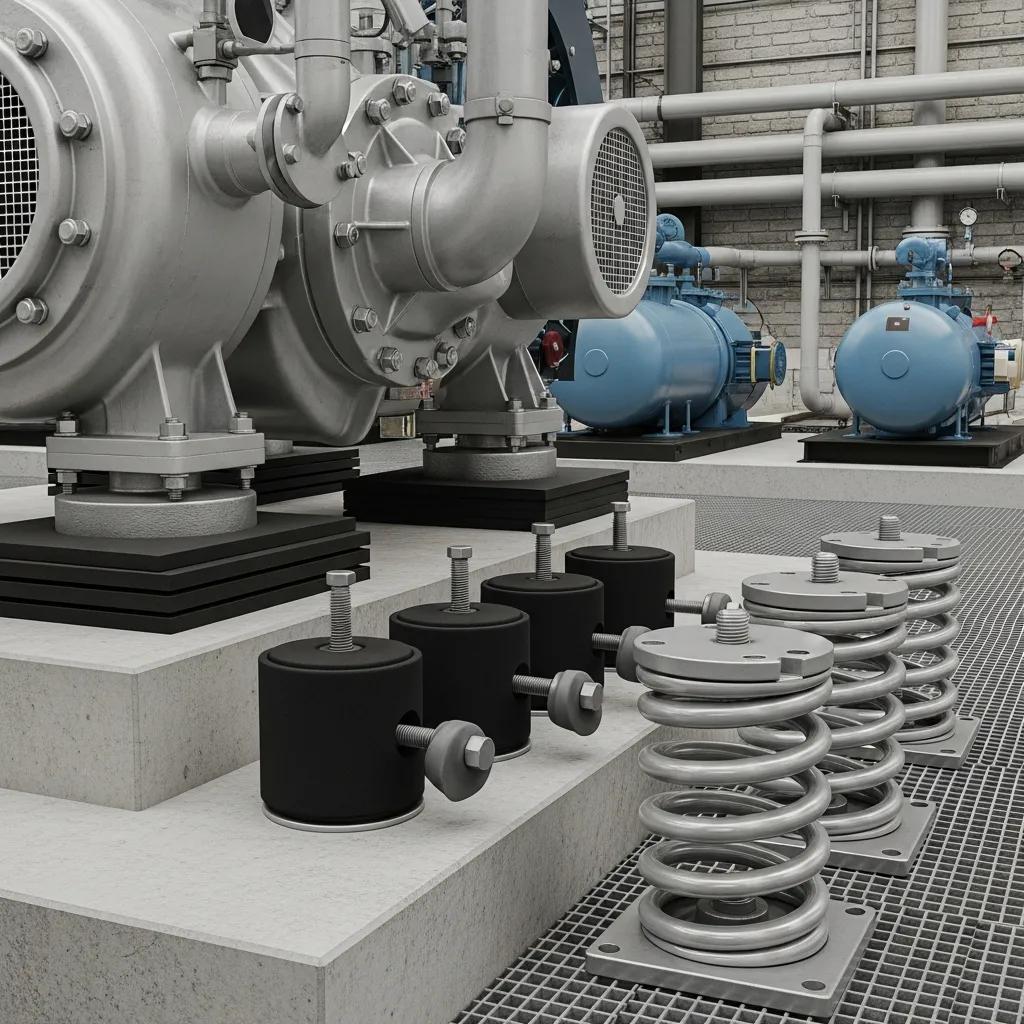
Compressor Noise and Vibration Control: Effective Industrial Solutions for Managing Facility Impacts
Compressor noise and vibration refer to the airborne sound and structure-borne energy produced by compressed-gas machinery during normal operation and transient events, and they directly affect facility safety, worker hearing, equipment life, and regulatory compliance. This article explains root causes, engineering controls, and maintenance practices that reduce airborne noise (SPL/dBA) and structure-borne vibration while preserving compressor performance and serviceability. Readers will learn how mechanical imbalance, aerodynamic turbulence, and structural coupling generate noise and vibration, how acoustic enclosures and vibration isolation work, and how to map those controls to OSHA/NIOSH exposure criteria. The guide also outlines inspection and vibration-analysis practices that enable predictive maintenance and fewer unplanned outages. Finally, we describe practical design considerations, material trade-offs, and how custom engineering and CAD deliverables support noise abatement projects for high-pressure compressors used across sectors such as diving, maritime, medical, motorsports, and industrial applications.
What Are the Main Causes of Industrial Compressor Noise and Vibration?
Compressor noise and vibration originate from three broad mechanisms: mechanical sources (rotor imbalance, bearing wear, piston slap), aerodynamic sources (intake/exhaust turbulence, flow separation in piping), and structural transmission (foundation resonance and rigid pipe coupling). These mechanisms create both airborne sound (radiated SPL) and structure-borne vibration that can excite building panels and pipe runs, increasing perceived noise and fatigue risk. Identifying the dominant mechanism is the first step toward targeted mitigation because solutions differ: balancing and bearing replacement address mechanical causes, whereas silencers and diffusers address aerodynamic noise. Understanding cause-specific symptoms guides selection of acoustic enclosures, isolators, or administrative controls to reduce exposure and equipment wear.
The main causes can be summarized as follows:
Mechanical faults produce tonal and broadband vibration that grow over time and accelerate wear.
Aerodynamic turbulence at intakes and exhausts creates broadband noise that propagates through ducts and open space.
Structural coupling transmits vibration into building fabric and piping, amplifying perceived noise at remote locations.
These cause categories map directly to mitigation strategies; addressing multiple causes together—such as correcting imbalance while adding an acoustic barrier and isolation mounts—yields the best facility-level outcomes.
How Mechanical and Aerodynamic Factors Generate Noise and Vibration
Mechanical energy in compressors converts to vibration when rotating masses are unbalanced, bearings degrade, or valves and pistons impact mating surfaces; those events create discrete frequency signatures and increasing broadband levels as wear progresses. Aerodynamic noise arises when flow separates at elbows, inlets, or nozzles, producing turbulent eddies and broadband SPL that can dominate at higher flow rates; piping geometry and discharge silencer design significantly influence the emitted spectrum. These mechanisms interact: a resonant support structure can amplify aerodynamic pulses into higher structure-borne vibration, while loosened fasteners turn minor flow excitations into audible tonal noise. Early detection through vibration and acoustic monitoring distinguishes mechanical tones from aerodynamic broadband signatures to enable targeted interventions.
What Facility Impacts Result from Compressor Noise and Vibration?
Excessive compressor noise and vibration increase occupational hearing risk, undermine productivity through distraction, and accelerate mechanical degradation that raises maintenance costs and and downtime. Structure-borne vibration induces fastener loosening, crack initiation in welded joints, and progressive bearing damage—effects that compound if not corrected. From a compliance perspective, elevated SPLs push time-weighted averages toward OSHA action levels, requiring hearing conservation measures or engineering controls. Facility-level impacts also include customer complaints in mixed-use buildings and potential restrictions on operating hours or capacity if mitigation is not implemented. Proactive engineering and maintenance strategies reduce these risks while protecting long-term asset value.
How Do Acoustic Enclosures Reduce Noise for High-Pressure Compressors?
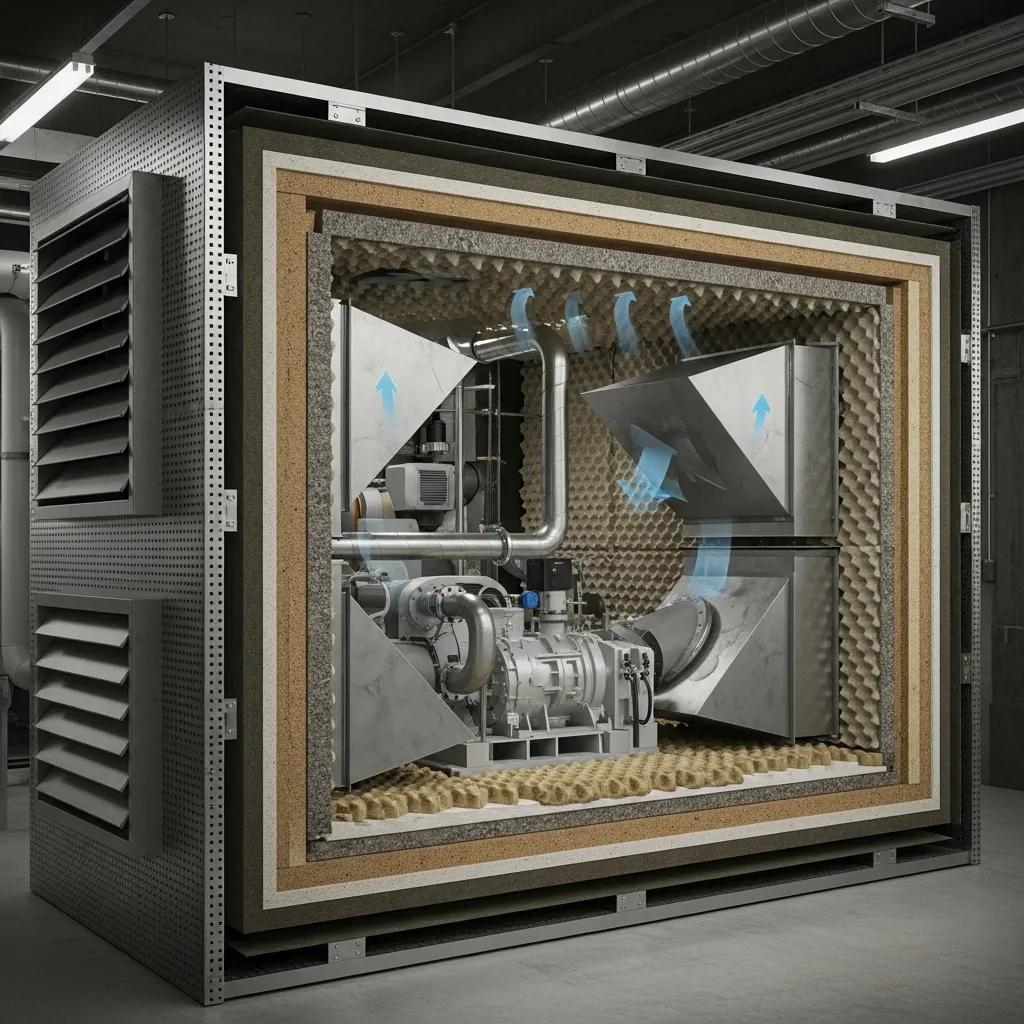
Acoustic enclosures reduce compressor noise by combining barrier transmission loss, absorptive lining to damp internal reflections, and carefully engineered ventilation to control airflow noise; the net effect lowers radiated SPL and can reduce TWA exposure at nearby workstations. Properly designed enclosures attenuate airborne sound through multi-layer shells and internal quilted or fibrous absorbers, while silencers and baffles manage inlet and exhaust flow to prevent aerodynamic noise penalties. Enclosure performance is a trade-off between dBA reduction and cooling/maintenance access; design must maintain continuous-duty cooling for high-pressure compressors while enabling service access and fire-safety considerations. When selected and installed correctly, enclosures can deliver substantial reductions in radiated sound levels, depending on frequency content and ventilation requirements.
Before reviewing material options, consider these enclosure design principles:
Maintain adequate airflow and thermal management to avoid thermal derating of the compressor.
Integrate silenced inlet and exhaust pathways to prevent creating new aerodynamic noise sources.
Provide service access panels and internal mounting features to simplify maintenance without degrading acoustic performance.
This combination of barrier, absorption, and ventilation management defines how an enclosure converts airborne noise sources into attenuated sound levels outside the cabinet.
What Materials and Designs Are Used in Industrial Acoustic Enclosures?
Industrial acoustic enclosures typically combine a rigid outer shell (mild steel or aluminized panels) with internal absorptive layers such as quilted acoustic material, mineral wool, or closed-cell absorbers to attenuate mid to high frequencies. The outer shell provides mass and barrier performance, while inner layers absorb reverberant energy and reduce cavity resonance; multi-layer constructions increase Rw and broadband SPL reduction. Ventilation is managed with lined ducting, silencers, and acoustic louvers to minimize flow noise; designers balance insertion loss versus pressure drop and partition airflow for cooling. Maintenance access is critical: hinged panels and removable sections preserve serviceability while limiting acoustic leakage when sealed.
Acoustic material comparison and design attributes:
Material / Design
Acoustic Performance (typical)
Airflow & Maintenance Notes
Mild steel shell + quilted fill
High barrier + mid/high absorption
Requires access panels; heavy but durable
Aluminum or composite panels + mineral wool
Moderate barrier, good mid-band absorption
Corrosion-resistant options for marine environments
Lined cabinet with silenced inlet/exhaust
Targeted broadband reduction
Requires engineered airflow and silencer maintenance
LW Americas emphasizes continuous-duty high-pressure compressor systems with lower RPM and one-piece cast block construction to minimize inherent noise and vibration; these intrinsic design traits pair effectively with custom acoustic enclosures and proper ventilation. LW Americas supports projects with 2D and 3D design drawings and custom project management, enabling site-specific enclosure integration while preserving accessibility and thermal controls.
How Do Acoustic Enclosures Help Achieve OSHA Noise Compliance?
Acoustic enclosures contribute to compliance by reducing the measured SPL at worker locations, thereby lowering time-weighted average (TWA) exposures and potentially moving operations below OSHA action levels and permissible exposure limits. For example, an enclosure *may be capable of achieving* a 20 dBA reduction *under specific conditions*, which *could potentially* change an 88 dBA TWA into a compliant 68 dBA condition for standard exposure calculations, thereby reducing the need for hearing conservation measures. *However, actual performance varies significantly based on factors such as frequency content, installation quality, and the specific environment, making verification through measurement essential.* Measurement involves baseline dosimetry, pre- and post-installation validation using calibrated SPL meters, and documenting time-weighted averages per OSHA 29 CFR 1910.95. Engineering controls like enclosures are preferred on the hierarchy of controls because they reduce exposure at the source without relying on PPE.
Practical steps for validation and documentation include:
Conduct baseline area and personal dosimetry to identify hotspots and worker TWA.
Model expected dBA reductions from enclosure specifications and ventilation configurations.
Perform follow-up dosimetry after installation to verify actual exposure reductions.
These steps ensure that enclosure performance translates into documented compliance and safer work environments.
What Are Effective Vibration Isolation Solutions for Industrial Compressors?
Vibration isolation solutions reduce structure-borne transmission by decoupling the compressor support from the surrounding foundation or piping system, lowering transmitted forces and preventing resonant amplification. Common isolators include anti-vibration pads, neoprene mounts, spring isolators, and inertia bases; selection depends on load, desired natural frequency, and environmental conditions. Proper selection targets a natural frequency significantly lower than the excitation frequencies to ensure adequate attenuation, and installation must consider leveling, anchoring, and flexible piping connections to avoid bypass paths. Good isolation reduces fatigue on connected structures, decreases transmitted tonal components, and complements acoustic treatments to create a quieter facility.
Before comparing products, facilities should apply these selection criteria:
Calculate static deflection and natural frequency based on load and required attenuation.
Consider environmental exposure (oil, moisture, temperature) when choosing materials.
Ensure piping and auxiliary components have flexible connections to avoid reintroducing vibration.
These criteria guide selection from simple pads to engineered spring systems.
How Do Anti-Vibration Pads and Mounts Minimize Facility Vibration?
Anti-vibration pads and mounts reduce transmitted vibration by adding compliant, damping layers between the compressor base and foundation, increasing energy dissipation and shifting the system natural frequency away from excitation bands. Pads made from bonded rubber or neoprene provide simple, cost-effective isolation for small-to-medium loads and also help dampen transient shocks during startup or shutdown. More advanced mounts, such as spring isolators or inertia bases, provide larger static deflections and better low-frequency attenuation for heavy compressors, but require careful leveling and anchoring. Correct installation practices—ensuring full bearing contact, isolator preload as specified, and flexible piping—prevent common performance losses that occur when isolators are incorrectly installed.
Key installation best practices:
Align and level the machine on the isolators to ensure even load distribution.
Avoid rigid pipe connections that create bypass vibration paths.
Verify dynamic performance post-installation with vibration measurements.
Following these steps preserves isolation performance and extends equipment life.
Which Materials Provide Optimal Vibration Dampening for Compressors?
Material selection for vibration dampening balances durability, damping coefficient, load capacity, and environmental resistance; common options include natural rubber, neoprene, polyurethane, and composite elastomers. Natural rubber offers excellent damping and high shear strength but may degrade with oils or ozone; neoprene resists oils and moderate temperatures and is widely used for compressor pads. Polyurethane provides high load-bearing capacity and long-term compression set resistance, making it suitable for heavily loaded isolators and outdoor or oily environments. Composite isolators combine elastomeric layers and metal elements for tailored stiffness and damping across frequency bands.
A comparative view of isolator materials:
Natural rubber: high damping, limited chemical resistance.
Neoprene: balanced damping and chemical tolerance.
Polyurethane: high load capacity, excellent wear resistance.
Selecting the right material based on operating conditions and load expectations ensures sustained isolation performance and lower transmitted vibration.
Isolator Type
Characteristic
Typical Application
Anti-vibration pad
Elastomeric damping, low cost
Small compressors, retrofit installations
Neoprene mount
Chemical and oil resistance
Industrial environments with exposure risks
Spring isolator
Low natural frequency, adjustable
Heavy compressors requiring low-frequency isolation
How Can Facilities Ensure OSHA Compliance for Compressor Noise Exposure?
Facilities ensure OSHA compliance through a structured approach: baseline noise assessment, prioritizing engineering controls (source reduction, enclosures, isolation), implementing administrative controls and PPE when necessary, and documenting monitoring and training.
OSHA sets an action level at 85 dBA TWA (triggering a hearing conservation program) and a permissible exposure limit (PEL) at 90 dBA TWA for an 8-hour shift; NIOSH recommends more conservative limits. Noise mapping, task-based dosimetry, and engineering modeling of enclosure and silencer performance allow facilities to choose controls that lower TWA exposures and reduce reliance on administrative measures. Continuous documentation, periodic re-testing after modifications, and training complete the compliance workflow.
To operationalize compliance, follow these steps:
Baseline measurement and identification of exposures above 85 dBA.
Apply engineering controls to reduce exposures at the source.
Implement hearing conservation program elements where exposures remain above action thresholds.
What Are OSHA Noise Limits and Hearing Conservation Requirements?
OSHA defines the action level at 85 dBA TWA, which obligates employers to implement a hearing conservation program that includes monitoring, audiometric testing, training, and recordkeeping; the PEL is 90 dBA TWA over an eight-hour period. Employers must measure employee exposures using calibrated dosimeters and assess tasks with high SPL to determine the need for engineering controls. When engineering controls are infeasible or during their implementation, administrative controls and properly fitted hearing protection reduce individual exposures. Documentation of monitoring results, medical surveillance where required, and periodic program evaluation complete the employer’s obligations under current rules.
A practical mapping of exposure to action:
85 dBA TWA — Hearing conservation program required; engineering controls recommended.
90 dBA TWA — PEL threshold; prompt engineering intervention required to reduce exposure.
>100 dBA — Short allowable exposure; immediate mitigation and PPE mandatory.
Compliance Mapping Table
This table links common exposure levels to allowable exposure times and practical mitigation examples.
Exposure Level (dBA)
Allowable Exposure
Mitigation Example
85 dBA
Action level; ongoing monitoring
Implement enclosures and schedule rotation
90 dBA
OSHA PEL for 8-hour TWA
Engineer silenced exhausts and isolation
100 dBA
Short allowable exposure (minutes)
Immediate isolation and mandatory PPE
How Does LW Americas Support Regulatory Compliance Through Custom Solutions?
LW Americas supports compliance by delivering custom high-pressure compressor systems designed to minimize inherent noise and vibration—features that reduce the engineering burden of downstream controls. The company’s continuous-duty compressors with one-piece cast block construction and lower RPM operation reduce internal excitation and structure-borne energy at the source, while responsive North American support and project management help integrate acoustic enclosures and isolation into facility layouts. LW Americas provides 2D and 3D design drawings that enable clash detection, thermal and acoustic modeling, and installation planning, which accelerates validation and documentation required for compliance. Facilities seeking compliance assessments or engineered solutions can request tailored design and project-management support to validate that implemented controls achieve measured dBA reductions consistent with OSHA requirements.
What Custom Noise Abatement Engineering Solutions Does LW Americas Offer?
LW Americas offers custom engineering services focused on integrated noise and vibration abatement for high-pressure compressor systems, including assessment, CAD deliverables, fabrication coordination, and project management to ensure solutions meet operational and regulatory needs. The workflow typically begins with a site assessment and baseline acoustic/vibration measurement, followed by conceptual design that may combine lower-RPM compressor options, acoustic enclosures, inlet/exhaust silencers, and vibration isolation. LW Americas produces 2D and 3D design drawings that facilitate installation planning, mechanical integration, and verification testing. Project management and North American support ensure on-time delivery and coordination with facility teams for commissioning and post-installation validation.
Service workflow and deliverables include:
Site assessment and acoustic/vibration baseline.
Concept and detailed design with 2D/3D CAD packages.
Fabrication oversight, installation coordination, and post-installation testing.
How Are 2D and 3D Designs Used for Tailored Noise and Vibration Control?
2D and 3D CAD deliverables translate acoustic and vibration design intent into installable layouts, allowing engineers to visualize enclosure clearances, intake/exhaust routing, and isolator placement before fabrication. Three-dimensional models enable clash detection with building structures, piping, and HVAC, and they support computational modeling for airflow and acoustic performance prediction. Deliverables often include enclosure cross-sections, mounting details, and isolation pad locations to guide field installation and testing. These models shorten project timelines, reduce site rework, and provide the documentation needed for regulatory validation and commissioning.
What Industry-Specific Noise Management Solutions Are Available?
Noise management solutions vary by industry priority: diving and medical systems prioritize breathing-air purity and compact enclosures, maritime and firefighting applications emphasize corrosion-resistant materials and seaworthy mounting, and motorsports require compact, high-performance systems with transportable acoustic housings. Each sector imposes constraints—such as portability, environmental exposure, or clean-air compliance—that influence enclosure materials, ventilation strategies, and isolation choices. LW Americas serves these sectors with tailored configurations that reflect operating priorities while preserving continuous-duty performance and serviceability.
How Does Regular Compressor Maintenance Contribute to Noise and Vibration Reduction?
Regular maintenance reduces noise and vibration by preventing the mechanical degradation that creates imbalances, bearing noise, and leaking seals; well-executed maintenance preserves tolerances and prolongs compressor life. Routine inspections catch loose fasteners, worn belts, and air-intake restrictions that elevate SPL and vibration. Lubrication schedules, filter replacement, and valve servicing reduce friction and impact events that manifest as tonal noise. Documenting maintenance actions and trending vibration and acoustic data creates a feedback loop that identifies developing faults before they produce excessive noise or equipment failure.
What Maintenance Practices Help Minimize Compressor Noise and Wear?
A practical maintenance checklist prevents many noise and vibration issues and includes intake filter checks, lubrication, belt tensioning, fastener torque verification, and valve clearance adjustments on scheduled intervals. Inspecting intake and exhaust paths for obstructions or loose ducting prevents aerodynamic noise spikes, while monitoring bearing temperatures and oil condition flags progressive wear. Quick fixes such as tightening mounts or replacing worn dampers often yield immediate noise reductions. Escalation to engineering support is warranted when vibration spectra show bearing frequencies or rotor imbalance patterns beyond routine corrective scope.
Maintenance checklist (task and frequency):
Inspect and replace intake filters monthly for dusty environments.
Verify belt tension and alignment quarterly to prevent slipping and squeal.
Check mounting fasteners and isolation elements monthly for integrity.
These tasks stabilize operational vibration levels and reduce unplanned repairs.
How Is Vibration Analysis Used as a Predictive Maintenance Tool?
Vibration analysis employs sensors and spectral analysis to identify signatures of imbalance, misalignment, bearing defects, and looseness before catastrophic failure occurs; trending amplitude and frequency content over time enables condition-based maintenance. Typical practice uses accelerometers mounted at bearing housings and structural locations, with data logged and trended to detect deviations from baseline. Spectral peaks at bearing defect frequencies or increasing broadband energy indicate specific faults that can be scheduled for repair during planned downtime. Integrating vibration data into maintenance planning reduces emergency repairs, lowers total cost of ownership, and complements acoustic monitoring for a full predictive maintenance program.
Facilities can pair vibration analysis with targeted engineering interventions—such as isolation upgrades or balancing—to address root causes revealed by trend data.