Importance of Compliance in Filling Connections
Compliance with national and international standards is crucial for filling connections used in SCBA and diving cylinders. These standards ensure that the products are safe, reliable, and suitable for use in critical environments such as firefighting and underwater activities.
For instance, adherence to standards such as ISO 11621 for breathing apparatus ensures that the filling connections can withstand high pressures and are resistant to corrosion. This not only protects the users but also enhances the overall efficiency of the equipment during operations.
Applications of Filling Connections
Filling connections are utilized in various industries, primarily in firefighting and diving. These connections facilitate the safe and efficient filling of air tanks, ensuring that users have a reliable source of breathable air in high-pressure situations.
In the diving industry, filling connections are essential for preparing tanks before dives, ensuring that divers have adequate air supply. Similarly, in firefighting, these connections are vital for maintaining the functionality of SCBA units, which are critical for the safety of firefighters in hazardous environments.
Choosing the Right Filling Connection
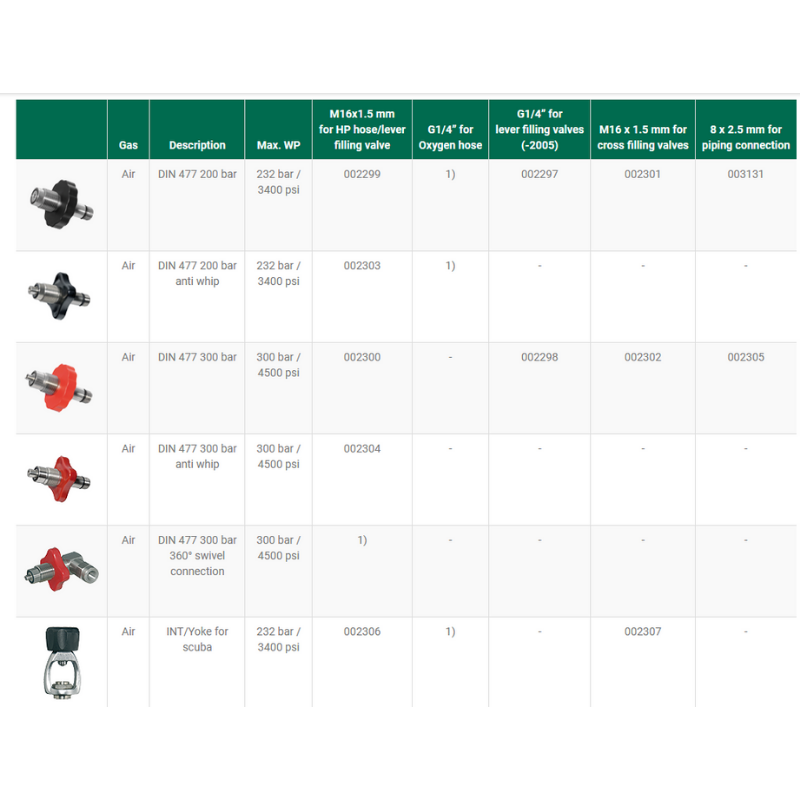
Selecting the appropriate filling connection is essential for ensuring compatibility with specific equipment and meeting operational requirements. Factors to consider include the type of cylinder, the pressure rating, and the intended application.
For example, a diver might require a different filling connection than a firefighter, as their equipment operates under varying pressure conditions. Understanding these nuances helps users make informed decisions that enhance safety and performance.
Maintenance Tips for Filling Connections
Regular maintenance of filling connections is vital to ensure their longevity and reliability. Users should inspect connections for wear and tear, check for leaks, and ensure that all components are functioning correctly.
Implementing a routine maintenance schedule can prevent unexpected failures. For instance, cleaning and lubricating the threads of the connections can help maintain a secure fit and prolong the life of the equipment, ensuring safety during use.