
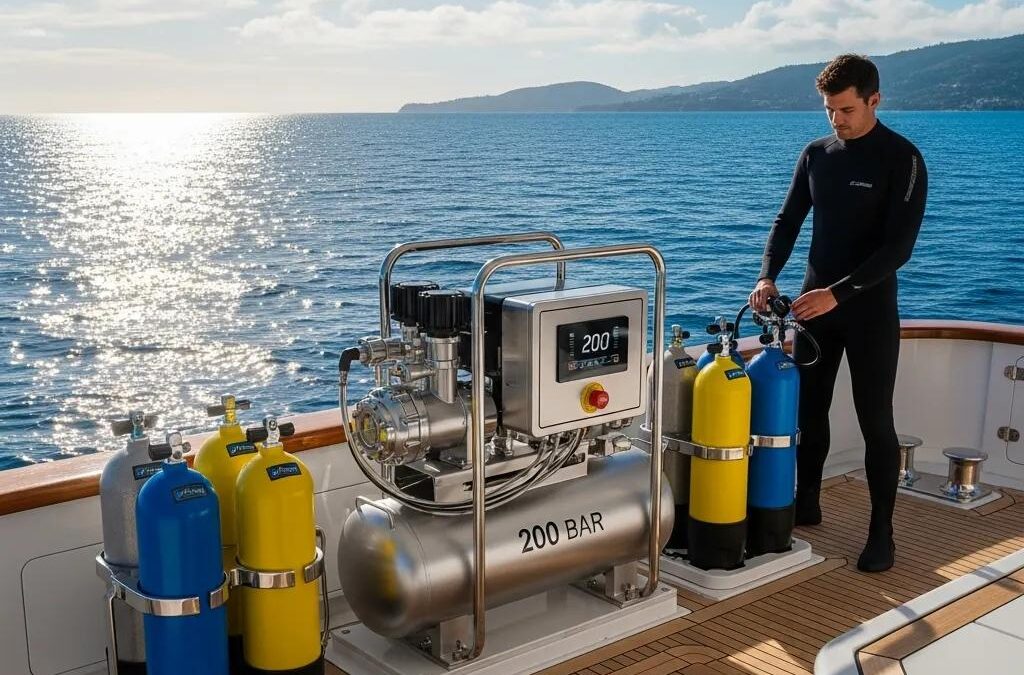
How to Choose the Right Yacht Compressor System: Expert Guide for Yacht Diving Compressor Selection and Marine Air Solutions
Choosing the right system depends on several factors, especially when selecting a high-pressure air compressor for your yacht. A well-selected compressor not only enhances the diving experience but also guarantees the quality of breathing air, which is vital for diver safety. This comprehensive guide will explore the various types of yacht compressor systems, key factors to consider during selection, and best practices for installation and maintenance, all with a sharp focus on the unique demands of a marine environment. By understanding these elements, yacht owners can make informed decisions that align with their specific needs and operational requirements, considering factors like space constraints, noise levels, power availability, and crew workflow.
In this article, we will cover the different types of yacht compressor systems, the essential factors for selecting a marine high-pressure compressor, the impact of cooling methods and power sources on performance, and best practices for installation and maintenance. Additionally, we will highlight how LW Americas’ YachtPro™ and NitroxMaker™ systems provide advanced solutions for yacht owners, ensuring optimal performance and reliability.
How to Select a Yacht Compressor System for Safe Diving
Yacht compressor systems come in various types, each designed to meet specific operational needs. Understanding these types is essential for selecting the right system for your yacht, particularly considering the unique constraints of marine environments. The primary categories include reciprocating compressors and rotary screw compressors, each with distinct technologies and applications.
How Do Reciprocating and Rotary Screw Compressors Compare for Yacht Diving?
Reciprocating compressors utilize pistons to compress air, making them highly suitable for high-pressure applications like filling diving tanks on a yacht. They are known for their efficiency in producing high output pressures (typically 3000-4500 PSI), which is essential for diver safety. However, their mechanical complexity can lead to higher noise levels and more frequent maintenance, which are important considerations for onboard comfort and crew workload.
In contrast, rotary screw compressors use two interlocking helical rotors to compress air, providing a continuous flow with generally lower noise levels. While often preferred for continuous, high-volume air supply in commercial diving or industrial settings, their larger footprint and higher initial cost might make them less common for recreational yacht diving unless a constant, quiet air supply for other onboard systems is also a priority. When properly specified and maintained, both types can offer reliable performance, but the choice often comes down to specific pressure needs, space availability, and noise tolerance on a yacht.
Which Key Factors Should You Consider When Selecting a Marine High-Pressure Compressor for Your Yacht?
When selecting a marine high-pressure compressor, several key factors must be considered to ensure optimal performance, compliance with safety standards, and seamless integration into your yacht’s operations.
- Working Pressure and Air Quality Standards: Define the required working pressure, typically between 3000–4500 PSI for breathing air, and ensure compliance with stringent air quality standards such as CGA Grade E or equivalent. This includes certified filtration to capture total hydrocarbons, CO, moisture, and particulates, often requiring multi-stage filtration (particulate/coalescing, activated carbon, molecular sieves) and continuous monitoring with CO/CO2 sensors.
- Flow Rate and Duty Cycle: Calculate the required Free Air Delivery (FAD) at the working pressure, including safety margins, based on the number of divers and expected fills per hour. Match the compressor’s duty cycle rating to your operational profile; systems designed for continuous operation are ideal for demanding yacht diving schedules, ensuring consistent air supply without overheating when properly specified.
- Simultaneous Use and Recovery Times: Assess how many divers or devices the system needs to support concurrently and the expected tank fills per hour, including recovery times. This directly impacts crew workflow and dive readiness.
- Environmental Factors & Installation Constraints: Consider the limited space, ventilation, and ambient temperatures within a yacht’s engine room or dedicated compartment. These factors significantly influence the choice of cooling method and overall compressor size.
- Noise Levels: For onboard comfort, evaluate the compressor’s noise output. Quieter models or those with sound-dampening enclosures are often preferred for yacht installations.
- Redundancy Needs: Determine if redundancy strategies are necessary for safety-critical applications, especially for remote cruising.
- Power Availability & Compatibility: Ensure the compressor is compatible with your yacht’s electrical supply (e.g., generator capacity, shore power) or if a gasoline-powered unit is more suitable for mobility or off-grid use.
- Engineering Review: Conduct a thorough engineering review to ensure all safety and performance needs are met, considering the unique marine environment.
These factors will help ensure the selected compressor meets operational demands and safety standards, providing reliable breathing air for your yacht’s diving activities.
How Do You Determine the Right Compressor Size and Capacity for Your Yacht?
Determining the right compressor size and capacity involves calculating the required Free Air Delivery (FAD) based on the number of divers, the frequency of use, and the available space on your yacht. A common approach is to consider the total volume of air needed for all divers and the time available for filling tanks, factoring in the compressor’s rated output at the required pressure. Crucially, the physical footprint and weight of the unit must fit within the designated installation area, allowing for adequate ventilation and maintenance access.
How Do Cooling Methods, Noise Levels, and Power Sources Affect Yacht Compressor Performance?
Cooling methods, noise levels, and power sources significantly impact the performance and suitability of yacht compressors, directly influencing onboard comfort, operational efficiency, and installation complexity. Understanding these factors is key to selecting the right system for your specific yachting needs.
What Are the Differences Between Air-Cooled and Water-Cooled Marine Compressors?
Air-cooled compressors rely on ambient air to dissipate heat, making them simpler in design and often more portable. However, within the confined and often hot spaces of a yacht’s engine room, they may struggle to dissipate heat effectively, potentially leading to reduced efficiency or overheating if not properly ventilated. This can also contribute to higher ambient temperatures in the installation area.
Water-cooled compressors, on the other hand, use seawater or freshwater to regulate temperature, allowing for more consistent performance in varying conditions, especially in hot climates or enclosed spaces. They are typically quieter and more efficient in heat removal, which is a significant advantage for onboard comfort. However, they require more complex installation, integrating with the yacht’s raw water system, and may involve additional maintenance for cooling system components.
How Do Electric and Gasoline Power Sources Impact Compressor Efficiency and Suitability for Yachts?
Electric compressors are generally more efficient and significantly quieter than gasoline-powered models, making them highly suitable for yacht applications where noise is a major concern. They also require less maintenance and have lower operational costs. However, their suitability depends on a stable and sufficient onboard power supply, typically from a generator or shore power, which must be adequately sized to handle the compressor’s starting and running loads.
Gasoline-powered compressors offer greater mobility and independence from the yacht’s electrical system, making them useful for remote operations or as a backup. However, they tend to be noisier, produce exhaust emissions that require careful venting, and demand more frequent maintenance due to engine wear. Their use on a yacht requires careful consideration of fuel storage, ventilation, and noise mitigation.
What Are the Best Practices for Installation, Maintenance, and Troubleshooting of Yacht Compressor Systems?
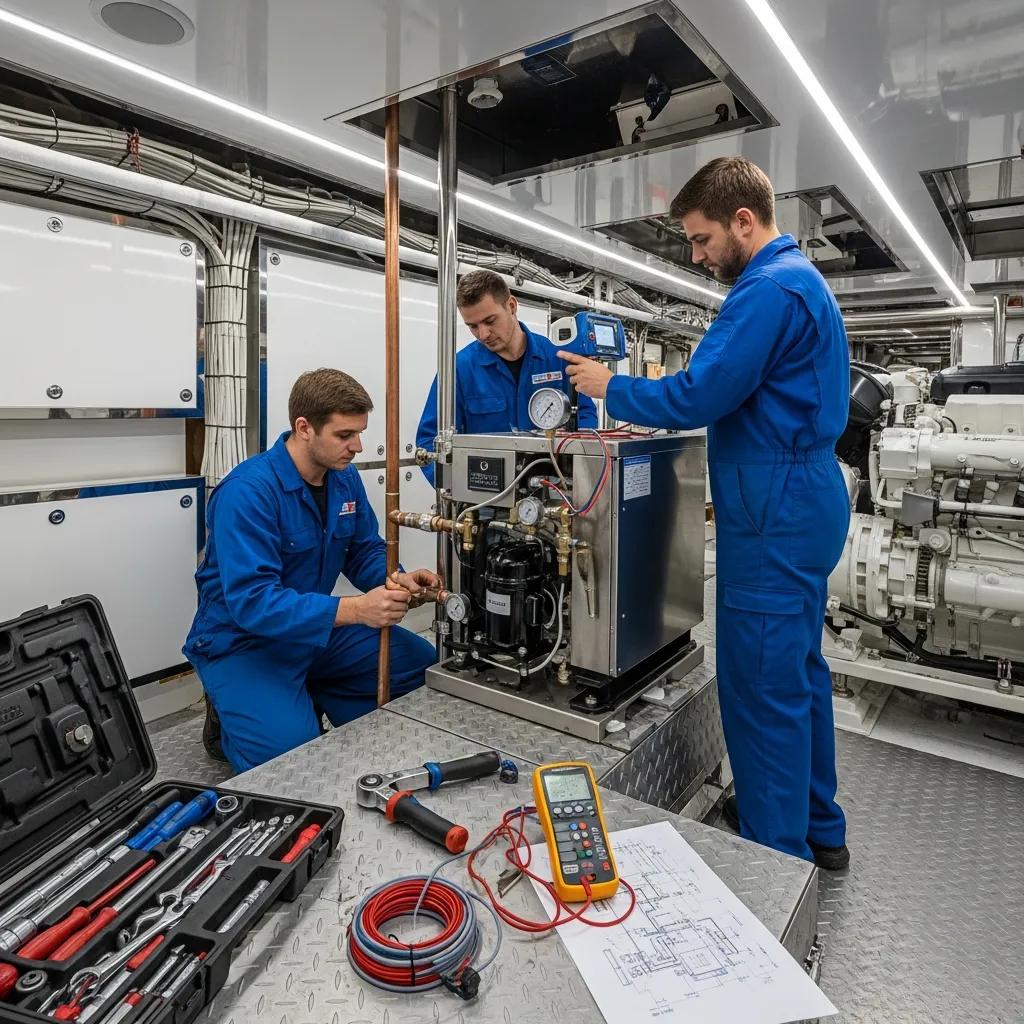
Proper installation, diligent maintenance, and effective troubleshooting are essential for ensuring the longevity, reliability, and safety of yacht compressor systems, directly impacting crew workflow and dive readiness.
What Should You Know About Yacht Compressor Installation and Integration?
For yacht compressor installation and integration, careful planning is paramount due to the unique marine environment and space constraints:
- Compressor Type & Footprint: Choose between stationary and mobile compressors based on your needs, always considering the available space. Stationary units require careful evaluation of their footprint, electrical connections, and ventilation requirements.
- Ventilation & Cooling: Ensure adequate airflow for air-cooled units or proper integration with the yacht’s raw water system for water-cooled models. Effective heat dissipation is critical for performance and longevity.
- Power Integration: Ensure the compressor is compatible with your yacht’s power supply (e.g., generator, shore power). Consider features like Variable Frequency Drives (VFD) for electric models to manage inrush current, making them suitable for smaller generator sets.
- Filtration and Monitoring: The system must include essential multi-stage filtration components and continuous monitoring systems (e.g., CO/CO2 sensors with alarms) to maintain breathing air quality standards (e.g., NFPA 1989 and CGA G-7.1).
- Automation & Crew Workflow: Consider automated systems, such as the YachtPro™ Essential (YP100), which allow for easy operation and automatic shut-off when tanks are full. This significantly reduces crew workload and ensures consistent, safe fills.
- Maintenance Access: Design the installation for easy access to all maintenance points, simplifying routine checks and servicing for the crew.
Maintaining Optimal Performance and Troubleshooting Common Issues
Regular, proactive maintenance is crucial for continuous-duty high-pressure compressors, especially in the demanding marine environment. A robust framework includes:
- Monthly Checks: Visual inspections and operational checks to identify any immediate concerns.
- Quarterly Servicing: Verification of filter conditions and oil levels, replacing as needed to maintain air quality and lubrication.
- Annual Analysis: More in-depth vibration and thermal analysis to detect potential issues before they lead to failures, ensuring the system operates at its designed performance levels.
Common troubleshooting tips often involve monitoring key parameters. Pay attention to temperature, vibration spectra, and oil condition. Addressing these indicators promptly can help schedule interventions before minor issues escalate into significant failures, ensuring the compressor remains reliable and safe for yacht diving operations.
How Do LW Americas’ YachtPro™ and NitroxMaker™ Systems Provide Advanced Solutions for Yacht Owners?
LW Americas offers innovative solutions for yacht owners through their YachtPro™ and NitroxMaker™ systems, specifically designed to enhance diving capabilities and ensure optimal air quality with a focus on marine operational demands.
What Are the Features and Advantages of LW Americas’ YachtPro™ Continuous-Duty Compressors?
The YachtPro™ continuous-duty compressors are engineered for high performance and reliability, specifically tailored for yacht environments. Key features and advantages include:
- Optimized for Extended Use: Designed for continuous operation without overheating, ensuring consistent air supply for demanding dive schedules when properly specified and maintained.
- High Output Pressure: Capable of filling tanks to required pressures efficiently and reliably.
- User-Friendly Automation: Simplifies operation and monitoring, reducing crew workload. Systems like the YachtPro™ Essential (YP100) are fully automated, filling tanks to programmed pressure and stopping automatically.
- Durability & Marine-Grade Construction: Built with robust materials to withstand harsh marine environments, ensuring long-term reliability.
- Variable Frequency Drive (VFD) Option: Helps manage the inrush current when starting the electric motor, making it highly compatible with smaller yacht generator sets.
How Do NitroxMaker™ Systems Enhance Diving Capabilities on Yachts?
NitroxMaker™ systems allow yacht owners to produce enriched air nitrox directly onboard, significantly enhancing diving safety and extending bottom time. These systems are designed for easy integration with existing compressor setups, providing divers with the flexibility to customize their air mixtures based on specific dive profiles. This capability offers a distinct advantage for yacht-based diving, allowing for more tailored and safer dive planning without reliance on shore-based nitrox supplies.
For further inquiries about specific system configurations, custom solutions, or to discuss your yacht’s unique requirements, you can easily reach out to LW Americas.
What Is the Total Cost of Ownership and Long-Term Value of Yacht Compressor Systems?
Understanding the total cost of ownership is essential for making informed purchasing decisions regarding yacht compressor systems, considering not just the initial outlay but also ongoing operational expenses and long-term value.
How Do Initial Investment, Maintenance, and Energy Efficiency Affect Overall Costs?
Initial investment, maintenance, and energy efficiency significantly affect the overall costs of a yacht compressor system:
- Initial Investment: The upfront cost of purchasing a compressor can vary based on its specifications, capabilities, and marine-specific features. Choosing the right compressor that meets operational demands without overspending, while also considering the value of automation and marine-grade construction, is crucial.
- Maintenance: Regular, proactive maintenance, including daily checks and scheduled servicing, is essential for reliability, safety, and compliance. A well-maintained system operates at its designed performance, reduces unexpected downtime (which can be critical at sea), and extends the lifespan of the equipment, ultimately lowering long-term costs and ensuring consistent air quality.
- Energy Efficiency: Innovations such as variable-speed drives and optimized designs enhance energy efficiency, reducing operating costs per delivered cubic foot. This shift towards energy-efficient technologies can lead to significant savings over time, especially for systems with high duty cycles, and reduces the load on a yacht’s power generation system.
Overall, a comprehensive approach that considers these factors, alongside the benefits of automation and reliability for crew workflow, can lead to a more favorable total cost of ownership and enhanced long-term value for your yacht.
What Are the Benefits of Choosing Custom High-Pressure Compressor Solutions for Marine Applications?
The benefits of choosing custom high-pressure compressor solutions for marine applications are substantial, directly addressing the unique challenges and requirements of yacht ownership:
- Enhanced Automation for Crew Workflow: Custom compressors like the YachtPro™ Essential (YP100) are fully automated, allowing users to focus on other tasks while the system fills tanks to the programmed pressure and stops automatically when full. This significantly reduces crew workload and ensures consistent, safe fills.
- Optimized Power Management: Features like Variable Frequency Drive (VFD) help manage the inrush current when starting the electric motor, making custom solutions highly suitable for integration with smaller yacht generator sets and optimizing onboard power usage.
- Simplified Installation & Space Efficiency: Custom systems are often pre-mounted on a compact base, simplifying the installation process and making them easier to integrate into the confined spaces typical of a yacht. Options can be modified to fit specific boat plans and spatial requirements.
- Tailored Compatibility: The system can be configured to work seamlessly with various electrical services and cooling methods, enhancing flexibility for different marine setups worldwide.
- Support for Diverse Diving Needs: Custom solutions can be precisely tailored to support the specific number of divers, the frequency of dives, and the desired air quality (e.g., standard air or nitrox), ensuring optimal performance for your yacht’s unique diving profile.
These features collectively enhance operational efficiency, safety, convenience, and overall value for marine applications, making custom solutions a strategic investment for yacht owners.