
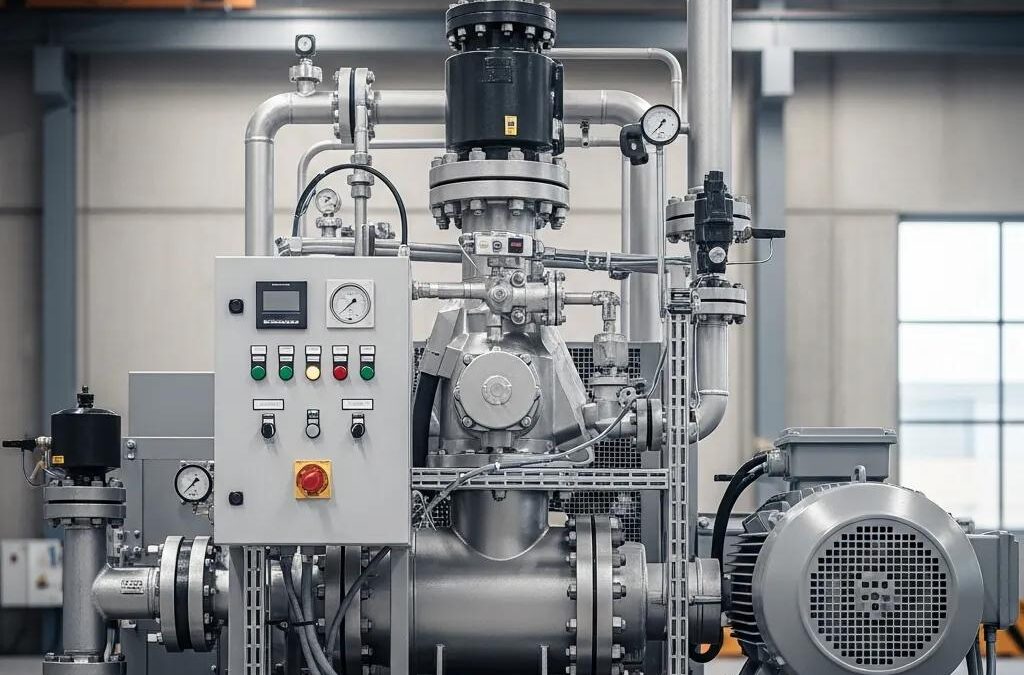
How to Select the Right High-Pressure Compressor System: A Comprehensive Buying Guide
Selecting the right high-pressure compressor system is crucial for various applications, from industrial uses to specialized fields like diving and firefighting. This comprehensive guide will help you navigate the complexities of compressor selection, ensuring you choose a system that meets your operational needs and safety standards. Understanding the key specifications, types, and application requirements will empower you to make informed decisions. This article will cover essential factors such as power supply compatibility, compressor specifications, air quality standards, and the importance of consulting with experts. By addressing these considerations, you can select a compressor system that effectively meets your operational and safety needs.
What Are High-Pressure Compressors and Their Key Specifications?
High-pressure compressors are mechanical systems designed to increase the pressure of air or gas for various applications, often ranging from tens to several hundred bar. Key specifications include:
- Pressure Ratings: Typically, high-pressure fills for breathing air cylinders require pressures between 3000 to 4500 PSI (approximately 200 to 310 bar).
- Delivery Capacities: These compressors are designed to provide stable, high-pressure delivery for reliable actuation, pressure testing, and filling operations.
- Power Requirements: They may come with features like Variable Frequency Drives (VFD) to manage inrush current and can be compatible with various electrical service configurations.
- Continuous-Duty Capability: Designed for sustained operation without frequent cool-down periods, enhancing uptime and efficiency.
- Safety Features: Include pressure relief devices and regular maintenance checks to ensure safe operation within rated limits.
These specifications help in selecting the right compressor for specific industrial needs, ensuring operational efficiency and compliance with safety standards.
What Defines a High-Pressure Compressor and Its Types?
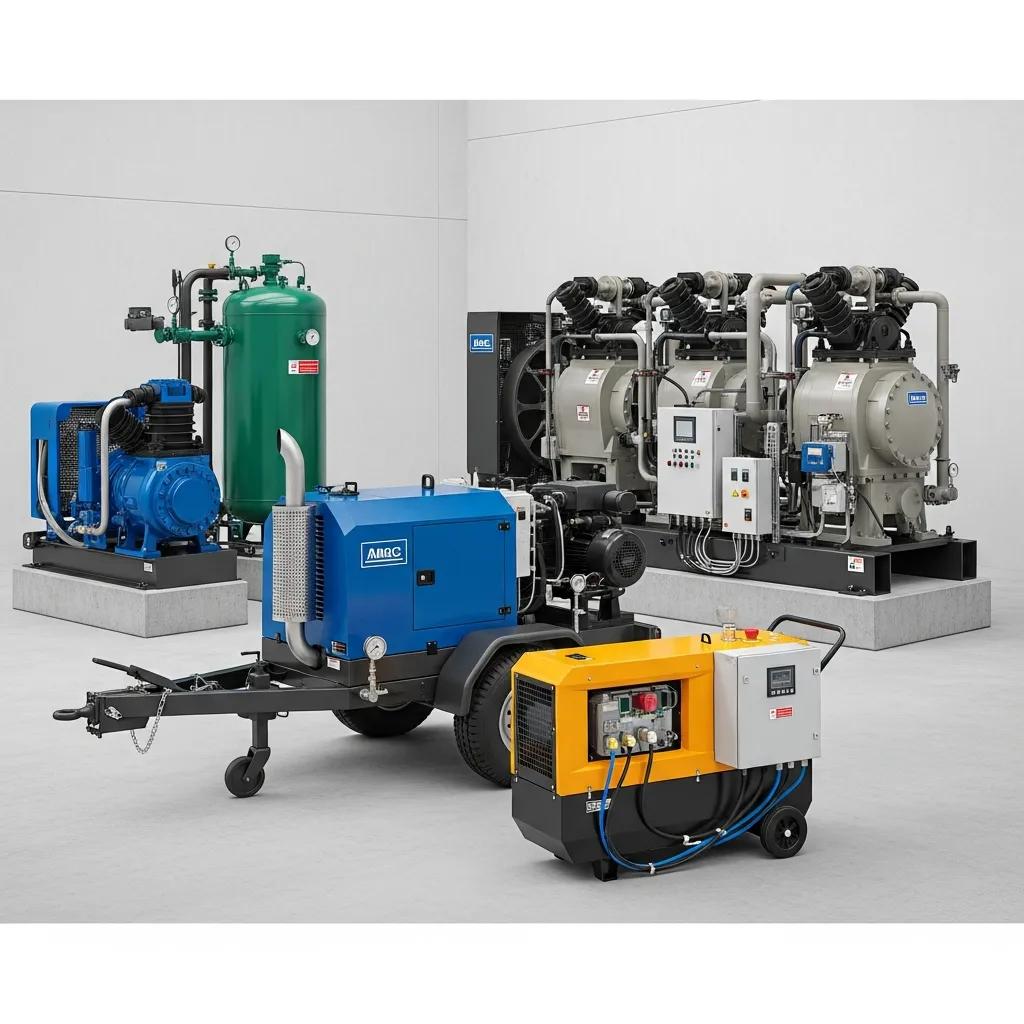
A high-pressure compressor is defined by its ability to generate compressed air at significantly elevated pressures, typically ranging from 3000 to 5000 PSI (approximately 200 to 350 bar). These compressors are essential in various applications, particularly for filling breathing air cylinders used in scuba diving and other high-pressure needs.
Types of high-pressure compressors include:
- 420 Bar Compressors – Designed for very high-pressure applications (up to 420 bar or about 6000 PSI).
- Compact Compressors – Smaller units suitable for limited spaces.
- Mobile Compressors – Portable units for on-the-go use.
- Silent Compressors – Designed to operate quietly.
- Stationary Compressors – Fixed installations for continuous operation.
These compressors often come with features like continuous-duty capability, purification systems, and monitoring devices to ensure safe and efficient operation.
How Do CFM, PSI, and Duty Cycle Affect Compressor Performance?
CFM (Cubic Feet per Minute), PSI (Pounds per Square Inch), and duty cycle significantly affect compressor performance:
- CFM: Determines how quickly a compressor can fill cylinders or operate multiple pneumatic devices. A higher CFM rating allows for faster fills and reduced queue times in busy operations.
- PSI: Represents the pressure capability of the compressor. Higher PSI can reduce available flow and increase thermal load, which may lower the sustainable duty cycle. For example, a compressor designed for high PSI may have lower continuous CFM compared to one designed for higher flow at moderate pressure.
- Duty Cycle: Indicates the operational time a compressor can run without overheating. A higher duty cycle (e.g., 90-100%) is suitable for continuous operations, while a lower duty cycle (e.g., 20-60%) is more appropriate for intermittent use. The duty cycle must match the operational profile to avoid performance degradation.
These three parameters interact as a triad, where increasing one often necessitates trade-offs in the others. For safety-critical applications, prioritizing duty cycle and pressure is essential, while for industrial production, flow and duty cycle take precedence.
How to Assess Your Application Needs for Compressor Selection?
To assess your application needs for compressor selection, follow these steps:
- Define Demand: Specify required working pressure, simultaneous flow, and air quality standards for your application.
- Calculate Required FAD: Determine the required Free Air Delivery (FAD) at the working pressure, including safety margins.
- Select Duty Cycle: Choose a duty cycle and architecture that supports both peak and continuous loads.
- Verify Environmental Factors: Consider altitude, inlet temperature, gas type, and planned redundancy, as these factors can affect FAD and cooling requirements.
- Conduct Engineering Review: For safety-critical applications, complement your assessment with a comprehensive engineering review to ensure compliance with applicable standards.
This checklist helps ensure the chosen compressor meets performance and safety needs without overspending on unnecessary capacity.
Which Pressure and Airflow Requirements Match Your Industry?
The pressure and airflow requirements that match your industry depend on the specific application. For example:
- Breathing-air fills (e.g., dive shops) typically require continuous-duty piston compressors with high output pressure capability (3000–4500 PSI) and moderate CFM.
- Fire department refill stations (SCBA fills) require systems optimized for rapid fill times, efficient utilization of cascade storage, and the ability to meet peak demand during emergencies. The overall system design, including cascade capacity and rapid fill technology, is crucial for minimizing turnaround times and ensuring readiness.
- Industrial continuous flow applications often utilize rotary high-flow compressors that operate at 70–100% duty cycle with lower max PSI but high CFM.
Factors such as gas composition control, purity requirements, redundancy for critical systems, and environmental influences (like temperature and altitude) also play a significant role in determining the appropriate compressor specifications for industrial and medical contexts.
What Are the Air Quality Standards for Breathing and Industrial Air?
Air quality standards are critical for ensuring the safety and effectiveness of compressed air used in various applications. For breathing air, standards such as CGA Grade E (U.S.) and EN 12021 (EU) typically specify limits for total hydrocarbons, carbon monoxide, moisture, and particulates. Compliance with these standards is essential to prevent health risks associated with contaminated air. In industrial settings, air quality standards may vary based on the specific application but generally focus on maintaining a clean and safe environment for both workers and equipment.
The importance of robust purification systems for breathing air is underscored by rigorous testing and evaluation, as demonstrated by studies on specific systems.
What Are the Main Types of High-Pressure Compressors and Their Benefits?
The main types of high-pressure compressors include:
- 420 Bar Compressors: These are designed to generate compressed air at very high pressures, typically up to 420 bar (about 6000 PSI), suitable for continuous-duty applications.
- Compact Compressors: These are designed for smaller spaces or applications where size is a constraint.
- Mobile Compressors: These are portable and can be used in various locations, making them versatile for different applications.
- Silent Compressors: These are designed to operate quietly, which is beneficial in environments where noise reduction is important.
- Stationary Compressors: These are fixed installations that provide high-pressure air for specific applications, often used in industrial settings.
Benefits of these compressors include:
- High Pressure Capability: They can generate the required PSI for various applications.
- Continuous Duty: Many are rated for continuous operation, ensuring reliability.
- Purification Systems: They often include multi-stage filters to ensure air quality.
- Automation Features: Some models come with automated controls for ease of use.
- Versatility: Different types cater to various needs, from mobile applications to stationary industrial use.
How Do Reciprocating and Rotary Screw Compressors Compare?
Reciprocating and rotary screw compressors serve different operational needs. Reciprocating compressors are typically used for applications requiring high pressure and lower flow rates, making them ideal for filling tanks. In contrast, rotary screw compressors are designed for continuous operation and higher flow rates, making them suitable for industrial applications. Each type has its advantages and disadvantages, with reciprocating compressors often being more cost-effective for smaller operations, while rotary screw compressors provide efficiency and reliability for larger, continuous operations.
What Specialized Systems Like NitroxMaker and YachtPro Offer?
Specialized systems like NitroxMaker and YachtPro cater to specific high-pressure needs. NitroxMaker is designed for producing nitrox gas mixtures for diving, ensuring optimal air quality and safety. YachtPro, on the other hand, provides high-pressure air solutions for marine applications, focusing on portability and efficiency. These systems often include advanced filtration and monitoring features to ensure compliance with safety standards, making them ideal for specialized applications.
How to Evaluate Operational Factors and Total Cost of Ownership?
To evaluate operational factors and total cost of ownership, consider the following steps:
- Define Demand: Identify the required pressure, simultaneous flow, and quality standards for the application.
- Calculate Required Flow: Determine the required flow at working pressure, including safety margins for peak and average needs.
- Select Duty Cycle and Architecture: Match the duty cycle rating to the operational profile, considering redundancy needs for critical systems.
- Assess Environmental Factors: Take into account factors like altitude and temperature that can affect flow and performance.
- Consider Total Cost of Ownership: Evaluate energy efficiency, maintenance costs, and uptime guarantees, as these factors increasingly influence procurement decisions.
Additionally, for safety-critical applications, a comprehensive engineering review is essential to ensure compliance with relevant standards and to optimize the system’s performance.
Why Are Power Source, Noise Level, and Tank Size Important?
Power source, noise level, and tank size are important factors when selecting compressors for marine research applications.
- Power Source: It affects the compressor’s efficiency and suitability for specific environments, ensuring it meets the operational demands of research vessels.
- Noise Level: This is crucial in marine environments to minimize disturbance to marine life and maintain a conducive working atmosphere for researchers.
- Tank Size: It determines the volume of air available for use, impacting the duration and effectiveness of underwater operations, such as diving and habitat assessments.
These factors collectively ensure that the compressor meets performance, safety, and operational needs in challenging marine conditions.
How to Calculate Energy Efficiency and Maintenance Costs?
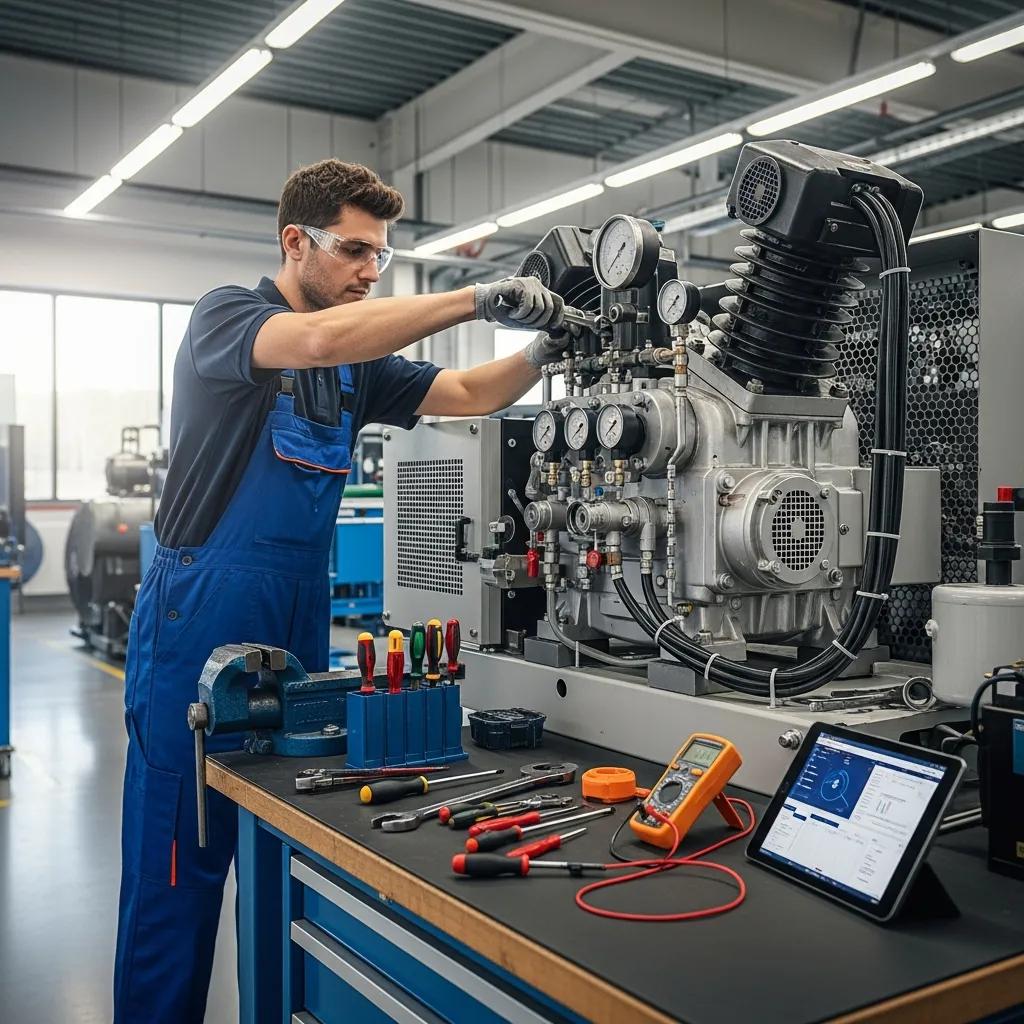
To calculate energy efficiency and maintenance costs for compressors, consider the following:
- Energy Efficiency:Evaluate technologies like Variable Speed Drives (VSDs) that can provide substantial savings in variable-load scenarios.Implement heat recovery systems to capture waste heat, reducing net energy consumption.Use IoT condition monitoring to lower unplanned downtime, which can indirectly affect energy costs.
- Maintenance Costs:Establish a routine maintenance schedule that includes monthly checks, quarterly filter and oil-level verifications, and annual vibration and thermal analyses.Focus on predictive maintenance by monitoring key parameters (temperature, vibration, oil condition) to schedule interventions before failures occur.Maintain a critical-spares list to reduce repair times and associated costs.
These practices help balance operational readiness and return on investment (ROI) while minimizing overall costs.
Modern approaches to maintenance, leveraging advanced technology, further enhance the reliability and cost-effectiveness of compressor systems.
How Does LW Americas Provide Custom Solutions and Expert Support?
LW Americas provides custom solutions and expert support through a structured project workflow that includes:
- Needs assessment
- Equipment selection
- 2D/3D system design
- Installation oversight
- Commissioning
- Post-installation support
They offer tailored high-pressure compressor solutions that adapt to specific site constraints and performance targets, improving lifecycle costs and regulatory compliance. Their local support presence in North America facilitates faster response for parts and technical queries, while comprehensive project management reduces installation complexity, ultimately supporting reliable fill-station uptime and predictable maintenance costs.
What Is LW Americas’ Approach to Project Management and Customization?
LW Americas’ approach to project management and customization involves a structured workflow that begins with a needs assessment and progresses through equipment selection, system design (2D/3D), installation oversight, commissioning, and post-installation support. This process aims to ensure that the final system aligns with operational and regulatory environments, reducing installation risk and enhancing maintainability.
Deliverables include design drawings, bills of material, and commissioning reports to document performance against specified acceptance tests.
Their project management also coordinates site requirements, ventilation, and safety interlocks with equipment delivery and commissioning, ensuring a coherent handover that includes operating and maintenance guidance for local staff. Custom solutions are tailored to meet specific site constraints and performance targets, optimizing component selection and service access to improve lifecycle costs and regulatory compliance.
Which Case Studies Demonstrate Successful High-Pressure Compressor Applications?
While specific case studies demonstrating successful high-pressure compressor applications are not provided, it is essential to consider real-world examples when evaluating compressor systems. Engaging with suppliers and reviewing their project portfolios can offer insights into how various systems have been successfully implemented across different industries. This information can guide potential buyers in understanding the practical applications and benefits of specific compressor models.
What Are Best Practices for Installation, Maintenance, and Long-Term Use?
Best practices for installation, maintenance, and long-term use of compressors include:
- Custom Engineering and Sizing: Utilize tailored project management and custom engineering to align compressor selection with specific operational needs. This includes producing installation-ready 2D/3D layouts to ensure fit and serviceability.
- Energy Efficiency: Opt for energy-efficient designs, such as variable-speed drives and continuous-duty platforms, which reduce operating costs and enhance durability.
- Predictive Maintenance: Implement IoT-enabled monitoring to collect key performance indicators (KPIs) like flow, motor load, and temperature. This data can inform maintenance decisions and help transition from reactive to predictive service models.
- Safety Considerations: For safety-critical systems, conduct thorough engineering reviews and adhere to applicable standards. Ensure redundancy strategies are in place for critical applications.
- Environmental Adaptation: Consider environmental factors such as altitude and temperature that can affect performance. Use appropriate filtration and cooling strategies to maintain efficiency.
- Regular Monitoring and Quality Control: Establish routine monitoring of quality parameters and conduct regular sampling to ensure compliance with safety and purity standards, especially in breathing-air applications.
- Lifecycle Planning: Focus on total cost of ownership and serviceability when selecting compressors, ensuring that maintenance intervals are predictable and manageable over the long term.
How to Plan Installation and Integration for Optimal Performance?
To plan installation and integration for optimal performance, follow these steps:
- Define Demand: Specify required pressure, simultaneous flow, and air quality standards for the application.
- Calculate Required FAD: Determine the required flow at working pressure, including safety margins.
- Select Duty Cycle and Architecture: Choose a duty cycle that supports both peak and continuous loads, considering redundancy needs.
- Verify Installation Environmental Factors: Assess factors like altitude, inlet temperature, and gas type, as these can affect flow and cooling requirements.
- Custom Engineering: For complex requirements, engage in custom engineering to produce 2D/3D installation drawings and integrated monitoring solutions.
- Safety Review: Conduct a thorough engineering reviews, especially for safety-critical systems, to ensure compliance with applicable standards.
What Maintenance Schedules Ensure Compressor Longevity and Reliability?
To ensure compressor longevity and reliability, a structured maintenance schedule should be developed that includes:
- Daily Checks: Visual inspections, oil level checks, and draining moisture traps.
- Weekly Checks: Monitoring differential pressure across filters and verifying alarms and gauges.
- Monthly/Quarterly Tasks: Replacing filters according to manufacturer hours, calibrating sensors, and recording compressor hours.
- Annual Major Inspections: Including oil analysis and valve servicing.
These tasks should align with manufacturer guidance and local requirements.
Additionally, maintaining records of tasks performed, dates, technician details, compressor hours, filter part numbers, test results, and corrective actions is essential for compliance audits and trend analysis.