
High-Pressure Air Compressors for Professional Diving: Reliable Continuous-Duty Systems for Safe Breathing Air Supply
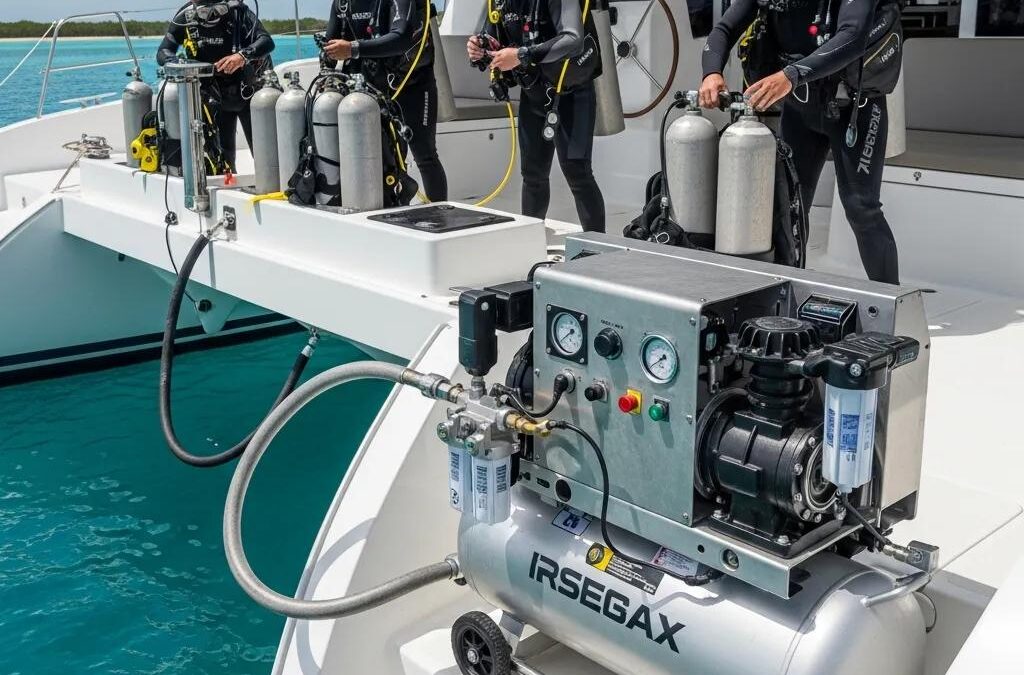
High-pressure air compressors for professional diving are specialized systems designed to provide safe breathing air by delivering compressed air at high pressures, typically required for scuba diving applications. These compressors are engineered for continuous-duty operation, designed to provide reliability and safety when properly specified, installed, and operated within their environmental limits. Key benefits include sustained uptime, precise pressure control, and enhanced air purity when paired with appropriate filtration systems. For marine environments, such as on various recreational or commercial vessels, compressors like the YachtPro™ Essential (YP100) are recommended. This model is fully automated, allowing users to fill tanks to a programmed pressure without constant supervision. It features a Variable Frequency Drive (VFD) to manage power draw during startup, ensuring efficient operation. Overall, high-pressure compressors are critical for ensuring safe and reliable air supply for divers, with specific designs and features tailored to meet the demands of marine applications.
Why Are High-Pressure Air Compressors Essential for Professional Diving Operations?
High-pressure air compressors are essential for professional diving operations because they generate compressed air at the required PSI (typically ranging from 3000–4500 psi) necessary for filling SCBA (Self-Contained Breathing Apparatus) and scuba cylinders. They ensure the delivery of breathing air that meets specific contaminant limits through a purification train that filters out particulates, oil, and other contaminants. Additionally, these compressors support safe filling procedures with features like fill panels for controlled distribution, monitoring devices for real-time air quality alerts, and cascade storage for rapid fills. Their continuous-duty design capability, when properly implemented, enhances reliability and safety, making them crucial for maintaining the quality and availability of breathing air in diving operations.
What Roles Do Breathing Air and Scuba Tank Filling Play in Diver Safety?
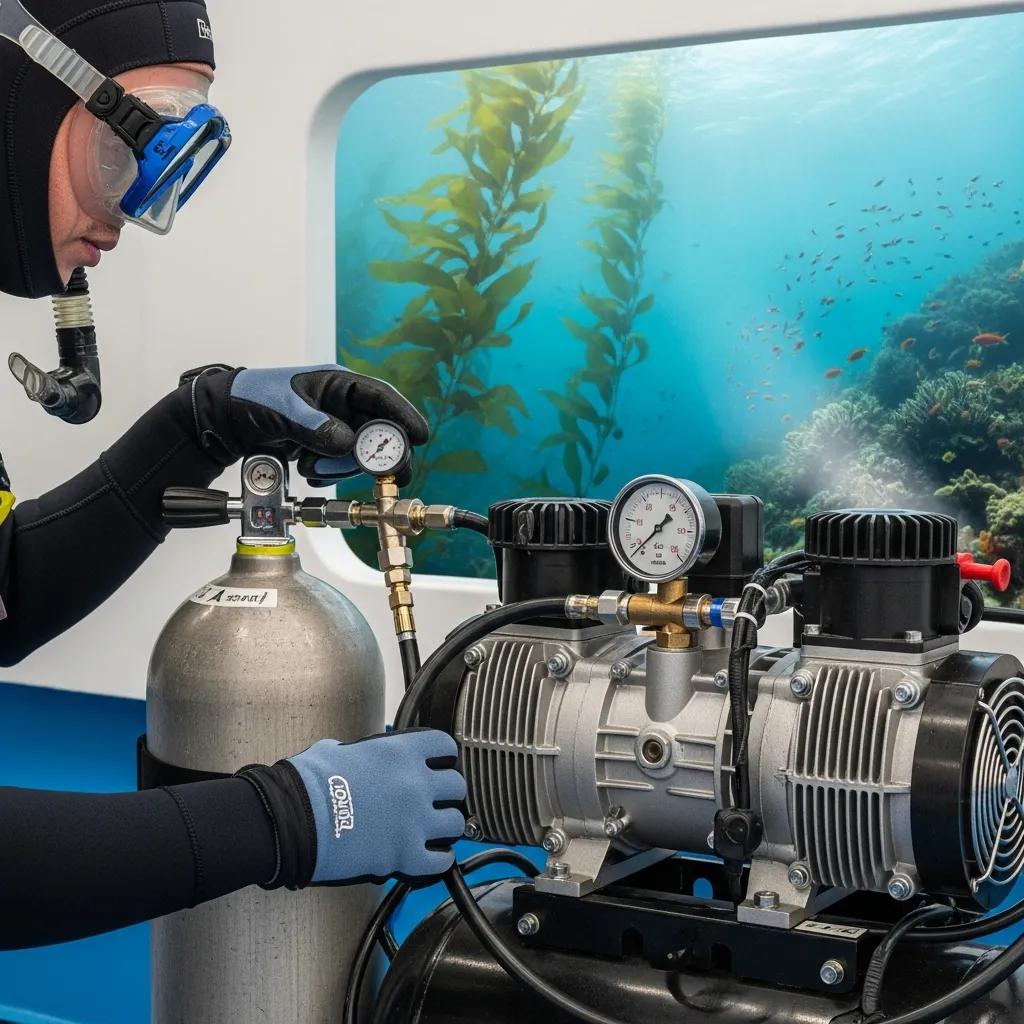
Breathing air and scuba tank filling play crucial roles in diver safety by ensuring that the air supplied is of high quality and at the correct pressure. Breathing air systems must adhere to strict air quality standards, including limits on total hydrocarbons, carbon monoxide, moisture, and particulates, to prevent contamination that could harm divers. Additionally, the compressors used for filling scuba tanks need to provide high-pressure fills (typically between 3000 to 4500 PSI) and maintain continuous availability to ensure divers have access to safe air during their activities. Proper filtration and monitoring systems are essential to detect any degradation in air quality before it reaches the diver, thereby enhancing safety.
Which Diving Applications Require Specialized High-Pressure Air Systems?
Diving applications that require specialized high-pressure air systems include scuba fills and firefighting SCBA (Self-Contained Breathing Apparatus). These applications prioritize air purity standards, continuous availability during operation, and specific pressure ratings, typically requiring fill pressures in the 3000–4500 PSI range.
How Does LW Americas’ Continuous-Duty Technology Enhance Dive Compressor Performance?
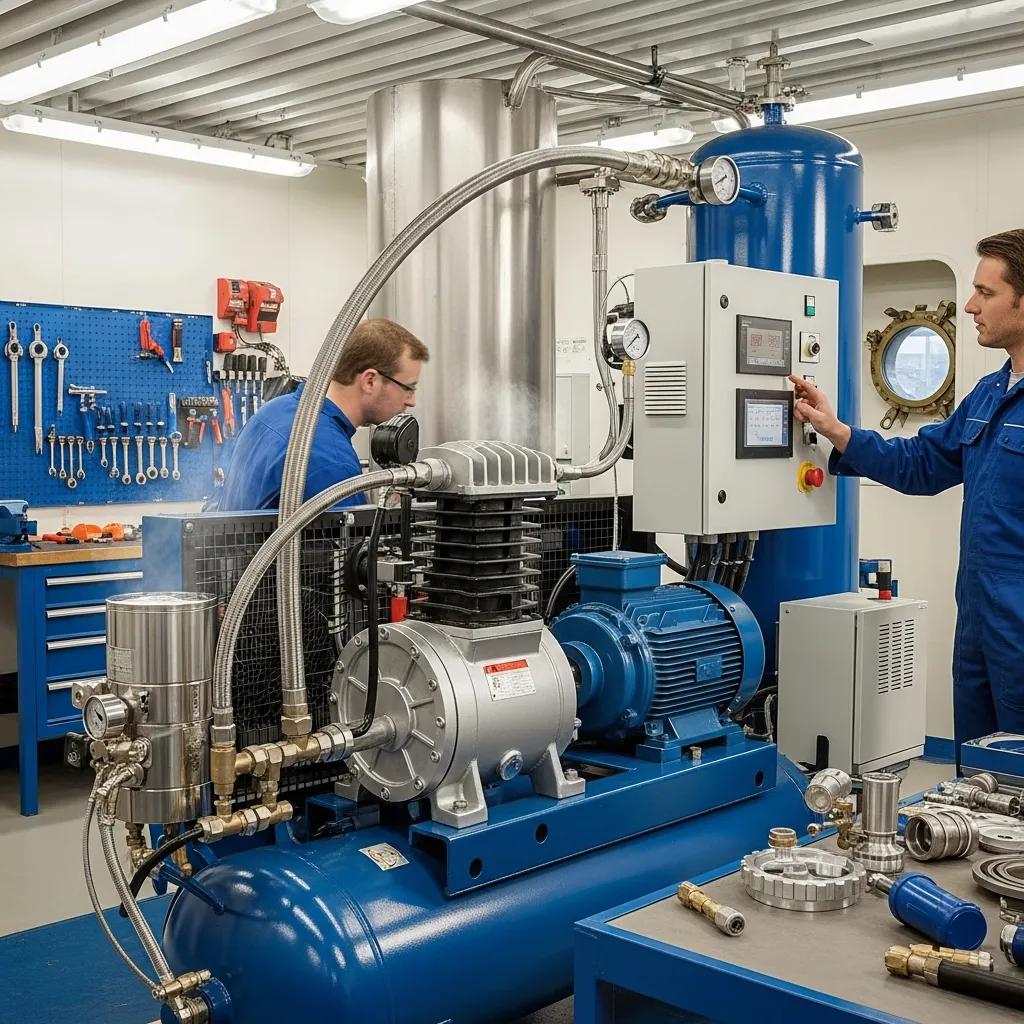
LW Americas’ Continuous-Duty Technology enhances dive compressor performance by designing compressors to operate for extended periods without frequent cool-down cycles, when properly specified and operated. This is achieved through the use of lower RPM components, robust cast blocks, and effective thermal management strategies. These features are designed to contribute to sustained uptime, precise pressure control, and improved safety and purity when combined with proper filtration and monitoring, and operated within design parameters. This continuous-duty capability ensures reliable actuation and filling operations, making it suitable for demanding applications like scuba diving.
What Are the Benefits of Continuous Operation Compared to Intermittent Compressors?
- Higher Duty Cycle: Continuous-duty compressors are engineered for high duty cycles, often approaching 90-100% under optimal conditions, allowing for consistent performance and reduced downtime in applications requiring constant air supply.
- Increased Output Pressure Capability: Continuous-duty compressors can achieve higher output pressures (e.g., filling cylinders to 3000-4500 PSI), making them suitable for demanding applications like breathing-air fills.
- Optimized for Steady Demand: They are specifically designed to manage steady, continuous demand, which is beneficial for applications requiring a constant flow of air within their operational parameters.
- Durability and Reliability: Continuous-duty platforms often feature robust designs, such as one-piece cast blocks, which enhance durability and reduce the risk of leaks.
- Energy Efficiency: Recent innovations in compressor technology, such as variable-speed drives and optimized cooling, are designed to allow for longer continuous operation without thermal compromise when properly maintained, leading to reduced operating costs.
- Predictive Maintenance: Continuous operation can be paired with IoT and predictive maintenance tools, allowing for better monitoring and lifecycle management, which can further enhance uptime and reduce maintenance costs.
Which Engineering Features Ensure Durability and Low Noise in LW Americas Compressors?
- Lower RPM Components: This design choice reduces wear and tear, contributing to longevity and quieter operation.
- Robust Cast Blocks: The solid construction enhances durability and stability during operation.
- Thermal Management Strategies: Effective heat dissipation during prolonged operation minimizes thermal stress on components, which can lead to failures and noise.
- Continuous-Duty Design: This allows for fewer start/stop cycles, reducing wear on valves and seals, which also contributes to lower noise levels.
What Comprehensive Solutions Does LW Americas Offer for Professional Diving Air Systems?
- Custom High-Pressure Solutions: Tailored designs for specific requirements, including 2D/3D drawings and project-managed compressor selection.
- YachtPro™ Essential Compressor: An automated system for filling tanks to programmed pressure, suitable for marine applications.
- SCBA Fill Station Setup: Guidance on designing, operating, and maintaining safe breathing air systems for fire departments.
- Purification Modules and Accessories: Integral components for system integrity and throughput, including purification and monitoring approaches.
- Continuous-Duty Compressors: Engineered for extended, reliable operation, designed to enhance uptime and reduce maintenance needs when properly utilized.
How Do Scuba Tank Filling Stations Integrate Compressors, Purification, and Storage?
Scuba tank filling stations integrate compressors, purification, and storage through a system that includes compressors with intercooler and aftercooler stages, purification modules, and storage receivers. The compressors are selected based on the required pressure and flow rates for filling tanks efficiently. Purification involves multi-stage filtration to ensure the air quality meets safety standards, while storage receivers help buffer demand and maintain pressure during peak usage. Controlled distribution piping with safety valves and monitoring systems ensures safe operation and compliance with relevant standards.
What Are the Advantages of Nitrox and Trimix Generation Systems for Technical Diving?
- Reduced Nitrogen Narcosis: By using a mix of oxygen and helium, divers can mitigate the effects of nitrogen narcosis at greater depths.
- Extended Bottom Time: These gas mixtures allow for longer dives without the risk of decompression sickness, enabling divers to explore deeper and more complex environments.
- Improved Safety: Custom gas blends can be tailored to specific dive profiles, enhancing safety and performance during technical dives.
How Are Breathing Air Quality and Purification Standards Met in Professional Diving Compressors?
Breathing air quality and purification standards in professional diving compressors are met through controlled pressure, certified filtration, and adherence to recognized air quality standards. These standards specify limits for total hydrocarbons, carbon monoxide (CO), moisture, and particulates. The systems are designed to achieve high-pressure fills (often between 3000–4500 PSI) while ensuring that the air delivered meets the necessary purity requirements for safe breathing.
LW Americas’ Approach to Air Quality, Purification, and Monitoring
LW Americas’ purification and monitoring systems are designed to ensure safe breathing air by integrating advanced purification modules and monitoring technologies within their compressor systems. These systems adhere to critical air quality standards such as CGA G-7, EN 12021:2014, and often reference NFPA 1989. These standards are paramount for diving applications, outlining permissible limits for contaminants like total hydrocarbons, carbon monoxide, and moisture, thereby ensuring the air supplied to divers is safe and free from harmful substances. Our SCBA fill stations are engineered to compress, purify, store, and dispense breathing air, supporting readiness for various applications. Key features like primary pressure monitoring, electronic compressor control, and filter monitoring are integral to maintaining air purity and safety throughout operation, ensuring compliance and diver health.
The importance of real-time monitoring is underscored by the historical challenges and evolving needs in ensuring breathing air purity for divers.
Real-Time Air Quality Monitoring for Safe Diving Compressors
The U.S. Navy Divers Air Sampling Program coordinates the mandatory semiannual air purity testing of compressors used to supply divers air in the Fleet. Gas samples are sent to the field, where gas samples are taken. These samples are then returned to a contract laboratory for analysis, with the results subsequently reported back to the field. This approach is expensive, cumbersome, and potentially unreliable. Consequently, the U.S. Navy is interested in having a real-time online air quality monitor to ensure that compressors deliver safe diving air.
Development and Evaluation of an Online Air Quality Monitor (Diveair2) for Diving Compressors, 2009
This interest led to the development of specific real-time monitoring solutions, such as the Anagas Diveair2, to address these critical safety requirements.
Ensuring Safe Diving Air with Real-Time Quality Monitors
With the help of the manufacturer Geotechnical Instruments, Inc. Leamington Spa, UK, the Navy Experimental Diving Unit NEDU previously developed the Anagas Diveair2 model DV 2.0, an online air quality monitor, to ensure that compressors deliver safe diving air. The Diveair2 should allow reliable real-time screening of diving air–provided that any hardware and procedures adopted for field use are verified to produce acceptable results.
Hardware and Procedures for Using the Diveair2 Monitor to Test Diving Air Quality in the Field, 2011
Why Choose LW Americas for Custom High-Pressure Air Compressor Solutions and Support?
LW Americas is a strong choice for custom high-pressure air compressor solutions and support due to several key factors:
- Customization: They offer tailored solutions that adapt core compressor designs to meet specific site constraints and performance targets, ensuring that the system aligns with operational and regulatory environments.
- Continuous-Duty Design: Their compressors are engineered for extended, reliable operation, designed to enhance uptime and reduce maintenance needs when properly specified and maintained. This design minimizes thermal stress and improves overall equipment availability.
- Project Management: LW Americas provides project-managed custom solutions, which include stages like requirements capture, compressor selection, engineering design, and site support, ensuring a comprehensive approach to system integration.
- Durability and Reliability: Their continuous-duty platforms utilize robust mechanical designs, such as one-piece cast blocks, engineered to enhance durability and reduce the risk of leaks, contributing to long-term reliability.
- Monitoring Capabilities: They offer telemetry-ready compressors that allow for proactive maintenance and monitoring, reducing risks associated with critical systems.
- North American Support: LW Americas provides local support, which can be crucial for timely assistance and service.
How Does LW Americas Provide Project Management and Tailored Compressor Systems?
LW Americas provides project management and tailored compressor systems by following a structured workflow that includes needs assessment, equipment selection, engineering design, and installation oversight. They focus on customizing high-pressure compressor solutions to meet specific site constraints and performance targets, ensuring that the final system aligns with operational and regulatory environments. Their approach emphasizes continuous-duty operation, robust construction, and optimized designs to enhance reliability and reduce maintenance needs. Additionally, they offer responsive support throughout the project lifecycle, from initial design to commissioning.
What North American Support and Maintenance Services Are Available for Dive Compressors?
LW Americas offers comprehensive support and maintenance services for dive compressors, ensuring that systems operate efficiently and safely. Their local expertise allows for timely assistance, routine maintenance, and emergency repairs, which are critical for maintaining the reliability of high-pressure air systems. This support is essential for organizations that rely on these systems for safety and operational effectiveness.