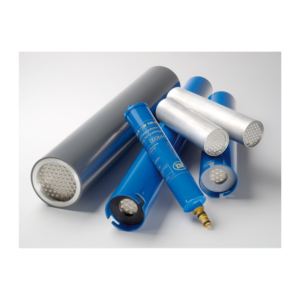
Filter cartridges are essential components used in various filtration systems to remove impurities from gases and liquids. They are designed to capture particulates, contaminants, and other unwanted materials, ensuring that the output meets specific quality standards.
These cartridges come in a variety of materials and configurations, tailored to different applications such as air filtration, water purification, and industrial processes. For instance, activated carbon cartridges are effective for odor removal, while HEPA filters are known for their ability to trap microscopic particles.
Filter cartridges find applications across multiple industries, including healthcare, manufacturing, and environmental management. Their versatility makes them suitable for use in air conditioning systems, water treatment plants, and even in diving equipment for breathing air purification.
In the healthcare sector, filter cartridges are crucial for maintaining sterile environments, while in manufacturing, they help in ensuring the quality of products by removing contaminants from raw materials. This adaptability highlights the importance of selecting the right cartridge for specific operational needs.
Selecting the appropriate filter cartridge is vital for achieving optimal performance in filtration systems. Factors to consider include the type of contaminants, flow rate, and the specific requirements of the application. Understanding these elements can significantly impact the efficiency and longevity of the filtration system.
For example, a high-flow application may require a cartridge with a larger surface area to prevent clogging, while a system dealing with fine particles may need a cartridge with a smaller pore size. Consulting with filtration experts can provide valuable insights into the best choices for your specific needs.
Regular maintenance and timely replacement of filter cartridges are crucial to ensure the continued effectiveness of filtration systems. Neglecting these tasks can lead to reduced performance, increased energy consumption, and potential system failures.
It is recommended to establish a maintenance schedule based on the manufacturer's guidelines and the operating conditions. Monitoring pressure drops across the cartridge can also indicate when replacement is necessary, helping to maintain optimal filtration efficiency and prolong the lifespan of the overall system.
Filter cartridges are essential components used in various filtration systems to remove impurities from gases and liquids. They are designed to capture particulates, contaminants, and other unwanted materials, ensuring that the output meets specific quality standards.
These cartridges come in a variety of materials and configurations, tailored to different applications such as air filtration, water purification, and industrial processes. For instance, activated carbon cartridges are effective for odor removal, while HEPA filters are known for their ability to trap microscopic particles.
Filter cartridges find applications across multiple industries, including healthcare, manufacturing, and environmental management. Their versatility makes them suitable for use in air conditioning systems, water treatment plants, and even in diving equipment for breathing air purification.
In the healthcare sector, filter cartridges are crucial for maintaining sterile environments, while in manufacturing, they help in ensuring the quality of products by removing contaminants from raw materials. This adaptability highlights the importance of selecting the right cartridge for specific operational needs.
Selecting the appropriate filter cartridge is vital for achieving optimal performance in filtration systems. Factors to consider include the type of contaminants, flow rate, and the specific requirements of the application. Understanding these elements can significantly impact the efficiency and longevity of the filtration system.
For example, a high-flow application may require a cartridge with a larger surface area to prevent clogging, while a system dealing with fine particles may need a cartridge with a smaller pore size. Consulting with filtration experts can provide valuable insights into the best choices for your specific needs.
Regular maintenance and timely replacement of filter cartridges are crucial to ensure the continued effectiveness of filtration systems. Neglecting these tasks can lead to reduced performance, increased energy consumption, and potential system failures.
It is recommended to establish a maintenance schedule based on the manufacturer's guidelines and the operating conditions. Monitoring pressure drops across the cartridge can also indicate when replacement is necessary, helping to maintain optimal filtration efficiency and prolong the lifespan of the overall system.