Dive Compressor Rental vs Purchase: Operational Considerations for High-Pressure Breathing Air Systems
High-pressure dive compressors are central to safe, compliant breathing air supply, and choosing between renting and purchasing has direct safety, operational and financial consequences for dive operations.
This article explains the compressor purchase decision and dive compressor rental trade-offs so operators can compare total cost of ownership, uptime requirements, air-quality obligations (often guided by standards like EN12021), and logistical constraints that shape optimal choices. The decision is primarily framed by usage frequency, service access, maintenance liability, and capital availability.
Readers will learn what high-pressure compressors do, how continuous-duty designs affect throughput and maintenance, the operational components that drive the decision between rental and ownership, and practical decision criteria for occasional, seasonal, and heavy commercial use.
Throughout the guide we use semantic comparisons—types, parts, and related entities like purification modules and storage banks—to clarify trade-offs and to help you calculate ROI.
The article concludes with a pragmatic decision framework and options for evaluation or an on-site systems assessment by LW Americas as a specialized supplier of continuous-duty compressors, NitroxMaker™ and YachtPro™ systems to support implementation and long-term service planning.
What Are High-Pressure Dive Compressors and Their Role in Breathing Air Supply?
High-pressure dive compressors are gas compression equipment that pressurize and deliver breathing air into storage cylinders or filling manifolds at the pressures required for scuba and commercial diving.
They function by increasing gas pressure through staged compression, removing contaminants with purification modules, and enabling safe, standards-compliant fills that often meet breathing air quality standards like EN12021.
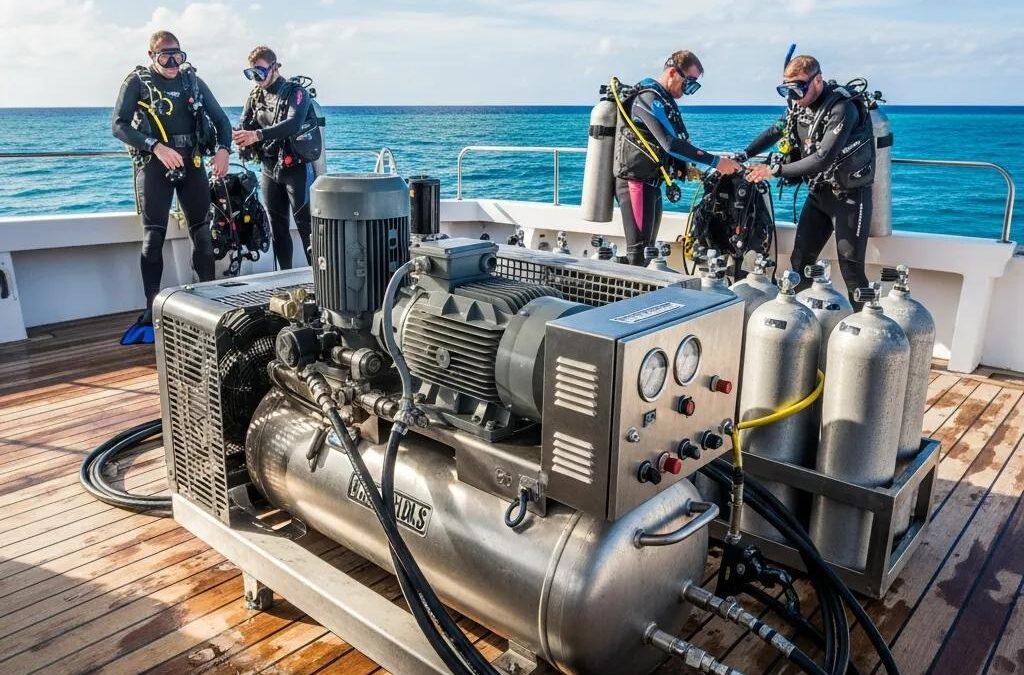
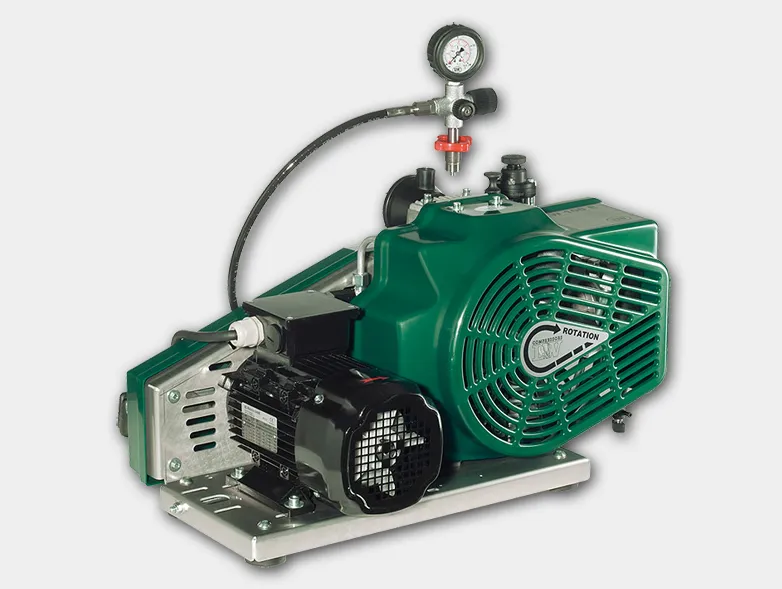
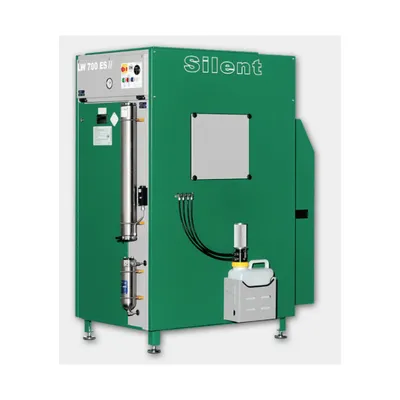
These compressors appear as portable dive air supply units for field fills or as stationary high-pressure compressors integrated into dive shops, maritime vessels and emergency-response systems.
Understanding the difference between portable and stationary systems clarifies rental versus purchase decisions and sets the stage for assessing throughput and quality controls.
Operators commonly select among several compressor families based on use case and site constraints:
Portable dive air supply units for remote fills and mobile operations.
Mobile scuba tank fill compressors with skids and quick-connect manifolds.
Stationary high-pressure compressors for dive shops or onboard vessels.
These hyponyms map directly to operational needs: portability prioritizes transportability and quick hook-up, while stationary units optimize continuous-duty operation and integration with storage cylinders. The next subsection explains how continuous-duty compressors specifically change operational outcomes for high-frequency fills.
How Do Continuous-Duty Compressors Enhance Dive Operations?
Continuous-duty compressors are engineered to run for extended periods without the heat and wear limitations common to intermittent designs, and that enables higher throughput with lower downtime.
Mechanically, continuous-duty designs use lower RPMs and robust components—such as one-piece cast compressor blocks—which reduce vibration, reduce wear on seals, and extend service intervals compared with higher-RPM intermittent units.
The operational result is predictable delivery rates during peak fill days, more consistent cylinder turnaround, and simplified scheduling for dive shops and maritime operations where uptime is mission-critical.
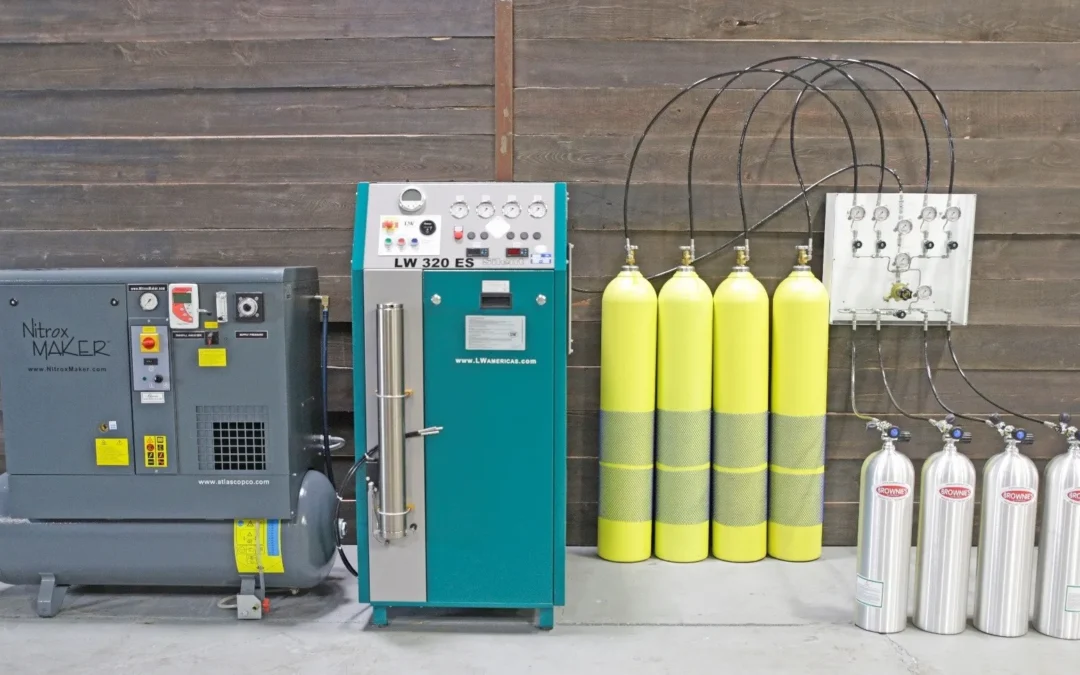
In practice, continuous-duty compressors pair well with storage banks and filling manifolds to smooth peak demand, which also reduces labor pressure on staff and optimizes operational efficiency compared with cycling smaller portable units.
Because continuous-duty capability changes maintenance cadence, the following section addresses why breathing air quality and purification are equally important for safe compressor operation.
Why Is Breathing Air Quality Critical for Dive Compressor Use?
Breathing air quality matters because contaminants—oil, carbon monoxide (CO), moisture, and particulates—create acute and chronic hazards when compressed and delivered as breathing gas; industry standards, such as EN12021, often set limits for oxygen, CO, CO₂ and contaminants to assure safety.
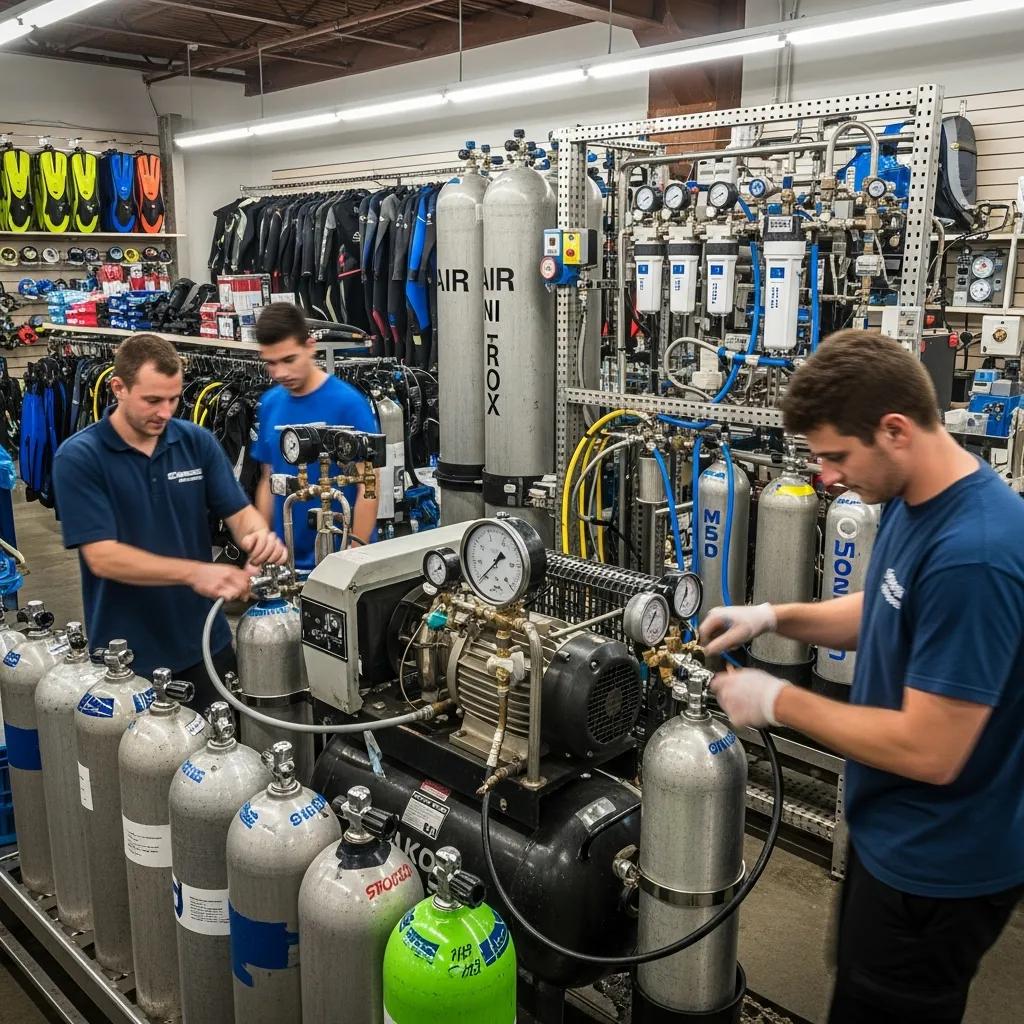
Effective purification includes pre-filtration, coalescing filters, adsorption beds and regular testing; these meronyms—air purification module, storage cylinders, filling manifold—form the functional chain that keeps breathing air within specification.
Operators must schedule filter changes, perform CO and moisture testing at prescribed intervals, and maintain documentation to demonstrate compliance, especially in commercial or regulated applications.
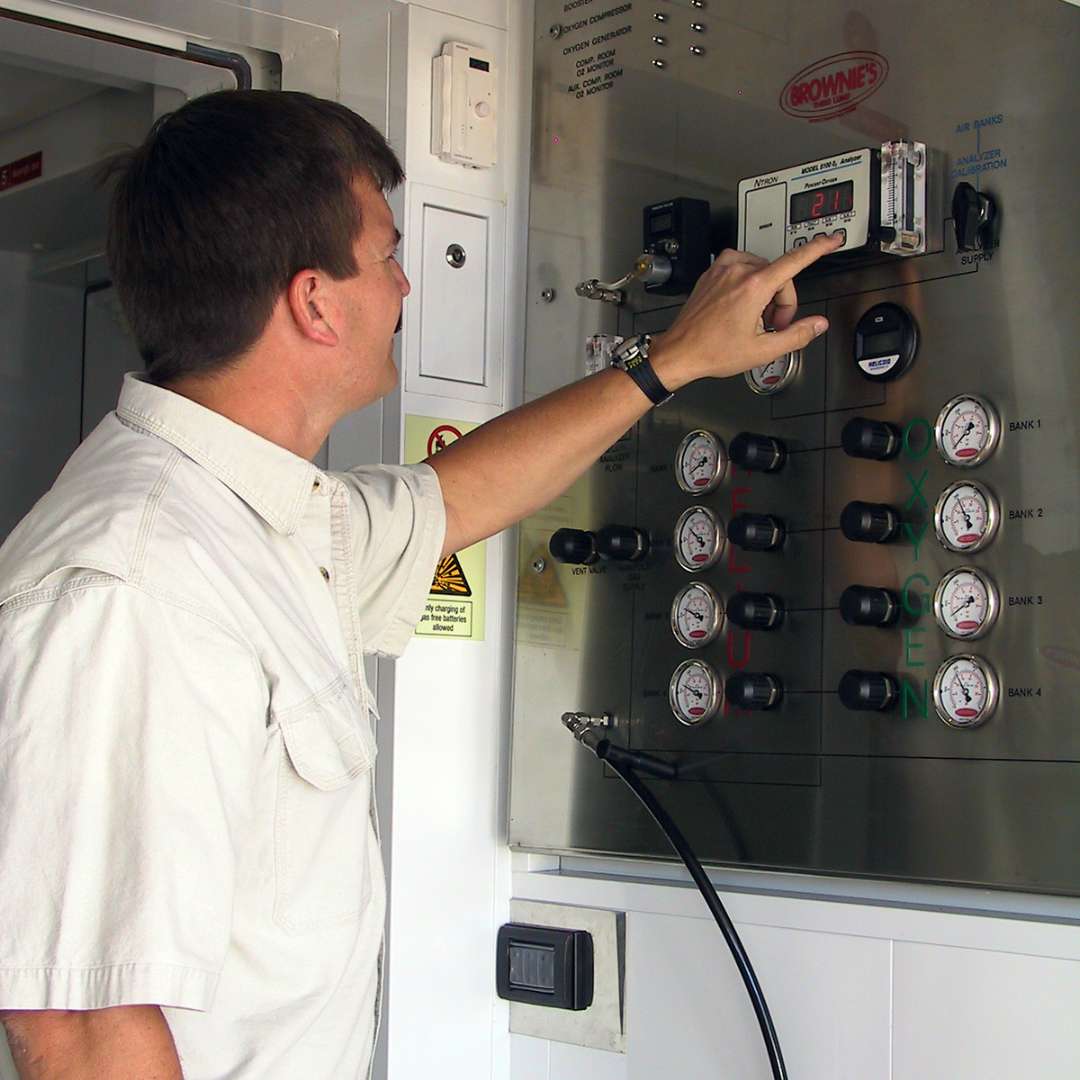
Good practices include using oil-free compression where feasible, monitoring compressor operating parameters, and pairing compressors with NitroxMaker™ or similar systems when gas blending is required for enriched-air applications.
What Are the Operational Differences Between Renting and Purchasing Dive Compressors?
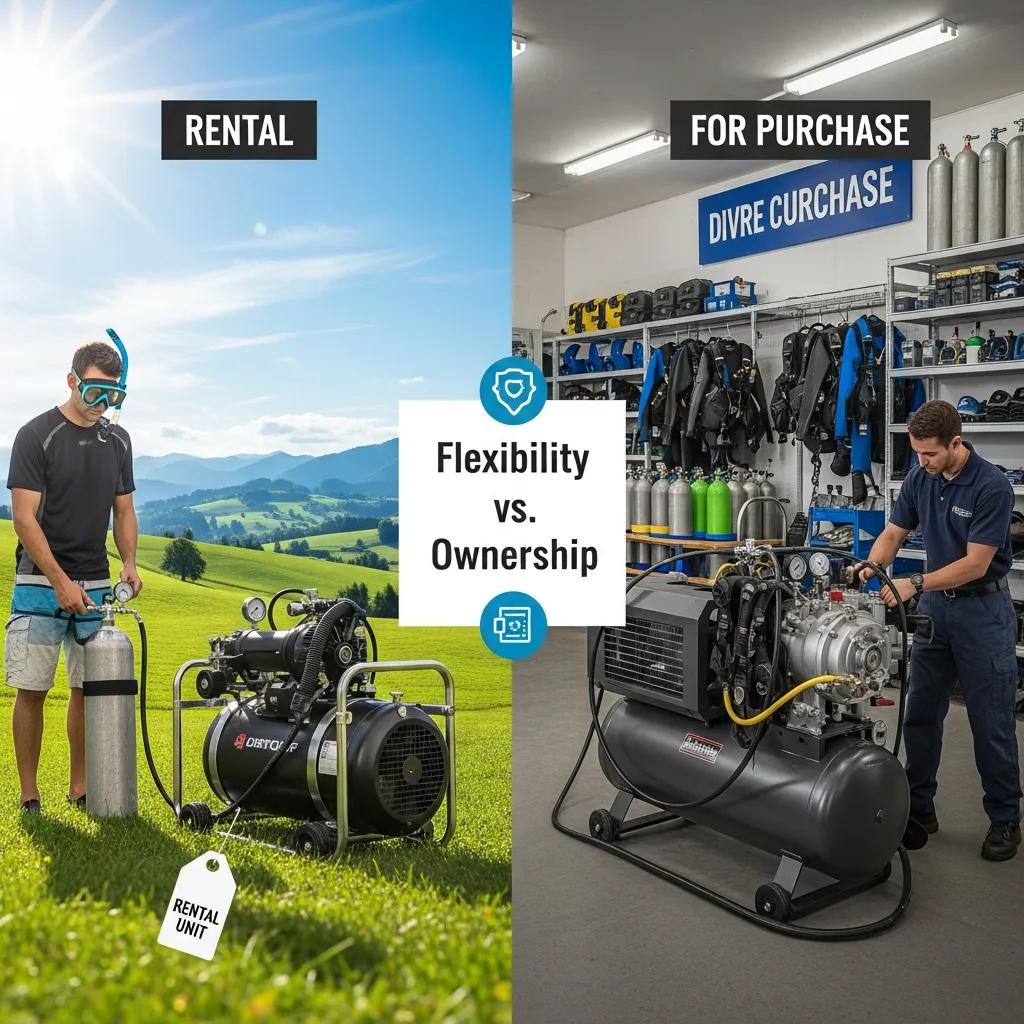
A clear comparison separates upfront capital, recurring operating expenses, and long-term operational outcomes—renting typically requires less initial capital but may involve different operational expenses, while purchasing concentrates capital outlay and offers distinct long-term operational characteristics.
When buying, expect a significant initial investment and ongoing costs for energy, filter media, scheduled maintenance, and parts; when renting, expect periodic rates plus transport and potential surcharges for specific needs.
Depreciation and potential long-term value shape total cost of ownership, and lease financing can spread capital but adds financing costs that affect the overall financial picture.
To support decision-making, the following table contrasts Rent / Buy / Lease across core financial and operational attributes.
Intro: The table below compares rental, purchase, and lease options across typical financial and operational attributes so decision-makers can weigh trade-offs objectively, focusing on capital availability, maintenance liability, service access, and usage frequency.
Option
Upfront cost
Periodic operational expense
Maintenance
Availability
Customization
Rent
Lower initial outlay
Periodic operational expense
Provider responsibility or limited
Variable during peak demand
Limited to what provider supplies
Buy
Significant capital investment
Owner-managed operational expenses
Owner-managed; scheduled
Predictable and immediate
High; system can be customized
Lease
Managed initial outlay
Fixed payments
Often serviced per agreement
Contracted availability
Moderate; subject to contract
How Do Upfront and Long-Term Operational Characteristics Compare for Rental vs Purchase?
Evaluating the long-term financial implications requires inputs such as initial investment, expected annual hours or fills, operational expenses, and the value of consistent service access. A comprehensive model compares the total operational expenditure of ownership against the periodic costs of rental, considering factors like utilization and service requirements.
For example, an operation with high annual fill volumes and mission-critical uptime may find ownership more advantageous over time due to consistent service access and predictable operational characteristics, which can outweigh the initial capital investment.
Key KPIs to track include operational efficiency per fill, cost per operating hour, downtime cost per hour, and annual maintenance spend, which together provide the datapoints for an ROI calculation.
What Hidden and Operational Expenses Should Be Considered?
Beyond initial investment and periodic rates, hidden costs frequently alter the economics: transport and logistics for mobile fills, insurance differentials between rented and owned equipment, training and certification for operators, and regulatory testing or documentation.
Downtime after equipment failure has opportunity cost measured in missed fills and customer satisfaction impact; rental units require careful verification of maintenance history to mitigate this risk.
Contractual protections—service-level agreements, spare-parts guarantees, and clear liability clauses—reduce hidden exposure but may add to rental cost.
A focused checklist helps capture these line items when modeling total cost:
Transport and logistics expenses for moving compressors to and from sites.
Insurance, liability coverage differences, and rental deposit risks.
Training and certification costs for operators and maintenance staff.
Unexpected downtime costs and spare-parts availability.
Accounting for these items leads to a more accurate lifecycle model and prepares operators to negotiate rental terms or service contracts, which is the subject of the next section on operational pros and cons.
What Are the Operational Advantages and Disadvantages of Renting Dive Compressors?
Renting offers operational flexibility, fast access to portable diving air supply when needed, and avoids capital commitments, making it a good fit for short-term projects and trialing equipment types.
The downsides include potential availability constraints during busy seasons, and the need for operators to conduct due diligence to verify maintenance histories and confirm air-quality controls on each rental unit before accepting it into service. The responsibility for ensuring compliance with breathing air standards, such as EN12021, ultimately rests with the operator, regardless of ownership.
Operators evaluating rental providers should vet maintenance records, purification modules installed, and confirm whether the unit is capable of meeting relevant breathing air standards, such as EN12021. Negotiating service-level guarantees can help reduce availability and quality risks.
When Is Renting a Portable Dive Air Compressor Most Beneficial?
Renting is most beneficial for infrequent fills, temporary events, seasonal peaks, or pilot testing where capital purchase is not justified by projected utilization.
For example, support for a multi-day training event, a one-off commercial inspection, or emergency response deployments commonly favors rental because it provides immediate capacity with minimal logistics.
A rental-selection checklist should confirm compressor flow rate, pressure rating, installed purification modules, noise levels, and available service support to ensure compatibility with mission requirements.
What Are the Limitations and Risks of Rental Equipment?
Common rental limitations include the need to verify maintenance histories to assess failure risk, possible incompatibility of fittings and accessories, and the operator’s responsibility to ensure air quality if purification modules are not properly maintained.
Liability and insurance coverage must be clarified in rental agreements to determine who bears responsibility for damage or contamination.
Best practices include pre-delivery inspection, documentation of CO and moisture readings upon receipt, and a written SLA that specifies response times for breakdowns.
Mitigating these risks often requires a short service-level agreement and an inspection protocol, which operators can use while comparing the long-term benefits of ownership covered in the next section.
What Are the Benefits and Challenges of Purchasing High-Pressure Dive Compressors?
Purchasing delivers predictable availability, the ability to customize systems for specific missions, and potential long-term operational efficiencies when utilization is high and maintenance is managed effectively.
Ownership enables integration with purification, storage, and filling manifolds and supports blending systems like NitroxMaker™ where enriched-air capability is required.
Challenges include upfront capital, space and storage requirements, the need for trained maintenance personnel, and planning for scheduled service intervals and spare-part inventory to avoid extended downtime.
To clarify ownership decisions across compressor classes, the table below compares typical compressor model types and attributes relevant to ownership.
Compressor Model Type
Flow rate
Pressure rating
Power source
Continuous-duty capability
Portable skid-mounted
Low–moderate
Up to 300 bar typical
Petrol/genset or electric
Limited; often intermittent
Mobile truck/van unit
Moderate–high
Up to 300 bar typical
Vehicle or generator
Varies by design
Stationary shop compressor
High
Up to 300+ bar
Industrial electric
Designed for continuous-duty
How Does Ownership Improve Reliability and Customization?
Ownership improves reliability by enabling scheduled preventive maintenance, consistent use of OEM parts, and controlled operating environments that limit contamination risk; this yields fewer unexpected outages and enhanced reliability.
Customization options include tailored purification trains, storage banks sized for peak demand, and integration with YachtPro™ packages for maritime installations.
These custom integrations reduce operator labor during fills and can improve throughput and safety, which collectively contribute to enhanced operational efficiency over the equipment lifecycle.
What Maintenance and Storage Responsibilities Come with Ownership?
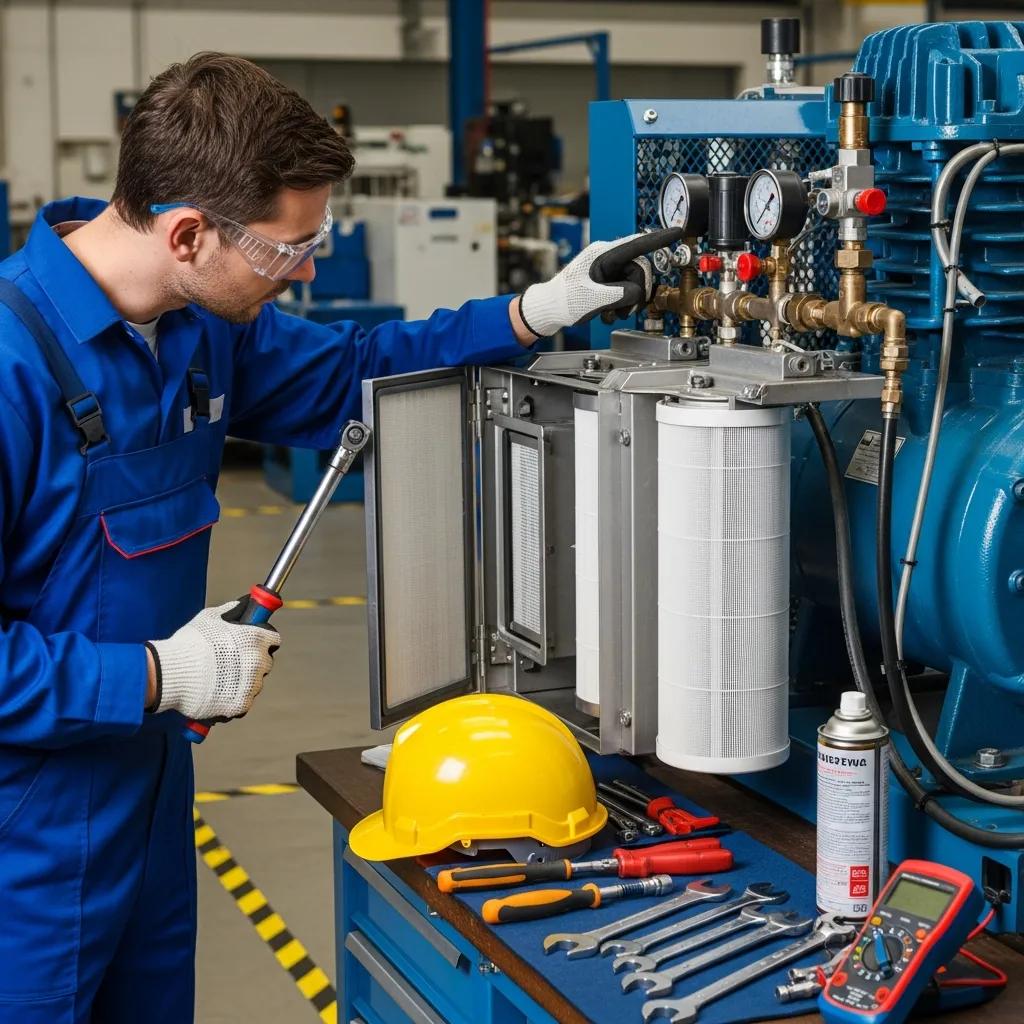
Owners are responsible for routine tasks—filter replacement, oil changes for non oil-free designs, belt inspections, pressure-testing storage cylinders, and scheduled CO/moisture testing—to keep air quality within applicable standards, such as EN12021, and maintain warranty conditions.
Storage considerations include secure mounting, proper ventilation, and environmental controls to prevent corrosion or condensation that shorten component life.
Owners must budget for spare filters, common wear parts, and occasional overhauls; outsourcing maintenance to qualified service providers is an alternative that trades labor time for predictable service costs.
A strategic maintenance schedule and documented storage plan reduce long-term costs and guide the purchase-versus-rent decision that follows, where supplier support becomes a differentiator.
How Does LW Americas Provide Superior Dive Compressor Solutions?
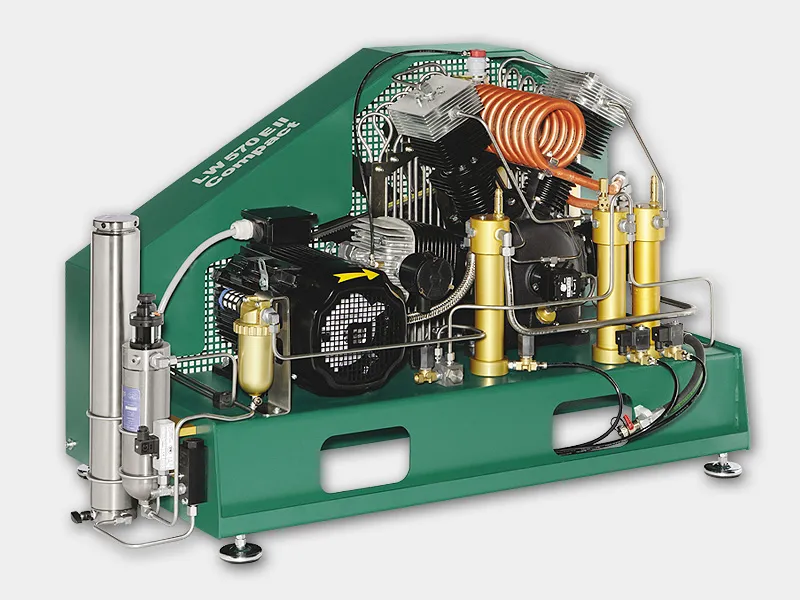
LW Americas is a specialized provider of high-pressure compressor and gas systems in North and South America and acts as the exclusive regional distributor for L&W Compressors of Germany, supplying continuous-duty scuba tank fill compressors, NitroxMaker™ systems, YachtPro™ systems, purification, storage, filling solutions, and custom dive systems.
The company’s value proposition centers on robust engineering—such as one-piece cast blocks and lower RPM continuous-duty designs—comprehensive system configurations that integrate purification and storage, and responsive North American parts and service support.
What Unique Features Do LW Americas’ Continuous-Duty Compressors Offer?
LW Americas’ continuous-duty compressors emphasize design features that reduce wear and downtime: robust one-piece cast compressor blocks that lower vibration, lower RPM operation that increases seal life, and compatibility with modular purification and storage banks for compliance with relevant breathing air standards, such as EN12021.
The operational benefits include sustained throughput during peak demand, quieter operation that eases staff exposure to noise, and reduced service frequency, which can contribute to reduced lifecycle maintenance.
These feature-to-benefit relationships make continuous-duty compressors particularly well-suited to busy dive shops, commercial teams, and marine installations where predictable performance and integration with NitroxMaker™ or YachtPro™ systems matter.
How Do Custom Solutions and Support Enhance Dive Compressor Investment?
Custom engineering allows LW Americas to tailor compressor skids, portable packages, and yacht installations to site constraints, integrating purification modules, storage cylinders and filling manifolds to meet specific throughput and quality needs.
Responsive parts availability and authorized service pathways in North America reduce downtime and simplify lifecycle management, while initial site surveys and operator training help ensure correct installation and safe operation.
Together, system customization and local support lower the operational risk of ownership and improve ROI by keeping equipment online and compliant with breathing air standards.
How Can Businesses Decide Between Renting and Purchasing Dive Compressors?
Deciding between renting and purchasing requires a structured checklist that weighs usage frequency, mission-critical uptime, budget constraints, storage, regulatory obligations, and vendor support for parts and service.
A practical approach uses a short scoring rubric: estimate annual fills or hours, score the criticality of uninterrupted availability, assign a budgetary tolerance for capital expenditure, and rate access to space and trained staff for maintenance.
This produces an initial recommendation—rent for low scores and purchase for high utilization and high-criticality operations—and helps prioritize next steps like trial rentals, pilot purchases, or requesting a site evaluation by a supplier.
The decision framework below provides a compact, action-oriented checklist to guide immediate choices.
Estimate Annual Usage: Quantify expected fills or operating hours for the next 3–5 years.
Assess Uptime Criticality: Rate how damaging downtime is to operations and reputation.
Evaluate Capital vs Operating Budget: Determine available capital and appetite for financing.
Check Space and Maintenance Capacity: Confirm storage, ventilation, and trained staff availability.
This checklist prepares operators to run an ROI calculation, which is detailed in the final subsection along with a recommendation to involve a systems partner for evaluation when appropriate.
Intro: The table below aligns common use cases with recommended approaches to clarify which option tends to be most appropriate, considering usage frequency, service access, maintenance liability, and capital availability.
Use Case
Estimated annual hours
Recommended approach
Key considerations
Occasional / hobby fills
<200 hrs/year
Rent
Minimize capital; verify air quality on delivery
Seasonal ops
200–800 hrs/year
Rent or lease pilot
Consider lease-to-own if usage grows
Heavy commercial
>800 hrs/year
Purchase
Favor continuous-duty, plan spare parts and training
Emergency response
Variable, mission-critical
Purchase + rental backup
Prioritize uptime, rapid deployable portable units
Summary: Mapping use cases to approach helps prioritize procurement and ensures operators align investment with expected utilization and risk tolerance.
What Factors Should Influence the Rental vs Purchase Decision?
Primary factors include operational cadence (annual fills), criticality of uptime, available budget or financing options, storage and maintenance capacity, regulatory obligations for testing and documentation, and supplier support for parts and service.
Weight each factor according to organizational priorities—safety and compliance should carry high weight for commercial operators—then compute a simple score that points toward renting, leasing, or purchasing.
This rubric reduces ambiguity and focuses stakeholder discussions on measurable inputs like operational efficiency per fill, expected downtime impact, and vendor response times.
How to Calculate ROI and Long-Term Value for Dive Compressor Investments?
Calculate ROI by estimating total lifecycle costs for purchase (capital + cumulative operating and maintenance costs over a multi-year horizon) and comparing them to cumulative rental costs for the same period; analyze total costs relative to expected fills to understand the long-term value and identify when ownership becomes more operationally efficient than renting.
Key inputs include initial investment, potential long-term value, annual maintenance, energy cost, periodic rental rates, and downtime cost per hour.
Track KPIs post-purchase—operational efficiency per fill, annual service spend, and unplanned downtime hours—to validate the decision and refine future procurement choices.
Practical next steps include running a 3–5 year modeled comparison and contacting a systems partner for a site survey or tailored quote; for operators needing integrated continuous-duty systems and North American support, LW Americas can provide system proposals, customization, and service planning to support accurate ROI modeling.
Choosing a High Pressure Air Compressor for Your Dive Shop: A Practical Decision Guide
Selecting a high pressure air compressor for a dive shop is a critical operational decision that impacts safety, efficiency, and profitability. This guide provides a structured approach to evaluating compressor systems, focusing on practical decision factors rather than just specifications. We’ll explore how to match equipment to your shop’s specific throughput, operational environment (fixed vs. mobile), and risk tolerance, emphasizing the importance of breathing-air quality, robust maintenance, and a clear understanding of total cost of ownership. Dive shop operators will learn to navigate choices related to compressor types, filtration design, air sampling logistics, and energy efficiency, ensuring a compliant and reliable air supply for scuba tank refills.
Choosing the Right Compressor System for Your Dive Shop
The ideal high pressure air compressor system for a dive shop delivers breathing air at the required pressure and flow for safe, repeated scuba cylinder refills. The best choice depends heavily on your shop’s daily fill volume, whether operations are fixed or mobile, and specific site constraints. Understanding the core compressor technology—high-pressure piston compressors—and how they are configured into systems (e.g., with cascade storage or as portable units) is key to making an informed decision.
Scenario-Based Selection: Matching Compressor Systems to Operational Needs
Consider your typical daily fill volume and operational model to guide your selection:
Low Daily Fills (e.g., 5-10 tanks/day, occasional mobile use): A smaller, compact high-pressure piston compressor, potentially integrated into a portable skid, might suffice. Focus on ease of transport and basic filtration.
Medium Daily Fills (e.g., 10-30 tanks/day, fixed location): A robust high-pressure piston compressor with a dedicated cascade fill system is often appropriate. Prioritize duty cycle, thermal management, and comprehensive multi-stage filtration.
High Daily Fills (e.g., 30+ tanks/day, busy fixed location): A larger, continuous-duty high-pressure piston compressor, often paired with a substantial cascade storage system, is necessary. Focus on high throughput, advanced thermal management, and redundancy options.
Mobile/Event-Based Fills: Portable high-pressure piston compressors (typically 3000-4500 psi) are essential. Evaluate their flow rate, self-contained power options, and integrated filtration for remote operations.
Understanding Compressor Types and Configurations
While the core technology for high-pressure breathing air is typically a multi-stage piston compressor, how it’s configured significantly impacts its application:
High-Pressure Piston Compressors: These are the workhorses, compressing air in stages to achieve pressures up to 4500 psi or higher. Key considerations include: Stage Count: More stages generally mean lower compression ratios per stage, leading to cooler operation and potentially longer component life.Thermal Management: Efficient intercoolers and aftercoolers are crucial for removing heat generated during compression, protecting components, and reducing moisture load on filtration.Duty Cycle: This defines how long a compressor can run continuously versus needing rest. Dive shop compressors often require high duty cycles, sometimes continuous, especially when paired with cascade systems.
Portable Compressor Systems: These are compact, self-contained high-pressure piston compressors designed for mobility. Typical Pressure Rating: Commonly 3000-4500 psi, suitable for standard scuba cylinders.Flow / Use-case: Ideal for field fills, charters, and remote events where fixed installations are impractical. They typically have lower flow rates than larger fixed systems.Operational Trade-offs: While offering mobility, they may have limited continuous run times, require more frequent pauses between fills, and often have smaller, less robust filtration systems compared to fixed units, necessitating careful monitoring.
Cascade Fill/Storage Systems: These are not a compressor type but a configuration that pairs a compressor with multiple high-pressure storage cylinders. Function: The compressor fills the storage cylinders, and then tanks are filled from the cascade bank, moving from highest to lowest pressure. This allows for rapid, successive fills without waiting for the compressor to build pressure for each tank.Benefits: Significantly increases effective fill rate during peak demand, reduces wear on the compressor by allowing it to run more continuously to fill the cascade bank rather than stop-start for each tank, and provides a buffer of air.Considerations: Requires additional footprint for storage cylinders and proper manifolding.
Key Operational Considerations: Duty Cycle and Throughput
Duty Cycle and Continuous-Duty Operation
A compressor’s duty cycle indicates the percentage of time it can operate within a given period. For dive shops, especially those with medium to high daily fills, understanding duty cycle is critical:
Stop-Start Limitations: Frequent stop-start cycles can increase wear on motors, starters, and compressor components, leading to premature failure and higher maintenance costs.
Thermal Management: Compressors generate significant heat. Continuous-duty units are designed with robust cooling systems (intercoolers, aftercoolers, larger fans) to dissipate this heat effectively, preventing overheating and thermal breakdown of lubricants or seals. Units not designed for continuous duty will overheat if pushed beyond their limits, compromising performance and longevity.
Peak-Hour Impact: During busy periods, a compressor with an insufficient duty cycle will struggle to keep up, leading to slow fills, operator frustration, and potential equipment damage. A continuous-duty compressor, often paired with a cascade system, can maintain consistent output during peak demand.
Practical Throughput Calculations
To determine if a compressor system meets your fill rate needs, consider the following:
Compressor Flow Rate (cfm / lpm): This is the volume of air the compressor can produce per minute. A higher flow rate means faster filling of both scuba tanks and cascade storage.
Receiver Volume (for Cascade Systems): The total volume of your cascade storage cylinders directly impacts how many tanks you can fill rapidly before the compressor needs to replenish the bank. Larger cascade banks provide more buffer.
Fills-Per-Hour Estimation: Calculate the total volume of air needed per scuba tank fill (e.g., a 80 cu ft tank filled to 3000 psi). Determine the compressor’s effective output volume per hour. For cascade systems, factor in the initial volume available in the cascade bank and the compressor’s ability to replenish it while fills are ongoing. A common approach is to size the compressor to replenish the cascade bank within a reasonable timeframe, allowing for continuous filling from the cascade.
Ensuring Breathing Air Quality and Compliance
Delivering safe breathing air is paramount for any dive shop. This requires adherence to specific standards, meticulous filtration design, and rigorous air sampling protocols.
Primary Standards: CGA G-7.1 vs. ISO 8573-1
CGA G-7.1 (Commodity Specification for Air): This is the definitive breathing-air standard, particularly in North America, specifying acceptable contaminant concentrations (e.g., oil vapor, carbon monoxide, particulates, moisture) and sampling procedures for scuba applications. Adherence to CGA G-7.1 directly reduces the risk of contaminants harming divers.
ISO 8573-1 (Compressed Air Purity Classification): It is crucial to understand that **ISO 8573-1 is NOT a breathing-air standard.** Instead, it is a compressed air purity classification system that defines purity classes for particulates, water, and oil. It provides a framework for specifying and verifying the performance of filtration stages. While not a breathing-air standard itself, ISO 8573-1 can be used as a supporting framework to specify filtration performance that helps achieve the breathing-air quality dictated by CGA G-7.1.
In practice, CGA G-7.1 dictates the required breathing-air quality, while ISO 8573-1 provides a technical language for selecting and verifying the filtration stages needed to achieve that quality.
Comprehensive Filtration System Design
A multi-stage filtration stack is essential to address various contamination paths and ensure breathing-air quality. Even “oil-free” compressor designs, which reduce lubricant carryover, still require full breathing-air filtration and testing to remove other contaminants.
Contamination Paths to Address:
Intake Air Quality: Ambient air can contain pollutants, dust, pollen, and even exhaust fumes from nearby vehicles or generators.
Moisture: Atmospheric air contains water vapor, which condenses into liquid water during compression.
Thermal Breakdown: High temperatures during compression can cause compressor lubricants to break down into harmful vapors (e.g., carbon monoxide, hydrocarbons).
Particulates: Wear particles from compressor components, rust from piping, or dust from intake.
Upstream Engine Exhaust: If the compressor is powered by an internal combustion engine, exhaust gases can be drawn into the intake if not properly managed.
Multi-Stage Filtration Components:
A typical breathing-air filtration system includes:
Pre-filters: Remove large particulates and bulk liquid water.
Coalescing Filters: Remove fine oil aerosols and remaining liquid water.
Activated Carbon Beds: Adsorb oil vapors, hydrocarbons, and odors.
Desiccant Dryers (optional but recommended): Further reduce moisture content, especially in humid environments.
Final Particulate Filters: Capture any remaining fine particles before the air enters the cylinder.
Sizing Filtration for Flow, Humidity, and Runtime:
Flow Rate: Filter elements must be sized appropriately for the compressor’s maximum flow rate (cfm / lpm). Undersized filters lead to excessive pressure drop, reduced service life, and risk of contaminant breakthrough.
Ambient Humidity: In humid climates, more robust moisture removal (e.g., larger coalescers, desiccant dryers) is critical to prevent water from reaching later filtration stages and compromising their effectiveness.
Runtime Expectations: Filters have a finite life based on the volume of air processed and contaminant load. Systems with higher runtime expectations require larger filter elements or more frequent replacement schedules.
Contamination Risk: If the intake air quality is consistently poor, or if there’s a higher risk of lubricant carryover, more aggressive or redundant filtration stages may be necessary.
Air Sampling Logistics
Regular air sampling is the only way to verify that your filtration system is performing as required and that the breathing air meets standards like CGA G-7.1.
Sample Port Placement and Accessibility: When selecting a compressor system, ensure it has easily accessible, properly located sample ports. These ports should be downstream of all filtration stages and before the fill whip connection to ensure the sample represents the air entering the scuba tank. Poorly placed or inaccessible ports can complicate sampling and lead to non-compliance.
Conditional Sampling Intervals: The frequency of air sampling is not fixed but depends on several factors: Jurisdictional Requirements: Local regulations or national standards may mandate specific intervals (e.g., monthly, quarterly).Insurer Requirements: Your insurance provider may have specific sampling frequency requirements to maintain coverage.Usage-Dependent: High-volume shops or those operating in challenging environments (e.g., high humidity, dusty conditions) may need more frequent sampling.Risk Profile: Any changes to the compressor system, maintenance practices, or a history of borderline test results should trigger more frequent sampling.
Documentation Requirements: Maintain meticulous records of all air samples, including dates, results, and comparison to applicable standards. This documentation is crucial for demonstrating compliance to auditors and insurers.
Maintenance Discipline and Preventing Operational Failure
An effective maintenance program is not just about changing parts; it’s about preventing common failure modes that compromise breathing-air quality, reduce uptime, and increase total cost of ownership. Understanding how neglect manifests operationally is key to proactive maintenance.
Understanding Failure Modes and Operational Impact
Filter Neglect:Manifestation: Overdue filter elements become saturated, leading to increased pressure drop, reduced flow, and ultimately, contaminant breakthrough. This can result in oil aerosols, particulates, or hydrocarbons entering scuba tanks, directly compromising diver safety.Operational Impact: Slow fills, reduced compressor efficiency, and potential for failed air quality tests, leading to costly remediation or even operational shutdown.
Moisture Accumulation:Manifestation: Inadequate draining of moisture separators or coalescing filters allows liquid water to carry over into subsequent filtration stages, reducing their effectiveness and potentially causing corrosion within the compressor or storage cylinders.Operational Impact: Increased wear on compressor components, compromised air quality (e.g., high moisture content in breathing air), and potential for rust or corrosion in scuba tanks.
Cooling System Inefficiency:Manifestation: Clogged intercoolers/aftercoolers, dirty cooling fins, or malfunctioning fans lead to elevated operating temperatures. This can cause thermal breakdown of compressor lubricants, increased moisture load on filters, and excessive wear on seals and components.Operational Impact: Reduced compressor lifespan, increased risk of carbon monoxide formation (from lubricant breakdown), higher energy consumption, and potential for sudden compressor shutdown due to overheating.
Scheduled Maintenance Program
A structured maintenance program combines daily checks with periodic replacements and annual performance testing:
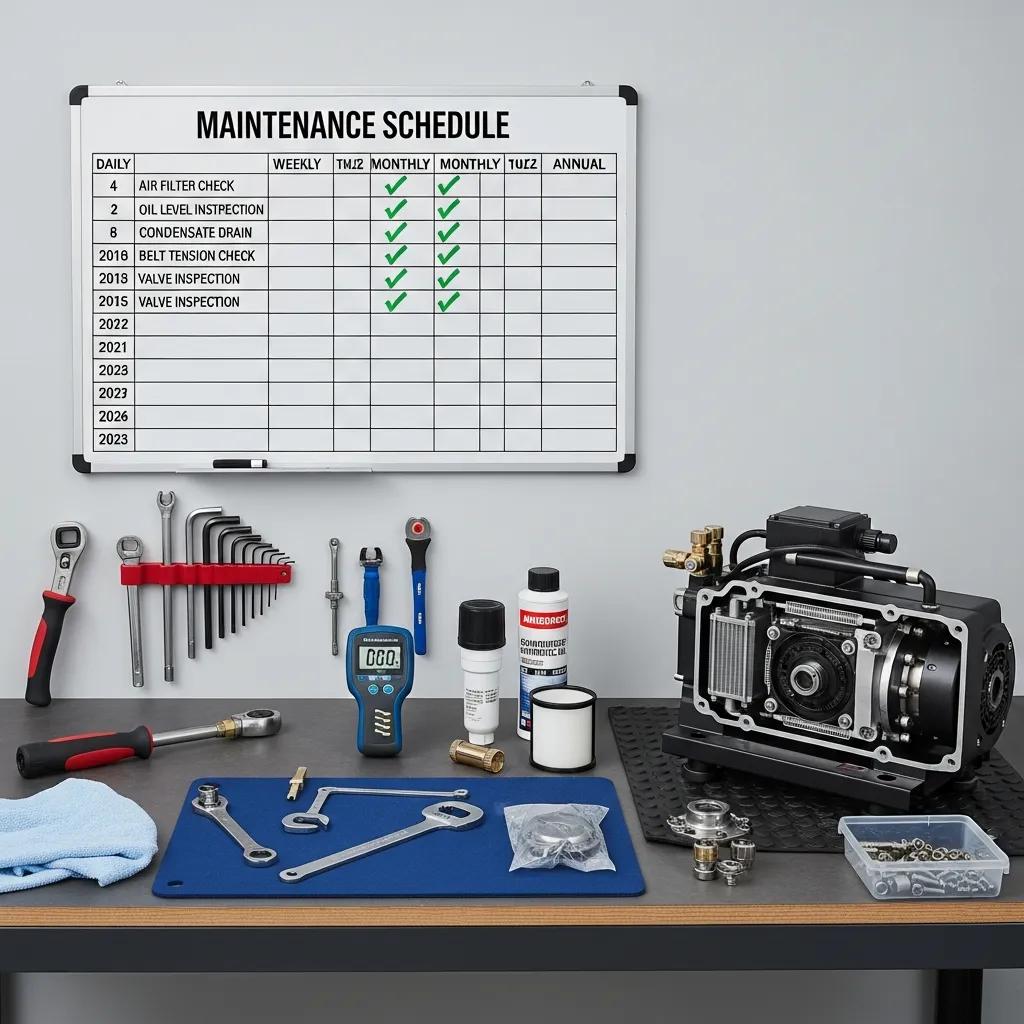
Daily: Visual inspection for leaks, abnormal noises or vibrations, moisture drain from receivers and separators, and basic pressure checks.
Monthly/Quarterly (conditional on usage, jurisdiction, insurer): Filter element checks, carbon bed monitoring (e.g., for breakthrough indicators), and quick tests for oil aerosol or CO (if equipped with sensors).
Semi-annual/Annual: Full service including replacement of all filter elements, oil change, valve inspection, intercooler/aftercooler cleaning, belt tension checks, and comprehensive performance testing against flow and pressure specifications.
This structured approach minimizes contamination risk and creates a defensible record of preventive care for auditors and insurers.
Documentation for Compliance and Audit Trails
Every maintenance task, filter change, oil change, and air sample result must be meticulously logged. This documentation serves multiple purposes:
Compliance: Provides evidence to regulatory bodies and insurers that the system is maintained according to standards.
Troubleshooting: Helps identify patterns or recurring issues, aiding in faster diagnosis and repair.
Asset Management: Tracks component lifespan and helps predict future maintenance needs and costs.
Total Cost of Ownership and Procurement Considerations
The true cost of a compressor system extends far beyond its initial purchase price. Total Cost of Ownership (TCO) includes energy consumption, maintenance, and the financial impact of downtime. Strategic procurement also involves asking the right questions of potential vendors.
Estimate Energy Use: Multiply expected annual operating hours by the system’s kW draw to calculate yearly kWh and electrical cost. Consider the impact of variable speed drives (VFDs) if applicable, which can significantly reduce energy consumption during periods of lower demand.
Quantify Maintenance: Add annualized costs for filter elements, compressor oil, and labor hours for scheduled servicing. Factor in the lifespan of major components.
Value Uptime: Estimate the revenue lost per hour of downtime (e.g., inability to fill tanks, lost retail sales) and include the likely downtime from each design option. Prioritize features that enhance reliability and ease of service.
TCO Factor
Description
Impact on Cost
Purchase & Installation
Initial capital outlay for equipment and setup.
Upfront cost
Energy Consumption
Electrical power usage over the system’s lifetime.
Ongoing operational cost (can be significant)
Maintenance & Consumables
Filters, oil, parts, labor for scheduled and unscheduled service.
Ongoing operational cost
Downtime
Lost revenue or operational disruption due to equipment failure.
Indirect operational cost (can be very high)
Energy Efficiency and Electrical Infrastructure
Energy consumption is a major component of TCO. Consider these factors:
Single-Phase vs. Three-Phase Power: Larger, more powerful compressors typically require three-phase electrical service, which may not be available or may require costly upgrades in some locations. Smaller portable units often run on single-phase.
Heat Rejection and Ventilation: Compressors generate substantial heat. Adequate ventilation is crucial to prevent the compressor room from overheating, which can reduce compressor efficiency, shorten component life, and increase air conditioning costs for the facility. Consider the heat load the compressor will add to your shop’s environment.
Electrical Limitations: Ensure your existing electrical panel and wiring can safely support the compressor’s starting and running amperage.
Variable Speed Drives (VFDs): VFDs adjust motor speed to match demand, significantly reducing energy consumption during periods of partial load compared to fixed-speed compressors that run at full power or cycle on/off.
Vendor Evaluation and Key Questions
Engaging with potential vendors requires asking specific questions to ensure long-term support and compliance:
Service Access and Parts Availability: How easy is it to access components for routine service? Are common wear parts (e.g., valves, seals) readily available, and what is the typical lead time?
Filtration Consumables and Support: What is the cost and availability of replacement filter elements and compressor oil? Does the vendor offer bulk discounts or service contracts that include consumables?
Sampling Support and Documentation: Does the vendor provide guidance on air sampling procedures or offer sampling kits? What documentation (e.g., maintenance logs, test certificates) is provided with the system?
Technical Support and Training: What level of technical support is available? Is operator training provided for maintenance and troubleshooting?
Warranty: Understand the warranty terms for the compressor and its components.
For dive shops ready to move from specification to procurement, prepare a short brief with desired fills per day, preferred maximum footprint, and required purity class to get precise recommendations and comparative lifecycle estimates. Engaging a specialist early in the process reduces rework, ensures sampling ports and maintenance access are included, and shortens time to compliant operation. To discuss your situation specifically with an experienced member of our team in South Florida, contact LW Americas here.
Best Diving Air Compressors 2026: Comprehensive Buyer’s Guide for High Pressure and Custom Solutions
Diving air compressors compress and condition breathing air to high-pressure levels so cylinders can be filled reliably for recreational, technical, and commercial diving. This guide explains the types of high pressure diving air compressors available in 2026, the technologies that improve breathing air quality, and the performance and reliability metrics buyers must read to make informed purchases. Many operators struggle to match pressure, flow and filtration to operational needs while meeting operational standards; this article provides a clear decision framework and actionable maintenance routines to close that gap. Readers will find model-comparison criteria, maintenance schedules formatted for quick decision-making, industry use-cases that justify custom engineering, and buyer checklists that prioritize what matters in real-world fills. Throughout the guide we use terms like scuba compressor comparison, high pressure breathing air systems, and compressor filtration technology to help you evaluate options in technical and procurement discussions. After the technical sections we explain how specialized providers can support custom solutions for sector-specific needs, enabling readers to transition from evaluation to requesting a tailored quote.
What Are the Key Types of High Pressure Diving Air Compressors in 2026?
High pressure diving air compressors fall into distinct categories defined by capacity, mobility, and duty cycle: portable scuba air compressors, industrial fill-station compressors, mobile fill units, and custom-engineered systems. Each type uses similar core components—a compressor pump, air filtration module, receiver tank and cooling system—but differs in scale, typical pressure ranges, and intended use. Choosing among them requires matching pressure rating (psi/bar), air flow (cfm/lpm) and filtration strategy to the operational profile, which determines whether portability or continuous duty is most important. The overview below lists each category with key differentiators to help readers quickly narrow the right class of equipment before looking at specific models.
Common high-pressure compressor categories and where they fit:
Portable scuba air compressors: Lightweight units for shore or remote filling that emphasize portability and modest flow rates.
Industrial diving compressors: Stationary or skid-mounted fill stations with higher pressure and sustained flow for commercial and rental operations.
Mobile fill station compressors: Trailer- or vehicle-mounted systems offering rapid fills on-scene for emergency or field operations.
Custom-engineered systems: Tailored builds that meet special pressure, footprint, or compliance needs for sectors such as maritime or medical.
These categories define the initial procurement decision, and the next subsection compares the practical tradeoffs between portable and industrial options to inform site-level choices.
How Do Portable Scuba Air Compressors Compare to Industrial Diving Compressors?
Portable scuba air compressors prioritize small footprint, lower weight, and simpler power requirements while sacrificing continuous duty and rapid fill capacity. Portable units typically produce lower maximum pressure and reduced cfm/lpm compared with industrial fill stations, making them ideal for shore dives, small clubs, and emergency top-ups rather than filling large fleets of cylinders.
Industrial diving compressors are built for sustained operation with larger receivers, multi-stage pumps, and robust cooling that support higher flow rates and repeated fills per hour; they also integrate advanced filtration and monitoring to maintain breathing air quality for commercial use.
When choosing between these classes, weigh portability and transportability against duty cycle and expected daily tank volumes, because that tradeoff determines operational efficiency and long-term cost.
What Are the Latest Technologies in Breathing Air Compressor Systems?
Recent advances in breathing air compressor systems focus on multi-stage compression, improved filtration media, integrated moisture and oil separation, and quieter enclosures that reduce environmental impact.
Modern filtration combines coalescing filters, activated carbon adsorption, and molecular sieves to target particulate, hydrocarbons and moisture—delivering air that meets stringent breathing quality expectations.
Noise control has progressed via engineered enclosures and vibration isolation that reduce dB levels, while energy-efficiency improvements such as variable-speed drives and optimized cooling lower operating costs and heat generation.
These technology trends reduce lifecycle costs and enable smaller mobile units to achieve performance once reserved for larger stationary compressors.
Which Diving Air Compressors Offer the Best Performance and Reliability?
Performance and reliability are functions of pressure rating, air flow, duty cycle, materials of construction and serviceability; each factor directly impacts reliable fills and operational uptime. Pressure rating (psi/bar) determines the maximum cylinder pressure the system can supply, while air flow (cfm/lpm) and receiver capacity dictate how many fills per hour are possible without overheating. Reliability indicators include the quality of pump components, accessibility of serviceable parts, documented maintenance intervals, and manufacturer support models that reduce downtime.
The following comparison shows representative model characteristics for quick evaluation:
Model Type
Pressure Rating (psi / bar)
Flow (cfm / lpm)
Filtration
Noise (dB)
Typical Compliance
Portable unit
3000 / 207
1.5 / 42
Coalescing + carbon
65
Recreational fills
Industrial fill station
4500 / 310
8–20 / 226–566
Multi-stage + activated carbon
75
Commercial dive centers
Mobile fill unit
4500 / 310
4–12 / 113–340
Corrosion-resistant + advanced filtration
72
Emergency/field ops
This comparison clarifies operational tradeoffs and highlights that models optimized for high flow and continuous duty require heavier construction and more advanced cooling and filtration. Next we examine how pressure and flow specifications translate into operational margins for practical diving operations.
What Are the Advantages of Custom Dive Air Compressor Solutions?
Custom-engineered compressors provide tailored pressure ranges, integrated receivers, specialized controls, and specific filtration stacks to meet unique operational constraints or regulatory needs.
Custom solutions can optimize footprint for tight installations, include corrosion-resistant materials for maritime use, or integrate with mobile platforms for firefighting and rescue applications—improving reliability and ROI where off-the-shelf systems fall short.
Mini case scenarios show that investing in a custom skid with integrated monitoring can reduce downtime and operational costs by matching duty cycle precisely to field demands.
When standard models cannot satisfy pressure, footprint or compliance requirements, custom engineering delivers a focused solution that aligns technical performance with operational priorities.
At this point, specialized providers become relevant: LW Americas is a manufacturer and provider of high pressure air compressors and custom compressor solutions serving diving, firefighting, maritime, industrial, medical, and sports sectors. As an information hub and lead generation resource, LW Americas emphasizes reliability and customization to meet sector requirements and can partner to define specifications and provide tailored system proposals. If your operation requires a tailored configuration—for example, a mobile trailer with rapid-fill capability and corrosion resistance—consultation with a custom engineering provider helps scope controls, filtration stages and mechanical packaging to your site requirements.
What Industry Applications Benefit from Specialized Diving Air Compressors?
Specialized diving air compressors support a variety of industries—firefighting, maritime, medical, sports diving, and industrial inspection—each with unique requirements for fill rate, portability, corrosion resistance and air purity.
Firefighting needs rapid-fill mobile units and rugged packaging for field response, maritime operations prioritize corrosion-resistant materials and compact footprints, and medical applications demand the highest filtration and validated sampling for regulatory compliance.
Sports diving organizations often prefer quieter, portable systems with trailer mounts or low-noise enclosures that integrate easily into training sites.
The industry mapping table below links typical sector requirements to customization options to guide procurement conversations and justify consultative engineering.
Industry
Typical Requirements
Customization Options
Firefighting
Rapid fills, mobile deployment
Trailer skids, fast-fill manifolds
Maritime
Corrosion resistance, compact layout
Marine-grade materials, sealed enclosures
Medical
Ultra-clean air, validated sampling
Multi-stage filtration, documented QA
Sports diving
Low noise, portability
Noise enclosures, trailer mounts
Industrial inspection
High throughput, integration
Skid-mounted units, automated controls
This mapping helps operational buyers translate sector needs into technical requirements that guide specification and vendor selection. The following subsection details how customization differs by major sectors and when custom engineering is justified.
How Are Compressors Customized for Firefighting, Maritime, and Medical Sectors?
Customization strategies vary by sector: firefighting units focus on rapid fills, integrated power and ruggedized mounts that support on-scene refills; maritime units emphasize corrosion-resistant coatings, stainless or composite receivers and sealed control enclosures to withstand saltwater environments.
Medical-sector compressors require ultra-clean filtration stacks, validated sampling procedures and documentation that supports clinical audits; these systems often include redundant monitoring and alarms for contamination events. Each sector benefits when controls and mechanical packaging are matched to operating environments, because these tailored elements reduce service interventions and improve uptime under demanding conditions.
What Are the Benefits of Using Custom Compressor Solutions in Sports Diving?
Sports diving organizations gain practical advantages from custom compressor solutions that prioritize quiet operation, portability and ease of maintenance for club or event use.
Noise enclosures and vibration isolation let compressors operate near training areas with minimal disturbance, while trailer-mounted or compact skids make transportation between sites straightforward.
Custom control panels that simplify common operations and provide fill counters save technician time and reduce training requirements for volunteer staff.
These modest customizations improve user experience, encourage program growth and reduce the total cost of ownership through simpler serviceability and lower operational friction.
After considering industry requirements, many organizations find value in consulting with specialist providers who translate operational constraints into technical specifications and offer engineered proposals tailored to real-world use-cases.
How to Choose the Right Diving Air Compressor for Your Needs in 2026?
Selecting the right diving air compressor requires a prioritized decision framework that balances pressure & flow, filtration & air quality, duty cycle & reliability, portability, and service/support.
Each criterion influences others—higher pressure often demands heavier construction and more advanced filtration, while portability can limit continuous duty capability—so buyers must score options against their operational profile.
The checklist below helps buyers evaluate vendors and models systematically, converting usage patterns and regulatory needs into clear technical requirements. After the neutral guidance, we explain how consultative partnerships can streamline specification and quoting for custom or complex projects.
Key decision criteria to evaluate before procurement:
Pressure & Flow: Confirm required maximum cylinder pressure and peak fill rates to size pump and receiver capacity.
Filtration & Air Quality: Verify multi-stage filtration and plan for validated sampling to ensure breathing air purity.
Duty Cycle & Reliability: Match expected daily fills and continuous runtime to the compressor’s duty rating and cooling design.
Portability & Footprint: Decide whether mobility or compact installation drives the mechanical layout and power choices.
Service & Support: Assess manufacturer support, spare parts availability and documented maintenance schedules.
This prioritized checklist converts operational needs into vendor specifications so procurement can compare like-for-like offers and avoid surprises during commissioning.
What Factors Should Buyers Consider When Selecting a High Pressure Air Compressor?
Buyers should weigh pressure capacity versus flow requirements first, because pressure rating without adequate flow yields impractical fill times; likewise, excessive flow with insufficient filtration risks compromised air quality.
Serviceability and accessibility of wear parts—valves, seals, filters—affect lifecycle cost and downtime, so prefer designs that facilitate routine maintenance and parts replacement.
Noise, energy consumption and physical footprint matter for site acceptance and staff comfort, so consider enclosures and energy-efficient drives where applicable.
Warranties, field service options and documented maintenance plans are critical to long-term reliability and should factor into total cost-of-ownership assessments rather than purchase price alone.
How Can LW Americas Assist with Custom Quotes and Expert Consultation?
LW Americas specializes in high pressure air compressors and custom compressor solutions across diving, firefighting, maritime, medical and sports diving sectors and can consult to translate operational requirements into engineered proposals.
Their consultative approach typically begins with a technical intake—detailing required pressure, expected daily fills, site constraints and filtration needs—followed by recommendations for controls, filtration stacks and mechanical packaging that meet those specifications. LW Americas positions itself as a solutions partner that emphasizes reliability and sector alignment rather than off-the-shelf sales, helping organizations scope custom builds and obtain detailed quotes for implementation. For operations seeking a tailored system, engaging a specialist early ensures that performance, compliance and maintainability are built into the specification rather than added later.
Prepare operational data: Document target cylinder pressures, daily fill counts and site constraints before consultation.
Request a technical intake: Share duty cycle, power availability and environmental factors to inform engineering choices.
Review proposed configurations: Compare recommended filtration, receiver sizing and controls to operational goals for sign-off.
This consultative path reduces specification errors and helps buyers move from evaluation to procurement with confidence while keeping manufacturer expertise aligned with operational goals.
High Pressure Compressor Applications: Ultimate Guide to Industrial and Custom Solutions
High pressure compressors compress air or gases to pressures well above typical shop-air levels, enabling reliable delivery of breathing air, cascade filling, process gases, and specialized pneumatic services across demanding environments. This guide explains how high-pressure air and gas compressors function, the range of industrial high pressure compressor applications they enable, and the decision factors engineering and procurement teams use to match pressure ratings, duty cycles, and purification systems to specific use cases. Readers will learn the technical distinctions between oil-free and lubricated compression, how custom high pressure compressor solutions improve uptime and lifecycle cost, and which safety certifications and maintenance schedules preserve system reliability. The article maps common sectors—diving, firefighting, maritime, medical, sports, and general industry—to concrete compressor configurations, provides selection and maintenance checklists, and reviews current trends such as VSD adoption and heat recovery. Start here for an organized, actionable reference that links specification-level choices to operational outcomes and procurement criteria for industrial and custom compressor systems.
What Are High Pressure Compressors and Their Key Industrial Applications?
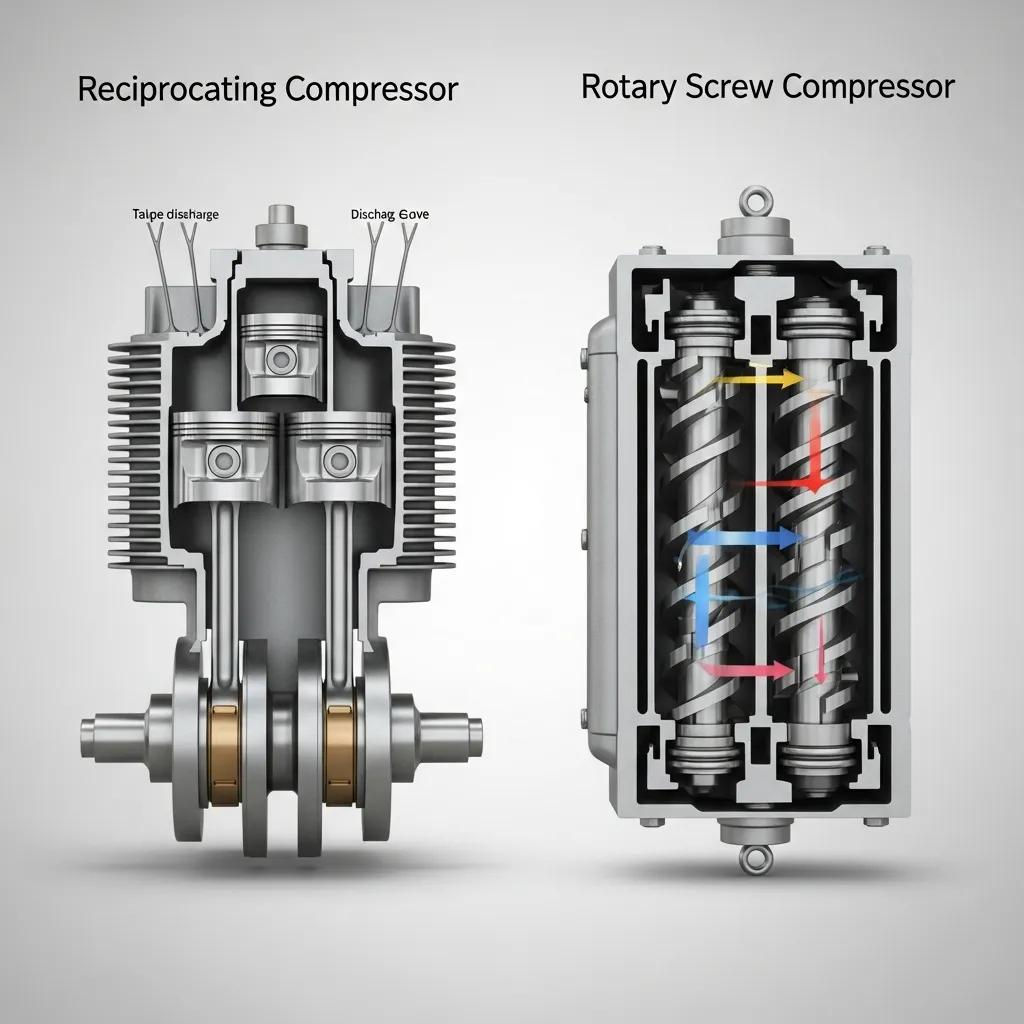
High pressure compressors are mechanical systems that raise gas pressure to required service levels—often from atmospheric to hundreds or thousands of psi—using reciprocating, rotary, or multi-stage compression. They work by reducing gas volume through successive compression stages, intercooling between stages, and final filtration or purification, producing compressed air or gas suitable for breathing, storage, or process use. The value is that a correctly specified high-pressure compressor delivers required flow and pressure while maintaining purity, reliability, and safety for mission-critical applications. Below is a concise comparison table to help match compressor type to typical use cases and pressure ranges; this table clarifies how hyponyms like breathing-air compressors and cascade filling systems fit under the broader category of compressed air systems.
Compressor Type
Max Pressure (approx.)
Typical Use Case
Breathing-air compressor
200–450 bar (2,900–6,525 psi)
Scuba/dive fills and emergency breathing air
High-pressure gas compressor
50–300 bar (725–4,350 psi)
Industrial gas transfer, specialty gases
Cascade filling system
Up to 300 bar (4,350 psi)
Rapid filling multiple storage cylinders
Oil-free multi-stage compressor
50–450 bar
Medical gas and purity-sensitive applications
This comparison highlights how meronyms like compressor pump module, intercooler, and filtration skids combine to form compliant systems; understanding these components helps specify service intervals and safety features. The next subsection distinguishes air versus gas compressors and outlines key technical parameters that determine suitability for each sector.
Defining High Pressure Air and Gas Compressors for Industrial Use
High pressure air compressors are optimized to deliver compressed atmospheric air at high pressure with control over contaminants, while gas compressors are engineered for compressing process gases whose properties differ from air. Pressure rating, flow (scfm or Nm³/h), and duty cycle determine compressor architecture—single- or multi-stage reciprocating designs are common for very high pressures, while rotary screw or oil-free designs suit continuous industrial duty at moderate high pressures. Oil-free technology is critical where gas purity and breathing-air standards apply, whereas lubricated compressors may be acceptable for industrial non-breathing applications when properly filtered. Understanding these technical parameters—pressure, flow, contamination control, and duty—forms the basis for choosing materials, cooling systems, and control strategies for long-term reliability.
Which Industries Benefit Most from High Pressure Compressor Systems?
High pressure compressors find concentrated use where elevated pressure and purity are essential: diving, firefighting, maritime operations, medical gas delivery, sports cylinder filling, and industrial processes requiring pressurized gases. Diving demands breathing-air purification and cylinder cascade systems that maintain trace contaminant limits; firefighting requires portable or vehicle-mounted high-pressure fills and redundancy for emergency readiness. Maritime systems prioritize space-efficient, corrosion-resistant designs, whereas medical applications focus on certification, traceability, and gas quality assurance. Sports and recreational filling centers emphasize fast-fill capability and user safety monitoring. Mapping each sector to its primary operational requirements helps prioritize filtration, certification, and redundancy during system design and procurement.
How Do Custom Compressor Solutions Enhance Sector-Specific Applications?
Custom compressor solutions adapt core components—pump modules, intercoolers, filtration skids, control panels, and storage manifolds—into integrated systems that match exact pressure, flow, purity, footprint, and redundancy needs of the end user. Tailored designs reduce lifecycle cost by selecting appropriate materials, optimizing cooling and stage counts, and integrating PLC controls or variable speed drives that lower energy consumption under varying loads. The advantages of specifying a custom skid include simplified installation, improved maintainability through modular components, and tighter performance guarantees when compared to off-the-shelf configurations. Below is a short benefits list that illustrates typical gains from customization and points toward the kind of design choices engineering teams should evaluate.
Custom compressor systems deliver several operational advantages:
Specification Matching: Systems designed to exact pressure and flow requirements avoid oversizing and reduce upfront and operating costs.
Integrated Controls: PLC and control integration enable automated sequencing, alarms, and remote monitoring that enhance uptime.
Modular Maintainability: Skid-based modular designs allow quick replacement of pump or filtration modules to reduce downtime.
These tangible benefits translate into improved availability and predictable operating expenses, leading naturally into specific examples for high-safety sectors like diving and firefighting where quality and redundancy are paramount.
LW Americas specializes in high pressure compressor systems tailored for diverse sectors including diving, firefighting, maritime, industrial, medical, and sports. The company’s primary offering centers on custom high pressure compressor solutions designed to meet specific application requirements, emphasizing system design expertise, reliability, and customer-focused customization. For teams seeking a partner that builds integrated skids, optimizes control logic, and supports specification-driven procurement, LW Americas positions its capabilities to help translate technical requirements into deployable systems and to provide lead-generation pathways for quote requests.
What Are the Advantages of Tailored Compressor Systems for Diving and Firefighting?
Tailored systems for diving and firefighting prioritize breathing-air purity, redundancy, rapid-deploy mobility, and regulatory compliance in compact footprints. For diving centers, designs combine oil-free compression, multi-stage filtration, humidity control, and cascade storage to deliver repeated fills while maintaining breathing-air standards. Firefighting systems favor portable trailers or vehicle-mounted skids with redundant compressors and simplified controls to support emergency operations. Custom solutions also integrate monitoring instrumentation for on-line purity verification and automated safety interlocks to prevent contaminated fills. These sector-specific features reduce risk, support compliance, and ensure the operational readiness demanded by first responders and dive operations.
How Are Custom Compressors Designed for Maritime, Medical, and Sports Uses?
Design priorities shift by sector: maritime systems emphasize corrosion-resistant materials, compact layouts, and vibration isolation for shipboard environments; medical gas compressors prioritize validated oil-free compression, traceable documentation, and certification compatibility for patient safety; sports filling setups target fast-fill performance, operator safety controls, and user-friendly panels for quick cylinder service. Material selection—stainless steel piping, marine-grade coatings—or filtration architectures—multi-stage purification with molecular sieve or activated carbon—reflect these priorities. Comparing these configurations clarifies trade-offs in cost, complexity, and maintainability that inform whether to choose a custom skid or a standardized package for a given operational profile.
What Are the Technical Requirements and Safety Standards for High Pressure Compressor Systems?
High pressure compressor systems must meet technical requirements around pressure ratings, mechanical design, materials, filtration, instrumentation, and safety devices such as pressure relief and emergency shutdowns; they also must comply with applicable certification frameworks to ensure legal and operational safety. Key parameters include rated working pressure, design margin, allowable stress for pressure vessels, required filtration levels for breathing air, control redundancy, and maintenance regimes tied to duty cycles. The following table maps common certifications and standards to the systems or components they typically apply to and summarizes key compliance requirements to aid procurement and engineering checks.
Certification / Standard
Applies To
Key Requirement
ASME pressure vessels
Storage manifolds, pressure vessels
Design and inspection to ASME Boiler & Pressure Vessel Code Section VIII
Breathing-air standards (EN/BS/CG)
Breathing-air compressors and filtration
Contaminant limits and sampling/analysis protocols (e.g., EN 12021)
Electrical safety standards
Motor/drive and control panels
Enclosure ratings and protective devices for hazardous locations (e.g., IECEx, ATEX)
Pressure system directives
Complete compressor assemblies
Documentation, labeling, and risk assessment compliance (e.g., PED 2014/68/EU)
Understanding how these standards interact with component selection prevents costly retrofits and aligns procurement with regulatory expectations; the next subsection provides practical maintenance schedules and pressure-rating guidelines that sustain compliant operation.
Which Pressure Ratings and Maintenance Schedules Ensure Reliable Compressor Operation?
Selecting an appropriate pressure rating requires matching the maximum required service pressure with a design factor that accounts for cycling, temperature, and material fatigue; common practice is to size pressure vessels and components with safety margins above maximum working pressure and to choose gasket and seal materials compatible with operating temperatures. Recommended maintenance intervals link directly to duty cycle and environment: daily visual checks and condensate drains, weekly instrumentation verification and filter inspections, monthly lubrication and belt/drive checks, and annual pressure vessel inspection and performance testing. Predictive maintenance methods—vibration analysis, oil analysis where applicable, and temperature trend monitoring—extend component life and prevent unplanned downtime. These maintenance practices form the practical backbone of any compliance program and should be documented in operating manuals and service contracts.
How Do Updated Safety Certifications Impact Compressor System Compliance?
Recent updates to safety certifications emphasize traceability, validated testing, and lifecycle documentation, which impact procurement by requiring tighter vendor documentation and additional on-site verification. For systems supplying breathing air or medical gases, updated standards may demand more frequent sampling, certified analyzers, or third-party validation to confirm pollutant thresholds. Procurement teams must evaluate vendor deliverables—material certificates, test reports, and compliance matrices—during specification and acceptance tests. Implementing these certification-driven process steps reduces operational risk and streamlines audits, and it encourages selection of vendors that provide comprehensive documentation and factory acceptance testing.
How to Select and Maintain High Pressure Compressors for Optimal Performance?
Selecting and maintaining high pressure compressors requires a structured checklist that aligns pressure, flow, duty cycle, gas type, environmental constraints, and certification needs with vendor offerings and maintenance capabilities. A clear selection process avoids overspecification and ensures the delivered system meets operational and regulatory needs. The checklist below gives procurement and engineering teams a stepwise approach to selection, followed by maintenance best practices to extend equipment life and ensure safety.
Selection checklist—use this when specifying a system:
Define Pressure and Flow: Specify required maximum pressure and continuous/peak flow rates to size compressor stages.
Determine Gas Type and Purity Needs: Identify whether oil-free compression and specific filtration levels are required.
Assess Duty Cycle and Environment: Use expected operating hours and ambient conditions to select cooling and motor ratings.
These selection steps lead directly into maintenance planning; once a system is chosen, a robust preventive and predictive schedule ensures uptime, which is described in the following maintenance table that maps common tasks to recommended frequencies and outcomes.
Maintenance Task
Frequency
Expected Outcome
Visual system check and condensate drain
Daily
Prevent moisture-related contamination and detect leaks
Filter inspection and replacement
Monthly
Maintain purity and protect downstream components
Lubrication and belt/drive inspection
Quarterly
Ensure efficient power transmission and prevent failures
Pressure vessel inspection and performance test
Annually
Validate safety margins and compliance with design codes
A disciplined maintenance program—combining daily checks with periodic predictive diagnostics—reduces unplanned outages and aligns lifecycle costs with operational expectations.
LW Americas provides specification support and system configuration advice that can be used as an example of best-practice vendor collaboration during selection and maintenance planning. The company emphasizes custom high pressure compressor solutions, system design expertise, and customer-focused customization to align equipment with sector-specific needs. Teams seeking vendor-led assistance with selection criteria or maintenance program templates can consult specialists who translate operational requirements into testable technical specifications and service agreements.
What Factors Should Guide the Selection of Industrial and Custom Compressor Systems?
Choosing between off-the-shelf and custom systems depends on technical, operational, and commercial factors such as required pressure and flow, environmental constraints, footprint limits, certification obligations, and total cost of ownership. Critical decision points include whether gas purity or breathing-air standards necessitate oil-free compressors, if repeated rapid fills require cascade systems, and whether remote monitoring and PLC integration are needed for operational visibility. Material compatibility, cooling capacity, and accessibility for maintenance influence long-term service costs, while modularity supports phased upgrades. Applying a decision-tree approach—specify demands, shortlist architectures, evaluate vendor documentation, and conduct factory acceptance—ensures procurement aligns with operational KPIs.
What Are Best Practices for Compressor Maintenance and Longevity?
Best practices combine routine inspections, condition monitoring, and scheduled component replacement to maximize equipment life and safety. Operators should implement daily checklists for condensate and leak detection, deploy vibration and thermography monitoring for early fault detection, and maintain spare-part inventories for high-failure components. Replace consumables—filters, seals, belts—on documented schedules and log all service actions to create traceable maintenance history. Predictive strategies that trigger action based on measured trends (vibration spikes, temperature drift) reduce reactive repairs and preserve uptime. These practices, combined with clear vendor support agreements, create a resilient operating model that links maintenance activity to measurable operational outcomes.
What Are Recent Trends and Case Studies in High Pressure Compressor Applications?
Energy-efficient compressors, variable speed drives (VSD), improved stage balancing, and heat-recovery integration are primary trends shaping high pressure compressor design in 2024–2025. VSDs reduce energy consumption by matching motor speed to required demand, while heat recovery captures compression heat for facility heating or process preheating, improving overall system efficiency. Control-system advances permit predictive analytics and remote diagnostics that reduce service response time and optimize maintenance intervals. The table below maps common energy-saving technologies to expected benefits to help teams quantify potential savings and ROI when evaluating upgrades.
Technology
Mechanism
Expected Benefit
Variable Speed Drives (VSD)
Match speed to load
10–40% energy reduction under variable loads
Heat recovery
Capture compression heat
Reduced facility heating energy and improved overall efficiency
Multistage optimization
Stage balancing and intercooling
Lower compression work per m³, improved thermodynamic efficiency
Embedding these technologies requires attention to control integration and maintenance implications, but they deliver measurable gains in operating cost and emissions. Before presenting case studies, note how LW Americas aligns its custom solutions with these trends to deliver applied benefits in the field.
LW Americas implements custom high pressure compressor integrations that reflect current trends—combining optimized compression staging, control integration, and service-focused design—to reduce energy consumption and improve reliability for sector-specific applications. Prospective clients can inquire about matching these features to their operational objectives through vendor consultations and specification reviews.
How Are Energy Efficiency Improvements Shaping Compressor Technology in 2024-2025?
Energy efficiency advances center on matching compression capacity to demand via VSDs, reducing waste through intercooling and optimized stage counts, and reclaiming heat for secondary uses. Controls that modulate capacity and sequence compressors intelligently minimize idle running and cycling losses. These approaches produce quantifiable reductions in power draw and operating costs while supporting sustainability goals in industrial operations. Designing for energy efficiency requires upfront analysis of load profiles and amortization of capital investments relative to projected energy savings to confirm financial viability.
Which Case Studies Demonstrate Successful Custom Compressor Integrations?
Case studies demonstrate practical outcomes when custom design addresses a specific operational gap: a dive center improved cylinder throughput and purity by integrating an oil-free multi-stage compressor with a cascade manifold and automated purge controls, resulting in faster fills and reduced contamination incidents. An industrial facility reduced energy consumption by retrofitting VSDs and improving intercooling, lowering electrical demand during variable operations. Metrics to evaluate success include reduced fill times, lower energy cost per delivered scfm, improved uptime percentages, and simplified maintenance cycles. These examples show how targeted customizations produce measurable operational and financial gains, leading operations to prefer specification-driven solutions over generic packages.
Diving Center Optimization: Challenge: inconsistent purity and slow fills. Solution: oil-free multi-stage compressor plus cascade storage. Outcome: faster turnarounds and verified breathing-air quality.
Industrial Energy Retrofit: Challenge: high energy draw during variable demand. Solution: retrofitted VSDs and revised intercooling. Outcome: reduced energy cost and smoother operation.
Maritime Compact Skid: Challenge: limited space and corrosive environment. Solution: compact skid with marine-grade materials and vibration isolation. Outcome: reliable shipboard operation and simplified maintenance.
These mini case studies illustrate how custom high pressure compressor solutions translate into operational improvements across sectors; teams evaluating vendors should prioritize demonstrable metrics and documented outcomes when choosing suppliers.
High pressure compressors remain central to many mission-critical operations, and specifying systems that align pressure ratings, purity controls, and maintenance programs with sector-specific demands delivers measurable reliability and cost advantages. This guide connected technical attributes, safety standards, selection checklists, maintenance practices, and current technology trends to practical procurement and engineering actions that preserve uptime and ensure compliance.
What is a High Pressure Air Compressor? Complete Guide 2026
High pressure air compressors are mechanical systems that raise ambient air to high pressure levels—typically hundreds to thousands of PSI—to supply breathing air, fill pressure vessels, and power specialized equipment. This guide explains what a high pressure air compressor is, how multi-stage compression and cooling produce clean compressed air, and why pressure rating (PSI) and flow rate (SCFM) are the defining performance metrics. Readers will learn the main compressor types, the internal components that determine reliability and safety, the sector-specific applications from diving to medical use, best practices for maintenance and operator safety, energy-efficiency innovations current in 2026, and the primary cost drivers buyers should weigh. The article integrates practical comparison tables, checklists, and selection tips to help engineers, procurement professionals, and operations managers match compressor specifications to real-world needs. Throughout the guide we use semantic relationships—like pressure → determines → flow capability—to clarify trade-offs and to help you specify the right solution. To discuss further, you can contact the LW Americas team.
What are the main types of high pressure air compressors?
A high pressure air compressor refers to machines built to generate elevated pressure levels above typical industrial low-pressure systems; major categories include reciprocating (piston), rotary screw/scroll (rotary), cascade-stage assemblies, and dedicated breathing-air units optimized for air purity and safety. These types differ in mechanism, duty cycle, and best-fit applications: reciprocating units deliver high PSI in intermittent bursts, rotary units provide steadier continuous flow at moderate high pressure, cascade systems stack stages to reach extreme pressures, and breathing-air compressors include advanced filtration and controls for safe human use. Understanding these categories helps match pressure rating and flow to tasks like scuba tank filling or high-pressure testing. Below is a compact comparison to guide initial selection and to support featured-snippet style quick decisions for buyers.
Compressor Type
Max Pressure (PSI)
Typical Flow (SCFM)
Typical Use Case
Reciprocating (Piston)
Up to 4,500 PSI
Low–medium (e.g., 5–50 SCFM)
High-PSI fills, intermittent tank charging
Rotary (Screw/Scroll)
Up to ~1,500–2,000 PSI
Medium–high (continuous flow)
Continuous service, industrial pneumatics
Cascade-Stage Systems
3,000–5,000+ PSI (multi-stage)
Varies by design
Scuba cylinder filling, specialty labs
Breathing-Air Units (Integrated)
300–4,500 PSI (depending on design)
Specified for breathing air
Diving, SCBA fills, medical breathing supply
This table highlights how compressor selection is driven by required PSI and the flow profile; the next subsections explain mechanical trade-offs and customization features that refine these broad categories.
How do reciprocating and rotary compressors differ?
Reciprocating compressors compress air via pistons and cylinders, generating high pressures in discrete strokes; rotary compressors use meshing screws or scroll elements to trap and compress air continuously. Reciprocating units typically achieve higher maximum PSI per stage and are well suited to intermittent, high-pressure fills where duty cycles are moderate, whereas rotary designs favor continuous duty with smoother flow and lower vibration. Maintenance trade-offs are notable: reciprocating machines need more frequent valve and ring work and routine piston inspections, while rotary units require attention to bearings, seals, and oil-system health; both demand proper cooling and filtration. Understanding these mechanical differences helps procurement teams weigh lifecycle maintenance, operational duty cycle, and the specific failure modes that affect uptime and total cost of ownership.
What are the features of custom high pressure compressor solutions?
Custom high pressure compressor solutions allow specification of staging, materials, filtration trains, and control systems to meet exact pressure, purity, and footprint requirements for specialized sectors. Customization areas include corrosion-resistant materials, multi-stage intercooling and aftercooling arrangements, breathing-air-certified filtration stacks, integrated control panels with remote monitoring, and skid or containerized packaging for maritime or mobile use. Choosing custom over off-the-shelf is appropriate when standard models cannot meet required PSI/SCFM combinations, air quality standards, or space and environmental constraints; custom engineering reduces integration risk and ensures compliance with sector-specific operational needs.
LW Americas, a specialized provider of high pressure air compressor systems and custom engineered solutions, can configure staging, filtration, and controls to match sector-specific needs when off-the-shelf options are insufficient. Their approach focuses on reliability, compliance, and support for diving, firefighting, maritime, medical, and industrial customers.
How does a high pressure air compressor work?
A high pressure air compressor works by drawing in ambient air, increasing its pressure through one or more mechanical compression stages, cooling and filtering the compressed air between stages, and finally delivering stored or continuous high-pressure air to the application. Mechanically, the process follows intake → staged compression → intercooling/aftercooling → filtration/drying → storage or direct delivery, and each step affects temperature, moisture content, and particulate loading that must be controlled for safe downstream use. Controls and safety interlocks regulate stage sequencing, pressure relief, and system shutdowns to prevent overpressure and to maintain air quality; well-designed systems also include instrumentation to verify PSI and SCFM performance. The bottom-line benefit is reliable high-pressure delivery matched to the application with minimized heat and contamination through staged cooling and effective filtration.
To clarify component roles and maintenance implications, the table below maps core components to function and performance impact.
Component
Primary Function
Effect on Performance / Maintenance Consideration
Cylinder(s) / Piston(s)
Convert mechanical motion to compression
Wear-prone; regular inspection and ring replacement affect efficiency
Valves
Control intake and discharge timing
Valve failure reduces volumetric efficiency and raises maintenance needs
Intercoolers
Remove heat between stages
Improve efficiency and reduce thermal stress; require cleaning/checks
Aftercoolers & Dryers
Lower discharge temperature and remove moisture
Protect downstream tools and tanks; periodic media replacement needed
Filters & Separators
Remove particulates and oil carryover
Critical for breathing air; element changes and leak checks required
Pressure Vessel / Storage
Stabilize flow and store compressed air
Corrosion and relief valve testing are key safety tasks
Control Panel
Monitor and regulate pressure/sequence
Instrument calibration and software checks maintain safe operation
This component breakdown shows how each meronym contributes to performance and why a holistic maintenance program is essential. The next section examines pressure and flow relationships that determine how a compressor performs on the job.
What are the key components and pressure ratings?
Key components in a high pressure compressor include cylinders/pistons (or rotary elements), valves, intercoolers, aftercoolers, filtration stacks, pressure vessels, and a control panel with safety interlocks. Pressure ratings are usually specified in PSI or bar and may indicate maximum discharge pressure, working pressure, or test pressure; multi-stage compressors often specify per-stage pressures and the final combined output. Single-stage designs suit lower high-pressure requirements, while multi-stage compressors distribute compression across stages to control temperature rise and improve efficiency; selecting appropriate safety margins and relief setpoints is essential for safe operation. Always interpret pressure ratings in the context of the intended use—breathing air fills require certified processes and filtration to ensure air quality alongside the correct PSI.
How do pressure and flow rate affect compressor performance?
Pressure (PSI) and flow rate (SCFM or m³/h) are linked: higher target pressure often reduces available flow for a given compressor size, and increased flow demands can require larger displacement or additional stages to hold pressure. When specifying equipment, match the required SCFM at the operational PSI rather than a disconnected nominal flow value; oversizing for peak demands or providing buffer storage can smooth intermittent high-flow events. A simple worked example helps: if a task needs a 2000 PSI fill at 10 SCFM sustained, choose a compressor whose rated SCFM at 2000 PSI meets or exceeds that requirement, or provide cascade staging to maintain fill times. Properly matching pressure and flow preserves efficiency, reduces cyclical stress on components, and extends service intervals.
What are the primary applications of high pressure air compressors?
High pressure air compressors serve sectors that require concentrated high-pressure air or certified breathing air: diving (scuba fills), firefighting (SCBA cylinder fills), maritime systems (shipboard breathing and control systems), medical-grade air supply, industrial testing and pneumatics, and sports uses such as paintball or compressed-air sports. Each sector imposes specific requirements—breathing-air purity and redundancy for diving and firefighting, corrosion and vibration resistance for maritime applications, and regulatory or medical-grade filtration for clinical environments. Understanding application-specific air quality and duty-cycle expectations ensures correct compressor type, filtration, and backup systems are specified.
The following list summarizes common sectors and concise examples of how compressors are used in each.
Diving: High-pressure cascade systems and breathing-air filtration for cylinder fills that meet breathing-air standards.
Firefighting: Mobile or fixed fill stations for SCBA cylinders with emphasis on rapid turn-around and redundancy.
Maritime: Shipboard systems require compact, vibration-tolerant compressors with corrosion-resistant materials.
Medical: Medical-grade compressed air for respiratory applications requiring strict filtration and backups.
Industrial & Testing: Pressure testing, high-pressure pneumatics, and specialty manufacturing processes that use elevated PSI.
These application profiles highlight why air purity, fill-time, and redundancy are frequent selection drivers. The next subsections provide deeper examples and explain how operational constraints shape equipment choices.
How are compressors used in diving, firefighting, and maritime sectors?
In diving, compressors often appear as cascade filling systems with multiple storage cylinders to rapidly fill scuba tanks while maintaining breathing-air purity via multi-stage filtration and monitoring. Firefighting operations require portable or fixed fill stations that can service SCBA bottles quickly and repeatedly, emphasizing redundancy, fast fill rates, and certified breathing-air filtration for first responders. Maritime installations prioritize compact footprints, low-vibration mounting, and corrosion-resistant materials to survive saltwater environments while delivering reliable high-pressure air for emergency breathing systems and control functions. Each sector imposes design trade-offs—portability versus continuous throughput—that influence whether reciprocating, rotary, or cascade systems are best suited to the mission.
What roles do compressors play in medical and industrial fields?
In medical environments, compressors supply clean, dry, and reliably regulated air for respiratory therapy and instrument operation; filtration, backup systems, and rigorous maintenance protocols are central to compliance and patient safety. Industrial roles include providing high-pressure pneumatics, powering endurance testing rigs, and delivering compressed air for processes that require elevated PSI or precision control; duty cycle and integration with plant controls are the primary engineering considerations. For both medical and industrial uses, selecting proper filtration, monitoring, and service agreements determines long-term uptime and compliance. Addressing those requirements at specification time reduces risk and simplifies lifecycle support.
LW Americas has experience building tailored systems for diving, firefighting, maritime, medical, and industrial customers, combining custom staging, filtration stacks, and packaging to meet sector-specific operational and air-quality expectations.
What are the best practices for high pressure air compressor maintenance and safety?
Effective maintenance and safety for high pressure air compressors rest on scheduled inspections, routine service tasks, component testing, and robust operator training to prevent overpressure events and maintain air quality. A recommended approach combines daily visual checks, weekly functional inspections, monthly filter and fluid reviews, and annual pressure-vessel and relief-device testing; documented procedures and certified technicians minimize risk and downtime. Safety-critical features include pressure relief valves, redundant sensors and alarms, interlocks to prevent unsafe operation, and accessible emergency shutdowns; maintaining these systems through regular testing is non-negotiable.
Below is a practical maintenance checklist presented as actionable items, followed by a short summary of safety standards and operator training considerations.
Daily Visual & Operational Checks: Verify gauges, alarms, oil levels, and listen for abnormal noises.
Weekly Filter and Drain Management: Inspect and service filters; drain condensate from separators and receivers.
Monthly Lubrication and Belt/Seal Inspection: Check oil condition, belt tension, and seals for leaks.
Annual Pressure Vessel & Relief Valve Testing: Perform certified inspections and test relief devices per regulations.
How often should maintenance be performed and what does it include?
Maintenance frequency depends on duty cycle and application criticality but follows a layered schedule: daily operational checks for leaks and abnormal operation, weekly or biweekly filter and condensate management, monthly oil and mechanical inspections, and annual system-level testing of pressure vessels and safety devices. Core tasks include filter element replacement, oil analysis and changes, valve inspections, intercooler and aftercooler cleaning, relief-valve testing, and calibration of control and monitoring systems; breathing-air systems additionally require documented air-quality testing. Signs of wear—rising temperatures, reduced flow at rated PSI, or oil contamination—should trigger immediate inspection to prevent cascading failures. A formal maintenance log and assigned responsible parties ensure accountability and a clear record for audits and warranty claims.
What safety features and standards are essential for operation?
Essential safety features include pressure relief valves sized and set appropriately, redundant pressure and temperature sensors tied to automatic shutdown logic, audible and visual alarms, and interlocks that prevent operation outside safe parameters. Operator training on emergency shutdown, leak response, and routine safety testing is critical; documented emergency procedures and regular drills reduce incident severity. While specific certification names are beyond this guide, verify that breathing-air systems and pressure vessels are serviced to recognized standards and that maintenance personnel follow accredited training programs. Incorporating these safety features and enforcing procedures protects people, equipment, and regulatory compliance.
How do energy efficiency and innovations impact high pressure air compressors?
Energy efficiency and recent innovations significantly reduce operating expense for high pressure air compressors by improving load matching, recovering waste heat, and enabling predictive maintenance that minimizes downtime and unnecessary runtime. Contemporary technologies in 2026 include variable frequency drives (VFDs) and advanced controls for precise load-following, enhanced sealing and bearing materials that lower leakage and friction losses, and heat-recovery systems that capture compressor waste heat for facility heating. Combined, these technologies reduce electrical consumption and improve overall system ROI when tailored to actual duty profiles.
The next subsection lists practical technologies and typical benefits, and the following subsection explains how custom engineering applies these innovations to improve performance in specific installations.
What energy-saving technologies are available in 2026?
Key energy-saving options include VFDs for motor speed control and load-matching, heat recovery modules that repurpose thermal waste for building heating, advanced electronic controls with demand-side management and sequencing, and improved mechanical designs that reduce internal leakage and friction. Implementing smart monitoring enables predictive maintenance that prevents efficiency-robbing failures and optimizes run schedules. Quantified savings vary by site profile, but combining VFDs with optimized staging commonly delivers measurable reductions in electrical use versus fixed-speed systems. Adopting these technologies requires system-level analysis to ensure that control strategies and heat-recovery opportunities align with operational needs.
How do custom engineering solutions enhance compressor performance?
Custom engineering tailors staging, control logic, materials, and ancillary systems to site-specific duty cycles, environmental conditions, and air-quality demands, delivering higher efficiency and reliability than one-size-fits-all equipment. Examples include designing multi-stage compression with intercooling optimized for a particular PSI/SCFM profile, integrating VFDs and demand-based sequencing to minimize idle power, and specifying materials and coatings for marine environments to extend component life. These engineering choices reduce lifecycle cost by balancing CAPEX and OPEX—spending more initially for improved controls and heat recovery can pay back through lower energy bills and reduced maintenance. When efficiency and uptime are priorities, investing in custom solutions often yields the best long-term value.
LW Americas offers custom engineering services to integrate efficiency technologies and tailored control strategies into high pressure compressor systems for demanding sectors.
What factors influence the cost of high pressure air compressors?
Cost drivers for high pressure air compressors include compressor type (reciprocating vs rotary vs cascade), pressure rating and flow requirements, materials and corrosion protection, filtration and breathing-air certification, packaging and mobility, and the scope of aftermarket support and integration services. Higher PSI and tighter air-quality requirements increase complexity and material costs, while custom engineering, testing, and documentation also add to initial expenditure. Buyers must weigh upfront CAPEX versus projected OPEX savings from efficiency features and service agreements.
The table below maps common specifications and features to their relative cost impacts to help procurement teams prioritize trade-offs.
Specialized alloys or coatings for maritime use increase cost
VFDs & Advanced Controls
Medium
Electronics add cost but reduce OPEX through efficiency
Custom Skid/Container Packaging
Medium
Adds engineering and fabrication expense for specific footprints
Aftermarket Support & Spare Parts
Medium
Service contracts and parts availability affect lifecycle cost
This breakdown shows that the most significant cost multipliers are pressure specification and air-quality requirements; buyers should match specification tightly to need rather than over-specifying capacity unnecessarily.
How do compressor type and specifications affect pricing?
Compressor type and specs scale price because higher pressure capability, larger continuous flow, and specialized materials each add mechanical complexity and testing requirements. For example, designing for extreme PSI requires additional stages, stronger cylinders, and more robust safety devices; similarly, specifying breathing-air filtration and validated testing procedures increases both component and documentation costs. Trade-offs between CAPEX and OPEX matter: spending more for advanced controls and heat recovery increases upfront cost but can lower operating expense over time. Buyers should request performance curves at the required PSI rather than generic flow ratings to understand true operational capacity and cost implications.
What should buyers consider when choosing manufacturers?
When choosing manufacturers, evaluate service and support capabilities, customization and engineering experience, spare parts availability, and proven delivery of application-specific systems like breathing-air or maritime packages. Ask prospective suppliers for case examples of similar installations, details on maintenance support and training, and information on warranty coverage and response times. An actionable buyer checklist includes required PSI/SCFM at operating point, air-quality standards, desired redundancy, space and environmental constraints, and expected duty cycle to include in RFPs. Prioritizing manufacturers that combine product quality with engineering support and responsive aftermarket service reduces integration risk and lifecycle cost.
For tailored quotes, project scoping, or to discuss custom-engineered high pressure compressor systems for diving, firefighting, maritime, medical, or industrial applications, contact LW Americas, which specializes in designing solutions that balance performance, safety, and reliability.
Specify operational PSI and SCFM: Provide exact working pressure and required continuous or peak flow.
Define air-quality requirements: State breathing-air or medical purity needs upfront.
List environmental constraints: Note space, vibration limits, and corrosive conditions.
These steps help manufacturers produce accurate proposals and reduce costly revisions later in the procurement cycle.
For organizations requiring custom design, documented testing, and ongoing support, engaging a specialist supplier with experience across relevant sectors ensures the final system meets both performance and regulatory expectations.
For more information on high-pressure compressors, visit us at lwamericas.com.
Why the LW 570ES Is the Scuba Tankfill Compressor of Choice for Professional Dive Centers
The LW 570ES is a high-pressure breathing air compressor engineered for continuous, high-volume scuba tankfill operations, prioritizing throughput, purity, and uptime. This article details how the LW 570ES delivers reliable capacity, ensures EN 12021 and CGA Grade E breathing-air quality, and supports profitable dive center operations. It addresses common pain points like downtime, noise, and maintenance through sound-insulated design, automatic condensate management, and service-friendly components. We will cover specifications, purification, operational efficiency, comparisons, and configurable options and support.
What Makes the LW 570ES the Ideal High-Capacity Dive Compressor?
The LW 570ES is an ideal high-capacity dive compressor, combining a 4-stage piston compression block with sound-insulated housing and robust condensate management for continuous fills. Its design emphasizes sustained duty cycles, predictable L/min output, and components sized for repetitive commercial use, reducing thermal stress and wear. This ensures operational reliability for dive centers needing stable breathing-air supply across multiple shifts.
This table summarizes key LW 570ES performance specifications for quick scanning and comparison.
Specification
Characteristic
Typical Value / Note
Nominal Capacity
Displacement / throughput
High L/min range suitable for multi-cylinder fills (commercial duty)
Maximum Pressure
Final discharge capability
Typically 350 bar, with 420 bar available on specific configurations
Compression Stages
Mechanical design
4-stage piston compression for efficient pressure rise and cooling
Condensate Management
Tank + drain system
Integrated condensate tank with automatic drain to reduce manual intervention
This overview highlights how the LW 570ES balances throughput, pressure, and serviceability for continuous dive-center operation.
How Does the LW 570ES Deliver Superior Capacity and Pressure?
The LW 570ES achieves superior capacity and pressure through amulti-stage piston compression block, staging pressure rise across cylinders for improved thermal management and volumetric efficiency. This design allows higher final pressures with reduced stress, supporting a strong duty cycle for continuous fills. Consistent L/min output and predictable fills per hour are maintained through optimized displacement and cooling, crucial for dive centers requiring stable fill rates.
What Are the Key Features That Enhance LW 570ES Performance?
Key features enhancing LW 570ES performance and uptime include a heavy-duty compressor block and dedicated lubrication system for extended component life. Sound-insulated housing reduces noise, allowing closer installation. An automatic condensate drain and large tank minimize manual intervention and filter saturation. Service-accessible elements and standardized parts simplify maintenance, shortening service windows, and helping manage lifetime operating costs. These features make the LW 570ES ideal for high-volume operations.
How Does the LW 570ES Ensure Breathing Air Purity for Professional Use?
The LW 570ES ensures professional breathing-air purity through a staged filtration and adsorption train, removing oil aerosol, particulates, hydrocarbons, and moisture (through condensate separation and the drying component of the filter cartridge) to meet breathing-air standards. This modular purification chain allows technicians to easily replace cartridges and media at recommended intervals, maintaining CGA Grade E and EN 12021 compliance. Monitoring points track filter life, preventing performance degradation.
Filtration Stage
Function
Typical Service / Replacement
Pre-filter
Removes coarse particulates and bulk oil droplets
Replace when visibly saturated or per hours-based interval
Coalescing filter
Removes fine oil aerosols and water droplets
Change at manufacturer-recommended hours or sooner under heavy use
Activated carbon
Adsorbs hydrocarbons and trace organic vapors
Replace based on capacity or when hydrocarbon breakthrough is detected
Final particulate filter
Ensures particulate and residual aerosol removal
Replace as last line of defense prior to distribution manifold
This purification mapping clarifies each stage’s contribution to air quality, aiding technicians in planning replacements for compliance.
What Breathing Air Standards Does the LW 570ES Comply With?
The LW 570ES complies with professional breathing-air specifications like EN 12021 and CGA Grade E, which set limits for CO, CO2, oil vapor, humidity, and particulates. Compliance requires a properly sized purification train and regular verification testing. The system’s design minimizes oil carryover, extending filter life. Ensuring purity combines robust hardware with a disciplined maintenance and testing regimen, crucial for dive centers.
How Does the LW 570ES Purify Air to Meet Professional Dive Center Requirements?
Air purification in the LW 570ES follows a stepwise flow: pre-filtration, compression, condensate separation, coalescing filtration, activated carbon adsorption, and a final particulate filter. Each stage targets specific contaminants: pre-filters and coalescers remove moisture and oil; carbon adsorbs hydrocarbons; final filters capture particulates. Service intervals depend on operational hours; high-volume centers should shorten cartridge changes and routinely test outlet air. Regular monitoring and preventive replacement ensure consistent breathing-air quality.
Why Is Operational Efficiency Critical for Commercial Dive Centers Using the LW 570ES?
Operational efficiency is critical for commercial dive centers, impacting scheduling, customer throughput, and margins. It defines how effectively inputs like electricity and staff time convert into filled cylinders, minimizing downtime and community impact. The LW 570ES enhances efficiency through automation (automatic condensate drains), serviceability (easy filter swaps), and sound insulation, directly improving revenue and customer satisfaction.
Operational benefits delivered by the LW 570ES include:
Reduced Labor per Fill: Automation features minimize manual interventions during high-volume shifts.
Improved Predictability: Stable throughput and consistent purification lower the risk of delayed customer operations.
These benefits translate into scheduling confidence and lower lifetime operating expenses.
How Does the LW 570ES Reduce Operational Costs and Downtime?
The LW 570ES reduces operational costs and downtime by automating routine tasks like condensate drainage and utilizing durable components that extend service intervals. Automated condensate management prevents rapid filter saturation, reducing consumable costs. Service access panels and standardized parts shorten technician turnaround, minimizing lost service hours. Dive centers should prioritize preventative maintenance aligned with peak seasons to avoid service disruptions.
What Maintenance Practices Optimize LW 570ES Longevity and Performance?
Optimal LW 570ES maintenance involves daily checks, scheduled cartridge replacements, and periodic inspections of lubrication, belt tension, and cooling systems. Daily routines include oil levels, condensate status, and outlet pressure. Recommended spare parts include filter cartridges, coalescing elements, belts, and seals for quick repairs. A maintenance calendar tied to runtime hours ensures consumables are replaced based on actual wear, preserving purity and reliability.
How Does the LW 570ES Compare to Other Professional Scuba Compressors?
The LW 570ES compares favorably to conventional compressors across noise footprint, condensate handling, and serviceability under continuous commercial loads. It features sound insulation for minimal site disruption, a larger condensate tank with automatic draining to protect filter life, and a heavy-duty block for longer service intervals. These design choices address common operational gaps in other offerings.
Feature
LW 570ES Characteristic
Operational Benefit
Sound Insulation
Enclosed, insulated housing
Lower ambient noise enables closer installation to customer areas
Condensate Management
Automatic drain + tank
Reduced filter saturation and longer cartridge life
Compression Design
4-stage heavy-duty block
Improved duty cycle and lower heat-related wear
Serviceability
Easy access panels, standardized parts
Faster service events and reduced downtime
This comparison highlights how LW 570ES design choices provide measurable site advantages for busy dive operations.
What Advantages Does the LW 570ES Have Over Bauer and Other Leading Compressors?
The LW 570ES offers advantages over conventional compressors by combining mechanical robustness with practical features like comprehensive sound insulation and automatic condensate handling, reducing auxiliary costs. This design minimizes filter replacement frequency and noise mitigation expenses. Enhanced lubrication and cooling lower component stress for continuous use, extending overhaul intervals. These benefits collectively reduce hidden operational costs and administrative overhead in high-volume filling environments.
How Do LW 570ES Features Translate to Better Dive Center Operations?
LW 570ES features translate into more reliable fills, fewer emergency service calls, and improved capacity planning. Automatic drains reduce staff maintenance time, while sound insulation enhances the customer environment and community acceptance. Standardized spare parts shorten repair lead times, and predictable purification maintains compliance. These benefits make the LW 570ES ideal for centers prioritizing throughput, predictable costs, and a comfortable customer experience.
LW Americas offers comprehensive project-based engagement for LW 570ES systems, guiding dive centers from needs assessment through installation and commissioning. We tailor configurations to site-specific throughput, noise, and power constraints. Services include site surveys, 2D/3D design drawings for placement, manifold and integration with external Nitrox systems, and full installation logistics coordination.
LW Americas offers these core services and configuration options:
How Can LW Americas Tailor LW 570ES Configurations for Specific Dive Center Needs?
LW Americas’ customization workflow follows a structured sequence: assessment, configuration, design, installation, and commissioning. During assessment, we evaluate fills-per-hour targets, electrical supply, and acoustic constraints to recommend specific LW 570ES options, including sound packages, manifold layouts, or integration with external Nitrox systems. Deliverables include 2D/3D drawings showing footprint and noise attenuation. Configurations range from compact single-unit installs to multi-manifold, high-throughput systems, ensuring alignment with operational goals and reducing installation surprises.
What Ongoing Support and Accessories Are Available for LW 570ES Users?
LW Americas provides ongoing support and accessories for LW 570ES users, simplifying operations with manifolds, pressure controllers, external Nitrox generation systems, spare parts kits, and service contracts. Accessories are selected to match the facility’s fill profile, such as manifolds for simultaneous fills or external Nitrox modules for mixed-gas. Service contracts offer scheduled preventive maintenance, prioritized spare-part supply, and technical support. LW Americas offers project-oriented consultations to align parts and service levels with each center’s operational cadence.
What Are Common Questions About Using the LW 570ES in Professional Dive Centers?
Dive centers frequently inquire about noise, power, installation footprint, and troubleshooting, which are key to integrating the LW 570ES. Understanding sound insulation, electrical options, and maintenance intervals helps avoid commissioning delays.
These answers highlight critical considerations like noise mitigation and electrical planning.
Noise Concerns: The LW 570ES uses sound-insulated housing to lower ambient noise and reduce complaints.
Power Options: Available configurations accommodate standard three-phase supplies; optimization with external VSD solutions may be considered where appropriate.
Service Intervals: Scheduled filter and lubrication checks tied to runtime hours keep the system within recommended operating conditions.
How Does Sound Insulation Benefit Dive Centers Using the LW 570ES?
Sound insulation significantly reduces ambient noise, allowing LW 570ES compressors to be placed closer to customer areas or within existing facilities without costly acoustic retrofits. Reduced noise levels reduce complaints and improve comfort for staff and customers. Sound packages, combined with proper mounting and distance planning, achieve regulatory and comfort objectives more cost-effectively than remote housing or building modifications, preventing expensive relocation later.
What Power Requirements Are Needed for the LW 570ES Compressor?
LW 570ES power requirements typically match commercial three-phase supplies, depending on motor options. For energy optimization, integration with external VSD solutions may be considered, requiring consultation with a qualified electrician to confirm supply capacity and plan for such installations. Proper electrical planning during design prevents commissioning bottlenecks and ensures operation within manufacturer specifications. Coordinating power provisioning with LW Americas’ site assessment accelerates time-to-first-fill.
LW Americas offers expert consultation and custom LW 570ES configurations to meet your specific needs. Let us help you achieve unparalleled efficiency, purity, and reliability.
LW Americas: Your Trusted Partner for Marine Breathing Air Solutions
At LW Americas, we pride ourselves on being a leading provider of mobile breathing air compressors tailored for marine applications. Our commitment to quality and innovation sets us apart in the industry, ensuring that our customers receive reliable and efficient solutions for their diving and marine needs.
With a focus on user satisfaction, our products are designed to meet the specific requirements of boat builders and divers alike. We understand the challenges faced in marine environments, which is why our compressors are engineered to deliver optimal performance while maintaining ease of use and installation.
Choosing the Right Compressor for Your Needs
Selecting the right compressor can significantly impact your diving experience and operational efficiency. Factors such as tank size, power requirements, and intended usage must be considered to ensure you choose a model that meets your specific needs.
Our expert team is available to guide you through the selection process, offering insights into various models, including the LW 100 and NitroxMaker systems. We provide detailed specifications and recommendations based on your unique requirements, ensuring you make an informed decision.
Innovative Features of LW Compressors
The LW series of compressors is equipped with cutting-edge technology designed to enhance performance and reliability. Features such as variable frequency drives and automatic start-stop capabilities ensure efficient operation while minimizing energy consumption.
Additionally, our compressors are built with durability in mind, incorporating high-quality materials and engineering practices that extend the lifespan of the equipment. This commitment to innovation not only improves user experience but also reduces long-term maintenance costs.
Comprehensive Support and Custom Solutions
At LW Americas, we recognize that every marine application is unique. That's why we offer tailored solutions, including custom tank fill designs and dive locker systems, to meet the specific demands of our clients.
Our experienced team works closely with customers to understand their needs and provide bespoke solutions that enhance safety and efficiency. From initial design to installation and ongoing support, we are dedicated to ensuring your satisfaction and success in all marine operations.