
Breathing Air Quality Standards: Understanding CGA G-7.1, ISO 8573-1, and Compliance Testing for Safe Air
Breathing air quality standards define the allowable contaminant levels in compressed air used for respiration, and they provide the technical specifications that support user safety across industrial, emergency response, diving, and medical settings. These standards work by specifying numeric limits for oxygen, carbon monoxide, carbon dioxide, hydrocarbons, water (dew point), and odor, and by prescribing testing and monitoring strategies that verify compliance. Understanding CGA G-7.1 and ISO 8573-1 helps operations choose proper filtration, monitoring, and compressor systems to minimize health risks and regulatory exposure. It’s crucial to recognize that while both are vital for air quality, CGA G-7.1 specifically addresses breathing air contaminant limits for human respiration, whereas ISO 8573-1 classifies general compressed air purity for industrial applications, focusing on particles, water, and oil. They are not interchangeable but often used in conjunction to ensure comprehensive air quality. This article explains the core requirements of CGA G-7.1, interprets ISO 8573-1 purity codes, outlines essential compliance testing practices, and details compressor design features that support sustained breathing air quality. Readers will get practical tables comparing grade limits, step-by-step ISO code interpretation, testing frequency guidance, and equipment feature checklists. Where relevant, the article notes how specialized providers — for example LW Americas with continuous-duty high-pressure compressors and breathing air purification and monitoring solutions — can support specification, testing workflows, and system integration without distracting from the standards-focused guidance.
What Are the Key Requirements of CGA G-7.1 for Breathing Air?
CGA G-7.1 is a technical standard that defines contaminant limits and grading for compressed breathing air, enabling consistent safety thresholds across industries. The standard lists specific maximum concentrations for oxygen, carbon monoxide (CO), carbon dioxide (CO2), total hydrocarbons, particulate matter, and dew point, and it sets odor acceptability criteria to ensure air is safe and comfortable to breathe. By defining grades such as Grade D, E, and L, G-7.1 links contaminant limits to intended applications—SCBA filling, diving fills, or specialized medical uses—and so informs filtration and monitoring requirements. The result of applying G-7.1 is a measurable specification that operations can verify through testing and continuous monitoring to reduce acute toxicity and chronic exposure risks. Understanding these numerical limits directly guides equipment choices, maintenance schedules, and recordkeeping practices that preserve compliance and user safety.
This table lets engineers and safety managers match grades to filtration stacks, monitoring devices, and verification sampling protocols so systems achieve the intended Grade reliability.
What Defines CGA G-7.1 Grade D Air Specifications?
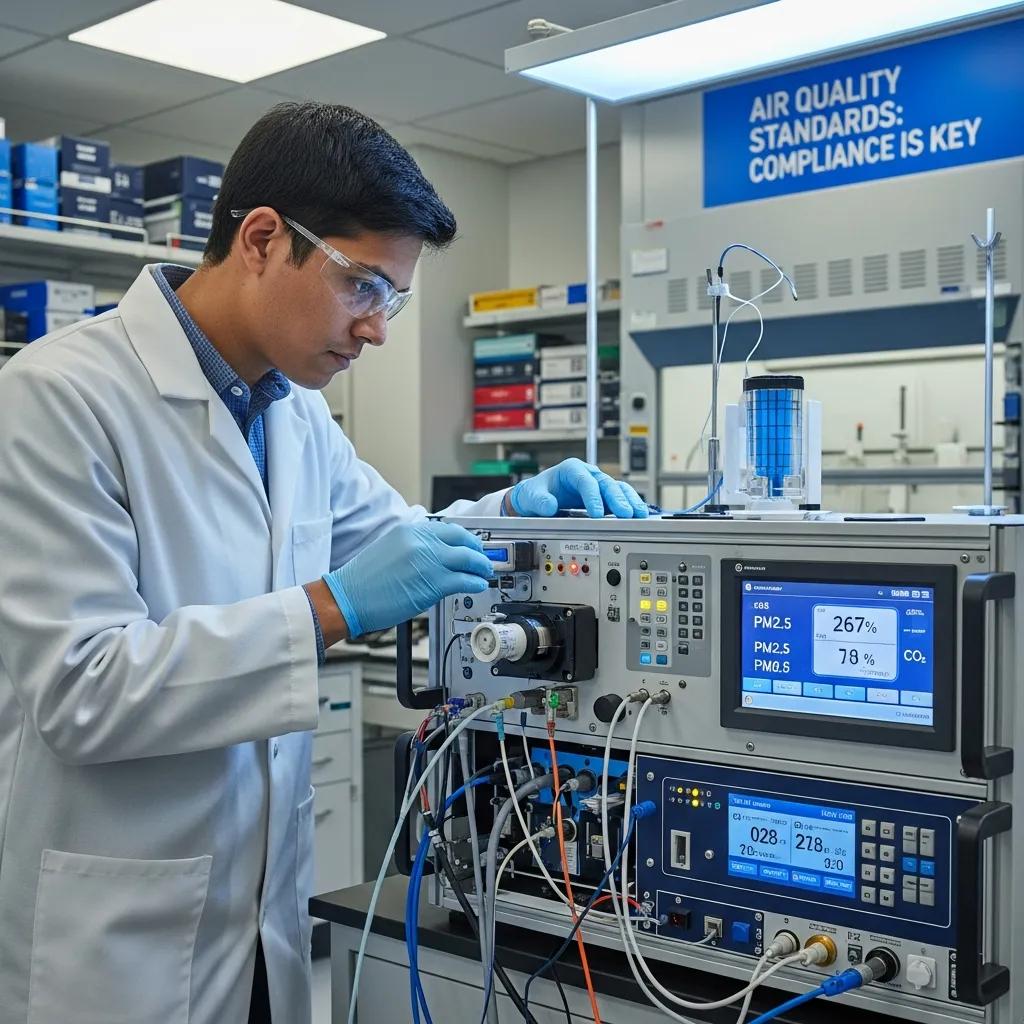
Grade D air under CGA G-7.1 is the common baseline for many occupational breathing-air applications because it balances achievable purification with protective limits for oxygen and common contaminants. Grade D specifies acceptable oxygen concentration ranges and maximum parts-per-million (ppm) limits for carbon monoxide and hydrocarbons, plus dew point ceilings to manage water content. Verification of Grade D typically requires on-site instrument readings for CO and dew point and laboratory or calibrated analyzer checks for hydrocarbons and particulates; recordkeeping should demonstrate periodic testing and corrective actions when values deviate. Operationally, Grade D is widely used for SCBA cylinder fills, workplace breathing air, and many industrial tasks where portable respiratory protection is required. Ensuring Grade D compliance focuses engineers on selecting multistage filtration, CO monitoring, and regular maintenance to prevent compressor or intake contamination.
This interpretation clarifies what system components and monitoring are necessary to reliably deliver Grade D air and prepares readers for contrasting Grades E and L.
How Do CGA G-7.1 Grades E and L Differ in Applications?
Grades E and L in CGA G-7.1 represent specialized use cases where different contaminant tolerances or applications demand adjusted specifications. Grade E is commonly associated with diving fills and gas blending (e.g., Nitrox) where hydrocarbon and CO limits are tighter to protect divers and to prevent mix degradation, while Grade L targets uses requiring very low hydrocarbons and particulates such as certain medical or laboratory breathing systems. Choosing between Grades E and L versus Grade D depends on exposure routes, vulnerability of users, and downstream gas processing steps; tighter grades often require additional activated carbon beds, catalytic CO removal, or finer coalescing and particulate filters. Equipment selection and certification should align with the chosen grade to avoid under- or over-specifying treatment stages.
Understanding these distinctions informs the filtration stack and monitoring priorities needed for each application and helps determine testing frequency and documentation intensity.
How Does ISO 8573-1 Classify Compressed Air Purity?
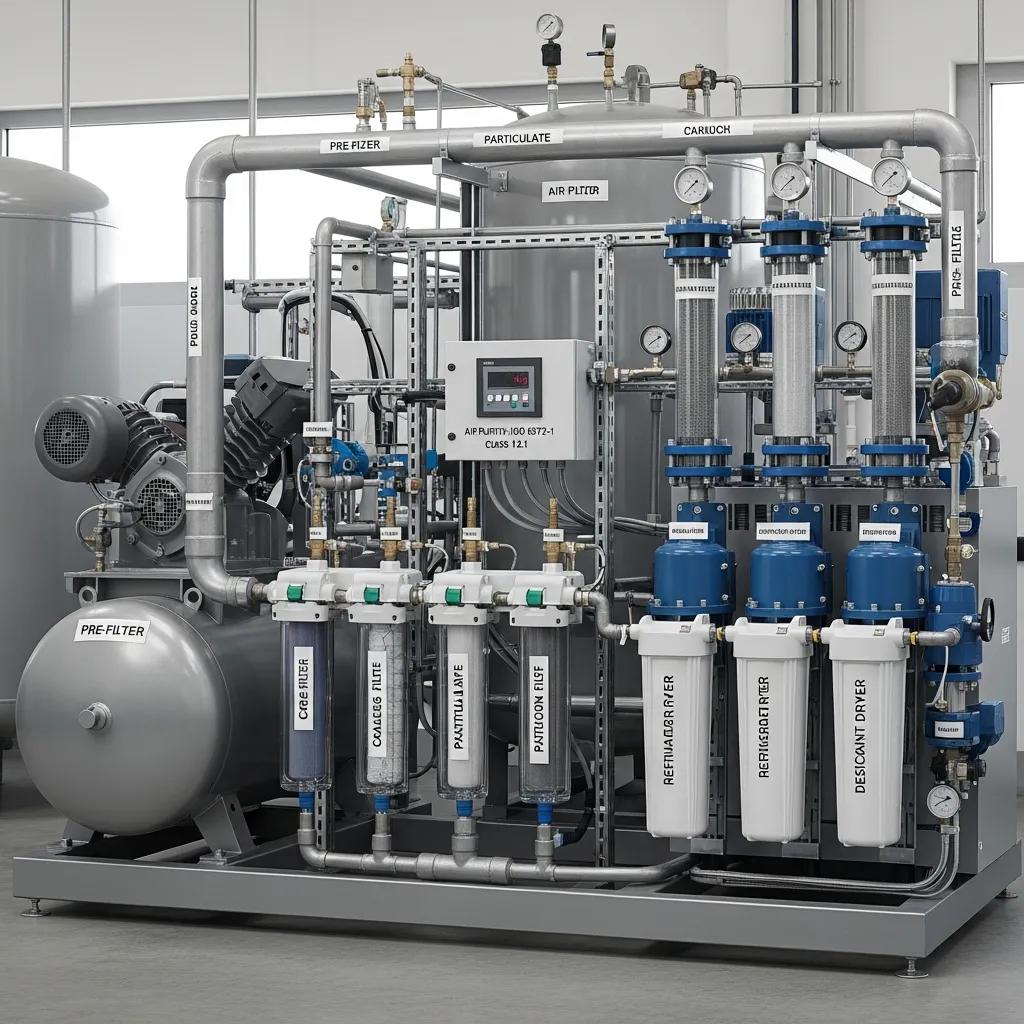
ISO 8573-1 is an internationally used standard that classifies general compressed air purity by three principal components: particles, water (expressed as dew point or liquid water), and oil (liquid and vapor). Unlike breathing air standards such as CGA G-7.1, ISO 8573-1 does not specify limits for gaseous contaminants like carbon monoxide or carbon dioxide, nor does it directly address human respiratory safety. Instead, it uses a three-number code—particle class.water class.oil class—so a specification like succinctly communicates the required maximum particle size/count, allowable dew point or water content, and permitted oil content. This structure makes ISO 8573-1 especially useful for specifying air for different downstream industrial uses because engineers can match a code to filtration, dryers, and coalescing or adsorption stages when designing systems. For breathing air applications, ISO 8573-1 purity classes are often used in conjunction with breathing air standards to ensure both mechanical system integrity and human safety.
- Particles: Defines maximum particle size and count per cubic meter requiring physical filtration and fine coalescers.
- Water: Specifies dew point or liquid water limits, guiding the use of refrigerated or desiccant dryers.
- Oil: Indicates allowable oil aerosol and vapor concentration, informing adsorption media like activated carbon.
This interpretation bridges ISO class selection with practical component choices so teams can translate a purity code into concrete hardware and monitoring needs.
What Are the Particle, Water, and Oil Purity Classes in ISO 8573-1?
Particle, water, and oil classes in ISO 8573-1 each use class numbers where lower numbers represent cleaner air. Particle classes range from coarse to extremely fine particle counts, water classes control dew point or water content, and oil classes limit total oil content in mg/m³. Typical breathing-air targets often sit in low-number classes (for example, particle class 1–2, water class 2–4 depending on environment, and oil class 0–1 where oil-free air is required), which translates into multiple filtration stages: pre-filters, coalescing filters, and activated carbon or adsorption beds. Engineers should interpret class numbers as operational guidance: lower classes mean more robust filtration and active monitoring to ensure the specified mg/m³ or dew point values are maintained.
This mapping helps teams select the correct combination of compressor type, dryers, and adsorbents to meet desired ISO purity classes for breathing air.
How to Interpret ISO 8573-1 Purity Class Codes?
Reading an ISO 8573-1 code is a stepwise decoding task: the first number indicates the particle class (size/count limits), the second number expresses water content or dew point, and the third number denotes oil concentration. For instance, a code of indicates a particle class 2 requirement, a water class 4 dew point limitation, and oil class 1 for total oil permitted. To translate these numbers into equipment, select filtration rated for the particle class, a dryer suitable for the water class, and oil-removal stages (or an oil-free compressor) for the specified oil class. Common misinterpretations occur when users assume the code implies breathing-air safety by itself—ISO 8573-1 addresses purity characteristics but must be combined with breathing-air standards (like CGA G-7.1) and application-specific limits to ensure respiratory safety.
Clear decoding prevents under-specification and ensures procurement and maintenance teams choose components that meet both ISO purity classes and the practical needs of the breathing-air application.
Why Is Breathing Air Quality Testing Essential for Compliance?
Breathing air quality testing verifies that compressed air meets the numeric limits defined by standards, supports the protection of users from acute and chronic exposure, and provides the documented evidence needed for audits and regulatory enforcement. Testing identifies failures in filtration, unexpected intake contamination, or compressor-related contamination such as oil carryover or elevated CO, allowing corrective actions before end users are harmed. Regular testing also reduces operational risk by detecting trends—rising CO or oil levels—that indicate maintenance needs, and it supports lifecycle planning for filter and adsorbent replacement. In addition to safety and legal reasons, proactive testing prevents costly downtime by ensuring compressors and purification systems perform reliably under load.
- Supports human health: Verifies contaminant levels against defined thresholds.
- Ensures regulatory compliance: Generates records required for audits and standards adherence.
- Preserves equipment and gas quality: Identifies oil carryover or moisture that degrades fills.
- Enables proactive maintenance: Reveals trends to plan filter and dryer replacement.
These testing motivations lead directly into the specifics of what contaminants are measured and how often tests should occur to maintain compliance.
contact LW Americas for project assistance when specifying system-level compliance.
What Contaminants Are Tested in Breathing Air Quality Services?
Breathing air testing typically measures carbon monoxide (CO), carbon dioxide (CO2), oil aerosol and vapor, particulates, water content or dew point, total hydrocarbons, and odor assessment where applicable. CO and CO2 are measured in ppm with portable analyzers or calibrated laboratory instruments because they represent acute toxicity and rebreathing risks; oil is measured as mg/m³ to assess compressor lubrication carryover; particulates are counted by size and density; and dew point sensors quantify moisture that can cause freeze-ups or microbial growth. Testing methods range from in-line continuous monitors for CO and dew point to periodic laboratory sampling for hydrocarbons and oil. Accurate measurement determines whether the breathing air meets the grade specified under CGA G-7.1 or the purity classes of ISO 8573-1.
This contaminant breakdown clarifies which instruments and sampling strategies are necessary to create defensible compliance records.
How Often Should Breathing Air Be Tested According to Standards?
Standards and best practices recommend baseline testing at installation and regular periodic testing thereafter. The frequency of these tests is not absolute but varies significantly based on several factors, including jurisdictional requirements, the specific application’s duty cycle, the manufacturer’s guidance for the equipment, and the risk profile of the environment. Common recommendations might suggest quarterly testing as a starting point, but increased frequency is often necessary under certain conditions such as changes to the intake environment, maintenance events, compressor work orders, or after repairs. Event-driven testing is essential when there is suspected contamination, unusual odors, filter bypass, or when intake conditions change (for example, nearby combustion sources). Recordkeeping should pair scheduled tests with event triggers and corrective actions, ensuring that trending data and remediation steps are documented. High-risk operations or those subject to stricter industry rules may require monthly or continuous monitoring for certain contaminants like CO or dew point, aligning with the most stringent applicable guidelines.
These scheduling principles help safety managers balance resource constraints with the need for timely detection and response to air-quality deviations.
What Are the Standards for High-Pressure Breathing Air Compressors?
High-pressure breathing air compressors influence air quality through design choices—lubrication type, duty cycle capability, sealing, and materials—that affect contaminant generation and the ease of purification. Standards expect compressors used for breathing air to allow integration of multi-stage filtration, CO mitigation technologies, and monitoring instrumentation while minimizing oil carryover and thermal spikes that generate CO. Design features such as continuous-duty capability, one-piece cast blocks, and lower RPM operation reduce mechanical wear and oil migration, which in turn supports sustained air purity. Proper compressor selection and system layout make it possible to meet CGA and ISO requirements reliably while maintaining throughput for cylinder fills or high-demand operations.
This table helps procurement and engineering teams prioritize features that materially reduce contaminant risks and maintenance burdens in breathing-air systems.
How Do Continuous-Duty Compressors Support Air Quality Compliance?
Continuous-duty compressors are engineered to run reliably under sustained load, which stabilizes operating temperatures and reduces thermal cycling that can increase CO formation and stress filtration systems. Thermal stability reduces temperature-driven oil vapor and hydrocarbon spikes, and continuous operation avoids the frequent cold starts that commonly elevate wear and oil migration. For high-throughput environments—industrial filling stations, dive shops, or fire departments—continuous-duty designs provide consistent flow and predictable integration with dryers and adsorption beds, simplifying compliance. Lower RPM operation inherent to many continuous-duty platforms also reduces vibration and mechanical wear, which helps limit particulate generation that would otherwise burden downstream filters.
These operational advantages explain why continuous-duty compressors are often specified in systems that must deliver reliable, standards-compliant breathing air under heavy or constant use.
What Features Ensure Compressors Meet CGA and ISO Standards?
Compressors and system components must include multi-stage filtration (pre-filters, coalescers, adsorbents), CO mitigation or monitoring, tight material and machining standards (e.g., one-piece cast blocks), and accessible maintenance points to reliably meet CGA and ISO requirements. Monitoring instrumentation—continuous CO sensors, oxygen monitors, and dew point sensors—provides real-time assurance and event logging, while filtration stacks sized for the expected flow rates ensure the specified ISO particle, water, and oil classes are achieved. Manufacturers that combine robust mechanical design with integrated purification and monitoring simplify compliance and reduce the risk of user error. Selecting systems with documented project support and design services makes implementation and validation more straightforward.
Operations should require specification documents that map each standard limit to a system component, maintenance activity, and monitoring strategy so compliance is auditable and operationally sustainable.
LW Americas’ continuous-duty compressor families, NitroxMakers, YachtPro systems, and breathing air purification and monitoring solutions illustrate how product-level choices—continuous-duty operation, durable cast components, lower RPM designs, and project support including 2D and 3D drawings—translate into systems engineered to meet CGA and ISO-driven specifications.
How Do NFPA 1989 and Industry-Specific Standards Impact Breathing Air Quality?
NFPA 1989 and other industry-specific standards add prescriptive requirements and operational mandates that can be stricter than general breathing-air standards, especially for emergency responders and medical applications. NFPA 1989 imposes expectations on SCBA filling stations, requiring documented testing, CO monitoring, and procedural controls to ensure cylinder fills are safe for firefighters during emergency response. Diving and medical sectors overlay their own preferences—diving often demands diving-grade specifications for Nitrox and Trimix fills, while medical uses may require the lowest achievable oil and particulate classes—so compliance strategies must integrate CGA and ISO limits with sector-specific rules. Understanding these layered expectations is essential for specifying purification, monitoring, testing cadence, and operational procedures that satisfy all applicable requirements.
- Emergency services (NFPA): Increased emphasis on CO monitoring, recordkeeping, and procedural fills.
- Diving operations: Tighter hydrocarbon and particulates control with documented mixing and blending procedures.
- Medical systems: More stringent expectations for oil-free air and validated monitoring to protect vulnerable patients.
These industry overlays determine both technical specifications and operational controls needed to ensure compliant breathing-air supply.
What Are NFPA 1989 Requirements for Firefighting Breathing Air?
NFPA 1989 centers on respiratory protection for emergency responders and prescribes operational protocols for SCBA filling stations, including monitoring, testing frequency, and documentation to ensure cylinder fills meet safe limits. Key expectations emphasize CO limits, continuous or frequent monitoring for contamination, and procedural controls such as intake placement and source checks to prevent smoky or combustion-contaminated air from entering the system. Fire departments must maintain records of testing and corrective actions and ensure personnel training for safe filling operations. Practical compliance steps include installing permanent CO monitors, performing baseline and routine sample testing, and establishing clear maintenance schedules for filters and dryers.
Translating NFPA 1989 into daily practice reduces acute exposure risks for firefighters and ensures fills are safe during high-stress operational periods.
How Do Diving and Medical Industries Apply Breathing Air Standards?
Diving operations typically prioritize Grade E-like specifications and ISO classes that minimize hydrocarbons and CO to protect divers and gas mixtures; systems for dive shops often include Nitrox Makers and blending controls to achieve accurate oxygen concentrations and low contaminant levels. Medical breathing-air systems demand the tightest oil and particulate controls and may require higher testing frequency and validated documentation to meet patient-safety requirements. System design differences include choice of compression technology (oil-free vs. oil-lubricated with aggressive oil removal), redundant monitoring, and conservative replacement schedules for adsorbents. These sector-specific adaptations ensure the compressed air meets the intended physiological risk profile and regulatory expectations.