
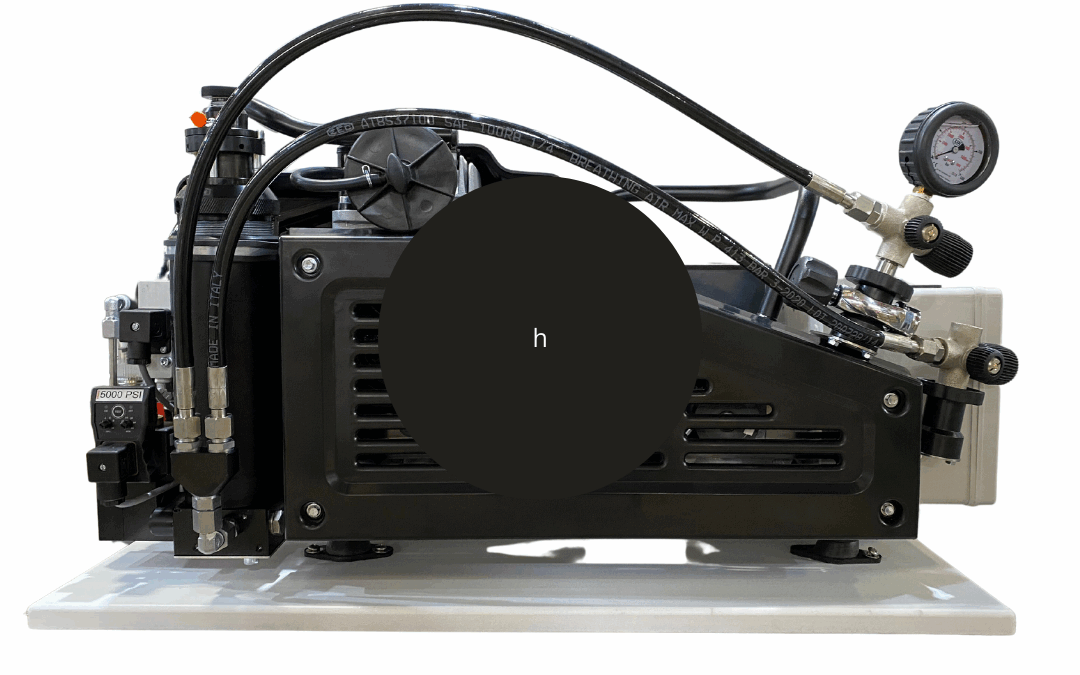
LW Americas, a division of Brownie’s Marine Group, Inc., specifies, supplies, and integrates the YachtPro YP 48vDC-60 dive compressor with yacht battery banks for onboard scuba tank fills. Based in Davie, Florida.
The YachtPro YP 48vDC-60 is a 48 VDC dive compressor within LW Americas’ YachtPro compressor range, delivering up to 60 liters per minute at pressures to 4,500 psi directly from a yacht’s battery bank. Running on battery power lets a crew fill scuba tanks without a generator running during the fill itself, provided the bank carries adequate capacity and is recharged on a schedule that keeps pace with diving demand. LW Americas matches each installation, electrical compatibility, mounting, ventilation, and charging architecture, to the specific vessel.
Key Takeaways
- The YachtPro YP 48vDC-60 runs on a 48 VDC battery bank and delivers up to 60 L/min at pressures to 4,500 psi.
- Battery-bank operation allows scuba tank fills without running a generator during the fill, but the bank still needs adequate capacity and a charging plan to keep pace with diving demand.
- LW Americas specifies, supplies, and integrates the system, matching electrical compatibility, mounting, and ventilation to each vessel rather than a one-size-fits-all installation.
- Sizing correctly against the vessel’s battery and charging architecture, not the compressor alone, is what determines whether repeated fills are practical between anchorages.
Why Do Yacht Owners Need Onboard Dive Compressors?
Extended cruising itineraries create a gas-refill problem that shore-based dive shops cannot always solve. Remote anchorages, not crowded marinas, generate the strongest case for self-sufficient breathing air aboard.
Divers must carry their own breathing gas, and cylinder capacity limits every excursion. Once a yacht’s tanks run low, the itinerary itself becomes hostage to refill logistics. This constraint shapes route planning long before a single fin hits the water.
Location determines the solution. In the U.S. Virgin Islands or British Virgin Islands, a nearby dive operation typically handles refills without complication. But in the Bahamas, Grenada, or the South Pacific, no such shortcut exists. Crews there must develop their own refill capability or accept restricted diving days.
What Options Exist for Remote Refills?
Carrying extra cylinders delays the problem but never eliminates it. Tank capacity is finite, and every additional cylinder consumes storage and weight budget.
A dedicated onboard system removes the dependency on a nearby dive shop. Options now include a battery powered scuba compressor, a 48V DC dive compressor, and a broader electric marine breathing air compressor installation sized to the vessel’s tank locker.
LW Americas supplies and ships these systems to yachts operating across remote dive regions, giving captains and refit shipyards a refill solution independent of shoreside dive infrastructure.
Can A Yacht’s Battery Bank Power A Dive Compressor?
Yes, provided the battery bank is sized and wired to match the compressor’s electrical demand. The YachtPro YP 48vDC-60 is built to run directly from a 48 VDC bank, delivering up to 60 L/min at pressures to 4,500 psi, without requiring a generator to be running during the fill.
Running the fill on battery power alone does not remove the need for planning. The bank must carry enough reserve capacity to complete a fill cycle, and it must be recharged on a schedule that keeps pace with how often the crew dives. A 48V DC dive compressor sized correctly against the vessel’s battery and charging architecture is what makes repeated fills practical between anchorages, not any inherent independence from shore charging.
What Electrical Compatibility Does a 48 VDC Compressor Need?
The YP 48vDC-60 draws on a 48 VDC circuit, so the installation must be matched to a battery bank and charging system already wired to that voltage, or one that can be reconfigured to support it. LW Americas reviews each vessel’s existing battery architecture, wiring, and charging capacity before specifying an installation, rather than applying a single configuration across every yacht.
Is Wiring A High-Voltage Battery Bank Dangerous?
Yes, high-current DC installations carry a genuine fire risk. Proceeding without significant experience in high-current electrical systems is not recommended. LW Americas works with refit shipyards and marine electrical engineers to specify systems matched to a vessel’s existing battery architecture before installation begins.
What Makes A Compressor Fit Yacht Battery Banks?
Fit begins with calculation, not guesswork. Compressor and drive power get individually calculated for each installation, a step that becomes essential when matching an electric marine breathing air compressor to a specific vessel’s battery bank capacity and charging system. Skipping this step risks a system that either strains onboard power or underperforms when tanks need filling fast.
Expandability matters just as much as initial sizing. Units built for individual applications carry a high degree of expandability. A 48V DC dive compressor installed today can scale as electrical and charging capacity grows during a refit. That flexibility protects the initial investment.
Does compressor build quality matter in an engine room?
Yes. Engine rooms expose equipment to vibration, heat, and constant motion at sea. A sturdy compressor frame supports maximum operating safety in that environment, reducing failure risk during offshore dives.
Who determines the right setup for a specific yacht?
A representative assesses diving needs, mounting space, ventilation, and the vessel’s battery and charging architecture before finalizing any custom installation, whether that means a dive locker or a battery powered scuba compressor paired with existing tank storage.
Fit factors reviewed before installation:
- Available battery bank voltage and amperage
- Charging capacity and recharge schedule between fills
- Mounting location, engine room space, and ventilation for cooling airflow
- Diving frequency and cylinder fill demand
- Long-term expandability needs
LW Americas, operating as a division of Brownie’s Marine Group, Inc., supports this assessment process for vessels requiring dive equipment integration.
FAQ
Why do yacht owners need onboard dive compressors?
Extended cruising to remote anchorages in places like the Bahamas, Grenada, or the South Pacific leaves no nearby dive shop for refills. An onboard system gives crews self-sufficient breathing air instead of restricting diving days to shoreside logistics.
Can a yacht’s battery bank power a dive compressor?
Yes, provided the bank is sized and wired for the compressor’s electrical demand. The YachtPro YP 48vDC-60 runs on a 48 VDC battery bank, delivering up to 60 L/min at pressures to 4,500 psi, without needing a generator running during the fill. The bank still needs adequate capacity and a charging plan to keep pace with fill demand.
How does LW Americas support yacht dive compressor installations?
LW Americas specifies, supplies, and integrates the YachtPro YP 48vDC-60 with a vessel’s existing 48 VDC battery bank and charging system, matching electrical compatibility, mounting, and ventilation to the boat. The company ships and supports these installations for yachts and refit shipyards operating in remote dive regions.
Conclusion
In closing, the YachtPro YP 48vDC-60 gives yacht operators a practical way to fill dive tanks directly from the vessel’s battery bank, without running a generator during the fill itself. Reliable results still depend on a battery bank with adequate capacity and a charging plan that keeps pace with diving demand. LW Americas specifies, supplies, and integrates these systems, matching each installation to the vessel’s electrical architecture, mounting, ventilation, and diving requirements. Contact our Davie, Florida office during business hours to discuss your marine compressor specifications.