
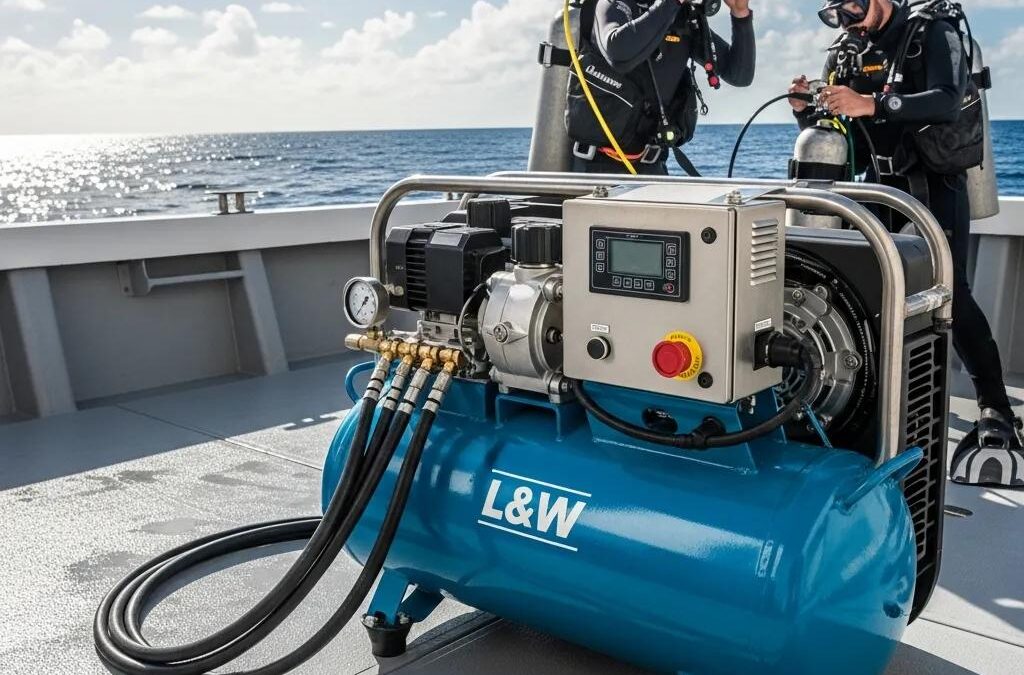
What Makes L&W Compressors Stand Out in Diving: Features, Technology, and Reliability Explained
L&W Compressors are recognized for their exceptional performance in diving applications, driven by advanced engineering and innovative features. This article delves into the unique aspects that set L&W Compressors apart, including their automation, reliability, and safety features, many of which are enhanced by their continuous-duty capable designs. Readers will gain insights into how these compressors enhance diving experiences through superior technology and design. Many divers face challenges related to air quality, compressor efficiency, and operational safety. L&W Compressors address these issues with robust solutions that ensure reliable air supply and operational efficiency. We will explore the principles of German engineering that define their quality, the importance of continuous-duty operation for specific models, and the reliability features that make them a preferred choice for divers.
How Does German Engineering Define L&W Dive Compressor Quality?
German engineering defines L&W dive compressor quality through a combination of robust design, the availability of continuous-duty capable models, and advanced monitoring systems. LW Americas emphasizes the importance of specifications such as pressure ratings, delivery capacities, and power requirements, ensuring that their compressors are tailored for high-performance in demanding marine environments. Features like corrosion-resistant components, advanced filtration systems, and telemetry readiness for proactive maintenance further enhance reliability and safety, making them suitable for critical applications like breathing air supply for divers.
What Are the Key German Engineering Principles in L&W Compressors?
- Continuous-Duty Design Options: Emphasis on creating compressor models and configurations that can operate continuously without frequent cool-down periods, enhancing reliability and uptime.
- Robust Mechanical Design: Use of one-piece cast blocks to improve durability and reduce potential leaks, ensuring long-term performance.
- Thermal Management: Implementation of thermal management strategies to maintain optimal operating temperatures and efficiency.
- Precision and Control: Focus on precise pressure control and monitoring capabilities to ensure process consistency and safety, particularly in critical applications.
- Customization and Integration: Ability to provide tailored solutions that combine appropriate pressure, flow, and duty cycle with project management support for installation.
- Monitoring and Telemetry: Integration of telemetry systems to analyze performance trends, allowing for proactive maintenance and specification validation.
These principles contribute to the overall efficiency, safety, and effectiveness of the compressors in various industrial applications.
How Does the One-Piece Cast Block Enhance Compressor Performance?
The one-piece cast block enhances compressor performance by improving durability and reducing leak potential. This design contributes to the overall efficiency and reliability of the compressor, which is particularly important in applications where consistent performance is critical.
Why Are Continuous-Duty Capable L&W Scuba Compressors Crucial?
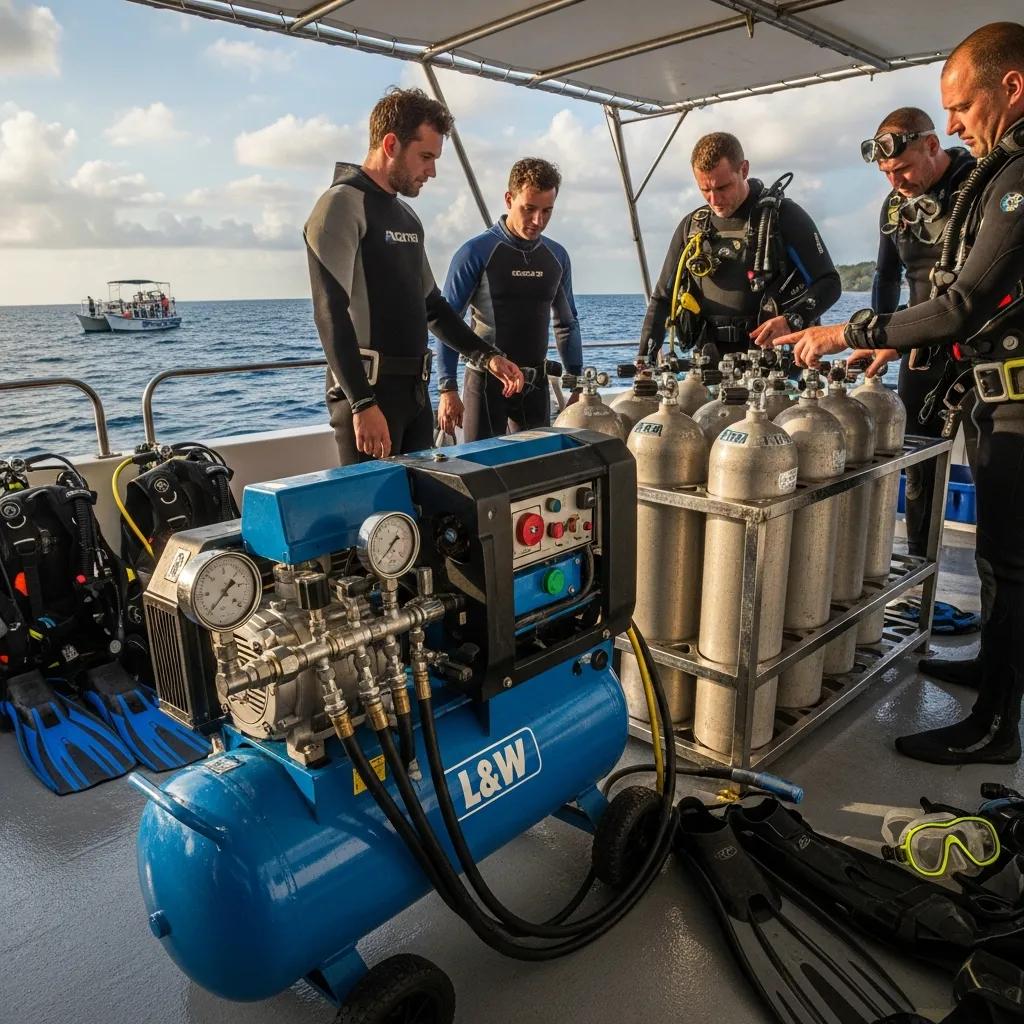
Continuous-duty operation, available on specific L&W Scuba compressor models and configurations, is crucial because it ensures sustained high-pressure fills and robust uptime, which are essential for applications like diving and firefighting. These specific compressors are designed to operate continuously without interruption, reducing the risk of downtime and enhancing reliability. Additionally, continuous-duty capable designs, combined with monitoring capabilities, support long-term asset planning and maintenance, making them suitable for critical breathing-air systems and other demanding applications.
How Do Continuous-Duty Capable Compressors Benefit Extended Dive Sessions?
Continuous-duty operation, when configured for specific models, benefits extended dive sessions by enabling longer run times without thermal compromise, which is crucial for applications like scuba fills that require consistent air supply. The design of continuous-duty capable platforms incorporates robust mechanical components and optimized cooling strategies, allowing for sustained operation and predictable maintenance intervals. This ensures that critical breathing-air systems can maintain air purity and availability during extended use, ultimately enhancing the reliability and efficiency of the diving experience.
How Do L&W’s Continuous-Duty Capable Models Compare to Competitors?
L&W’s continuous-duty capable platforms are positioned as competitive options in the market due to their robust mechanical components, energy efficiency improvements, and integration-ready monitoring capabilities. They emphasize total cost of ownership, uptime guarantees, and serviceability, which are increasingly valued by buyers. L&W’s designs, such as one-piece cast blocks, enhance durability and reduce maintenance needs, making them suitable for critical applications. Additionally, their project management services and custom engineering support help ensure that systems are tailored to specific operational demands, further differentiating them from competitors. Overall, L&W’s combination of continuous-duty design options and monitoring readiness offers a compelling package for organizations seeking reliable and efficient compressor solutions.
Why L&W Dive Compressors Excel: Features, Technology & Reliability
- Primary Pressure Calibration – Allows adjustment of the desired inlet pressure.
- Inlet Buffer Tank – 150 l capacity with safety valve, manual condensate drain valve, pressure gauge, and electrical cut-off solenoid for inlet gas.
- Primary Pressure Monitoring – Includes pressure shut off at maximum/minimum inlet pressure.
- Electronic Compressor Control (ECC) – Facilitates automated operation.
- Auto Start Function – For semi/full automatic mode.
- Inter-stage Pressure Gauge – For monitoring pressure between stages.
- Oil Pressure Gauge and Monitoring – Includes auto shut down feature.
- Puracon Filter Monitoring – Ensures effective filtration.
- Compressor Block Heating – For operation in ambient temperatures below +5°C.
- Water Cooling System – Utilizes a stainless steel heat exchanger.
- High-Pressure Versions – Capable of reaching up to 420 bar.
- Filter Extension Options – Allows for larger or additional filter housing.
How Do Steel Piston Rings Improve Compressor Longevity?
Steel piston rings improve compressor longevity by providing a better seal, which reduces wear and tear on the compressor components. This enhancement leads to improved efficiency and lower maintenance costs over time, ensuring that the compressor operates reliably in various conditions.
What Maintenance Advantages Do L&W Compressors Offer for Diving?
- Automated Operation: Compressor systems, such as the YachtPro™ Essential (YP100), are designed for automated operation, allowing users to connect tanks, open valves, and initiate fills without constant supervision, freeing them for other tasks.
- Proactive Monitoring for Filter Life: Real-time monitoring, like that provided by the Puracon M200, tracks moisture content in compressed air, alerting users when filter changes are necessary to prevent moisture from entering scuba tanks and optimizing filter lifespan.
- Structured Maintenance Support: Emphasis on best practices for filter maintenance, including regular checks and replacements based on usage, helps maintain air quality and system longevity.
- Digital Record Keeping: A structured maintenance log system supports compliance and predictive maintenance, reducing risk and demonstrating due diligence during inspections.
- Designed for Serviceability: L&W compressors are engineered with service access in mind, simplifying routine maintenance and component replacement to minimize downtime.
How Do L&W Compressors Ensure Safe Breathing Air Quality for Divers?
- Advanced Filtration and Monitoring: Systems like Puracon Filter Monitoring actively ensure air purity by detecting and alerting users to potential contaminants, crucial for meeting breathing air standards.
- Integrated Pressure Management: Primary pressure monitoring and shut-off mechanisms at maximum and minimum inlet pressures prevent unsafe operating conditions.
- Robust System Design: Features such as one-piece cast blocks, lower RPM operation, and the option for continuous-duty capable designs contribute to overall system durability and consistent, safe performance.
- Comprehensive Safety Valves: Integrated safety valves and monitoring systems are in place to mitigate overpressure risks, ensuring secure operation during use.
What Are the EN 12021 Standards and How Do L&W Systems Support Compliance?
The EN 12021 standards set the requirements for breathing air quality in diving applications. L&W Compressors, when integrated into a complete system with appropriate filtration, regular maintenance, and continuous monitoring, are designed to help achieve compliance with these standards by providing air that meets or exceeds the purity levels required for safe breathing. This comprehensive approach to compliance is critical for maintaining diver safety and operational integrity.
Beyond Air Purification: Nitrox Generation with NitroxMaker™
While dedicated multi-stage filtration systems, such as those incorporating Puracon technology, are essential for ensuring breathing air purity by removing contaminants like oil, particulates, moisture, and hydrocarbons, L&W also offers specialized systems like the NitroxMaker™. The NitroxMaker™ is a low-pressure membrane nitrox generator designed to produce enriched air nitrox, not to purify breathing air. It integrates seamlessly into a complete compressor setup, allowing divers to safely generate nitrox for extended bottom times and reduced nitrogen loading. Continuous monitoring of air quality via dedicated filtration systems remains a critical design principle to ensure compliance with purity standards for breathing air.
Which L&W Compressor Models Best Suit Different Diving Applications?
The recommended compressor model for diving applications, specifically for a Lagoon 42 Catamaran, is the YachtPro™ Essential (YP100). This model is preferred by motor cat and sail cat owners due to its automation features, allowing users to fill tanks to a programmed pressure without constant supervision. It includes a Variable Frequency Drive (VFD) to manage inrush current during motor start-up, making it suitable for marine environments.
For other diving applications, LW Americas offers a range of compressors designed for high-pressure needs, ensuring clean and safe air for divers, with robust features for durability and performance in marine conditions. However, specific models for different diving applications beyond the YP100 are not detailed in the provided context.
What Are the Features of the YachtPro™ Series for Marine Diving?
The YachtPro™ series is designed specifically for marine environments, featuring automation for ease of use, corrosion-resistant components, and advanced filtration systems. These features ensure that divers receive clean and safe air while maximizing operational efficiency.
How Do L&W Compressors Support Commercial and Technical Diving Needs?
L&W Compressors support commercial and technical diving needs by providing high-performance, reliable compressor systems specifically designed for marine environments. Their compressors are equipped with features such as corrosion-resistant components, advanced filtration systems for clean and safe air, and automation for ease of use. They ensure sustained uptime and precise pressure control, which are critical for breathing air supply for divers. Additionally, their continuous-duty capable platforms and telemetry-ready designs enhance operational efficiency and safety, making them suitable for various underwater activities.
Why Choose LW Americas for Support and Custom Dive Compressor Solutions?
You should choose LW Americas for support and custom dive compressor solutions because they offer tailored high-pressure solutions that align with specific site constraints and performance targets. Their YachtPro™ Essential (YP100) compressor system is fully automated, allowing users to fill tanks without constant supervision. LW Americas also provides project-managed custom solutions, ensuring that the final system meets operational and regulatory requirements, which can improve lifecycle costs and reduce downtime. Additionally, they offer responsive North American support for specific quotes, custom designs, and engineering assistance.
What Customization and OEM Services Does LW Americas Provide?
LW Americas provides customization and OEM services that include tailored high-pressure compressor solutions, project management, and design services. Their approach involves a structured workflow that starts with needs assessment, followed by equipment selection, engineering design, installation oversight, commissioning, and post-installation support. They offer custom designs, 2D/3D drawings, and project-managed compressor selection to ensure systems align with operational and regulatory environments. Additionally, they focus on optimizing component selection and service access to improve lifecycle costs and regulatory compliance.
How Does North American Support Enhance Customer Experience?
North American support enhances customer experience by providing faster response times for parts and technical queries, which is crucial for maintaining operational efficiency. The local presence allows for custom solution capabilities and comprehensive project management, reducing installation complexity. This support contributes to reliable fill-station uptime, predictable maintenance costs, and facilitates compliance verification during audits, all of which are practical outcomes that benefit departments managing life-safety infrastructure.