

Marine Compressor Systems for Professional Diving Needs: High-Pressure Solutions for Commercial and Offshore Applications
Marine compressor systems are essential for professional diving, providing the high-pressure air necessary for safe underwater operations. These specialized systems compress ambient air to high pressures, ensuring divers have a reliable supply of clean and safe breathing air. In this article, we will explore the critical role of high-pressure marine compressors in professional diving, the differences between various types of compressors, and the advanced technology offered by LW Americas. Additionally, we will discuss the importance of air quality standards and the applications of custom marine compressor systems in commercial diving.
What Are High-Pressure Marine Compressors and Their Role in Professional Diving?
High-pressure marine compressors are specialized systems designed to compress ambient air to high pressures for various applications, including scuba diving. In professional diving, these compressors play a critical role by providing a reliable supply of clean and safe breathing air. They are engineered to withstand harsh marine environments and often include advanced filtration systems to ensure the air quality meets safety standards. These compressors enhance safety and efficiency in underwater activities by delivering the necessary air supply for divers while also being equipped with features that ensure durability and performance in challenging conditions.
How Do Continuous-Duty Compressors Ensure Reliable Breathing Air Supply?
Continuous-duty compressors, depending on their specific design and configuration, can ensure a reliable breathing air supply by incorporating robust mechanical components and advanced thermal management strategies that allow them to operate without frequent cool-down periods. These compressors are designed with lower RPM components and one-piece cast blocks, which enhance durability and reduce thermal stress. This engineering enables them to sustain long run times with predictable maintenance intervals, making them suitable for critical applications like breathing air systems. Additionally, their energy-efficient designs contribute to lower total costs per delivered cubic foot, enhancing resilience and uptime for continuous industrial use.
What Are the Differences Between Portable and Stationary Marine Compressor Systems?
The differences between portable and stationary marine compressor systems include:
- Purpose and Use Case:Stationary Compressors: Designed for centralized high-volume refilling and continuous operation, making them suitable for consistent, high-demand environments.Portable Compressors: Ideal for situational support, such as on-scene refilling, remote training, or temporary field deployment where a fixed installation is not feasible.
- Performance:Stationary Compressors: Specific models typically have higher sustained pressure capabilities (up to 5000 psi) and flow rates, supporting continuous duty.Portable Compressors: Specific models may have moderate pressure capabilities (up to 4500 psi) and are not always designed for continuous operation.
- Maintenance and Access:Stationary Compressors: Generally offer easier maintenance access and are designed for sustained power availability and cooling capacity.Portable Compressors: May have limitations in maintenance access and cooling, as they are built for mobility.
- Installation and Footprint:Stationary Compressors: Require specific electrical and ventilation setups and have a fixed footprint.Portable Compressors: Designed for easy transport and setup, often requiring less space and simpler installation.
- Operational Considerations:Stationary Compressors: Better suited for high-throughput needs and long-term operational plans.Portable Compressors: More flexible for temporary needs and can be used in various locations as required.
How Does LW Americas’ Continuous-Duty Compressor Technology Stand Out?
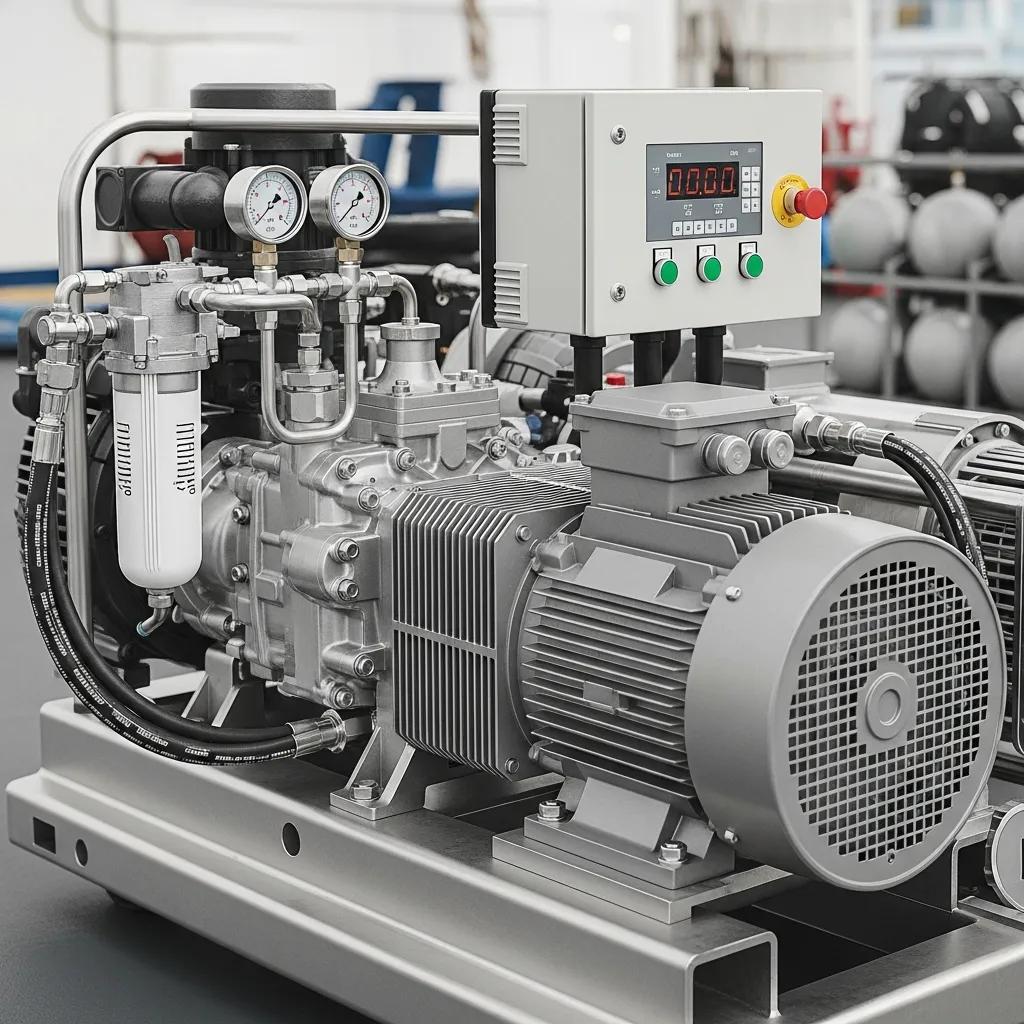
LW Americas’ continuous-duty compressor technology, in its various configurations, stands out due to its engineering designed for uninterrupted operation without frequent cool-down periods. This is achieved through the use of lower RPM components, robust cast blocks, and effective thermal management strategies that dissipate heat during prolonged use. These features reduce thermal stress, maintain steady pressure delivery, and minimize the risk of unplanned stops, thereby improving overall equipment availability. Additionally, continuous-duty compressors experience fewer start/stop cycles, which decreases wear on components and extends maintenance intervals compared to intermittent-duty machines. This design is particularly beneficial for operations that prioritize uptime and reliability.
What Are the Advantages of the One-Piece Cast Block Design?
The one-piece cast block design offers several advantages, including enhanced durability and reduced risk of leaks. This design minimizes the number of joints and potential failure points, ensuring a more robust and reliable compressor system. Additionally, the solid construction allows for better heat dissipation, which is crucial for maintaining optimal operating temperatures during extended use.
How Does Lower RPM Operation Reduce Noise and Wear?
Lower RPM operation significantly reduces noise levels and wear on compressor components. By operating at lower speeds, the mechanical stress on parts is minimized, leading to longer service life and reduced maintenance needs. This quieter operation is particularly beneficial in environments where noise reduction is a priority, such as in residential areas or during nighttime operations.
What Are the Standards and Solutions for Breathing Air Quality and Purification?

Breathing air systems, depending on their intended application and regulatory requirements, require controlled pressure, certified filtration, and adherence to recognized standards for air quality, specifying limits for total hydrocarbons, CO, moisture, and particulates. Compliance with these standards is critical for maintaining the safety and operational integrity of breathing air systems used in diving, as they help prevent health risks associated with contaminated air. Additionally, adherence to these standards supports continuous availability and reliability of air supply during diving operations.
How Do Grade E Breathing Air Standards Impact Marine Diving Operations?
Grade E breathing air standards impact marine diving operations by ensuring that the air quality meets specific safety and health requirements for systems configured to meet these standards. These standards dictate controlled pressure, certified filtration, and limits on total hydrocarbons, carbon monoxide, moisture, and particulates in the air supplied to divers. Compliance with these standards is critical for maintaining the safety and operational integrity of breathing air systems used in diving, as they help prevent health risks associated with contaminated air. Additionally, adherence to these standards supports continuous availability and reliability of air supply during diving operations.
Research highlights the critical need for rigorous air quality testing to prevent contamination in breathing air systems.
High-Pressure Compressors & Breathing Air Quality for Divers
pared with the aid of high-pressure compressors operating in breathing air has been found to contain elevated levels of and Systems be made obligatory and that air quality tests be
Carbon monoxide and water vapor contamination of compressed breathing air for firefighters and divers, CC Austin, 1997
Which Purification Systems Ensure Safe Breathing Air for Divers?
The purification systems that ensure safe breathing air for divers include multi-stage purification combined with continuous monitoring. This design principle supports compliance and operator safety by detecting any degradation in purification performance before user exposure. Additionally, while some systems utilize oil-free compressors, many compliant breathing air systems effectively mitigate oil carryover risk into the compressed air stream through the use of high-quality oil-lubricated compressors paired with advanced, multi-stage filtration systems. Both approaches are essential for maintaining purity standards in breathing air applications, with the specific choice often depending on operational requirements and system design.
Further studies emphasize the importance of multi-stage purification and robust filtration systems for ensuring the safety of breathing air.
Breathing Air Filtration & Multi-Stage Purification for Diving Safety
This paper deals with the implementation of safety parameters downstream of the breathing air filtration system. Tests were Compressed air was subjected to multi-stage purification in a
Use of a Carbon Dioxide Measurement System to Control the Process of Obtaining Breathing Air for Hyperbaric Oxygen Conditions, A Woźniak, 2020
How Do Nitrox and Mixed Gas Systems Enhance Professional Diving Performance?
Nitrox and mixed gas systems can enhance professional diving performance by allowing divers to potentially extend their bottom time and reduce the risk of decompression sickness, provided proper training, dive planning, and adherence to established standards are maintained. These systems utilize different gas mixtures to optimize the breathing gas for specific depths and conditions, improving overall safety and efficiency during dives.
Understanding the physiological effects of gas flow under high ambient pressure is fundamental to optimizing these specialized breathing gas mixtures.
Gas Flow & Breathing Physiology Under High Ambient Pressure
of gas flow under high pressure in the human airways and it gas flow under high pressure in air was compared to that of high at each stop by connecting the wedge to a standard Collins
Breathing under high ambient pressure, 1966
What Is the NitroxMaker™ System and How Does It Work?
The NitroxMaker™ system is a low-pressure membrane nitrox generator designed to produce nitrox blends on-site. It works by separating oxygen from ambient air, allowing divers to customize their breathing gas according to their specific needs. It is crucial to note that the NitroxMaker™ system generates low-pressure nitrox and must be paired with a separate high-pressure breathing-air compressor for the safe and proper filling of dive cylinders. By providing nitrox blends, when used correctly and in conjunction with appropriate high-pressure compression, the system can help reduce nitrogen absorption, thereby potentially minimizing the risk of decompression sickness for properly trained and equipped divers following established protocols.
How Are Trimix and Enriched Air Used in Commercial Diving?
Trimix and enriched air are used in commercial diving to enhance safety and performance at greater depths, when utilized by properly trained and certified divers following strict dive plans and safety protocols. Trimix, which consists of oxygen, nitrogen, and helium, can reduce the risk of nitrogen narcosis and allow divers to operate safely at deeper depths. Enriched air, or nitrox, provides a higher oxygen concentration, which can potentially improve bottom time and reduce fatigue. Both gas mixtures are essential for professional divers working in challenging underwater environments, but their safe application is entirely dependent on adherence to industry standards and individual diver competency.
Which Commercial Diving Applications Benefit from Custom Marine Compressor Systems?
The commercial diving applications that benefit from custom marine compressor systems include scuba fills, firefighting SCBA, medical gas supply, and maritime systems. These applications require specific specifications related to flow, pressure, air quality, and duty cycle, which custom systems can address effectively.
How Are Offshore Diving and Underwater Construction Supported by Compressor Systems?
Offshore diving and underwater construction are supported by compressor systems that provide reliable breathing air and power for tools. These systems are designed to meet the high demands of underwater operations, ensuring that divers have the necessary air supply while also powering equipment used in construction and maintenance tasks.
What Are the Design Considerations for Dive Boat Air Fill Stations?
The design considerations for dive boat air fill stations include:
- Continuous Operation: Systems must be optimized for continuous-duty to ensure reliable air supply during operations.
- High-Pressure Capability: The compressors should meet target cylinder pressures, typically between 3000–4500 psi.
- Air Quality Standards: Compliance with controlled pressure, certified filtration, and recognized air quality standards is essential, focusing on limits for total hydrocarbons, CO, moisture, and particulates.
- Compact Packaging: Due to space constraints on boats, equipment should be compact and easily mountable.
- Vibration Resistance: The design must withstand the vibrations typical in maritime environments.
- Custom Configurations: Tailoring systems to specific site demands and operational profiles is crucial, including expected simultaneous fills and turnaround times.
- Safety Features: Incorporation of safety valves and monitoring systems to manage pressure and ensure safe operation.
What Are Best Practices for Maintenance, Support, and Spare Parts for Marine Compressors?
Best practices for maintenance, support, and spare parts for marine compressors include regular servicing according to manufacturer specifications, timely replacement of worn components, and adherence to manufacturer guidelines. Proper maintenance ensures the longevity and reliability of compressor systems, which is critical for safety in diving operations.
How Often Should Professional Diving Compressors Be Serviced?
Professional diving compressors should be serviced regularly, with specific intervals varying by model and manufacturer recommendations, but typically every 500 hours of operation or annually, whichever comes first. Regular servicing includes checking and replacing filters, inspecting mechanical components, and ensuring that the system operates within specified parameters. Neglecting maintenance can lead to reduced performance and increased risk of failure during critical operations.
What Support Does LW Americas Provide for Compressor Maintenance and Parts?
LW Americas provides support for compressor maintenance and parts through tailored high-pressure solutions, including project-managed custom designs, engineering support, and responsive North American assistance. They offer features such as primary pressure monitoring, electronic compressor control, and maintenance planning to enhance equipment availability and reduce downtime. Additionally, they provide standard equipment with automatic features, safety measures, and options for customization based on specific application requirements.