
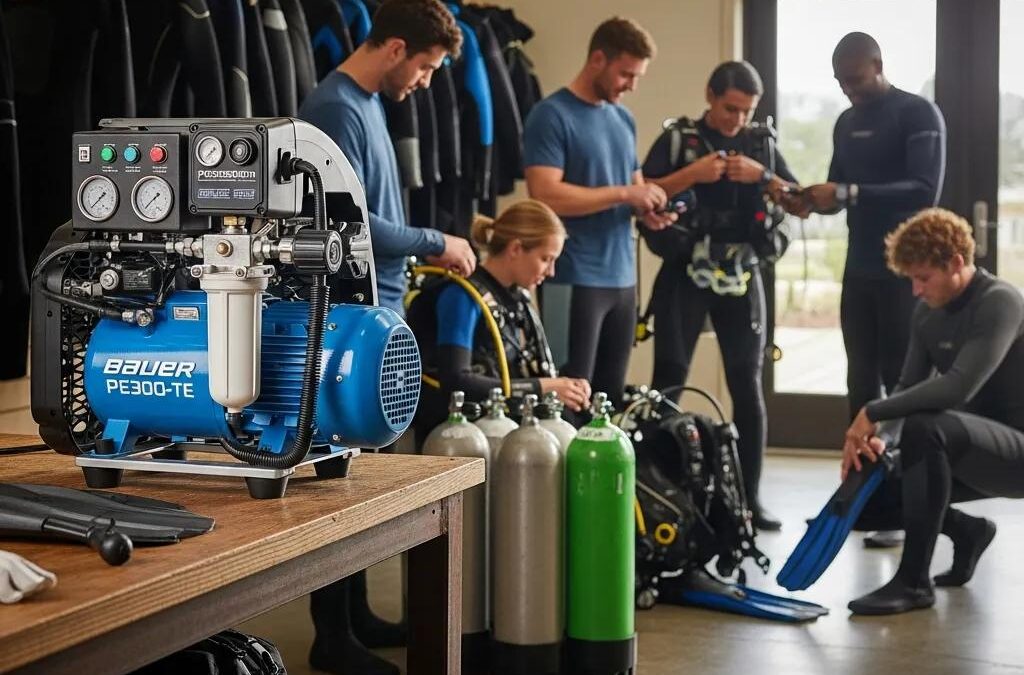
Choosing the Right Compressor for Your Dive Operations: The Ultimate Scuba Diving Compressor Buying Guide
Selecting the right compressor for your dive operations is crucial for ensuring safety, efficiency, and reliability. This comprehensive guide will help you navigate the complexities of compressor selection, focusing on key factors such as power requirements, diving needs, and filtration systems. Understanding these elements will empower you to make informed decisions that enhance your dive operations. Many divers and dive shop owners face challenges in choosing the right equipment that meets their specific needs. This guide aims to provide clarity and actionable insights to help you select the best compressor for your diving activities. We will explore various types of compressors, essential features, and maintenance practices, along with industry-specific applications and the advantages of choosing LW Americas for your compressor needs.
What Are the Different Types of Dive Compressors and Their Features?
Dive compressors come in various types, each designed to meet specific operational needs. Understanding these types and their features is essential for making an informed choice. The primary categories include portable and stationary compressors, each with unique advantages and limitations.
How Do Portable and Stationary Dive Compressors Compare?
Portable dive compressors are designed for mobility and situational support, making them suitable for incident support, remote training, or temporary field use. However, they typically have limitations in sustained power availability, cooling capacity, and maintenance access compared to stationary systems. Stationary dive compressors, on the other hand, offer consistent high-volume capacity and are better suited for fixed installations, requiring careful consideration of footprint, electrical, and ventilation needs.
The practical performance of portable units, particularly gasoline-powered models, has been a subject of detailed evaluation for specific applications.
Historically, portable high-pressure breathing air compressors have been subject to detailed evaluations for specific applications. For example, a 1980 Navy Experimental Diving Unit assessment of a gasoline-powered portable unit highlighted its capacity to charge scuba tanks efficiently, along with its robust construction and economical fuel consumption, validating its suitability for field use at the time.
The choice between portable and stationary compressors should align with the operational tempo and long-term plans of the user, factoring in scenarios like multi-station mutual aid or rural coverage. Portable units should not replace the primary role of fixed installations but can serve as a valuable augmentation.
What Are the Benefits of Electric vs. Gas/Diesel Dive Compressors?
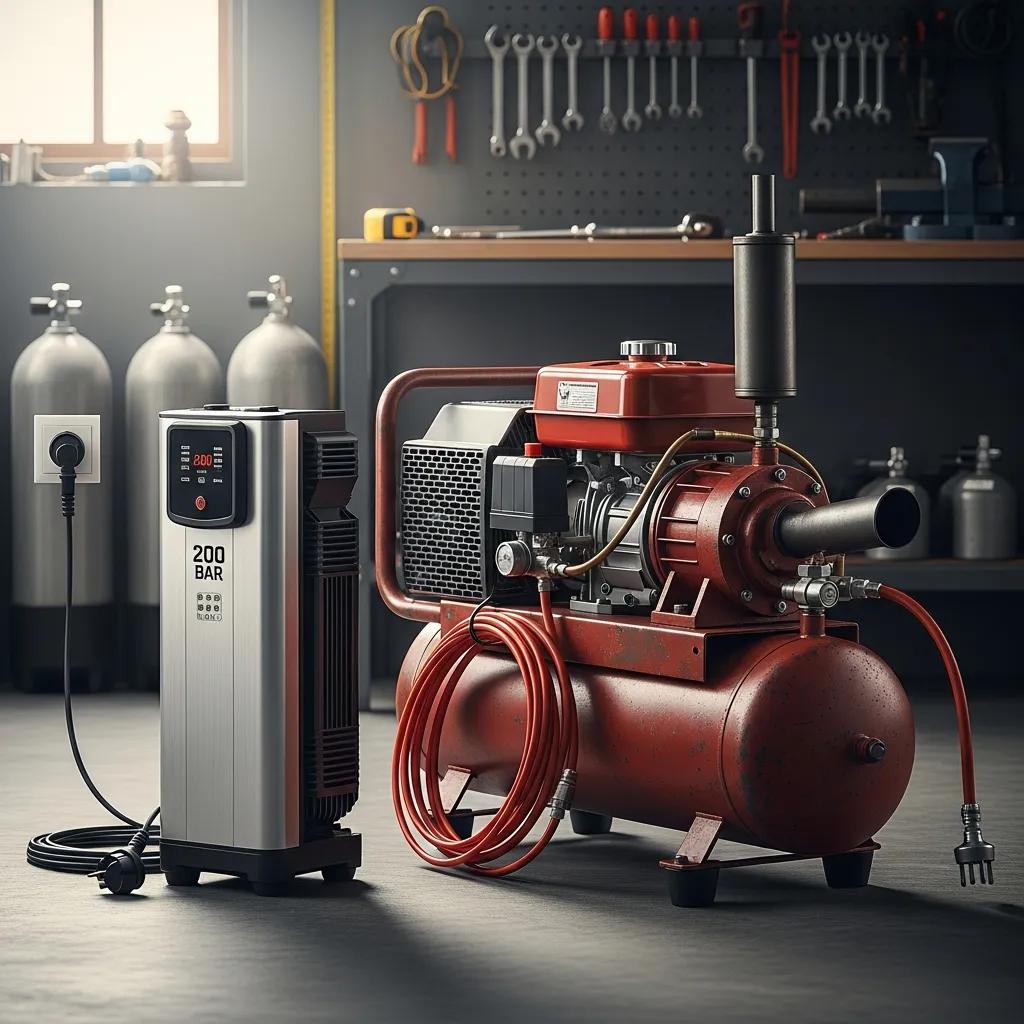
Electric dive compressors are known for their efficiency and lower operational costs, making them ideal for environments where power supply is stable. They produce less noise and emissions, contributing to a more environmentally friendly operation. In contrast, gas and diesel compressors offer greater mobility and are often preferred in remote locations where electricity is not readily available. However, they may incur higher fuel costs and require more maintenance due to their mechanical components.
Ultimately, the choice between electric and gas/diesel compressors depends on the specific operational context, including location, budget, and environmental considerations.
Which Key Factors Should You Consider When Selecting a High-Pressure Dive Compressor?
When selecting a high-pressure dive compressor, several key factors must be considered to ensure optimal performance and safety. These factors include power requirements, diving needs, pressure ratings, and filtration systems.
- Power Requirements: Ensure compatibility with your generator’s voltage and phase (e.g., 200-240V, 50/60Hz).
- Diving Needs: Determine how many divers the system needs to support and the number of dives per day.
- Pressure Ratings: Identify the required fill pressures for your breathing air cylinders (typically 3000–4500 psi).
- Flow and Duty Cycle: Assess the flow rate and duty cycle to meet your operational demands.
- Filtration and Purification: Ensure the compressor has adequate filtration to meet breathing air quality standards.
- Monitoring and Controls: Look for systems that support monitoring of air quality parameters and routine sampling.
- Installation and Maintenance: Consider ease of installation and availability of customer support and maintenance services.
How Do Capacity, Pressure Ratings, and Power Source Affect Compressor Choice?
Capacity, pressure ratings, and power source significantly influence compressor choice.
- Capacity: The required flow rate (FAD) must match the operational needs, including peak and average demands. For example, a compressor for a dive shop may need to support multiple simultaneous fills, which requires a higher capacity.
- Pressure Ratings: The working pressure must align with the application requirements. For instance, breathing-air fills often require pressures between 3000–4500 psi. Higher pressure capabilities may reduce flow rates, necessitating a balance based on operational priorities.
- Power Source: Compatibility with available power sources (e.g., 200-240V, 50/60Hz) is crucial, especially for mobile applications like boating, where smaller generator sets may be used. The choice of power source can also affect the compressor’s efficiency and operational feasibility.
Overall, these factors must be carefully considered to ensure the compressor meets performance, safety, and operational needs.
Why Are Air Quality Standards and Filtration Systems Critical for Dive Compressors?
Air quality standards and filtration systems are critical for dive compressors because they ensure that the compressed air meets safety and purity requirements for breathing air. These systems must control total hydrocarbons, carbon monoxide, moisture, and particulate limits to provide safe air for divers. Adhering to recognized standards such as the Compressed Gas Association (CGA) Grade E or EN 12021 is essential to prevent contamination that could pose health risks during diving operations. Proper filtration and monitoring enhance safety and purity, which are vital for applications like scuba tank fills.
The importance of rigorous air quality control is further highlighted by ongoing efforts to improve monitoring methods for diving compressors.
Ensuring Safe Diving Air: Real-time Compressor Monitoring
The U.S. Navy Divers Air Sampling Program coordinates the mandatory semiannual air purity testing of compressors used to supply divers air in the Fleet. Gas sampling kits are sent to the field, where gas samples are taken. These samples are then returned to a contract laboratory for analysis, with the results subsequently reported back to the field. This approach is expensive, cumbersome, and potentially unreliable. Consequently, the U.S. Navy is interested in having a real-time online air quality monitor to ensure that compressors deliver safe diving air.
Development and Evaluation of an Online Air Quality Monitor (Diveair2) for Diving Compressors, 2009
How Can Proper Maintenance and Support Extend the Life of Your Dive Compressor?
Proper maintenance and support are essential for extending the life of your dive compressor. Regular maintenance not only ensures optimal performance but also helps prevent costly repairs and downtime.
What Is the Recommended Maintenance Schedule for High-Pressure Dive Compressors?
A recommended maintenance schedule for high-pressure dive compressors typically includes:
- Filter Changes: Replace air filters every 100 hours of operation or as needed based on environmental conditions.
- Oil Changes: Change the oil every 500 hours or annually, whichever comes first, to ensure proper lubrication and performance.
- Inspection: Conduct regular inspections for wear and tear, checking components like hoses, valves, and seals for any signs of damage.
Please note that these intervals are typical examples and may vary based on the specific manufacturer’s guidance, actual operating hours, and environmental conditions. Always refer to your compressor’s owner’s manual for precise maintenance requirements.
Following a structured maintenance schedule helps ensure the compressor operates efficiently and safely, reducing the risk of unexpected failures.
How Does LW Americas Provide Spare Parts and Professional Servicing?
LW Americas provides spare parts and professional servicing through a structured project workflow that includes needs assessment, equipment selection, system design, installation oversight, commissioning, and post-installation support. Their local support presence in North America allows for faster response times for parts and technical queries. Additionally, they offer tailored high-pressure solutions and project management to reduce installation complexity and ensure compliance with standards, which collectively support reliable equipment uptime and predictable maintenance costs.
What Are Industry-Specific Applications and Custom Solutions for Dive Compressors?
Industry-specific applications and custom solutions for dive compressors include:
- Scuba Fills: Compressors must meet specific pressure ratings and air quality standards for filling scuba tanks.
- Firefighting SCBA: These applications require high purity air and continuous availability, emphasizing safety and reliability.
- Medical Gas Supply: Similar to SCBA, medical applications prioritize air quality and pressure consistency.
- Maritime Systems: Compact and vibration-resistant designs are often necessary for marine environments.
- Motorsports: High-pressure capabilities and continuous-duty designs are critical for performance and reliability.
It’s important to note that even within high-pressure systems, applications like SCBA, medical gas supply, and motorsports have distinct requirements concerning redundancy, compliance with specific industry standards, and duty-cycle demands.
Custom solutions may involve tailored compressor specifications, filtration systems, and monitoring devices to meet the unique demands of these applications.
How Do Compressor Requirements Differ for Dive Shops, Liveaboards, and Commercial Diving?
Compressor requirements vary significantly across different sectors:
- Dive Shops: Typically require high-capacity compressors to support multiple simultaneous fills, ensuring quick turnaround for customers.
- Liveaboards: Need reliable compressors that can operate continuously to meet the demands of divers on extended trips.
- Commercial Diving: Often requires specialized compressors that can handle high-pressure fills and meet stringent air quality standards for safety.
Understanding these differences is crucial for selecting the right compressor for each application.
What Custom High-Pressure Compressor Designs Does LW Americas Offer?
LW Americas offers custom high-pressure compressor solutions that adapt core designs to meet specific site constraints and performance targets. Their offerings include:
- Continuous-duty high-pressure compressors designed for uninterrupted operation, featuring lower RPM components and robust cast blocks.
- Customization options for footprint, purity, pressure staging, and integration with existing plant controls.
- Project-managed solutions that involve requirements capture, compressor selection, engineering design, packaging, and site support.
- Key components for SCBA fill stations, including multi-stage or reciprocating compressors, purification trains, and monitoring devices.
For specific designs or configurations, further details would be needed.
Why Choose LW Americas for Your Breathing Air Compressor Needs?
You should choose LW Americas for your breathing air compressor needs because they offer continuous-duty high-pressure compressors designed for reliable, uninterrupted operation, which enhances uptime and reduces maintenance. Their systems are tailored to meet specific site constraints and performance targets, ensuring compliance with regulatory standards. Additionally, LW Americas provides project management support, custom engineering solutions, and North American support, making them a comprehensive choice for organizations requiring high-pressure fills and robust uptime.
What Are the Unique Advantages of LW Americas’ Continuous-Duty Compressors?
The unique advantages of LW Americas’ continuous-duty compressors include:
- No Frequent Cool-Down Periods: Designed to operate continuously without needing frequent cool-downs, which enhances operational efficiency.
- Lower RPM Components: Utilizes lower RPM components that reduce wear and thermal stress on key parts.
- Robust Construction: Features robust cast blocks that contribute to durability and reliability.
- Effective Thermal Management: Employs thermal management strategies to dissipate heat effectively during prolonged operation.
- Steady Pressure Delivery: Maintains steady pressure delivery, which is crucial for critical manufacturing lines and fueling stations.
- Minimized Risk of Unplanned Stops: Reduces the likelihood of unplanned stops, improving overall equipment availability.
- Fewer Start/Stop Cycles: Decreases wear on valves and seals, leading to longer maintenance intervals compared to intermittent-duty machines.
- Predictable Scheduling: Supports predictable scheduling and smoother integration with storage tanks and downstream purification stages.
- Customization: Often customized to align with specific site constraints and purity requirements, enhancing operational efficiency.
How Does Responsive North American Support Enhance Dive Operation Uptime?
Responsive North American support enhances dive operation uptime by providing faster response times for parts and technical queries, as well as offering custom solution capabilities and comprehensive project management. This support helps reduce installation complexity, ensures reliable fill-station uptime, and facilitates predictable maintenance costs. Additionally, the project management approach includes thorough documentation and compliance verification, which are essential for maintaining operational readiness and safety in critical applications like diving.