
SCBA Fill Station Setup: Complete Guide for Fire Departments to Design, Operate, and Maintain Safe Breathing Air Systems
An SCBA fill station is the centralized system a fire department uses to compress, purify, store, and dispense breathing air for self-contained breathing apparatus (SCBA), supporting daily training and emergency responses. This guide explains how to design, size, and operate an SCBA fill station so crews maintain readiness, minimize downtime, and are designed to align with air-quality requirements, often referencing standards such as NFPA 1989, which is commonly adopted by many fire departments. Specific requirements can vary by Authority Having Jurisdiction (AHJ) and local regulations. Readers will learn needs assessment methods, equipment selection criteria, purification and monitoring approaches, storage and fill-panel layout considerations, plus operation, maintenance, and troubleshooting best practices. The article also highlights practical vendor-grade options and project support examples to show how manufacturers can simplify design and installation without dictating choices. Start here with an operational definition and proceed through design checklists, compressor comparisons, purification EAV tables, and a maintenance matrix that together form a complete blueprint for breathing air system setup and sustained alignment with standards.
What Is an SCBA Fill Station and Why Is It Critical for Fire Departments?
An SCBA fill station is a breathing air system designed to compress ambient air to high pressure, filter contaminants, store the compressed air, and supports safe filling of SCBA cylinders for firefighter use. It works by combining a high-pressure air compressor with multi-stage purification, high-pressure storage (cascade) tanks, and a distribution/fill panel to aim to provide cylinders with air that aligns with health and safety criteria. The primary benefit is reliable on-site access to breathing air that is designed to align with recognized standards, which can help reduce response delays and address operational risks associated with using off-site fills. Understanding this central role sets the stage for how design choices can influence safety, readiness, and alignment with commonly adopted regulatory guidelines, such as those found in NFPA 1989. It’s important to note that specific requirements vary by Authority Having Jurisdiction (AHJ) and local regulations.
How Does an SCBA Fill Station Support Firefighter Safety and Operations?
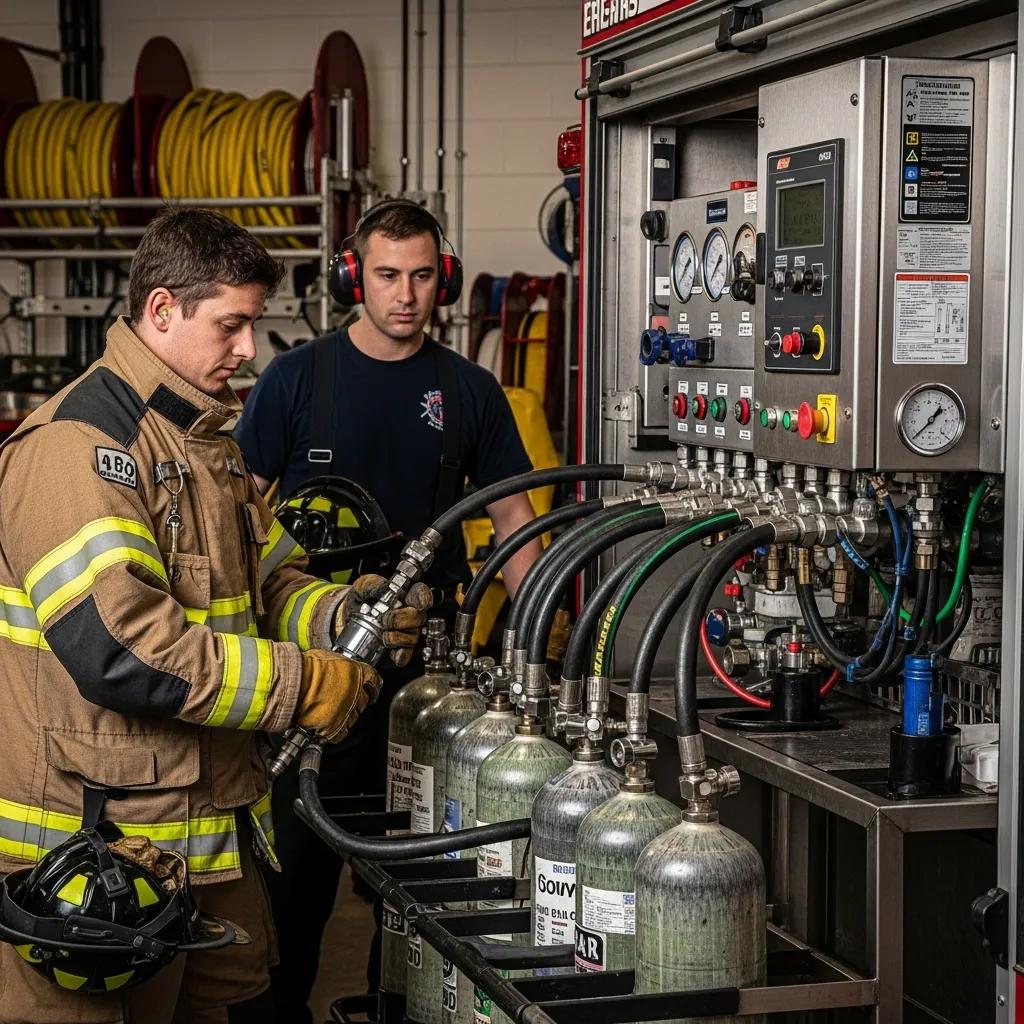
An on-site SCBA fill station supports rapid cylinder turnaround by enabling immediate refills after training or incident use, which can contribute to improved crew readiness and help reduce response gaps. The mechanism begins with continuous-duty compressors that deliver required flow to the purification train and cascade storage so multiple cylinders can be filled in sequence, limiting queuing during peak demand. Operationally, integrated air quality monitoring helps detect potential contaminated fills by flagging CO, CO2, or oil vapor excursions and triggering isolation or shutdown actions. Having these capabilities on site translates into measurable improvements in fill-rate performance and reduces logistical dependence on external suppliers, which benefits both daily operations and emergency surge scenarios.
What Are the Different Types of SCBA Fill Stations Used by Fire Departments?
Fire departments typically deploy several fill station configurations—stationary centralized systems for main stations, mobile trailer-mounted units for on-scene or regional mutual aid, cascade-only storage for high-volume buffering, and hybrid combinations that mix fixed compressors with mobile support. Stationary systems are optimized for consistent high-throughput filling at a fixed location, while mobile systems serve as crucial situational support tools, prioritizing transportability, ruggedness, and on-scene refilling capability for remote training, emergency deployment, or temporary field support. Cascade storage systems act as high-pressure reservoirs that enable simultaneous rapid fills without immediate compressor output matching every demand spike. Selecting among these types depends on mission profile, geographic coverage needs, and expected fill cycles, which leads directly into design and selection criteria.
How to Design an Effective SCBA Fill Station for Fire Department Needs?
Designing an effective SCBA fill station starts with a systematic needs assessment followed by equipment selection, layout planning, and validation testing to support performance and safety goals. First quantify duty cycle, peak simultaneous fills, and future growth to size compressor capacity and cascade storage; then plan ventilation, noise control, and safety interlocks for the installation area. Incorporate purification and monitoring specifications that are designed to align with air-quality criteria, often referencing standards like NFPA 1989, which is commonly adopted by many fire departments. Specific requirements can vary by Authority Having Jurisdiction (AHJ) and local regulations. Document the system design in drawings and bills of material for procurement and commissioning. Good design can help reduce installation risk and simplify maintenance, so a clear project plan with deliverables and acceptance testing is essential before purchasing equipment.
The core steps for SCBA fill station design are:
- Assess demand and duty cycle to determine required compressor flow and cascade capacity.
- Select compressor technology and purification train matching air-quality and redundancy needs.
- Design storage, fill panel layout, ventilation, and safety interlocks for the installation footprint.
- Specify monitoring, testing protocols, and record-keeping designed to align with recognized standards, such as NFPA 1989, and other applicable local regulations.
- Plan commissioning tests and ongoing maintenance schedules to validate performance.
These steps form a practical roadmap for design decisions and then guide specific component selection for compressors, purification, and storage.
What Are the Key Components in SCBA Fill Station Design?
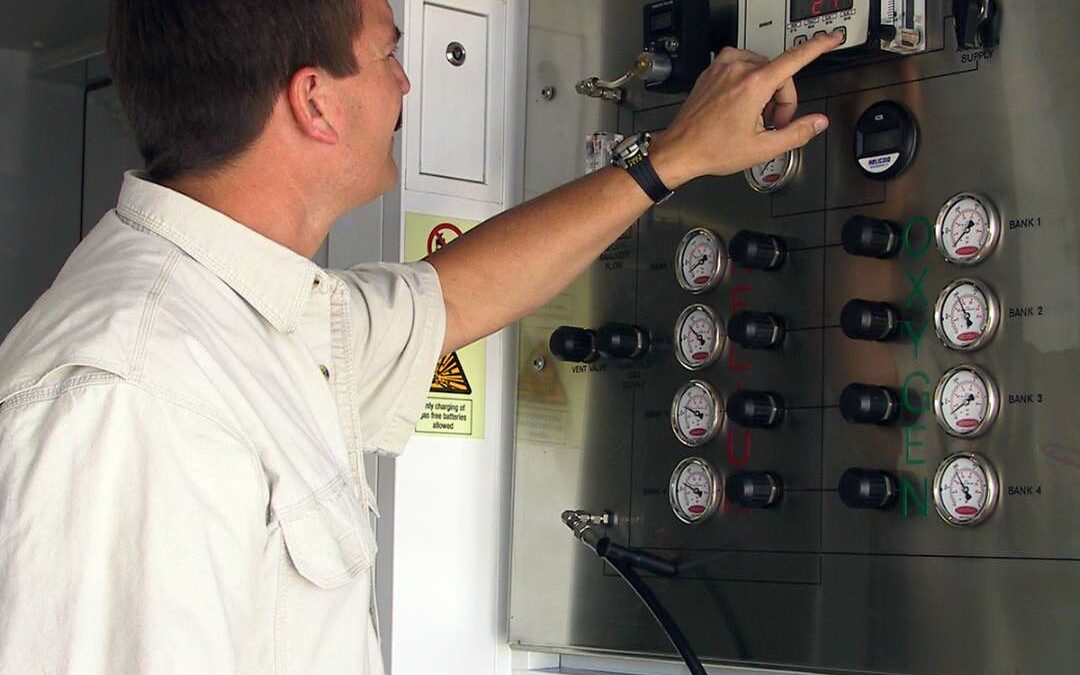
Key components include the high-pressure compressor (multi-stage or reciprocating), a purification train (coalescing filters, molecular sieves, catalytic CO removal where required), high-pressure cascade storage tanks, a calibrated fill panel or manifold with gauges and pressure relief devices, and continuous air quality monitors for CO/CO2 and oil vapor. The compressor is the workhorse that determines flow-rate and pressure capabilities, while the purification train aims to support purity testing protocols for the compressed air to align with specified contaminant limits. Fill panels provide controlled distribution to cylinders and support safe filling procedures, and monitoring devices provide both real-time alarms and data logs for audits—each piece is interdependent in supporting the delivery of breathing air that is designed to align with standards.
This component matrix clarifies how each element contributes to system performance and informs procurement specifications for reliable operation.
How Do NFPA 1989 and Other Standards Influence SCBA Fill Station Design?
NFPA 1989 is a widely referenced standard that defines breathing air quality criteria, provides frameworks for testing intervals, and sets acceptable contaminant limits. It directly shapes purification train selection, monitoring thresholds, and validation testing for many SCBA fill stations. Complementary references like NFPA 1500 and CGA guidance also influence installation practices, operator training, and periodic hydrostatic testing of cylinders and tanks. While NFPA 1989 is commonly adopted by many fire departments, specific requirements can vary by Authority Having Jurisdiction (AHJ) and local regulations. These standards often require documented testing and records that demonstrate ongoing alignment with their guidelines, so design choices should prioritize test points, sample ports, and accessible monitoring for routine verification, with specific testing intervals typically ranging based on usage and jurisdiction. Incorporating acceptance tests into commissioning, aligned with adopted standards, supports the validation of the installed system against documented requirements and its readiness for operational use.
Which High-Pressure Air Compressors Are Best for Fire Department SCBA Fill Stations?
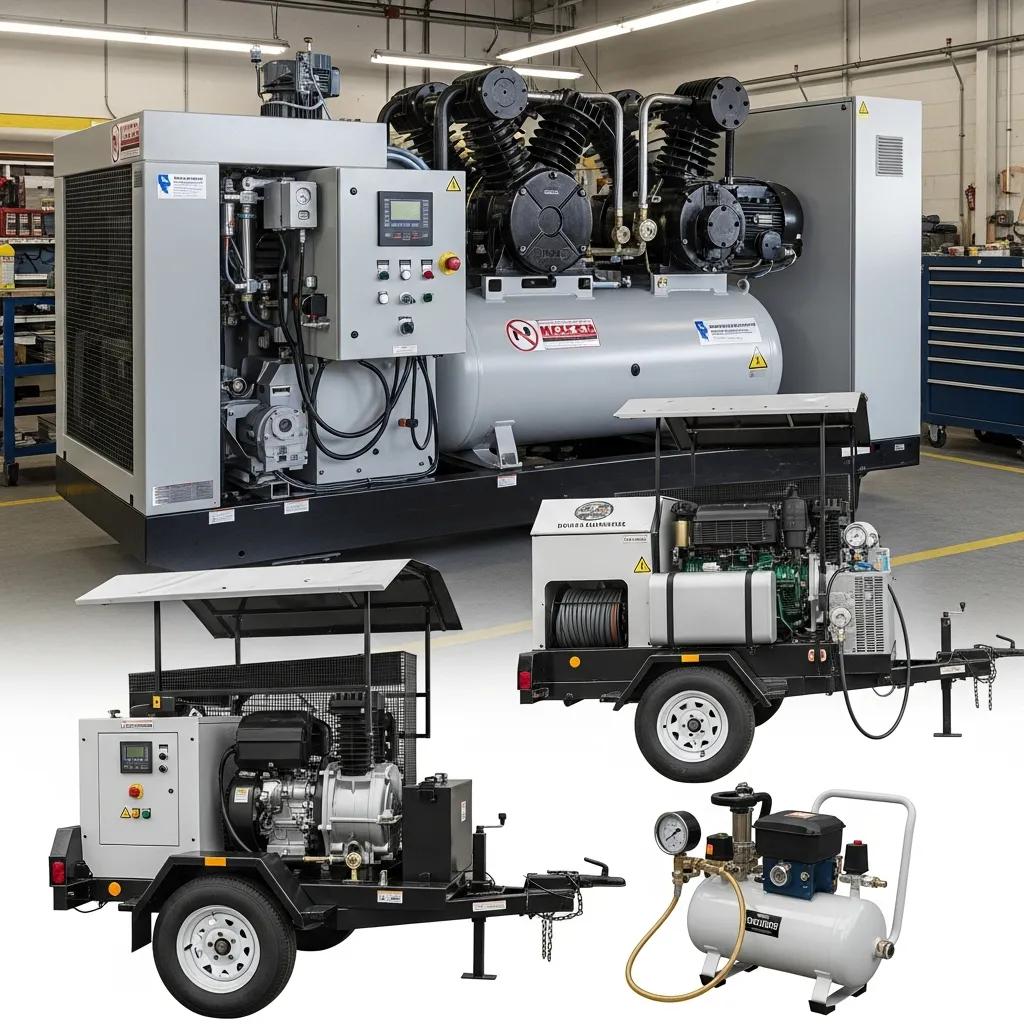
The best compressors for SCBA fill stations are continuous-duty, high-pressure units designed for sustained operation with robust cooling and service access, often optimized for lower operating speeds. Continuous-duty designs reduce thermal stress and allow longer run times during large filling campaigns, while architectures optimized for lower operating speeds reduce wear and vibration, which can contribute to extended service intervals. Stationary compressors are the primary solution, offering higher sustained flow and are ideally suited to centralized fill rooms for consistent, high-volume refilling. Mobile compressors, while portable, are best utilized as situational support tools for remote training, emergency deployment, or temporary field support, rather than as replacements for fixed installations. They often have constraints in power availability, cooling capacity, and maintenance access compared to their stationary counterparts. Choosing between types requires matching rated flow (CFM), discharge pressure (PSI), footprint constraints, and maintenance capacity to the department’s fill-rate and operational profile.
What Are the Benefits of Continuous-Duty, Low RPM Compressors for Fire Departments?
Continuous-duty compressors, often designed for lower operating speeds, offer engineering advantages such as reduced mechanical stress, lower operating temperatures, and diminished vibration, which together can contribute to increased reliability and potentially extended service intervals. Practically, these benefits can contribute to fewer unscheduled outages, predictable maintenance windows, and potentially reduced lifecycle cost due to lower component wear. For fire departments that rely on uninterrupted access to breathing air, the smoother operation and potentially extended periods between service events support operational readiness and can help reduce the risk of compressor-related fill interruptions. These reliability improvements dovetail with purification and monitoring investments to support the delivery of consistent breathing air that is designed to align with standards.
How to Choose Between Mobile and Stationary SCBA Compressors?
Deciding between mobile and stationary compressors hinges on mission profile, expected fill volume, geographic coverage, and budget constraints. Stationary units are the foundational choice, excelling for centralized high-throughput needs and continuous operation. Mobile units, conversely, are optimal for incident support, remote refilling during training, or temporary field support where a fixed installation is not feasible or available. It is important to recognize that mobile units typically have limitations regarding sustained power availability, cooling capacity, and ease of maintenance access compared to dedicated stationary systems. Consider scenarios such as multi-station mutual aid, remote training events, or rural coverage to determine whether portability for situational support or consistent high-volume capacity is the priority. Evaluate footprint, electrical and ventilation requirements for stationary installs versus towing, mounting, and environmental protection for mobiles. The decision should align compressor capability with the department’s operational tempo and long-term plans, and include contingency planning for redundancy or temporary mobile augmentation without suggesting portable units replace the primary role of fixed installations.
How to Ensure Breathing Air Purification Meets Fire Department Standards?
Supporting breathing air purification to align with standards typically involves a multi-stage filtration approach, continuous and periodic monitoring, and a documented testing program tied to acceptance criteria from adopted standards. Purification typically involves multi-stage filtration that captures particles and oils, along with activated carbon or catalytic elements for hydrocarbons and VOCs, and molecular sieves for moisture control, combined with CO/CO2 sensors that can provide alarms before cylinder filling. Implement sampling points and test procedures into the system design so technicians can periodically verify contaminant levels under load. Establishing clear alarms, isolation protocols, and corrective actions in SOPs aims to ensure that any deviation from acceptable air quality is detected and addressed before providing air to firefighters.
What Filtration and Monitoring Systems Are Essential for SCBA Breathing Air?
Essential filtration and monitoring components include a staged filter train (pre-filter, coalescing oil remover, activated carbon or catalyst for hydrocarbons, and molecular sieve for moisture), plus continuous CO and CO2 monitors and oil vapor detectors. These elements work together to capture particulates, hydrocarbon vapors, and moisture that could potentially compromise cylinder air quality, while monitors provide immediate alerts and logging to support compliance. Proper sizing of filter elements and scheduled replacement intervals are critical, and alarms should be integrated into fill-panel controls so filling can be halted automatically when sensors exceed thresholds. This combination of filtration and monitoring is the backbone of breathing air systems designed to align with standards.
These components must be matched to the compressor’s oil type and operating profile to support effective contaminant management through detection and filtration, and reliable monitoring.
How Does Compliance with NFPA 1989 Affect Breathing Air Purification?
NFPA 1989 is a widely referenced standard that sets measurable air-quality limits and provides frameworks for testing intervals. These often directly inform filter selection, monitoring alarm setpoints, and sample testing frequency for many fire departments. Systems are typically validated at commissioning and routinely re-tested to demonstrate ongoing alignment with adopted standards, with re-testing intervals typically ranging based on usage and jurisdiction. While NFPA 1989 is commonly adopted, specific requirements can vary by Authority Having Jurisdiction (AHJ) and local regulations. Adherence to adopted standards influences acceptance criteria such as acceptable ppm levels for CO and hydrocarbon presence, dew point limits, and documentation of corrective actions when limits are exceeded, with specific testing frequencies often outlined by the Authority Having Jurisdiction (AHJ) and manufacturer guidance. A compliance-driven approach requires integrating test ports, accessible sampling points, and a log system to record monitoring data, filter changes, and corrective maintenance, supporting auditors in tracing the system’s performance history and corrective measures if needed.
What Are Best Practices for SCBA Fill Station Operation, Maintenance, and Troubleshooting?
Best practices include establishing clear SOPs for operation and emergency shutdown, scheduling preventive maintenance aligned with duty cycles (with specific schedules typically ranging based on manufacturer guidance and local requirements), maintaining meticulous records for filters, oil changes, hours, and test results, and training personnel on first-line troubleshooting steps. A preventive maintenance matrix helps ensure critical tasks occur at appropriate intervals, which can vary based on duty cycle and manufacturer recommendations, and that parts such as filters and seals are replaced before failure. Troubleshooting protocols should start with basic diagnostics—power and controls checks, filter differential pressure, and sensor calibration—escalating to manufacturer support for specialized compressor block or purification failures. Implementing these practices reduces downtime and supports readiness for audits against adopted standards.
Everyday operational checklists and preventive maintenance routines keep a fill station reliable and aligned with standards while enabling rapid diagnosis when faults arise. While specific routines can vary, common frameworks include:
- Daily checks: Visual inspection, oil level, drain moisture traps (these are common daily tasks).
- Weekly checks: Monitoring differential pressure across filters and verifying alarms and gauges are common weekly tasks.
- Monthly/quarterly: Replacing filters per manufacturer hours, calibrating sensors, and recording compressor hours are common monthly/quarterly tasks, though specific schedules should align with manufacturer guidance and local requirements.
These routine activities ensure system reliability and provide documentation for compliance audits, leading into a structured maintenance schedule and record-keeping approach.
How to Develop a Maintenance Schedule and Record-Keeping for SCBA Compressors?
Develop a maintenance schedule by mapping tasks to frequencies based on duty cycle and manufacturer guidance. This often includes daily checks, weekly operational verifications, and quarterly filter/service intervals, with annual major inspections including oil analysis and valve servicing. However, specific frequencies should always align with manufacturer recommendations and local requirements. Records should capture task, date, technician, compressor hours, filter part numbers, test results, and any corrective actions to create a history that supports audits. Digital logs with timestamped entries simplify trend analysis and support predictive maintenance, while paper backups can help meet basic record-retention requirements. Consistent record-keeping reduces risk and can demonstrate due diligence during inspections.
A structured matrix like this aligns maintenance actions with documented outcomes and supports compliant record retention.What Are Common Troubleshooting Steps for SCBA Fill Station Issues?
When facing common issues such as compressor failure to start, low fill rate, or contamination alarms, follow a tiered troubleshooting flow starting with operator-level checks, moving to technical diagnostics, and escalating to manufacturer support as needed. Begin by verifying power, control settings, and safety interlocks; if a low flow condition persists, check filter differential and suction conditions, and inspect for leaks in the cascade or fill panel. For contamination alarms, isolate the compressor, suspend fills, record sensor readings, and perform sample testing to confirm alarm validity before corrective remediation. Escalate to qualified service for compressor block, pump failures, or persistent contamination that simple filter changes do not resolve.
- Basic diagnostics: Verify power and control status; reset alarms if needed.
- Intermediate checks: Inspect filters, drain traps, and manifold valves; measure pressures.
- Escalation: Contact qualified technical support for compressor block or purification train failures.
Following a clear escalation path can help preserve safety and minimize downtime while ensuring issues are addressed at the correct technical level.
Why Choose LW Americas for Custom SCBA Fill Station Solutions and Support?
LW Americas offers continuous-duty high-pressure compressors and gas systems designed to support life-safety applications, including offerings across tankfill compressors, stationary compressors, mobile compressors, filling panels, storage solutions, purification systems, and breathing air monitoring devices. Their product portfolio emphasizes continuous-duty operation, robust one-piece cast block construction, and designs optimized for lower operating speeds that reduce wear—attributes that can contribute to long-term reliability and potentially lower maintenance needs for fire department use. LW Americas also positions itself to provide responsive North American support and project management services that span equipment selection through design and installation oversight, making them a practical partner for departments seeking a turnkey design-to-support pathway that aims to align with commonly adopted standards, such as NFPA 1989, while acknowledging that specific requirements vary by Authority Having Jurisdiction (AHJ) and local regulations.
How Does LW Americas Provide Project Management and 2D/3D Design for Fire Departments?
LW Americas supports fire departments through a structured project workflow that begins with needs assessment and moves through equipment selection, 2D/3D system design, installation oversight, commissioning, and post-installation support. Deliverables typically include design drawings, bills of material, and commissioning reports that document performance against specified acceptance tests, which helps reduce installation risk and aims to ensure components are laid out for maintainability and alignment with adopted standards. Final compliance validation should always be coordinated with the Authority Having Jurisdiction (AHJ). Their project management approach aims to coordinate site requirements, ventilation, and safety interlocks with equipment delivery and commissioning to provide a coherent handover that includes operating and maintenance guidance for local staff.
What Are the Unique Value Propositions of LW Americas’ SCBA Fill Station Products?
- Continuous-duty compressors: Support long run times and surge demands.
- Designs optimized for lower operating speeds: Can contribute to reduced wear and maintenance frequency.
- Project management & design: Can help minimize installation risk and supports documentation for compliance.
These product and service strengths can help a department translate technical requirements into a working, maintainable SCBA fill station configured to support their operational needs. Their local support presence in North America supports faster response for parts and technical queries, while custom solution capabilities and comprehensive project management reduce installation complexity. These attributes collectively support reliable fill-station uptime, predictable maintenance costs, and can facilitate compliance verification during audits against adopted standards, which are practical outcomes for departments managing life-safety infrastructure.